Plot Explained Spoilers guaranteed!
Plot Explained

Browse by genre

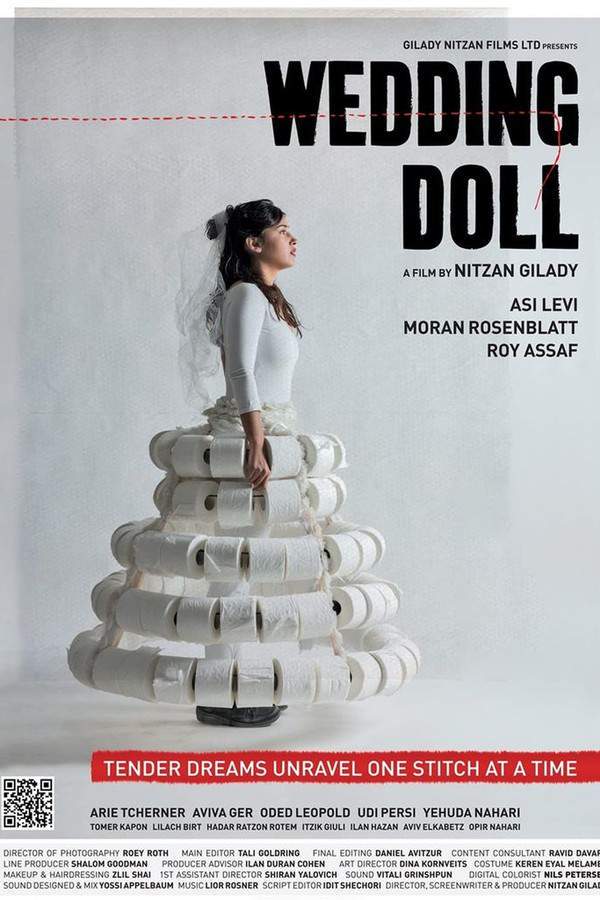
Wedding Doll (2016) movie poster

Characters & Themes

Wedding Doll (2016) Characters, Setting & Themes Explained

Release, runtime and language
2016 · 82 min · English
Loading streaming availability…
Directed by
Nitzan Giladi
Starring
Assi Levy, Moran Rosenblatt, Roy Assaf

A spirited young woman named Hagit seeks independence in a close-knit community centered around a toilet-paper factory. While navigating her mother Sarah's devoted care, she secretly develops a romantic connection with the factory owner's son. However, the factory's impending closure casts a shadow over their lives, forcing Hagit and Sarah to confront their own aspirations and the delicate balance of their relationships.

On this page (8)
  1. 1 Where to watch
  2. 2 Characters explained (3)
  3. 3 Character relationship map
  4. 4 Where & when it takes place
  5. 5 Themes & meaning (3)
  6. 6 Character & meaning questions
  7. 7 Movie threads
  8. 8 Every angle
Loading streaming availability…

3 main characters · contains spoilers

Wedding Doll Characters Explained: Who Is Who

The main characters of Wedding Doll (2016), heroes and villains: what drives them, how they change over the course of the story and what each of them reveals about the film's bigger ideas.

  • Hagit (Moran Rosenblatt)

    Hagit is a determined 24-year-old woman with a mild intellectual disability who desires independence and love. Her naive yet hopeful nature drives her to pursue a relationship with Omri, which symbolizes her personal dreams. Despite her limitations, she shows a profound ability to love and yearn for connection.

    • 👰 Bride
    • ❤️ Infatuation
  • Sarah (Assi Levy)

    Sarah is Hagit's protective mother, navigating the challenges of single motherhood while caring for a daughter with a disability. Her overprotection stems from love but often hinders Hagit's growth. The conflict between her responsibilities and personal desires adds emotional depth to her character.

    • 👩‍👧 Motherhood
    • 💔 Sacrifice
  • Omri (Roy Assaf)

    Omri is a kind-hearted young man who works at the factory and becomes Hagit's romantic interest. His compassion towards Hagit is genuine, though tinged with pity, highlighting his internal conflict between societal expectations and his feelings for her. His character embodies the complexity of love in nuanced situations.

    • ❤️ Compassion
    • 😟 Conflict

Last updated: October 27, 2026 at 18:55

Was this helpful?

7 characters · 6 connections · contains spoilers

Wedding Doll Character Relationship Map

Who is connected to whom in Wedding Doll: family, love, friendships, rivalries and hidden ties, colour-coded. Pick a character to see their side of the story, or a connection to see what brings two characters together.

How much of the story to show
HHagitMoran RosenblattSSarahAssi LevyOOmriRoy AssafAArieCChenEEladCChaim

Last updated: October 27, 2026 at 18:55

Was this helpful?

Setting

Where and When Does Wedding Doll Take Place?

The setting of Wedding Doll (2016): the year and time period, the places and locations, and how they shape the characters, the mood and the tension of the story.

Time period

The movie is set in contemporary times, reflecting present-day challenges faced by individuals with intellectual disabilities. It showcases modern social issues, including familial responsibilities, workplace dynamics, and personal dreams in a rapidly changing world.

Location

Mitzpe Ramon, Ramon Crater, Be'ersheba

Mitzpe Ramon is a small town in Southern Israel, nestled next to the breathtaking Ramon Crater, a geological wonder. The town is known for its tranquil atmosphere and desert landscapes, often attracting tourists and artists. The local toilet paper factory serves as the main workplace for the characters, highlighting the tight-knit community.

  • 🏞️ Landscape
  • 🏭 Factory

Last updated: October 27, 2026 at 18:55

Was this helpful?

3 major themes

Wedding Doll Meaning: Themes & Message Explained

What is Wedding Doll (2016) really about? The emotional, social and philosophical themes the film keeps returning to, its symbolism and the message beneath the surface.

  • Love & Heartbreak

    The theme of love and heartbreak is central to the story, as Hagit dreams of marrying Omri, who represents her hopes and aspirations. However, their relationship is complicated by societal perceptions and personal limitations. The emotional journey reflects the struggle between dreams and reality, leading to bittersweet moments.

  • Family Dynamics

    The interplay of family dynamics is significant in 'Wedding Doll,' particularly the protective nature of Sarah towards Hagit. The tension between familial duties and personal desires creates a poignant backdrop, highlighting how family shapes individual choices and outcomes.

  • Dreams & Aspirations

    Hagit's dream of marriage and independence symbolizes the universal quest for self-actualization. Her journey illustrates the challenges faced by those with disabilities in pursuing their aspirations while contending with societal limitations and personal circumstances.

Last updated: October 27, 2026 at 18:55

Was this helpful?

Character & theme questions

Wedding Doll Characters & Meaning: Your Questions Answered

The questions people ask about Wedding Doll (2016): who the characters really are, their relationships, what the symbols mean, where it takes place and what the movie is really about. Each answer contains spoilers.

Q1

Where is Wedding Doll set?

The movie takes place in Mitzpe Ramon, a small town in Southern Israel located next to the Ramon Crater. This desert town is known for its tranquil atmosphere and serves as the backdrop for the close-knit community where the story unfolds.

  • mitzpe ramon
  • israel
  • setting
  • location
  • ramon crater
Q2

What is the setting like in the movie?

Mitzpe Ramon is portrayed as a quiet desert town with a small community centered around a local toilet paper factory. The setting emphasizes the intimate, enclosed nature of the world the characters inhabit, highlighting both the support and limitations of small-town life.

  • desert town
  • small town
  • community
  • factory setting
Q3

When does the story take place?

Wedding Doll is set in contemporary times, reflecting present-day social issues and challenges. The modern setting allows the film to explore current attitudes toward disability, family responsibilities, and workplace changes.

  • contemporary
  • modern
  • time period
  • present day
Q4

What are the main themes in the film?

The film explores three interconnected themes: love and heartbreak through Hagit's romantic aspirations; family dynamics, particularly the tension between a parent's protection and a child's need for independence; and dreams and aspirations, as Hagit seeks self-actualization despite societal limitations.

  • love
  • heartbreak
  • family
  • dreams
  • aspirations
  • themes
Q5

How does the movie handle love and heartbreak?

Love and heartbreak are central to the story, with Hagit dreaming of marrying Omri as a symbol of her hopes for independence and connection. Their relationship is complicated by societal perceptions and personal limitations, leading to bittersweet emotional moments that reflect the struggle between dreams and reality.

  • romance
  • love story
  • heartbreak
  • Omri
  • relationship
Q6

What role does family play in the story?

Family dynamics are central, particularly Sarah's protective nature toward Hagit. The tension between Sarah's caregiving responsibilities and her own personal desires creates a poignant backdrop, showing how family both supports and constrains individual choices and growth.

  • family
  • mother daughter
  • Sarah
  • caregiving
  • protection
Q7

What does the film say about dreams and aspirations?

The film explores Hagit's dream of marriage and independence as a symbol of universal quests for self-actualization. Her journey illustrates the challenges faced by individuals with disabilities in pursuing their aspirations while contending with societal limitations and family dynamics.

  • independence
  • dreams
  • aspirations
  • disability
  • self-actualization
Q8

Who is Hagit in the movie?

Hagit is a determined 24-year-old woman with a mild intellectual disability who desires independence and love. Her naive yet hopeful nature drives her to pursue a relationship with Omri, representing her personal dreams. She demonstrates a profound ability to love and yearn for connection despite her limitations.

  • Hagit
  • main character
  • disability
  • independence
  • protagonist
Q9

Who is Sarah in the movie?

Sarah is Hagit's protective single mother, navigating the challenges of caring for a daughter with a disability. Her overprotection stems from love but often hinders Hagit's growth. The conflict between her familial responsibilities and personal desires adds significant emotional depth to her character.

  • Sarah
  • mother
  • caregiver
  • protective
  • single mother
Q10

Who is Omri in the movie?

Omri is the factory owner's son who works at the toilet paper factory and becomes Hagit's romantic interest. He is kind-hearted and genuinely compassionate toward Hagit, though his feelings are tinged with pity, highlighting his internal conflict between societal expectations and his genuine emotional connection to her.

  • Omri
  • love interest
  • factory
  • romance
  • character
Q11

What does the factory represent in the story?

The toilet paper factory serves as the community's main workplace and a symbol of stability. Its impending closure casts a shadow over the characters' lives, forcing them to confront broader economic uncertainties while also examining their personal aspirations and relationships.

  • factory
  • workplace
  • job
  • economic
  • community
Q12

What is the emotional tone of the film?

The film has a predominantly bittersweet tone, where Hagit's hopeful aspirations for romance and independence are consistently contrasted with the practical limitations of her disability and her mother's protective anxiety. The ending is notably sad, symbolizing the relinquishment of primary dreams.

  • tone
  • bittersweet
  • emotional
  • sad ending
  • mood

Movie threads

More Movies Like Wedding Doll, by Mood & Story

Curated lists built around what makes Wedding Doll tick: the same mood, the same kind of story or the same emotional payoff. Each list explains why these movies belong together.

Movies like Wedding Doll about stifling small-town life

Intimate dramas where a community's economic struggles mirror personal disappointments. If you liked the intimate, melancholic feel of Wedding Doll, this thread gathers similar movies about small towns and close-knit communities. These stories explore how economic hardship and social confines shape personal dreams and relationships, often with a bittersweet or sad tone.

  • melancholic
  • tender
  • oppressive
  • dreamlike
  • longing
  • quietly devastating
  • Tone: bittersweet, melancholic
  • Pacing: slow, deliberate
Why these movies?

The story pattern: Narratives in this thread typically follow characters grappling with the limitations of their environment, often a small town facing closure or decline. Personal dreams for love, independence, or a better life are tested against the unyielding reality of their circumstances, leading to poignant, character-driven conclusions.

Why they belong together: These films are grouped together for their shared focus on the intersection of personal and communal struggle. They possess a similar slow, observant pacing, a medium emotional intensity, and a tone that blends tenderness with melancholy, creating a powerfully understated emotional experience.
Movies like Wedding Doll about dreams clashing with dependency

Character-driven journeys where the desire for independence clashes with protective bonds. For viewers who appreciated the central mother-daughter dynamic and Hagit's quest for independence in Wedding Doll, this collection highlights similar films. These narratives explore the delicate, often heartbreaking balance between protective love and personal aspiration, with a straightforward, emotionally resonant focus.

  • hopeful
  • longing
  • tender
  • comfort
  • melancholic
  • family dynamics
  • Tone: bittersweet, tender
  • Pacing: slow, character-focused
Why these movies?

The story pattern: The narrative pattern involves a protagonist with a strong inner world and aspirations bumping against the practical and emotional constraints imposed by their situation and their closest relationships. The story arc is typically a straight line toward a moment of reckoning, where dreams are either painfully adjusted or a new, more complicated form of independence is won.

Why they belong together: These movies share a central thematic focus on the tension between care and control. They are united by a straightforward narrative complexity, a medium emotional weight that builds gradually, and a bittersweet or sad emotional tone that acknowledges the complexity of love and limitation.

Every angle

Wedding Doll (2016) Explained: Plot, Timeline & Characters

Everything about Wedding Doll in one place: what happens in the plot summary, the timeline in chronological order, the characters and meaning and a spoiler-free summary. What's After the Movie adds the cast, box office and post-credit scenes.

Coming soon on iOS and Android

The Plot Explained Movie Summary App

Plot summaries, endings explained and timelines on your phone. Catch up on any movie in minutes, save your favorites and never miss a twist again.

Be the first to know when we launch. Your email stays private, always.

Learn more about the app