Plot Explained Spoilers guaranteed!
Plot Explained

Browse by genre

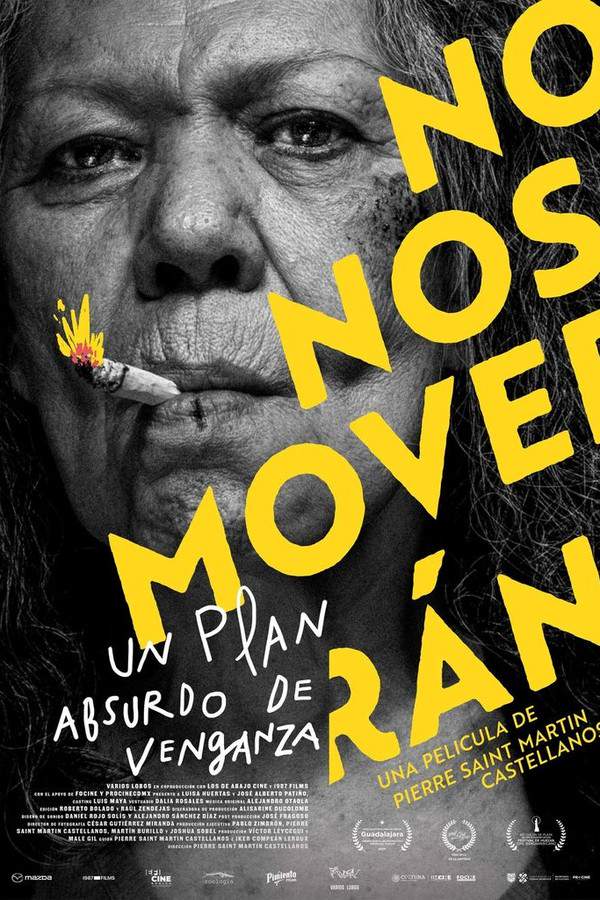
We Shall Not Be Moved (2025) movie poster

Timeline

We Shall Not Be Moved (2025) Timeline Explained – Every Event in Order

Release, runtime and language
2025 · 1 h 40 m · Spanish
Directed by
Pierre Saint-Martin
Starring
Agustina Quinci, Luisa Huertas, Alberto Trujillo, Juan Carlos Colombo, Pedro Hernández, José Alberto Patiño

Haunted by the unsolved murder of her brother during the 1968 Tlatelolco massacre, Socorro becomes consumed by the search for his killer. When a cryptic clue finally surfaces, she throws caution to the wind, endangering her own safety and fracturing family bonds, all in a relentless drive to locate the former soldier responsible and exact vengeance.

On this page (4)
  1. 1 Events in order (13)
  2. 2 Timeline questions answered
  3. 3 Movie threads
  4. 4 Every angle

13 events in order · contains spoilers

We Shall Not Be Moved Timeline: Events in Chronological Order

Every key event of We Shall Not Be Moved (2025) in order, scene by scene, with when and where it takes place. Use it to untangle flashbacks, time jumps and parallel storylines, to refresh your memory before the sequel or to find the exact scene you are thinking of.

  1. Opening archival footage setting the historical context

    The film opens with archival footage from El Grito, signaling the 1968 Mexican student movement. It introduces the repression that culminated in the Tlatelolco massacre, establishing the trauma that frames the story. The historical context foreshadows Socorro's lifelong quest for accountability.

    When
    1968
    Where
    Tlatelolco, Mexico City
  2. Socorro's decades-long quest begins in isolation

    Socorro, a lawyer in her sixties, has spent decades trying to identify the soldier who murdered her brother Coque on October 2, 1968. She lives in isolation in an apartment in Tlatelolco, sustaining strained relations with her sister Esperanza and her son Jorge. The weight of unresolved trauma shapes every interaction and decision.

    When
    present (after 1968)
    Where
    Tlatelolco, Mexico City
  3. Package reveals the name of the soldier: Juan Agúndez

    On Coque's seventy-fifth birthday, a long-lost package arrives and reveals the name of the soldier who appears in Coque's final photograph: Juan Agúndez. This discovery becomes the catalyst for Socorro's plan to seek vengeance. The revelation shifts the narrative from memory to active pursuit.

    When
    Coque's 75th birthday (present timeline)
    Where
    Socorro's apartment, Tlatelolco
  4. Socorro enlists Siddartha to locate Agúndez

    To advance her plan, Socorro tracks down Agúndez with the help of Siddartha, the building's porter. The search takes them through the corridors of the building and into the surrounding city. The alliance marks the move from obsession to a concrete course of action.

    When
    shortly after birthday
    Where
    Tlatelolco, Mexico City
  5. A magistrate is coerced to share a hitman contact

    Socorro blackmails a former superior who has become a magistrate in Mexico City to obtain the contact information for a hitman. The tactic demonstrates the lengths she will go to secure justice outside the official system. Her willingness to bend the law foreshadows the escalating danger.

    When
    around the same period
    Where
    Mexico City
  6. The plan expands: kidnapping the suspect

    With funds secured by mortgaging her apartment, Socorro arranges the kidnapping of Agúndez. The operation pulls in additional accomplices and tightens the net around the target. The act intensifies the moral stakes as she pursues a personal form of justice.

    When
    shortly after
    Where
    Socorro's apartment area; kidnapping site
  7. Lucía leaves Jorge; pregnancy disclosed to the future

    Lucía, pregnant and uncertain about the future with Jorge, leaves him and returns to Argentina without telling him about the pregnancy. Her departure compounds the family tensions and leaves Jorge to confront his own instability. The personal upheaval mirrors the larger political trauma weighing on the characters.

    When
    concurrent with the kidnapping plot
    Where
    Mexico City / Argentina
  8. The accomplices falter; Socorro confronts the kidnapped man

    As the plan unravels, the accomplices falter, and Socorro confronts the kidnapped man herself. She collapses during the confrontation, overwhelmed by the strain and danger. The moment marks a turning point from calculated vengeance to vulnerable mortality.

    When
    midway through the events
    Where
    Mexico City; near the kidnapping site
  9. Socorro wakes in hospital and learns the truth

    She wakes up in a hospital and learns that the kidnapper was the one who brought her there, complicating the moral calculus. The hospital scene reframes her quest from certainty to uncertainty about who deserves justice. The revelation drives the next phase of her confrontation with the man.

    When
    immediately after awakening
    Where
    Hospital
  10. The taxi conversation: the accused reveals his version

    The two share a taxi where the man explains his version of events. He admits to participating in the massacre under orders from a superior officer and denies being the soldier in the photograph. He even offers Socorro a gun to kill him, testing her resolve.

    When
    after hospital
    Where
    Taxi, Mexico City
  11. Socorro refuses revenge; justice means prison

    Socorro rejects the offer of killing him, arguing that true justice would have placed him in prison. The refusal reframes vengeance as a pursuit of accountability within the law rather than personal retribution. Her stance preserves her humanity even as the wound remains.

    When
    after taxi conversation
    Where
    Taxi (en route)
  12. Return home and reconciliation with Esperanza

    Socorro returns home and slowly reconciles with Esperanza. The sisters reflect on Coque's death and the broader events of 1968, indicating a fragile healing of the family rift. The home becomes a space where memory and memory-making shift toward resolution.

    When
    after taxi conversation
    Where
    Socorro's apartment, Tlatelolco
  13. Conclusion: burning the photograph and singing No nos moverán

    In the final moment, Socorro burns the photograph of Coque as a act of release and makes peace with the past. She and Esperanza sing No nos moverán, signaling resilience and solidarity in the face of oppression. The film closes with a note of quiet defiance that links personal memory to collective history.

    When
    end of film
    Where
    Socorro's apartment

Last updated: March 05, 2026 at 18:39

Was this helpful?

Timeline questions answered

We Shall Not Be Moved Timeline Explained: Your Questions Answered

When does it happen, and why in that order? The questions people ask about the chronology of We Shall Not Be Moved (2025): time jumps, flashbacks, cause and effect between scenes and the correct order of events, each answered with spoilers.

Q1

Why does Socorro spend decades searching for her brother's killer?

Socorro's decades-long search stems from the unsolved nature of her brother Coque's murder during the 1968 Tlatelolco massacre. As a lawyer, she has the skills and determination to pursue justice, but the official channels failed to identify the soldier responsible. The trauma never resolved for her, and receiving the package with the name on Coque's 75th birthday reactivated her pursuit, making her feel compelled to finally achieve the closure that had eluded her for over fifty years.

  • socorro
  • coque
  • tlatelolco
  • revenge
  • justice
  • trauma
  • 1968
Q2

How does Socorro discover Juan Agúndez's name?

On what would have been Coque's seventy-fifth birthday, a long-lost package arrives at Socorro's apartment. This package contains the name of the soldier who appears in the final photograph of her brother before his death. The discovery provides the first concrete lead in decades and becomes the catalyst that propels Socorro from passive grief into active pursuit of vengeance.

  • package
  • coque
  • photograph
  • soldier
  • name
  • birthday
Q3

What was the Tlatelolco massacre?

The Tlatelolco massacre was a brutal crackdown on October 2, 1968, when the Mexican military opened fire on student protesters gathered in the Tlatelolco section of Mexico City. Hundreds were killed or wounded in what became one of the darkest moments in Mexico's modern history. The film uses archival footage from the documentary El Grito to establish this historical backdrop, showing how state repression targeted students advocating for democratic reforms.

  • tlatelolco
  • 1968
  • massacre
  • student movement
  • mexico
  • repression
Q5

Why does Lucía leave Jorge and return to Argentina?

Lucía, Jorge's wife, is pregnant but decides to leave him and return to Argentina because of his instability and the overwhelming burden of Socorro's long-ignored trauma affecting the entire family. She makes this painful choice without disclosing her pregnancy, feeling uncertain about bringing a child into such a fractured and emotionally toxic environment. Her departure adds another layer of family breakdown that compounds the existing tensions between Socorro, Esperanza, and Jorge.

  • lucía
  • jorge
  • argentina
  • pregnancy
  • leave
  • family tension
Q6

What happens when Socorro confronts the kidnapped man?

When the accomplices hired for the kidnapping falter, Socorro confronts Juan Agúndez herself. During the confrontation, she collapses due to the physical and emotional strain of her plan. She wakes up in a hospital, where she learns that the man she kidnapped was actually the one who brought her there, suggesting he may have had a change of heart or wanted to ensure her safety despite being abducted.

  • confrontation
  • collapse
  • hospital
  • kidnapping
  • agúndez
Q7

Why does the man in the taxi offer Socorro a gun?

During their taxi ride, Juan Agúndez admits to Socorro that he participated in the massacre under orders from a superior officer, though he denies being the specific soldier in the photograph of Coque. By offering her a gun, he is confronting her with a choice, either to kill him in a moment of personal vengeance or to accept the moral complexity of his involvement. The offer tests whether Socorro will choose revenge or a different form of justice.

  • taxi
  • gun
  • massacre
  • confession
  • agúndez
  • orders
Q8

Why does Socorro refuse to kill Juan Agúndez?

Socorro refuses to kill Juan Agúndez because she believes true justice would have meant bringing him to prison, not executing him personally. Though she came close to revenge, she ultimately rejects the cycle of violence. Her refusal preserves her humanity and represents a choice to seek accountability through the law rather than becoming a killer herself. This decision marks her transition from obsessed vengeance toward a more principled, if still painful, form of closure.

  • refuse
  • kill
  • justice
  • prison
  • revenge
  • mercy
  • closure
Q9

What does Socorro burning the photograph signify?

In the film's final scene, Socorro burns the photograph of her brother Coque as an act of release and letting go. This gesture symbolizes her decision to stop being chained by the past and the quest for vengeance that consumed her life. By burning the image that represented her unresolved grief, she begins the process of healing and making peace with the loss, choosing to honor Coque's memory through acceptance rather than endless pursuit of retribution.

  • burn
  • photograph
  • coque
  • release
  • healing
  • memory
  • closure
Q10

What is the significance of No nos moverán in the film?

No nos moverán (We Shall Not Be Moved) is a traditional Spanish protest song that became an anthem of resistance during the 1968 student movement. Socorro and her sister singing it together in the final scene represents a connection between personal memory and collective history. It signifies resilience, solidarity with the victims of the massacre, and a stubborn hope that despite all the trauma and loss, they will not be broken or moved from their roots or their dignity.

  • no nos moverán
  • song
  • protest
  • resistance
  • 1968
  • memory
  • resilience
Q11

How do Socorro and Esperanza reconcile after their conflict?

Socorro and Esperanza reconcile after Socorro returns home from the taxi encounter with Juan Agúndez. Their reconciliation is gradual, built on shared grief over their brother Coque and the broader trauma of 1968 that fractured their family. The sisters reflect together on the loss and violence that affected multiple generations, slowly mending the strained relationship that Socorro's obsession had worsened during her pursuit of vengeance.

  • esperanza
  • reconciliation
  • sisters
  • coque
  • family
  • healing
Q12

Why does Socorro's health decline throughout the film?

Socorro experiences partial deafness and recurrent fainting spells as the film progresses, reflecting the physical toll of her decades-long obsession and the intense strain of her vengeance plan. Her declining health serves as a reminder of her mortality and urgency, making her more desperate to achieve closure before it's too late. The health crisis also creates vulnerability that ultimately leads to her collapse during the confrontation with Juan Agúndez, forcing a reckoning with her methods.

  • health
  • deafness
  • fainting
  • decline
  • mortality
  • urgency

Movie threads

More Movies Like We Shall Not Be Moved, by Mood & Story

Curated lists built around what makes We Shall Not Be Moved tick: the same mood, the same kind of story or the same emotional payoff. Each list explains why these movies belong together.

Obsessive revenge quests like in We Shall Not Be Moved

When a single-minded quest for vengeance consumes a character's life. Movies like We Shall Not Be Moved that feature a character relentlessly driven by a need for vengeance, often spanning years and fracturing personal relationships. If you liked the singular focus and heavy emotional toll of Socorro's journey, you'll find similar narratives here.

  • obsessive
  • vengeful
  • tense
  • morally grey
  • driven
  • unraveling
  • Tone: dark, intense, morally complex
  • Pacing: steady, deliberate
Why these movies?

The story pattern: Stories in this thread follow a linear yet emotionally complex path: a catalyst of violence or loss ignites an all-consuming need for revenge. The protagonist's fixation often leads them down a dark path, sacrificing personal connections and moral ground, culminating in a moment of reckoning that questions the very nature of justice.

Why they belong together: These films are grouped together due to their shared focus on a singular, obsessive character arc driven by revenge. They share a dark tone, heavy emotional weight, and explore the psychological toll of living for retribution, creating a powerful and introspective viewing experience.


Movies about trauma fracturing families like We Shall Not Be Moved

How collective historical wounds tear families apart across generations. Films similar to We Shall Not Be Moved that explore how unresolved grief and political violence from the past create deep rifts in family bonds. These dramas focus on the intergenerational impact of trauma and the bittersweet struggle for healing.

  • melancholic
  • somber
  • traumatic
  • resigned
  • grief-stricken
  • fractured
  • Tone: melancholic, somber, bittersweet
  • Pacing: steady, reflective
Why these movies?

The story pattern: These narratives often unfold over an extended period, using a family as a microcosm for societal wounds. A past historical injustice creates a chasm between relatives, driven by differing ways of coping with grief—silence, obsession, or denial. The story charts the collateral damage of this fracture and the challenging, often incomplete, path toward mending broken ties.

Why they belong together: These films are united by their central theme of a family being ripped apart by a shared, unresolved historical trauma. They share a melancholic and somber mood, a steady pacing that allows for deep emotional exploration, and a focus on the heavy, lingering effects of grief on personal relationships.

Every angle

We Shall Not Be Moved (2025) Explained: Plot, Timeline & Characters

Everything about We Shall Not Be Moved in one place: what happens in the plot summary, the timeline in chronological order, the characters and meaning and a spoiler-free summary. What's After the Movie adds the cast, box office and post-credit scenes.

Coming soon on iOS and Android

The Plot Explained Movie Summary App

Plot summaries, endings explained and timelines on your phone. Catch up on any movie in minutes, save your favorites and never miss a twist again.

Be the first to know when we launch. Your email stays private, always.

Learn more about the app