




Plot Explained Spoilers guaranteed!
Plot Explained

Browse by genre

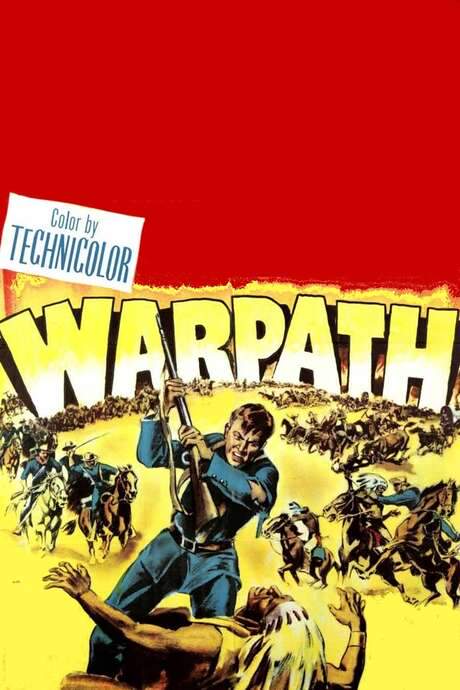
Warpath (1951) movie poster

Timeline

Warpath (1951) Timeline Explained – Every Event in Order

Release, runtime and language
1951 · 95 mins · English
Directed by
Byron Haskin
Starring
Paul Fix, Chief Yowlachie, Harry Carey Jr., Forrest Tucker, Edmond O'Brien, Frank Ferguson

A battle cry echoes over the plains as John Vickers, driven by vengeance, spends eight years tracking the three men who murdered his beloved. He finally tracks down Woodson, confronting him in a deadly gunfight and killing him, only to discover the remaining two have enlisted in the U.S. Cavalry, pushing Vickers toward a new, dangerous pursuit.

On this page (6)
  1. 1 Where to watch
  2. 2 Events in order (14)
  3. 3 Timeline questions answered
  4. 4 Movie threads
  5. 5 Movies like Warpath
  6. 6 Every angle

Where to watch

Where to Watch Warpath (1951)

Where can you watch Warpath? Stream, rent or buy it in the US, including on Amazon Video, Apple TV Store and Google Play Movies: current JustWatch availability with up-to-date prices.

Streaming availability powered by JustWatch

14 events in order · contains spoilers

Warpath Timeline: Events in Chronological Order

Every key event of Warpath (1951) in order, scene by scene, with when and where it takes place. Use it to untangle flashbacks, time jumps and parallel storylines, to refresh your memory before the sequel or to find the exact scene you are thinking of.

  1. Vickers kills Woodson

    Vickers tracks down Woodson, the first man who helped murder the woman he loved, and shoots him in a tense gunfight. He learns from Woodson that the other two killers have joined the U.S. Army cavalry, setting his hunt on a broader scale. The confrontation confirms his relentless vendetta will continue within the military ranks.

    When
    After the Civil War
  2. Vickers goes to Dakota Territory to reenlist under Custer

    Vickers travels to the upper western Dakota Territory to reenlist in the Army as a buck private, with the goal of continuing his search from inside the cavalry. He seeks out General George Armstrong Custer and makes Fort Abraham Lincoln his base of operations. The move marks the start of his methodical plan to uncover the remaining killers within the Army ranks.

    When
    1876
    Where
    Fort Abraham Lincoln, Dakota Territory
  3. O'Hara's abuse and Vickers intervenes

    On the way to the fort, Vickers intervenes when Sgt. O'Hara manhandles a young woman. This act of intervention foreshadows O'Hara's cruelty and foreshadows the tension between Vickers and the deserter who will later target him. The encounter sets the stage for the personal conflict to come.

    Where
    Route to Fort Abraham Lincoln
  4. Molly Quade arrives at the fort; Sam opposes romance

    Molly Quade comes to the fort to help her father run a general store, and Sam Quade opposes her attraction to Vickers. The friction between a protective father and an incoming rival creates personal stakes for Vickers’ quest. This dynamic foreshadows the struggle between vengeance and family loyalty.

    Where
    Fort Abraham Lincoln
  5. Lakota attack; Custer rescues; Vickers promoted

    During a mission, Captain Gregson's detachment is badly outnumbered by Lakota Sioux. General Custer and his troops arrive to rescue the besieged soldiers and drive back the attackers. Custer recognizes Vickers as a former Civil War officer and promotes him to first sergeant.

    When
    1876
    Where
    Near Fort Abraham Lincoln
  6. O'Hara deserts after suspicion grows

    O'Hara realizes Vickers suspects him of the killings, and an ambush attempt fails. He deserts the Army, fleeing the fort and joining the growing anti-Custer sentiment.

    Where
    Fort Abraham Lincoln area
  7. Wagon train evacuates civilians as battle looms

    A military wagon train is formed to evacuate civilians from the fort while Custer prepares to engage the Sioux near the Little Bighorn River. The impending battle drives a sense of urgency and danger through the group.

    When
    June 1876
    Where
    Dakota Territory near Little Bighorn
  8. O'Hara sacrifices his life to warn Custer

    O'Hara, now a prisoner with Molly, Sam, and Vickers, sacrifices his life by running through a gauntlet to distract the Sioux and allow the others to escape. His act, though criminal, becomes a desperate aid to Custer's command in the chaos of the village.

    When
    Day of the escape
    Where
    Sioux village
  9. Molly, Sam, and Vickers are captured

    The trio is taken captive by Sioux forces as the wagon train is overtaken. They endure confinement and witness the looming threat of a massacre. The capture tightens the emotional stakes for Vickers’ vendetta and Molly’s loyalties.

    Where
    Sioux camp
  10. Escape at night on unguarded horses

    Under cover of darkness, they free themselves and steal unguarded horses behind their tents. They ride out and hide in the daylight, evading the Sioux with the arrival of dawn. The escape marks a fragile turning point in the pursuit.

    When
    Night to dawn
    Where
    Sioux camp
  11. Sam revealed as the third killer; Molly counsels mercy

    Molly confronts Vickers with the truth that Sam Quade is the third killer he has hunted, and she pleads for restraint. The revelation tests Vickers' vow of vengeance against his remaining ties to Sam and Molly. The confrontation adds a moral dilemma to the hunt.

    Where
    Nearby camp
  12. Sam rides to warn Custer; likely death

    Ignoring Molly's pleas, Sam Quade rides into the darkness to warn Custer of the impending danger, accepting the risk that he may die. His decision underscores the personal cost of defending others and the unpredictability of survival during wartime.

    When
    Night
    Where
    Direction toward Custer
  13. Prelude to the Little Bighorn battle

    With the escapees on the run and the traitor within his circle, the narrative builds toward the fateful clash at the Little Bighorn. Vickers wrestles with his vow for vengeance while beginning to confront a broader sense of honor and loyalty.

    When
    June 1876
    Where
    Montana Territory near Little Bighorn
  14. Battle of the Little Bighorn unfolds

    The famous clash at the Little Bighorn River erupts as Custer's forces meet the Sioux. The events tie together Vickers' quest for vengeance, O'Hara's sacrifice, and the fates of Molly and Sam within the larger tragedy of the battle.

    When
    June 1876
    Where
    Little Bighorn River, Montana

Last updated: October 09, 2025 at 11:14

Was this helpful?

Timeline questions answered

Warpath Timeline Explained: Your Questions Answered

When does it happen, and why in that order? The questions people ask about the chronology of Warpath (1951): time jumps, flashbacks, cause and effect between scenes and the correct order of events, each answered with spoilers.

Q1

Why does Vickers reenlist in the Army instead of continuing to hunt the killers as a civilian?

After killing Woodson, Vickers learns the remaining two killers have joined the U.S. Cavalry. Reenlisting as a buck private allows him to infiltrate the Army and track them from within, giving him access to military records and movements that would be impossible as a civilian hunter.

Foreshadowing: The opening scene establishes Vickers as a methodical, patient man who spent eight years tracking Woodson, his approach to the cavalry will follow the same pattern.

  • reenlist
  • army
  • cavalry
  • hunt killers
  • civilian hunting
Q2

Why does Custer promote Vickers to first sergeant?

During a Lakota attack on Captain Gregson's detachment, Custer rescues the outnumbered troops. During the battle, Custer recognizes Vickers is a seasoned Civil War veteran who fights effectively. Impressed by his military experience and courage, Custer promotes him to first sergeant on the spot.

Foreshadowing: This promotion mirrors Vickers' earlier military career as a Union Army officer, showcasing skills he hasn't lost.

  • custer
  • promotion
  • first sergeant
  • lakota attack
  • battle
Q3

Why does Sgt. O'Hara desert from the Army?

O'Hara realizes Vickers suspects him of involvement in the original murder. When his ambush attempt against Vickers fails, O'Hara flees the fort rather than face questioning or exposure as one of the killers Vickers has been hunting.

Foreshadowing: Earlier scenes showed O'Hara's cruelty and grudge against Vickers, hinting at deeper guilt and fear of discovery.

  • ohara
  • desert
  • flee
  • ambush
  • suspicion
Q4

Why does O'Hara sacrifice himself to help Vickers, Molly, and Sam escape?

Though O'Hara is a deserter and was originally an enemy, he realizes the battle ahead is doomed and the Sioux are distracted. He runs through a gauntlet to draw their fire and attention, giving the others a critical window to escape despite knowing he will likely die.

Foreshadowing: O'Hara's earlier cruelty masked deeper complexity, his final act redeems his desertion and turns him from antagonist to unlikely hero.

  • ohara
  • sacrifice
  • escape
  • sioux
  • gauntlet
  • death
Q5

How does Sam Quade become revealed as the third killer Vickers has been hunting?

After escaping captivity on horseback, Molly confronts Vickers with the truth: her father Sam Quade is the third man who murdered the woman Vickers loved. The revelation comes as a devastating shock, adding personal betrayal to Vickers' years of pursuit.

Foreshadowing: Sam's earlier opposition to Molly's romance with Vickers hinted at deeper unease, his guilt over the past drives his protective hostility.

  • sam quade
  • third killer
  • revelation
  • molly
  • father
Q6

Why does Sam Quade ride to warn Custer of the danger when he knows he will likely die?

Despite knowing Vickers could kill him for his crime, Sam chooses to ride toward the Little Bighorn to warn Custer about the impending Sioux attack. His act is one of redemption, he accepts his likely death as a way to atone for his past and save others, transforming from killer to protector.

Foreshadowing: This choice contrasts with his earlier secrecy, showing his willingness to sacrifice himself rather than be punished or live with his guilt.

  • sam quade
  • warn custer
  • death
  • redemption
  • sacrifice
  • little bighorn
Q7

Why does Molly plead with Vickers not to kill her father Sam despite knowing he is a killer?

Molly is torn between her love for Vickers and her loyalty to her father. She recognizes Sam's guilt but also sees his genuine change of heart. Her plea represents the moral conflict at the heart of the story, can someone who committed murder truly be redeemed, and should Vickers fulfill his vendetta or let justice take a different path?

Foreshadowing: The romantic tension between Molly and Vickers throughout the film builds to this impossible choice between love and vengeance.

  • molly
  • plead
  • father
  • killer
  • mercy
  • loyalty
  • vendetta
Q8

What happens to Vickers' quest for vengeance by the end of the movie?

Vickers' vengeance is effectively subverted. He discovers Sam is the third killer, but Sam chooses to ride to warn Custer and likely die in the process. This selfless act interrupts Vickers' quest, killing Sam in cold blood would now feel like murder rather than justice, leaving Vickers' vendetta unresolved in a traditional sense.

Foreshadowing: The entire narrative has been building toward this subversion, eight years of hunting end not with a gunfight but with an act of sacrifice.

  • vengeance
  • quest
  • end
  • subverted
  • sam
  • unresolved
Q9

Why does Vickers intervene when Sgt. O'Hara mistreats Molly Quade on the way to the fort?

Vickers steps in when he witnesses O'Hara physically mistreating a young woman traveling to the fort. This act of chivalry establishes Vickers as honorable despite his personal vendetta, but it also creates an enemy, O'Hara's spite will follow Vickers throughout his time at the fort.

Foreshadowing: This intervention directly leads to O'Hara's personal grudge against Vickers, making his later desertion and betrayal feel inevitable.

  • intervene
  • ohara
  • molly
  • abuse
  • defend
  • chivalry
Q10

What is the significance of the Little Bighorn battle in the story?

The Little Bighorn represents the climax where all character arcs converge. Custer's last stand provides the historical framework for the final showdown, Sam rides to warn him, O'Hara has already sacrificed himself, and Vickers must decide whether to continue his vendetta or let the larger historical tragedy resolve his quest.

Foreshadowing: The timeline explicitly builds toward this battle, with each event pushing characters toward this inevitable collision.

  • little bighorn
  • custer
  • battle
  • climax
  • historical
Q11

Why does Vickers specifically request assignment under Custer at Fort Abraham Lincoln?

Vickers requests assignment under General Custer because the two remaining killers have joined the cavalry. By attaching himself to Custer's command, he gains proximity to the entire cavalry force and can systematically investigate which soldiers match the descriptions of the men he hunts.

Foreshadowing: This strategic move shows Vickers' military mind, he's using the Army's own structure to achieve his personal goals.

  • custer
  • fort abraham lincoln
  • assignment
  • investigate
  • killers

Movie threads

More Movies Like Warpath, by Mood & Story

Curated lists built around what makes Warpath tick: the same mood, the same kind of story or the same emotional payoff. Each list explains why these movies belong together.

Obsessive Revenge Stories like Warpath

Stories where a single-minded quest for revenge consumes the protagonist. If the relentless hunt for vengeance in Warpath captivated you, explore more movies like it. This collection features grim dramas and tense thrillers where a protagonist's obsessive quest for justice defines their journey, often at a great personal cost.

  • vengeful
  • grim
  • tense
  • dogged
  • obsessive
  • melancholic
  • Tone: dark, grim, tense
  • Pacing: steady, purposeful
Why these movies?

The story pattern: The narrative follows a linear, goal-oriented path: a grievous wrong sparks a long and determined hunt. The story explores the protagonist's obsession, the sacrifices made along the way, and the often ambiguous or bittersweet resolution that questions the very nature of revenge.

Why they belong together: These films are grouped by their central theme of consuming vengeance, shared dark and tense tone, and heavy emotional weight. They feature protagonists whose defining characteristic is a dogged pursuit of retribution, creating a cohesive and intense viewing experience.

Gritty and Bleak Westerns like Warpath

Harsh and unforgiving stories set against the brutal American frontier. For viewers who appreciated the harsh, realistic portrayal of the frontier in Warpath, this list highlights similar Western movies. Discover stories with a dark tone, high stakes, and a focus on the grim realities of military life, historical battles, and moral ambiguity.

  • grim
  • oppressive
  • frontier
  • historical
  • tense
  • melancholic
  • Tone: dark, oppressive, melancholic
  • Pacing: steady, building tension
Why these movies?

The story pattern: Narratives are often straightforward and driven by external conflict, set against an authentic and unglamorous backdrop. Characters are typically hardened by their environment, facing difficult choices within larger historical events, leading to conclusions that are somber and reflective rather than triumphant.

Why they belong together: These films share a dark, gritty tone and a high-intensity depiction of the American West. They are united by a focus on historical realism, the psychological weight of frontier life, and a generally steady pacing that builds tension towards a impactful, often tragic, conclusion.

If you liked this

Movies Like Warpath

Similar movies to Warpath: the same genre, themes or kind of story. Each one comes with its own plot summary, timeline and ending explained.

Browse all movie summaries

Every angle

Warpath (1951) Explained: Plot, Timeline & Characters

Everything about Warpath in one place: what happens in the plot summary, the timeline in chronological order, the characters and meaning and a spoiler-free summary. What's After the Movie adds the cast, box office and post-credit scenes.

Coming soon on iOS and Android

The Plot Explained Movie Summary App

Plot summaries, endings explained and timelines on your phone. Catch up on any movie in minutes, save your favorites and never miss a twist again.

Be the first to know when we launch. Your email stays private, always.

Learn more about the app