Plot Explained Spoilers guaranteed!
Plot Explained

Browse by genre

Warning Shot (2018) movie poster

Timeline

Warning Shot (2018) Timeline Explained – Every Event in Order

Release, runtime and language
2018 · 90 mins · English
Echo score 42
Directed by
Dustin Fairbanks
Starring
Bruce Dern, David Spade, Onata Aprile, Frank Whaley, Niki Koss, Guillermo Díaz
Budget
$2M

A struggling single mother and her daughter find a chance at a better life when they inherit a farmhouse. However, their newfound stability is threatened when a ruthless business rival sets his sights on their valuable water rights. As tensions escalate, the situation quickly spirals out of control, putting their safety and future at risk.

On this page (4)
  1. 1 Events in order (14)
  2. 2 Timeline questions answered
  3. 3 Movie threads
  4. 4 Every angle

14 events in order · contains spoilers

Warning Shot Timeline: Events in Chronological Order

Every key event of Warning Shot (2018) in order, scene by scene, with when and where it takes place. Use it to untangle flashbacks, time jumps and parallel storylines, to refresh your memory before the sequel or to find the exact scene you are thinking of.

  1. Grandfather's funeral

    Audrey and her young daughter Cheyenne attend the funeral of Audrey's grandfather, signaling the start of the family crisis. Audrey, a single mother, is already struggling to make ends meet as a waitress and worries about the future. She quietly considers moving into the farmhouse if it is left to her in the will.

    When
    Funeral day
    Where
    Funeral service
  2. Inheritances and possibilities

    As the family gathers, Audrey contemplates the farmhouse as a potential new home and a way to stabilize Cheyenne's life. The prospect hinges on the grandfather's will and what assets might be left to her. The tension between need and opportunity hangs over the aftermath of the funeral.

    When
    After funeral
    Where
    Grandfather's farmhouse / family home
  3. Bobby's plan to seize water rights

    Bobby, the head of a powerful water company, hires Rainy and Jawari to intimidate the elderly owner into signing over water rights to a creek on Audrey's property. He hopes to secure control of valuable resources without facing direct opposition. The plan depends on catching the grandfather off-guard while still alive who can sign documents.

    When
    Shortly after funeral
    Where
    Bobby's office / corporate environment
  4. Calvin's final days

    Calvin, Bobby's sickly grandfather, is near the end of his life and disinterested in business affairs. He spends his remaining time reminiscing about past struggles and expressing regrets. His withdrawal creates a vulnerability that the extortion plot seeks to exploit.

    When
    Near end of life
    Where
    Calvin's home
  5. Intruders arrive at the farmhouse

    Rainy and Jawari confront Audrey and Cheyenne at the farmhouse where they are visiting, intending to secure ownership of the water rights. The encounter quickly becomes a hostage situation as the duo decide to hold them until Bobby arrives with the documents. The calm of a routine visit dissolves into danger.

    When
    Evening
    Where
    Grandfather's farmhouse
  6. Rainy's escalating game

    Rainy reveals a sadistic streak, incessantly provoking reactions from Audrey, Cheyenne, and Jawari. He uses psychological pressure and threats to test how far he can push before the situation spirals out of control. The mood darkens as the hostages realize the severity of their danger.

    When
    Evening
    Where
    Grandfather's farmhouse
  7. Audrey's protective sacrifice

    Caught between fear and maternal instinct, Audrey initially agrees to the implied terms hoping for a quick escape. Her protective streak surfaces when Rainy pressures her to choose between herself and Cheyenne, and she offers to take Cheyenne's place. The choice further enrages Rainy and deepens the crisis.

    When
    Evening
    Where
    Grandfather's farmhouse
  8. David arrives, shifting the balance

    A door-to-door proselytizer named David arrives, briefly distracting Rainy and giving Audrey a glimmer of hope. With David as a new hostage, the number of captives increases to three, altering the dynamics and stakes of the confrontation. The fragile web of control begins to unravel.

    When
    Late evening
    Where
    Grandfather's farmhouse
  9. Audrey's delaying tactics

    Audrey tries to delay Rainy by appealing to Jawari and divulging intimate details of her life. She uses conversation and emotional honesty as a tactic to stall and buy time for a potential resolution. The strategy shows her resolve but also keeps everyone under threat.

    When
    Mid-crisis
    Where
    Grandfather's farmhouse
  10. Jawari is murdered

    Rainy escalates the violence by murdering Jawari to prevent any interference. The act removes a potential obstacle and makes the hostage situation even more perilous for the remaining captives. The tragedy sharpens the sense that escape may be impossible.

    When
    Climax of confrontation
    Where
    Grandfather's farmhouse
  11. David's self-sacrifice

    Rainy presses David to make a life-or-death decision, convinced his religious conviction would never permit self-sacrifice. Moved by Audrey's selflessness, David instead chooses to sacrifice himself, stepping into harm's way to save others. His act becomes a pivotal turning point in the crisis.

    When
    Climax
    Where
    Grandfather's farmhouse
  12. The struggle and Bobby's arrival

    Cheyenne grabs Jawari's gun, and Audrey retaliates against Rainy in a violent struggle. Bobby arrives amid the chaos, attempting to restore order, but the situation has spiraled beyond simple resolution. The confrontation leaves the fate of all involved uncertain.

    When
    Moments after David's sacrifice
    Where
    Grandfather's farmhouse
  13. The will reading reveals forfeiture

    During the reading of the will, Audrey learns that the water rights have already gone into forfeiture, negating the entire extortion plot. The violence and danger that followed become unnecessary in hindsight. The twist reframes the events as avoidable if the information had been known earlier.

    When
    After crisis
    Where
    Will reading / family estate
  14. All they had to do was ask

    The film ends with Audrey lamenting the cruel irony as she realizes the outcome could have been avoided with communication. The line 'All they had to do was ask' echoes the missed opportunity and the cost of fear and coercion. The closing tone is one of stunned reflection as the aftermath settles in.

    When
    Aftermath
    Where
    Will reading / family estate

Last updated: February 24, 2026 at 13:57

Was this helpful?

Timeline questions answered

Warning Shot Timeline Explained: Your Questions Answered

When does it happen, and why in that order? The questions people ask about the chronology of Warning Shot (2018): time jumps, flashbacks, cause and effect between scenes and the correct order of events, each answered with spoilers.

Q1

Why was Bobby so desperate to get the water rights from Audrey's grandfather?

Bobby, head of a powerful water company, wanted control of the creek running through Audrey's inherited property because water rights are extremely valuable corporate assets. He assumed the elderly grandfather would sign over the rights willingly, allowing his company to secure a valuable resource without facing legal opposition.

Foreshadowing: Earlier scenes show Bobby as a corporate figure who operates through pressure and intimidation rather than fair negotiation.

  • bobby
  • water rights
  • corporate
  • extortion
  • creek
Q2

Why did Rainy and Jawari turn the farmhouse visit into a hostage situation?

Rainy and Jawari were sent by Bobby to force the water rights transfer. When they found Audrey and Cheyenne at the farmhouse instead of the grandfather, they decided to hold them hostage as leverage to get Bobby to arrive with the documents and finalize the deal.

Foreshadowing: Bobby's office scene establishes that he hired these men specifically to pressure the family into signing.

  • rainy
  • jawari
  • hostage
  • audrey
  • cheyenne
  • extortion
Q3

Why did Rainy kill Jawari during the standoff?

Rainy murdered Jawari because he feared Jawari might interfere with his plans or try to help the hostages escape. Jawari had shown a more conciliatory attitude toward the captives, which Rainy saw as weakness and a potential threat to maintaining control over the situation.

Foreshadowing: Earlier tension between Rainy's cruelty and Jawari's gentler approach foreshadows their conflict.

  • jawari
  • murder
  • rainy
  • death
  • hostage crisis
Q4

What was the twist about the water rights at the will reading?

During the will reading, Audrey discovers the water rights had already gone into forfeiture, meaning they were no longer valid or owned by the family. This made the entire extortion plot and violent hostage situation completely unnecessary, as there was nothing to steal.

Foreshadowing: The title 'Warning Shot' hints at the pointless nature of the violence that follows.

  • will
  • forfeiture
  • water rights
  • twist
  • ending
Q5

Why did David choose to sacrifice himself during the crisis?

David, a door-to-door proselytizer, was coerced by Rainy into making a life-or-death choice, expecting his religious faith would prevent self-sacrifice. Instead, inspired by Audrey's earlier willingness to die for her daughter, David chose to step into harm's way to save the remaining hostages.

Foreshadowing: David's religious conviction and his arrival as an unexpected presence set up his moral test.

  • david
  • sacrifice
  • religious
  • faith
  • audrey
Q6

What was Bobby's relationship to Audrey's grandfather Calvin?

Bobby is Calvin's son, making him Audrey's uncle. Despite this family connection, Bobby showed no hesitation in using intimidation and violence against his own father's estate to extract the water rights, demonstrating how purely transactional his motivations were.

Foreshadowing: Calvin's contempt for Bobby's ambitions is visible during his final days, revealing the family rift.

  • bobby
  • calvin
  • family
  • father
  • son
  • relationship
Q7

What does the ending line 'All they had to do was ask' mean?

The line refers to the tragic irony that Bobby's violence and coercion were completely pointless. Had he or his men simply communicated with Audrey or her grandfather about the water rights, they would have learned the rights were already forfeited. The phrase underscores the film's commentary on how fear and aggression create unnecessary tragedy.

Foreshadowing: The entire hostage crisis builds toward this revelation of pointless violence.

  • ending
  • irony
  • communication
  • ask
  • tragedy
Q8

Why did Audrey offer to take Cheyenne's place during the standoff?

When Rainy forced Audrey to choose between herself and her daughter, her maternal instinct compelled her to volunteer herself instead of Cheyenne. This act of self-sacrifice demonstrated her unwavering priority to protect her daughter at any cost, even her own life.

Foreshadowing: Audrey's character as a struggling, protective single mother is established from the opening scenes.

  • audrey
  • cheyenne
  • mother
  • sacrifice
  • protective
Q9

Why did Rainy seem to enjoy tormenting the hostages?

Rainy displayed sadistic tendencies throughout the standoff, using psychological pressure and threats to provoke fear in Audrey, Cheyenne, and Jawari. His enjoyment came from having power over others and testing how far he could push people before they broke, revealing a volatile and cruel personality.

Foreshadowing: Rainy's volatile temper is mentioned when Bobby hires him and Jawari.

  • rainy
  • sadistic
  • psychological
  • torture
  • hostages
Q10

What triggered the final violent confrontation at the farmhouse?

The final confrontation erupted when Cheyenne grabbed Jawari's dropped gun during the chaos following David's sacrifice. This triggered Audrey to physically retaliate against Rainy, while Bobby arrived attempting to regain control. The situation had already spiraled beyond anyone's ability to manage peacefully.

Foreshadowing: David's sacrifice and Jawari's murder set the stage for the breakdown of all remaining restraint.

  • confrontation
  • gun
  • cheyenne
  • rainy
  • bobby
  • climax

Movie threads

More Movies Like Warning Shot, by Mood & Story

Curated lists built around what makes Warning Shot tick: the same mood, the same kind of story or the same emotional payoff. Each list explains why these movies belong together.

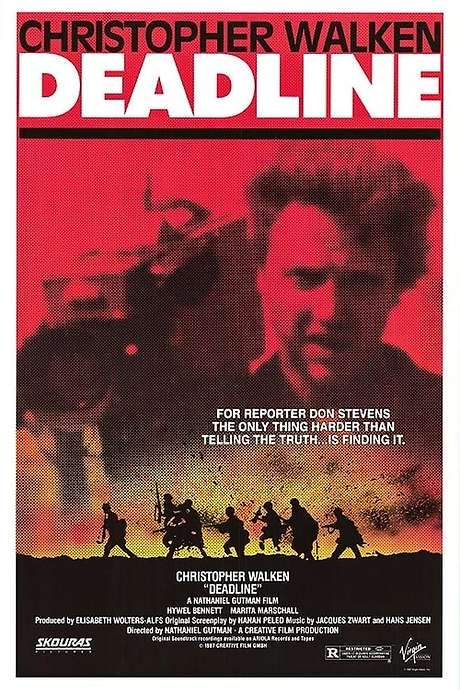
Deadline thrillers like Warning Shot

Stories where ordinary people face escalating threats with time running out. Find more movies like Warning Shot where the tension is relentless. These stories feature ordinary people forced into desperate races against time, with fast pacing and high stakes that create an urgent, gripping viewing experience.

  • urgent
  • tense
  • desperate
  • dangerous
  • high-stakes
  • race against time
  • Tone: tense, desperate
  • Pacing: fast, escalating
Why these movies?

The story pattern: These narratives typically begin with a simple problem that rapidly balloons into a life-or-death crisis. The structure is straightforward, driven by external threats that force continuous action, leaving characters with little time to think or recuperate. The plot often culminates in a final, explosive confrontation.

Why they belong together: Movies in this thread share a core DNA of relentless pacing and high-stakes conflict. They deliver a similar viewing experience of sustained tension and anxiety, focusing on characters who must use their wits and courage to survive an immediate, escalating danger.
Stories of futile struggles like Warning Shot

Characters endure brutal conflicts only to find a victory that feels like a loss. If you liked the bittersweet, heavy ending of Warning Shot, explore more movies about hopeless causes. These films follow characters through brutal ordeals, only to conclude with a victory that feels hollow and a future forever scarred by violence.

  • bittersweet
  • tragic
  • heavy
  • futile
  • desperate
  • grim
  • Tone: bittersweet, heavy, bleak
  • Pacing: fast, then reflective
Why these movies?

The story pattern: The journey in these films is one of endurance against a brutal, external force. The central dramatic irony is that the conflict is often based on a misunderstanding, greed, or a pointless feud. The characters survive the physical threat but are left emotionally shattered, their lives irrevocably changed by the futile nature of the struggle.

Why they belong together: These films are grouped by their shared emotional arc and thematic focus on the futility of violence. They deliver a heavy, thought-provoking experience centered on the high cost of survival and the bleak realization that the battle did not need to happen.

Every angle

Warning Shot (2018) Explained: Plot, Timeline & Characters

Everything about Warning Shot in one place: what happens in the plot summary, the timeline in chronological order, the characters and meaning and a spoiler-free summary. What's After the Movie adds the cast, box office and post-credit scenes.

Coming soon on iOS and Android

The Plot Explained Movie Summary App

Plot summaries, endings explained and timelines on your phone. Catch up on any movie in minutes, save your favorites and never miss a twist again.

Be the first to know when we launch. Your email stays private, always.

Learn more about the app