










Plot Explained Spoilers guaranteed!
Plot Explained

Browse by genre

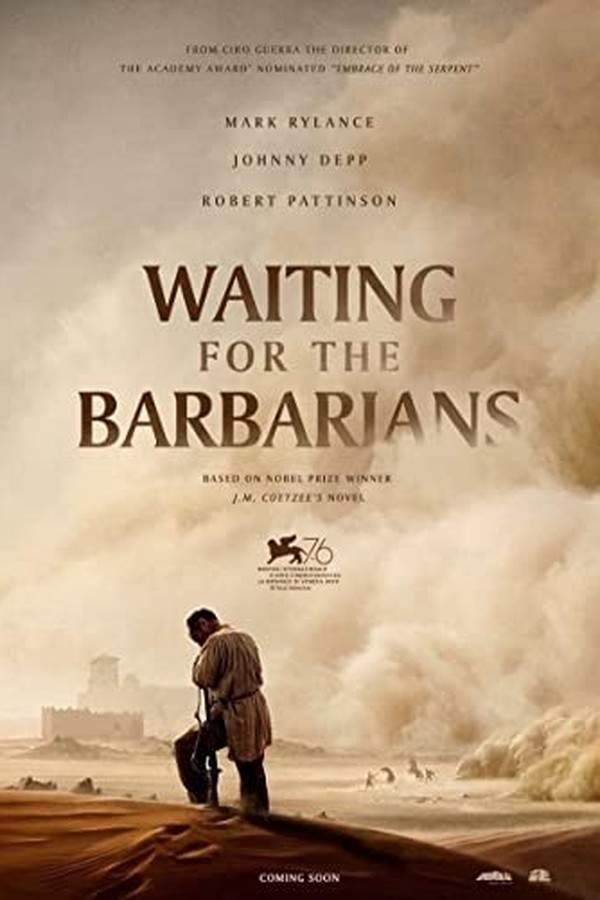
Waiting for the Barbarians (2017) movie poster

Characters & Themes

Waiting for the Barbarians (2017) Characters, Setting & Themes Explained

Release, runtime and language
2017 · 76 mins · French
JustWatch #814 79
Directed by
Eugène Green
Starring
Valentine Carette, Hélène Gratet, Fitzgerald Berthon, Chloé Chevalier, Anne-Sophie Bailly, Arnaud Vrech

A group of individuals grapples with modern anxieties and the search for meaning in a world saturated by social media. They seek guidance from a sorcerer in this unusual blend of performance art, ghost story, and exploration of consciousness.

On this page (7)
  1. 1 Where to watch
  2. 2 Characters explained (4)
  3. 3 Where & when it takes place
  4. 4 Themes & meaning (3)
  5. 5 Character & meaning questions
  6. 6 Movie threads
  7. 7 Every angle

Where to watch

Where to Watch Waiting for the Barbarians (2017)

Where can you watch Waiting for the Barbarians? Stream, rent or buy it in the US, including on Amazon Prime Video, Netflix and Netflix Standard: current JustWatch availability with up-to-date prices.

Streaming availability powered by JustWatch

4 main characters · contains spoilers

Waiting for the Barbarians Characters Explained: Who Is Who

The main characters of Waiting for the Barbarians (2017), heroes and villains: what drives them, how they change over the course of the story and what each of them reveals about the film's bigger ideas.

  • The Magistrate

    A careful, rule-bound administrator who seeks humane governance. He shows compassion by sheltering the nomad girl and attempting to heal her, even as the empire expects brutal efficiency. His humane stance clashes with Joll's brutality and with the consequences of standing against systemic violence.

    • 🧭 Moral conflict
    • ⚖️ Law and justice
    • 🤝 Compassion
  • Colonel Joll

    A colonel who enforces imperial order through coercion and torture, convinced that 'truth' can only be uncovered by force. He is dogmatic and impatient, embodying the hard line of imperial power. His methods drive the conflict and reveal the costs of authoritarian certainty.

    • 🗡️ Brutality
    • 🧭 Authoritarianism
    • ⚔️ Military
  • Officer Mandel

    Joll's underling who assumes control at the fort after Joll departs and actively participates in repression. He accuses the Magistrate of treachery and strips him of office, illustrating how power can corrupt and shift from interrogation to punishment. He embodies the escalation from coercion to punitive governance.

    • ⚔️ Military aggression
    • 🗡️ Tyranny
    • 💼 Ambition
  • Nomad girl

    A prisoner of war who endures torture and displacement, symbolizing the empire's human cost. Her journey from captivity to a choice about returning to her people highlights resilience and the impact of imperial policies on individuals. Her presence grounds the story in the victims of empire and the possibility of mercy.

    • 🌾 Survival
    • 🗺️ Nomad roots
    • 💔 Victim of empire

Last updated: October 27, 2025 at 16:46

Was this helpful?

Setting

Where and When Does Waiting for the Barbarians Take Place?

The setting of Waiting for the Barbarians (2017): the year and time period, the places and locations, and how they shape the characters, the mood and the tension of the story.

Time period

Location

Desert frontier outpost, unnamed Empire

Set on a remote desert frontier, the outpost guards the empire's far borders and endures harsh conditions. Isolation heightens tensions with nomadic tribes and makes arbitrary decisions feel like lived reality. The place functions as a microcosm of imperial control, where peace depends on power as much as mercy.

  • 🏜️ Desert frontier
  • 🛡️ Frontier outpost
  • 🏛️ Imperial setting

Last updated: October 27, 2025 at 16:46

Was this helpful?

3 major themes

Waiting for the Barbarians Meaning: Themes & Message Explained

What is Waiting for the Barbarians (2017) really about? The emotional, social and philosophical themes the film keeps returning to, its symbolism and the message beneath the surface.

  • Imperialism

    An unnamed Empire extends its reach into remote deserts, enforcing order through distant commands and coercive measures. The outpost serves as a microcosm of imperial power, where rules are upheld by fear as much as law. Colonel Joll's arrival exposes how empire uses torture and force to extract meant 'truth.' The narrative questions whether such power can ever deliver genuine security or lasting peace.

  • Torture

    Colonel Joll insists on brutal methods to squeeze information, revealing a system that legitimizes violence in the name of truth. The process dehumanizes both victim and interrogator, eroding moral boundaries. Violence reshapes the outpost's social order, turning ordinary people into instruments of coercion. The film uses torture to expose the emptiness and cruelty of authoritarian power.

  • Compassion

    The Magistrate's humane acts—like sheltering the nomad girl and tending her injuries—stand in stark contrast to the empire's brutality. His mercy triggers conflict and public shaming, illustrating how kindness can threaten a rigid system. Yet mercy also seeds a fragile hope that humanity can persist within or beyond oppression. The narrative suggests empathy might eventually bind disparate peoples against a common force.

Last updated: October 27, 2025 at 16:46

Was this helpful?

Character & theme questions

Waiting for the Barbarians Characters & Meaning: Your Questions Answered

The questions people ask about Waiting for the Barbarians (2017): who the characters really are, their relationships, what the symbols mean, where it takes place and what the movie is really about. Each answer contains spoilers.

Q1

Where is the movie set?

The film takes place at a desert frontier outpost on the edge of an unnamed Empire. This remote location serves as the Empire's far border, where harsh conditions and isolation define daily life. The outpost functions as a microcosm of imperial control, representing how distant power operates through isolated garrisons.

  • desert frontier
  • outpost
  • empire
  • setting
  • location
Q2

What does the frontier outpost symbolize?

The outpost symbolizes imperial power at its farthest reach, where authority is enforced through isolation and dependence on military presence. It represents a liminal space where the Empire's rules feel arbitrary and lived reality, demonstrating how colonial power operates at the margins of civilization.

  • outpost
  • symbol
  • frontier
  • empire
  • colonialism
Q3

What does the film say about imperialism?

The film portrays imperialism as a system that extends reach into remote territories through distant commands and coercive measures. Colonel Joll's arrival exposes how empires use torture and force to extract so-called 'truth.' The narrative questions whether such power can ever deliver genuine security or lasting peace, suggesting that imperial control relies on fear as much as law.

  • imperialism
  • empire
  • power
  • colonialism
  • authority
Q4

What role does torture play in the story?

Torture serves as the film's central mechanism for revealing how authoritarian power legitimizes violence in the name of truth. Colonel Joll's brutal methods dehumanize both victim and interrogator, eroding moral boundaries across the entire outpost. The film uses torture to expose the emptiness and cruelty inherent in systems that prioritize control over compassion.

  • torture
  • violence
  • colonel joll
  • interrogation
  • truth
Q5

Who is the Magistrate?

The Magistrate is a careful, rule-bound administrator who seeks humane governance at the outpost. He shelters a nomad girl and attempts to heal her injuries, representing the possibility of mercy within a brutal system. His humane stance directly clashes with Colonel Joll's brutality, creating the film's central moral conflict.

  • magistrate
  • compassion
  • kindness
  • administrator
  • leadership
Q6

Who is Colonel Joll?

Colonel Joll is the imperial officer who arrives at the outpost enforcing order through coercion and torture. He is dogmatic and impatient, convinced that truth can only be uncovered by force. Joll embodies the hard line of imperial power and drives the conflict that unfolds throughout the film.

  • colonel joll
  • torturer
  • imperial officer
  • authority
  • villain
Q7

Who is the Nomad girl?

The Nomad girl is a prisoner of war who endures torture and displacement at the outpost. She symbolizes the Empire's human cost, the individual lives crushed by imperial expansion. Her journey highlights resilience and the impact of imperial policies on ordinary people, grounding the story in the victims of empire.

  • nomad girl
  • prisoner
  • victim
  • war
  • indigenous
Q8

What is the significance of compassion in the film?

Compassion appears through the Magistrate's acts of mercy, sheltering the nomad girl and tending her injuries, which stand in stark contrast to the Empire's brutality. His kindness threatens the rigid system and triggers his public shaming. Yet this mercy also plants fragile hope that humanity can persist within or beyond oppression.

  • compassion
  • mercy
  • kindness
  • empathy
  • humanity
Q9

What is the conflict between the Magistrate and Colonel Joll?

The conflict represents a clash between humane governance and authoritarian control. The Magistrate seeks to rule fairly and protect the outpost's people, while Colonel Joll demands brutal efficiency and torture to extract information. Their opposition forms the film's moral core, testing whether compassion can survive within imperial power structures.

  • conflict
  • magistrate
  • colonel joll
  • authority
  • morality
Q10

What is the film's emotional tone?

The film carries a heavy emotional weight characterized by relentless depictions of torture, systemic cruelty, and moral disintegration. The pacing is slow, focusing on the gradual erosion of order and the Magistrate's internal conflict. The tone is starkly oppressive, exploring the psychological and moral costs of power with unflinching darkness.

  • tone
  • emotional weight
  • pacing
  • atmosphere
  • mood
Q11

How does the film portray power and corruption?

The film shows how power corrupts through Officer Mandel, who escalates from Joll's underling to someone who strips the Magistrate of office and punishes him. This progression illustrates how authoritarian systems corrupt individuals, moving from coercion to punitive governance. The narrative demonstrates that power shifts easily from interrogation to punishment.

  • power
  • corruption
  • officer mandel
  • authority
  • oppression

Movie threads

More Movies Like Waiting for the Barbarians, by Mood & Story

Curated lists built around what makes Waiting for the Barbarians tick: the same mood, the same kind of story or the same emotional payoff. Each list explains why these movies belong together.

Slow burn political dread like in Waiting for the Barbarians

Atmospheric tales where oppressive systems slowly crush individual conscience. If you liked the oppressive atmosphere and moral decay in Waiting for the Barbarians, explore these films. This thread features movies with a slow burn pace and heavy emotional weight, focusing on characters grappling with brutal authority and systemic injustice, leading to bleak endings.

  • oppressive
  • morally conflicted
  • somber
  • anxious
  • claustrophobic
  • dread
  • Tone: bleak, oppressive, morally conflicted
  • Pacing: slow burn, deliberate
Why these movies?

The story pattern: Stories typically follow a protagonist, often a functionary of a corrupt system, who experiences a crisis of conscience. The narrative builds tension not through action, but through the gradual unveiling of brutality and the protagonist's powerlessness to stop it, culminating in their personal and societal collapse.

Why they belong together: These films are grouped by their shared atmosphere of oppressive dread, slow pacing that amplifies psychological tension, and a relentless focus on the human cost of power. They deliver a heavy, intellectually and emotionally demanding experience centered on moral failure.
Movies about civilization's collapse like Waiting for the Barbarians

Stories set at the edge of empire, where order gives way to brutality. Find movies similar to Waiting for the Barbarians that explore themes of colonialism and the collapse of order. These stories often feature isolated settings, a bleak tone, and focus on the psychological impact of injustice and the consequences of violence, posing tough questions about humanity.

  • isolated
  • somber
  • morally conflicted
  • thought-provoking
  • desolate
  • anxious
  • Tone: somber, bleak, thought-provoking
  • Pacing: deliberate, slow burn
Why these movies?

The story pattern: The narrative pattern involves an isolated community or individual representing an empire or system. Their sense of superiority is challenged, leading to paranoia and escalating violence. The story deconstructs the myth of civility, showing that the true threat often comes from within the fortress walls, not from the outside 'barbarians'.

Why they belong together: These movies share a specific thematic focus on colonialism, power corruption, and the myth of civilization. They create a somber, isolated mood and often feature a slow, deliberate pace that allows for a deep exploration of the psychological and moral consequences of maintaining power through brutality.

Every angle

Waiting for the Barbarians (2017) Explained: Plot, Timeline & Characters

Everything about Waiting for the Barbarians in one place: what happens in the plot summary, the timeline in chronological order, the characters and meaning and a spoiler-free summary. What's After the Movie adds the cast, box office and post-credit scenes.

Coming soon on iOS and Android

The Plot Explained Movie Summary App

Plot summaries, endings explained and timelines on your phone. Catch up on any movie in minutes, save your favorites and never miss a twist again.

Be the first to know when we launch. Your email stays private, always.

Learn more about the app