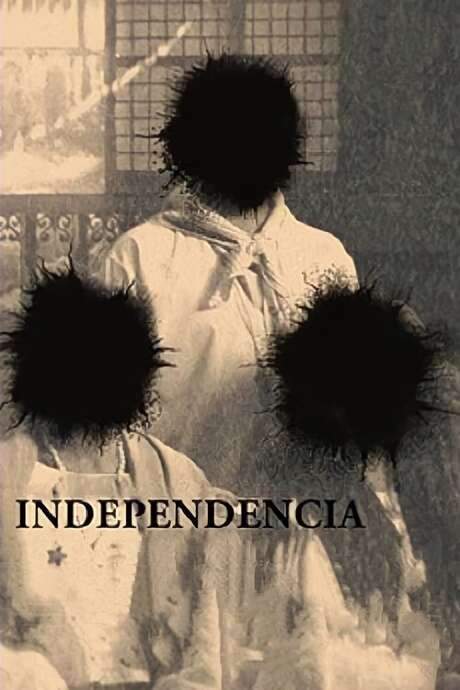
The film opens on a street filled with music, laughter, and the bright energy of a community celebrating the Philippines’ newfound independence from Spain. The air feels hopeful as the townspeople move in sync with drums and singing, savoring a moment of national pride. Yet the mood shifts in an instant as the crowd strains to the horizon and whispers begin: they are coming. The presence of American forces is felt even before they appear, casting a shadow over the celebration.
In the wake of this tension, a mother Tetchie Agbayani flees with her young son Sid Lucero into the dense mountain jungle, seeking safety away from civilization and any threat of occupation. They stumble upon an abandoned wooden hut and decide to make it their home, attempting to survive in a world that feels newly unsettled and dangerous. Their days fall into a hard-won rhythm of hunting, gathering, and patching together a life far from the crowded towns they once knew.
One day, the boy encounters a young woman Alessandra de Rossi lying exhausted along a road, a survivor of a brutal act inflicted by an American soldier. He tends to her with a tenderness that surprises even himself, while his mother watches with wary eyes. Despite her initial reluctance, the mother’s stance softens as the woman’s presence complicates their fragile existence, and a fragile bond begins to form in the heart of the jungle. The story deepens as the mother falls ill and dies, leaving the son to bury her beneath the sheltering trees of their forest home. The woman, carrying the child conceived in violence, finds her footing in this new world and must navigate the implications of the life she carries.
Then the film takes a sharp turn, breaking away from the intimate chronicle to insert a newsreel that interrupts the narrative flow. An American broadcaster describes the Philippines in broad strokes, then shifts to a bustling marketplace in an unnamed town where a boy is shot by a soldier who believed the boy was stealing. Observers disagree—some claim the boy was merely playing, others insist he posed a danger—and the soldier poses for the camera beside the lifeless body. The newsreel closes with a stark warning about keeping streets safe in times of crisis:
> Our brave troops are everywhere, ensuring that the streets are safe in this time of crisis.
When the film returns to the jungle tale, the boy is now grown and living a comfortable life among a small, makeshift family that has embraced a life far removed from modern civilization. He speaks of “white ghosts” he sees among the trees—illusions that are really the approaching soldiers he fears will one day find them. The sense of danger grows as the night falls and a violent storm tears through their shelter, sweeping away what little they have. The woman dies in the storm, and the man dies while trying to protect the boy and shield him from the rain and cold.
Left alone, the boy traverses the jungle, escaping the soldiers who pursue him. They eventually corner him, and fear drives him to flee upward toward the mountains. As he climbs, his shirt becomes a hand-painted banner of survival and identity, and in a final, haunting moment he leaps from a cliff to his death. Behind him, the sky is transformed by the hand of art—from a pale yellow to a blazing orange, and finally to a deep, resplendent red, as if the horizon itself participates in the last act of the story.