


















Plot Explained Spoilers guaranteed!
Plot Explained

Browse by genre

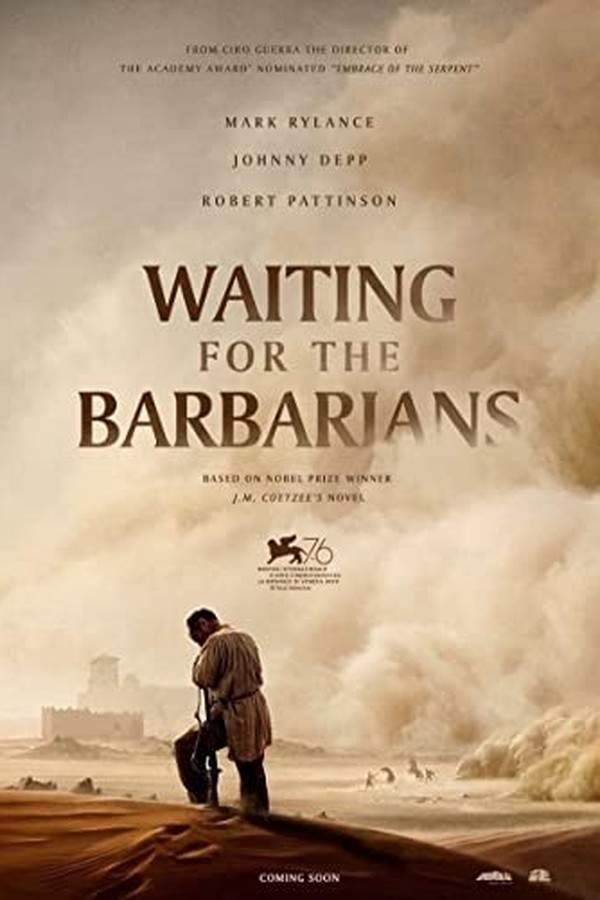
Waiting for the Barbarians (2020) movie poster

Timeline

Waiting for the Barbarians (2020) Timeline Explained – Every Event in Order

Release, runtime and language
2020 · 112 min · English
Echo score 56
JustWatch #804 69
Directed by
Ciro Guerra
Starring
Greta Scacchi, David Dencik, Robert Pattinson, Mark Rylance, Johnny Depp, Harry Melling

In a remote frontier settlement, a seasoned Magistrate looks forward to a peaceful retirement from his duties along the border. His expectations are disrupted by the arrival of a shrewd Colonel, who brings unsettling news and unsettling actions. The Magistrate is then compelled to examine the oppressive nature of the empire he serves and question his own values as he witnesses the consequences of its power.

On this page (6)
  1. 1 Where to watch
  2. 2 Events in order (15)
  3. 3 Timeline questions answered
  4. 4 The book behind the movie
  5. 5 Movie threads
  6. 6 Every angle

Where to watch

Where to Watch Waiting for the Barbarians (2020)

Where can you watch Waiting for the Barbarians? Stream, rent or buy it in the US, including on Amazon Prime Video, Netflix and Netflix Standard: current JustWatch availability with up-to-date prices.

Streaming availability powered by JustWatch

15 events in order · contains spoilers

Waiting for the Barbarians Timeline: Events in Chronological Order

Every key event of Waiting for the Barbarians (2020) in order, scene by scene, with when and where it takes place. Use it to untangle flashbacks, time jumps and parallel storylines, to refresh your memory before the sequel or to find the exact scene you are thinking of.

  1. Fragile Peace of the Empire

    The position of The Magistrate in the Empire's desert frontier is one of delicate balance, maintained through years of diplomatic negotiations. This peace is soon disrupted when Colonel Joll, a menacing figure with ulterior motives, arrives to impose his will.

    Where
    Desert Frontier of the Empire
  2. Colonel Joll's Brutal Pursuit

    Colonel Joll's arrival signals havoc as he unjustly accuses an innocent man and his nephew of sheep rustling. He employs cruel methods to extract what he believes is the truth, showcasing his ruthless nature and intolerance for dissent.

  3. Escalation of Violence

    As tensions rise, the nephew is horrifically tortured and forced back to his tribe, heightening the fear among the local populace. The Colonel's actions lead to the wrongful capture of several innocent women and elderly men, falsely labeled as 'prisoners of war.'

  4. Release of Innocent Captives

    Following Colonel Joll's departure, The Magistrate feels compelled to release the captives taken during the tumultuous events. He arranges for their safe return to their families, though the scars of the Colonel's actions remain deeply etched within the community.

  5. Encounter with a Former Prisoner

    Months later, The Magistrate encounters a former prisoner, who bears the traumatic and physical scars of her ordeal. This woman, now begging on the streets due to her broken spirit and body, exemplifies the harsh realities of life under the Empire's rule.

    Where
    Street
  6. The Magistrate's Act of Compassion

    Compelled by empathy, The Magistrate offers the woman food, shelter, and medical care. However, his kindness is misconstrued by soldiers who suspect his motives, complicating his attempt to do right by her in a world riddled with suspicion and violence.

  7. Journey to Reconcile with the Nomads

    Desperate to make amends for Colonel Joll's brutal actions, The Magistrate sets off on a perilous journey through the desert mountains. Facing initial hostility from the nomadic tribes, he gradually earns their respect through his good intentions and perseverance.

    Where
    Desert Mountains
  8. Arrest and Accusations

    Upon returning from his journey, The Magistrate discovers that Officer Mandel has taken over the fort and quickly finds himself arrested on charges of treason. Stripped of his position, he is forced to reckon with the fallout of Colonel Joll's heinous schemes.

    Where
    Fort
  9. Public Shaming and Violence

    As he tries to aid those suffering under Mandel’s harsh rule, The Magistrate is met with violence and bewilderment. Accusations rooted in absurdity lead to public shaming, and his home and belongings are seized, leaving him destitute.

    Where
    Fort
  10. Formation of the 'Barbarian' Army

    The devastation caused by Colonel Joll's military campaign unites the nomadic tribes against their oppressors. In a show of solidarity, they form a formidable army, marking a shift in power dynamics and setting the stage for inevitable confrontation.

  11. Colonel Joll's Return

    Colonel Joll makes a return with a diminished troop, revealing the dire outcomes of his brutal campaign. The Magistrate confronts the detached Colonel, who appears unfazed by the chaos around them, highlighting the growing chasm between them.

  12. Unsettling Sight in the Town

    As The Magistrate wanders through a town ravaged by conflict, he discovers children mimicking soldiers next to scarecrow soldiers. This chilling scene serves as a stark reminder of the pervasive conflict and its impact on the youth and societal psyche.

    Where
    Town
  13. The Arrival of the Nomadic Warriors

    The calm is abruptly disrupted by a rumble from the distance, heralding the arrival of a large army of nomadic warriors. This army aims to reclaim their homeland, rekindling hope among the oppressed and presenting a new threat to the Empire.

  14. The Magistrate's Despair

    Through all the chaos and despair, The Magistrate is left as a shadow of his former self, grappling with the rejection from his own community. The burden of guilt and the weight of his experiences haunt him as he navigates this tumultuous reality.

  15. Hope Amidst Chaos

    Even in his darkest moments, a former servant offers The Magistrate a flicker of kindness, providing him with much-needed food and shelter. This small act of compassion amidst the turbulent backdrop signifies that even in chaos, humanity can prevail.

Last updated: November 19, 2024 at 16:58

Was this helpful?

Timeline questions answered

Waiting for the Barbarians Timeline Explained: Your Questions Answered

When does it happen, and why in that order? The questions people ask about the chronology of Waiting for the Barbarians (2020): time jumps, flashbacks, cause and effect between scenes and the correct order of events, each answered with spoilers.

Q1

Why does Colonel Joll come to the frontier settlement?

Colonel Joll arrives from the Empire's core with a calculated agenda to impose control over the frontier. Unlike the Magistrate who maintained peace through diplomacy, Joll is determined to find so-called 'truth' about perceived threats, using brutal methods. His true motive appears to be demonstrating imperial power and provoking a conflict that justifies military action, regardless of actual guilt.

Foreshadowing: The fragile peace the Magistrate maintained is described as something the Empire views as weakness.

  • colonel joll
  • empire
  • frontier
  • military
  • power
Q2

Why does Colonel Joll torture the innocent man and his nephew?

Joll tortures an innocent man and his nephew under false accusations of sheep rustling. He resorts to extreme cruelty not to extract real information, but to demonstrate the Empire's willingness to use violence. The torture serves as a warning to the local population and a way for Joll to justify his harsh rule. The nephew is horrifically tortured and forced back to his tribe as a message of intimidation.

Foreshadowing: Joll's arrival is described as bringing 'unsettling actions' before any violence begins.

  • torture
  • nephew
  • colonel joll
  • cruelty
  • intimidation
Q3

Why does the Magistrate release the prisoners taken by Colonel Joll?

After Colonel Joll departs, the Magistrate feels compelled to release the women and elderly men who were unjustly captured as 'prisoners of war.' This act reflects his moral conscience and his role as a just leader. He arranges for their safe return to their families, trying to repair some of the damage caused by Joll's brutality, though the community's trauma remains.

Foreshadowing: The Magistrate is described as someone who maintained peace through diplomatic skill, suggesting he values humane governance.

  • prisoners
  • magistrate
  • release
  • colonel joll
Q4

Why is the Magistrate arrested for treason?

Upon returning from his journey to reconcile with the nomads, the Magistrate discovers Officer Mandel has taken command. He is arrested on absurd charges of treason, primarily because of his association with the nomadic girl he helped. The real reason appears to be that his compassionate actions and attempts at reconciliation threaten the new military leadership's agenda. He is stripped of his position and publicly shamed.

Foreshadowing: The Magistrate's kind treatment of the nomadic woman is noted as being misinterpreted by soldiers.

  • arrest
  • treason
  • magistrate
  • officer mandel
  • false charges
Q5

Why does the nomadic woman return to her people instead of staying with the Magistrate?

The woman, who was tortured and had her father killed, initially accepts the Magistrate's help, food, shelter, and medical care. However, after sharing her tragic history with him, she chooses to return to her people. The Magistrate respects her decision, understanding that her place is with her tribe, not in the fort under suspicious circumstances. Her return represents a reclaiming of her identity and loyalty.

Foreshadowing: The woman bears both physical scars (broken ankles) and invisible trauma from her ordeal.

  • nomadic woman
  • tribe
  • magistrate
  • return
  • trauma
Q6

What causes the nomadic tribes to unite into a barbarian army?

The devastating consequences of Colonel Joll's military campaign, his brutal torture, wrongful captures, and apparent intentions to annihilate the mountain nomads, force the previously scattered tribes to unite against their common oppressor. The Empire's cruelty becomes the catalyst for collective resistance, transforming disparate groups into a formidable army determined to reclaim their homeland.

Foreshadowing: The tribes initially show hostility toward the Magistrate but grant him mercy due to his reputation as a just leader.

  • barbarian army
  • tribes
  • unity
  • colonel joll
  • resistance
Q7

What happens to Colonel Joll's military expedition?

Colonel Joll leads a formidable military force into the mountains intending to annihilate the nomads, but the campaign fails catastrophically. He returns with only a handful of survivors, his army decimated. The nomadic tribes, now united, have dealt the Empire's forces a devastating blow. The body of one of Joll's mutilated men is brought to the fort as proof of this defeat.

Foreshadowing: The tribes unite specifically in response to Joll's campaign of destruction.

  • colonel joll
  • military
  • defeat
  • survivors
  • nomads
Q8

What happens to the Magistrate by the end of the movie?

The Magistrate becomes a shadow of his former self, disheveled, destitute, and rejected by his own people. Even after being released, he is unable to escape the chaos; his home and belongings have been seized. A former servant shows him compassion by providing food and shelter. The town descends into violence as the remaining soldiers scatter, and the Magistrate wanders through the devastation, haunted by his memories and the impending arrival of the nomadic army.

Foreshadowing: The narrative describes his descent as a 'straightforward descent into despair' with no redemption.

  • magistrate
  • downfall
  • destitution
  • end
  • despair
Q9

What is the significance of the children playing at soldier duty?

As the Magistrate wanders through the ravaged town, he sees boys playing at sentry duty next to scarecrow soldiers at the fort's entrance. This chilling scene represents how the pervasive conflict has infected the next generation. The children mimic the soldiers they see, demonstrating the lasting psychological impact of war on the community and the normalization of violence.

Foreshadowing: This scene occurs after the soldiers commit horrific acts of violence against the townspeople.

  • children
  • soldiers
  • town
  • play
  • psychological impact
Q10

What does the final scene imply about the town's fate?

The movie ends with the Magistrate hearing a distant rumble and seeing a shadowy figure emerge with a rising cloud of dust, a large army of nomadic warriors approaching. This signals the nomads' return in force to reclaim their homeland. The Magistrate, now broken and alone, witnesses the culmination of the conflict his empire created, with the town about to face the consequences of the Empire's brutality.

Foreshadowing: The tribes have united into a formidable army specifically to oppose the Empire's oppression.

  • ending
  • nomadic army
  • town
  • reclaim
  • fate

Movie threads

More Movies Like Waiting for the Barbarians, by Mood & Story

Curated lists built around what makes Waiting for the Barbarians tick: the same mood, the same kind of story or the same emotional payoff. Each list explains why these movies belong together.

Movies about moral conscience under tyranny like Waiting for the Barbarians

Stories of individuals confronting the brutal reality of the power they serve. If you liked the moral conflict in Waiting for the Barbarians, explore these similar films. This list features slow-burning, heavy dramas where characters grapple with their role in an oppressive system, leading to profound existential crises and bleak outcomes.

  • oppressive
  • moral dilemma
  • somber
  • tense
  • isolated
  • existential
  • Tone: bleak, tense, somber
  • Pacing: slow, deliberate, atmospheric
Why these movies?

The story pattern: The narrative typically centers on a protagonist, often an official or insider, who witnesses the cruelty of the institution they are part of. This triggers a crisis of conscience, but their attempts at resistance or atonement are futile against the overwhelming force of the system, resulting in a personal and often bleak downfall.

Why they belong together: These movies are grouped by their shared focus on the internal collapse of a character's morality when faced with institutional evil. They share a slow, deliberate pacing that emphasizes psychological tension, a bleak and oppressive tone, and a heavy emotional weight derived from themes of injustice and complicity.

Atmospheric movies with isolated settings like Waiting for the Barbarians

Cinematic journeys into remote, harsh settings where civilization's fragility is exposed. Fans of the desolate, tense atmosphere in Waiting for the Barbarians will appreciate these selections. These movies use remote, oppressive settings to explore themes of power, morality, and human fragility, creating a similarly heavy and unsettling viewing experience.

  • isolated
  • desolate
  • unsettling
  • atmospheric
  • claustrophobic
  • harsh
  • Tone: bleak, unsettling, melancholic
  • Pacing: slow, atmospheric build
Why these movies?

The story pattern: Stories in this thread unfold in confined or remote locations—frontier outposts, isolated compounds, or barren landscapes. The narrative tension arises from both external threats and the internal psychological decay of characters trapped in these spaces, leading to a pervasive sense of doom and existential crisis.

Why they belong together: These films share a powerful, atmospheric vibe defined by a sense of place. They utilize slow pacing to build a palpable mood of unease and isolation, coupled with high intensity derived from psychological tension and themes of brutality or survival. The overall experience is one of profound bleakness and heaviness.

Every angle

Waiting for the Barbarians (2020) Explained: Plot, Timeline & Characters

Everything about Waiting for the Barbarians in one place: what happens in the plot summary, the timeline in chronological order, the characters and meaning and a spoiler-free summary. What's After the Movie adds the cast, box office and post-credit scenes.

Coming soon on iOS and Android

The Plot Explained Movie Summary App

Plot summaries, endings explained and timelines on your phone. Catch up on any movie in minutes, save your favorites and never miss a twist again.

Be the first to know when we launch. Your email stays private, always.

Learn more about the app