Plot Explained Spoilers guaranteed!
Plot Explained

Browse by genre

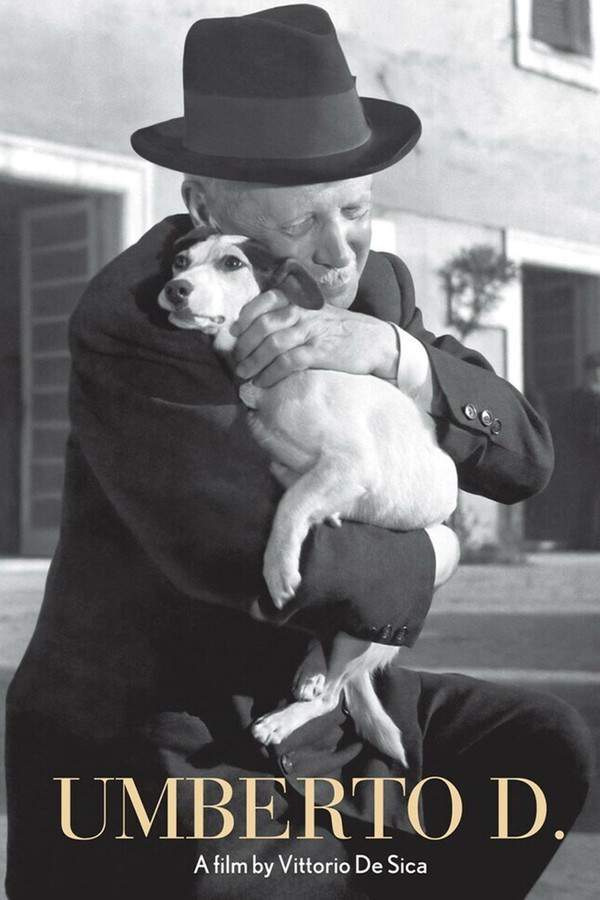
Umberto D. (1952) movie poster

Timeline

Umberto D. (1952) Timeline Explained – Every Event in Order

Release, runtime and language
1952 · 91 mins · Italian
Loading streaming availability…
Directed by
Vittorio De Sica
Starring
Carlo Battisti, Maria Pia Casilio, Lina Gennari, Ileana Simova, Elena Rea, Memmo Carotenuto

After returning to his boarding house from a protest demanding higher old‑age pensions, the frail pensioner Umberto Domenico Ferrari learns his landlady will evict him and his small dog unless he pays the 15,000‑lire rent by month’s end. With no money, he pretends to be ill to be admitted to a hospital and entrusts his beloved dog to the landlady’s pregnant, abandoned maid for temporary care, highlighting his desperate struggle to preserve dignity amid poverty.

On this page (6)
  1. 1 Where to watch
  2. 2 Events in order (15)
  3. 3 Timeline questions answered
  4. 4 Movie threads
  5. 5 Movies like Umberto D.
  6. 6 Every angle
Loading streaming availability…

15 events in order · contains spoilers

Umberto D. Timeline: Events in Chronological Order

Every key event of Umberto D. (1952) in order, scene by scene, with when and where it takes place. Use it to untangle flashbacks, time jumps and parallel storylines, to refresh your memory before the sequel or to find the exact scene you are thinking of.

  1. Police disperse pension protest; Umberto D among the marchers

    Police disperse an organized street demonstration of elderly men demanding a raise in their meager pensions. Umberto D. Ferrari is among the marchers, illustrating his precarious financial situation. The scene establishes the social pressures facing retirees in postwar Italy.

    Where
    City street
  2. Landlady rents Umberto's room for an hour and threatens eviction

    The landlady returns to Umberto's room and finds it rented for an hour to a young couple who want to have sex. She threatens to evict him at the end of the month if he cannot pay the overdue rent, fifteen thousand lire. This moment underscores the fragility of his housing situation.

    Where
    Umberto's room
  3. Umberto sells possessions to raise money; partial payment refused

    To raise money, Umberto sells a watch and some books, but the sum raised is only about a third of what he owes. The landlady refuses to accept partial payment, leaving him still in arrears. The weight of unpaid rent compounds his desperation.

    Where
    Umberto's room
  4. Sympathetic maid reveals her pregnancy and lovers

    The sympathetic maid confides in Umberto about her own problems: she is three months pregnant and unsure which of her two soldier lovers is the father. Her candor adds a personal layer to the hardships depicted in the film. Her confession foreshadows the precariousness of many characters' lives.

    Where
    Apartment
  5. Umberto falls ill and is admitted to hospital

    Feeling ill, Umberto checks into a hospital and is diagnosed with tonsillitis. He is discharged after a few days and returns to an unsettled home life. The illness temporarily relieves him from his immediate worries but intensifies his sense of fragility.

    Where
    Hospital
  6. Renovations and a hole in the wall reveal a new living room plan

    Back at the apartment, Umberto discovers workmen renovating the place and learns the landlady is getting married. His room has a gaping hole in the wall, and the maid explains the hole will become part of an enlarged living room. The changes strip away the room that had been his refuge.

    Where
    Apartment
  7. Flike runs away as the door is left open

    The maid had been taking care of his dog Flike, but a door is left open and Flike runs away. Umberto is left to cope with the loss as the household changes around him. The dog’s disappearance compounds his loneliness and practical worries.

    Where
    Apartment
  8. Search at the city pound; Flike is found

    Umberto goes to the city pound and is relieved to find Flike there. The reunion rekindles his resolve to care for the dog despite his mounting problems. It also highlights the harsh realities of keeping a pet without stable housing.

    Where
    City pound
  9. A loan request is refused; contemplation of suicide

    Unable to secure a loan from a friend who has a job, Umberto refuses to beg from strangers and contemplates suicide. He clings to the idea of caring for Flike even as his own life spirals. The moment marks a turning point from despair toward a stubborn will to survive.

    Where
    Friend's home
  10. He packs up and leaves; parting advice to the maid

    Umberto packs his belongings and leaves the apartment, offering the maid one last piece of advice: to get rid of the Florence boyfriend. His departure marks the end of his tenure in that place. He faces an uncertain future without a stable roof over his head.

    Where
    Apartment
  11. Attempts to rehome Flike fail; first with a dog-boarding couple

    First he tries to place Flike with a couple who board dogs, then with a little girl he knows, but the nanny makes the girl give the dog back. The attempts fail one after another, underscoring his inability to secure help. Flike remains a hopeful, fragile link to his former life.

    Where
    City
  12. Flike and Umberto at the park; a hopeful separation

    Flike goes to play with some children, and Umberto slips away, hoping that one of the children will adopt him. The moment shifts the focus from survival to finding a possible home for his companion. The park setting becomes a stage for their tentative bond.

    Where
    Park
  13. Approaching danger: the railway moment with Flike

    Umberto carries Flike toward a railway track as a speeding train approaches. Flike becomes frightened, wriggles free, and flees into the surrounding area. The moment tests their bond as a real-life peril looms.

    Where
    Railway tracks near park
  14. Chase turns to play; a pine cone guides them back

    The chase slowly morphs into play as Umberto lures Flike with a pine cone. The dog responds with curiosity, easing the tension of the earlier peril. Their interaction hints at a renewed bond between man and dog.

    Where
    Park
  15. Ending: Umberto and Flike run and play in the park

    The movie ends with Umberto and Flike running and playing down the park lane. The moment offers a fragile sense of hope after poverty, loneliness, and loss. It leaves the audience with a humane, hopeful note about companionship.

    Where
    Park

Last updated: October 09, 2025 at 10:41

Was this helpful?

Timeline questions answered

Umberto D. Timeline Explained: Your Questions Answered

When does it happen, and why in that order? The questions people ask about the chronology of Umberto D. (1952): time jumps, flashbacks, cause and effect between scenes and the correct order of events, each answered with spoilers.

Q1

Why is Umberto D. facing eviction from his room?

Umberto faces eviction because he cannot pay the overdue rent of fifteen thousand lire. After selling his watch and some books to raise money, he falls far short of the total owed, and the landlady refuses to accept partial payment. The situation is compounded when he returns from the hospital to find his room has been converted into part of a larger living room with a gaping hole in the wall.

  • eviction
  • rent
  • landlady
  • pension
  • poverty
Q2

Why does Umberto check into the hospital?

Umberto pretends to be ill and checks into the hospital because he is desperate to find a place to stay after facing eviction. With no money and nowhere to go, the hospital provides temporary shelter. He is diagnosed with tonsillitis and stays for a few days, but this only temporarily relieves him from his immediate worries about housing and his dog.

  • hospital
  • illness
  • tonsillitis
  • shelter
  • desperation
Q3

Why does Flike run away from the apartment?

Flike runs away because the maid, who was caring for him while Umberto was in the hospital, accidentally leaves a door open. When Umberto returns to the apartment after being discharged, he discovers that his dog has escaped during the renovations happening in the building.

  • Flike
  • dog
  • run away
  • apartment
  • renovation
Q4

Why does Umberto try to rehome Flike?

Umberto tries to rehome Flike because his own situation has become hopeless, he has no money, no stable housing, and is facing the prospect of living on the streets. Rather than abandon Flike to suffer with him, he hopes to find the dog a proper home where he can be cared for, showing his deep love and responsibility for his companion despite his own desperation.

  • rehome
  • Flike
  • dog
  • abandon
  • hope
Q5

What happens when Umberto brings Flike to the railway tracks?

Umberto brings Flike to the railway tracks contemplating suicide as his situation has become unbearable, he has no money, no home, and cannot secure a loan. As a train approaches, Flike becomes frightened and wriggles free from Umberto's grasp, running away. This moment represents Umberto's lowest point, but the dog's reaction also rekindles his will to live.

Foreshadowing: Earlier, Umberto refused to beg from strangers, insisting on maintaining his dignity despite his poverty.

  • railway
  • suicide
  • despair
  • train
  • Flike
Q6

Why does the maid tell Umberto about her pregnancy?

The maid confides in Umberto about being three months pregnant and unsure which of two soldiers, one from Naples and one from Florence, might be the father. This moment reveals the shared vulnerability among the people in the boarding house, showing that Umberto's struggles with precarity are not unique. It also foreshadows the precariousness that affects many characters in the film.

  • maid
  • pregnancy
  • soldiers
  • precarious
  • vulnerability
Q7

What does the ending with Flike in the park signify?

The ending shows Umberto and Flike running and playing together in the park, representing a small but meaningful moment of joy amid their difficult circumstances. Rather than resolving Umberto's poverty or housing problems, the film suggests that resilience and hope can be found in the bond between human and animal. The chase with the pine cone transforms fear into play, symbolizing their renewed connection and Umberto's refusal to surrender to despair.

  • park
  • ending
  • play
  • hope
  • companionship
Q8

Why does the landlady rent Umberto's room to a young couple?

The landlady rents Umberto's room for an hour to a young couple who want to have an intimate encounter, demonstrating both her pragmatic disregard for Umberto's dignity and the precarious nature of his housing. This incident underscores how little control Umberto has over his own living space and highlights the broader theme of vulnerability faced by the elderly poor in postwar Italy.

  • landlady
  • room
  • rent
  • couple
  • eviction
Q9

Why is Umberto D. at the pension protest?

Umberto participates in the pension protest because as a retired government worker, his pension is insufficient to meet his basic needs. The demonstration by elderly men demanding better pensions establishes his precarious financial situation and the social pressures facing retirees in postwar Italy. The police disperse the march, showing the marginalization of elderly citizens.

  • protest
  • pension
  • elderly
  • police
  • postwar
Q10

What does Flike represent in the film?

Flike serves as a symbol of loyalty, companionship, and purpose in Umberto's life. Despite losing almost everything, his home, his money, his stability, his bond with Flike gives him a reason to keep living. The dog's unwavering attachment to Umberto, especially when Flike chooses to return to him even when Umberto tries to leave him with others, underscores the film theme that love and loyalty can provide meaning even in dire circumstances.

  • Flike
  • symbol
  • loyalty
  • companionship
  • dog
Q11

Why does Umberto refuse to beg for money?

Umberto refuses to beg from strangers because doing so would shatter the dignity he has clung to throughout his hardships. Even when his friend cannot or will not listen to his request for a loan, Umberto cannot bring himself to ask strangers for help. This reflects the film's central theme of preserving one's dignity amid poverty and marginalization.

  • beg
  • dignity
  • pride
  • money
  • poverty

Movie threads

More Movies Like Umberto D., by Mood & Story

Curated lists built around what makes Umberto D. tick: the same mood, the same kind of story or the same emotional payoff. Each list explains why these movies belong together.

Movies about poverty and dignity like Umberto D.

Stories of individuals struggling to maintain their humanity against systemic indifference. If you were moved by the dignified struggle in Umberto D., explore more movies like it. These films focus on quiet desperation and the human need for respect amid financial ruin and social neglect, offering powerful, character-driven dramas.

  • desperate
  • dignified
  • observant
  • lonely
  • tender
  • heartbreaking
  • Tone: melancholic, dignified
  • Pacing: slow, observational
Why these movies?

The story pattern: These narratives typically follow a linear, character-focused journey where the central conflict is external societal pressure (eviction, debt, social neglect) against an internal need for self-respect. The plot is often a slow accumulation of small defeats and minor, fleeting victories, leading to an ending that acknowledges the harsh reality but often finds a sliver of resilience in human connection.

Why they belong together: Movies in this thread share a melancholic tone, slow, observational pacing, and a heavy emotional weight. They are united by their focus on the thematic intersection of poverty and the human fight for dignity, creating a deeply moving and contemplative viewing experience.

Movies with a deep human-animal bond like Umberto D.

Stories where a loyal animal provides the sole comfort in a bleak world. If the relationship between Umberto and his dog touched you, discover similar movies about the powerful bond between people and their animal companions. These films often explore themes of loneliness and loyalty, where the animal provides crucial emotional support.

  • tender
  • heartwarming
  • lonely
  • hopeful
  • loyal
  • sentimental
  • Tone: bittersweet, tender
  • Pacing: slow to steady, character-focused
Why these movies?

The story pattern: The narrative pattern revolves around a protagonist facing isolation or hardship, whose life is given meaning and emotional stability through their care for an animal. The animal's well-being becomes a primary motivation, and the story's emotional stakes are deeply tied to the safety and happiness of this non-human partner. The journey often tests this bond, ultimately reinforcing its profound importance.

Why they belong together: These films are grouped by their central theme of interspecies companionship as a redemptive force. They share a tender, often bittersweet mood, and use the animal-human relationship to explore deeper themes of loneliness, loyalty, and the simple, pure forms of love that sustain us.

If you liked this

Movies Like Umberto D.

Similar movies to Umberto D.: the same genre, themes or kind of story. Each one comes with its own plot summary, timeline and ending explained.

Browse all movie summaries

Every angle

Umberto D. (1952) Explained: Plot, Timeline & Characters

Everything about Umberto D. in one place: what happens in the plot summary, the timeline in chronological order, the characters and meaning and a spoiler-free summary. What's After the Movie adds the cast, box office and post-credit scenes.

Coming soon on iOS and Android

The Plot Explained Movie Summary App

Plot summaries, endings explained and timelines on your phone. Catch up on any movie in minutes, save your favorites and never miss a twist again.

Be the first to know when we launch. Your email stays private, always.

Learn more about the app