Plot Explained Spoilers guaranteed!
Plot Explained

Browse by genre

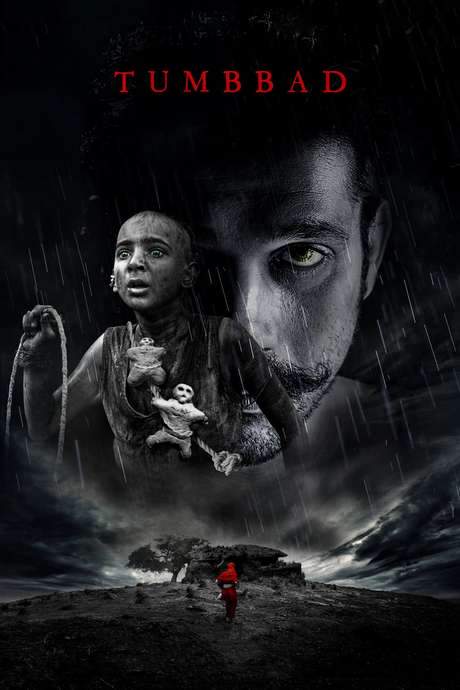
Tumbbad (2018) movie poster

Characters & Themes

Tumbbad (2018) Characters, Setting & Themes Explained

Release, runtime and language
2018 · 113 mins · Hindi
Echo score 79
Loading streaming availability…
Directed by
Rahi Anil Barve
Starring
Ronjini Chakraborty, Harish Khanna, Sohum Shah, Mohammad Samad, Anita Date-Kelkar, Raghubir Yadav

In 1918 India, young Vinayak becomes fixated on a hidden ancestral treasure guarded by a mysterious old woman on the edge of the rain-soaked village of Tumbbad. Along with his mother and brother, he seeks to uncover the secret, but the village is cursed, and greed unleashes forces beyond comprehension, testing his courage and challenging the boundaries of morality.

On this page (7)
  1. 1 Where to watch
  2. 2 Characters explained (7)
  3. 3 Where & when it takes place
  4. 4 Themes & meaning (3)
  5. 5 Character & meaning questions
  6. 6 Movie threads
  7. 7 Every angle
Loading streaming availability…

7 main characters · contains spoilers

Tumbbad Characters Explained: Who Is Who

The main characters of Tumbbad (2018), heroes and villains: what drives them, how they change over the course of the story and what each of them reveals about the film's bigger ideas.

  • Vinayak Rao (Sohum Shah)

    A driven treasure hunter whose childhood trauma fuels a lifelong greed. He returns to Tumbbad fifteen years after leaving, determined to claim Sarkar’s hoard by any means. His calculative nature and willingness to bend rules lead him to manipulate others and risk everything for wealth, ultimately inviting ruin upon his family.

    • 💰 Greedy
    • 🧭 Calculated
    • 💼 Wealth-driven
  • Hastar (Harsh K)

    played by Harsh K.

    An ancient, insatiable deity imprisoned by the Goddess within a womb, hungry for gold and recognition. His presence drives violence and fear as Vinayak and others attempt to drain his treasure. Hastar mutates into multiple forms inside the womb, embodying the inescapable consequences of unchecked desire.

    • 👹 Monster
  • Sarkar

    played by Madhav Hari Joshi

    The powerful zamindar whose wealth and dominion provide the initial lure for the treasure. He represents feudal authority and exploitation, and his world crumbles as the colonial transition reshapes ownership and power. His death and the shifting control of the mansion set the stage for the treasure’s enduring myth.

    • 🏛️ Feudal Power
  • Grandmother (Ratnabali Chatterjee)

    An elderly woman kept chained in a separate room, she holds crucial knowledge about the treasure’s location. She guides Vinayak to the goddess’ womb but also bears the burden of suffering from the village’s curse. Her actions and fate underscore the harsh costs endured by those entangled in the treasure’s legend.

    • 🗝️ Knowledge
    • 🧓 Elder Wisdom
  • Pandurang (Mohammad Samad)

    Vinayak’s son, trained to retrieve Hastar’s coins. He embodies a new generation drawn into the same cycle of greed, tempted by the same dangerous dough dolls used to lure Hastar. His choices and eventual confrontation with the ill-fated inheritance highlight how legacy can perpetuate rather than resolve the curse.

    • 👦 Young
    • 🪙 Ambitious
    • 🎯 Impulsive
  • Raghav

    played by Deepak Damle

    A moneylender who senses the sudden influx of wealth around Vinayak. He follows the trail to the womb and becomes a victim of Hastar’s fury, illustrating how greed can draw others into the perilous cycle. His pursuit of profit mirrors the social vulnerabilities exploited by the treasure myth.

    • 💼 Moneylender
    • 🕵️ Suspenseful
    • 💰 Wealth-chaser
  • Vaidehi (Anita Date-Kelkar)

    Vinayak’s mother, the mistress of Sarkar who seeks a share of the mysterious treasure. Her ambitions drive key early moves in the story, influencing Vinayak’s path and the eventual flight to Pune. Her actions reflect the personal costs borne by those entangled in a hierarchy built on wealth and power.

    • 🤝 Family Loyalty
    • 💔 Survival
    • 🏚️ Household Bonds

Last updated: October 01, 2025 at 12:30

Was this helpful?

Setting

Where and When Does Tumbbad Take Place?

The setting of Tumbbad (2018): the year and time period, the places and locations, and how they shape the characters, the mood and the tension of the story.

Time period

1918-1947

The events unfold starting in 1918 during British-ruled India, when Vinayak’s mother is connected to the zamindar Sarkar. Fifteen years later, in the early 1930s, Vinayak returns to Tumbbad to pursue the treasure. By 1947, on the eve of independence, greed, family tensions, and the Hastar legend converge to seal the fates of those involved.

Location

Tumbbad, Pune, Sarkar's Mansion

The story centers on the remote village of Tumbbad in Maharashtra, where myth and poverty collide around a legendary treasure. A temple and a mansion tied to the zamindar Sarkar anchor the mystery, with Hastar’s presence shaping the village’s fate. Pune nearby serves as a gateway to the wider world, while the setting spans the colonial era into the early years of independence, under a climate of perpetual rain that the villagers associate with the curse.

  • 🏚️ Village setting
  • 🕯️ Mythic origins
  • 🏛️ Colonial-era India

Last updated: October 01, 2025 at 12:30

Was this helpful?

3 major themes

Tumbbad Meaning: Themes & Message Explained

What is Tumbbad (2018) really about? The emotional, social and philosophical themes the film keeps returning to, its symbolism and the message beneath the surface.

  • Greed

    Greed drives the entire narrative, from a mother’s ambition to secure a share of hidden wealth to Vinayak’s relentless pursuit of Hastar’s coins. The cycle of hoarding wealth leads to betrayal, violence, and spiritual ruin for multiple generations. The lure of gold corrupts relationships and distorts moral judgment, keeping the treasure just out of reach yet never far enough to satisfy.

  • Myth vs Reality

    The villagers’ belief in Hastar and the treasure blurs the line between legend and reality. Myth becomes a practical tool for power, enabling manipulation and risky schemes within Sarkar’s world. The descent into the womb of the goddess reveals how legends shape decisions more than empirical truth, trapping people in an endless quest for wealth.

  • Curses and Weather

    The village’s fate is tied to a divine curse expressed through incessant rain after the Hastar myth is disturbed. Weather becomes a tangible consequence of hubris and ritual, amplifying hardship and doom for those chasing the treasure. The rain mirrors the characters’ spiraling fortunes and the grim cost of greed.

Last updated: October 01, 2025 at 12:30

Was this helpful?

Character & theme questions

Tumbbad Characters & Meaning: Your Questions Answered

The questions people ask about Tumbbad (2018): who the characters really are, their relationships, what the symbols mean, where it takes place and what the movie is really about. Each answer contains spoilers.

Q1

Where is the village of Tumbbad located?

Tumbbad is a remote village in Maharashtra, India, situated on the edge of the rain-soaked region. The story centers around this impoverished village where myth and poverty collide around a legendary treasure. Key locations include a temple and a mansion tied to the zamindar Sarkar, with Pune serving as a gateway to the wider world beyond the village.

  • maharashtra village
  • remote setting
  • tumbai location
Q2

What time period does Tumbbad cover?

The events unfold across several decades, starting in 1918 during British-ruled India when Vinayak's mother becomes connected to the zamindar Sarkar. Fifteen years later, in the early 1930s, Vinayak returns to pursue the treasure. The story culminates in 1947, on the eve of India's independence, when the Hastar legend and family greed converge to seal the fates of those involved.

  • 1918
  • 1930s
  • 1947
  • colonial india
  • british era
Q3

What is the Hastar legend in Tumbbad?

Hastar is an ancient, insatiable deity who was imprisoned by the Goddess within a womb-like chamber beneath the village. He is hungry for gold and recognition, and his treasure has become legend. The villagers believe that disturbing this myth unleashes curses, with the legend serving as both a tool for power manipulation and a trap that keeps people chasing an impossible wealth.

  • hastar
  • deity
  • legend
  • treasure
  • goddess womb
Q4

What does the curse in Tumbbad represent?

The curse in Tumbbad represents the consequences of disturbing sacred myths and the price of unchecked greed. When the Hastar myth is disturbed, the village is plagued by incessant rain that the villagers associate with the curse. The weather becomes a tangible manifestation of hubris and moral transgression, amplifying hardship and doom for those who chase the treasure.

  • curse
  • weather
  • rain
  • consequences
  • moral transgression
Q5

Why is greed the central theme in Tumbbad?

Greed drives the entire narrative, from a mother's ambition to secure hidden wealth to Vinayak's relentless pursuit of Hastar's coins. This cycle of hoarding wealth leads to betrayal, violence, and spiritual ruin across multiple generations. The lure of gold corrupts relationships, distorts moral judgment, and keeps the treasure just out of reach while never satisfying those who pursue it.

  • greed
  • wealth
  • corruption
  • family
  • obsession
Q6

Who is Vinayak and what motivates him?

Vinayak Rao is a driven treasure hunter whose childhood trauma fuels a lifelong greed. He returns to Tumbbad fifteen years after leaving, determined to claim Sarkar's hoard by any means. His calculative nature and willingness to bend rules lead him to manipulate others and risk everything for wealth, ultimately inviting ruin upon his family.

  • vinayak
  • protagonist
  • motivation
  • treasure hunter
  • obsession
Q7

Who is the grandmother in Tumbbad and what is her role?

The grandmother is an elderly woman kept chained in a separate room who holds crucial knowledge about the treasure's location. She guides Vinayak to the goddess' womb but also bears the burden of suffering from the village's curse. Her actions and fate underscore the harsh costs endured by those entangled in the treasure's legend across generations.

  • grandmother
  • chained
  • treasure location
  • guide
  • suffering
Q8

What does the perpetual rain symbolize in Tumbbad?

The perpetual rain in Tumbbad symbolizes the village's cursed state and mirrors the characters' spiraling fortunes. The villagers associate the endless rain with the curse triggered by disturbing the Hastar myth. This weather amplifies the grim atmosphere and reflects the moral decay and impending doom that consumes those chasing the treasure.

  • rain
  • symbolism
  • curse
  • atmosphere
  • doom
Q9

What does the goddess' womb represent in Tumbbad?

The goddess' womb is the sacred chamber where Hastar is imprisoned, representing the boundary between the mortal world and divine consequences. The descent into the womb reveals how legends shape decisions more than empirical truth, trapping people in an endless quest for wealth. Inside, Hastar mutates into multiple forms, embodying the inescapable consequences of unchecked desire.

  • goddess womb
  • underworld
  • consequences
  • transformation
  • descent
Q10

How do myth and reality interact in Tumbbad?

The villagers' belief in Hastar and the treasure blurs the line between legend and reality throughout Tumbbad. Myth becomes a practical tool for power, enabling manipulation and risky schemes within Sarkar's world. The story shows how legends can shape decisions and trap people in cycles of behavior, regardless of whether the supernatural elements are empirically verifiable.

  • myth
  • reality
  • belief
  • legend
  • power
Q11

Who is Sarkar and what is his role in Tumbbad?

Sarkar is the powerful zamindar whose wealth and dominion provide the initial lure for the hidden treasure. He represents feudal authority and exploitation in colonial-era India. His death and the subsequent shifting control of the mansion set the stage for the treasure's enduring myth, as the colonial transition reshapes ownership and power structures.

  • sarkar
  • zamindar
  • feudal
  • wealth
  • authority
Q12

How does the remote village setting affect the story of Tumbbad?

The remote village setting of Tumbbad creates an isolated, claustrophobic atmosphere where myth and poverty coexist. This isolation allows the curse and treasure legend to dominate village life without outside interference. The colonial-era infrastructure and lack of modern resources also contribute to the villagers' dependence on myth and their vulnerability to exploitation by those in power.

  • village setting
  • isolation
  • poverty
  • atmosphere
  • colonial era

Movie threads

More Movies Like Tumbbad, by Mood & Story

Curated lists built around what makes Tumbbad tick: the same mood, the same kind of story or the same emotional payoff. Each list explains why these movies belong together.

Greed-fueled generational curses like Tumbbad

Dynastic tales where a family's avarice summons a supernatural downfall. If you liked Tumbbad, explore movies like it that delve into the dark legacy of family curses born from greed. These films feature atmospheric horror, supernatural consequences for moral decay, and multi-generational stories where characters are doomed to repeat the sins of their ancestors.

  • cursed
  • greed-driven
  • mythic
  • somber
  • generational
  • atmospheric
  • Tone: dark, bleak, mythic
  • Pacing: steady, methodical
Why these movies?

The story pattern: These stories typically follow a linear or cyclical structure, often jumping through key time periods to show how a family's initial transgression continues to haunt their descendants. The protagonist is usually driven by the same destructive obsession as their forebears, leading to a bleak conclusion where the curse claims another victim, emphasizing the futility of breaking the cycle.

Why they belong together: Movies are grouped here for their shared focus on inherited trauma, mythological horror, and the theme that greed is a poison passed down through bloodlines. They create a cohesive experience through their dark tone, heavy emotional weight, and the unsettling inevitability of the family's fate.

Atmospheric folk horror movies like Tumbbad

Chilling tales where ancient legends and desolate landscapes breed terror. Discover movies similar to Tumbbad that master atmospheric folk horror. These films use mythology, cursed settings like remote villages, and a pervasive sense of dread to tell terrifying stories. If you liked the rain-soaked, mythic horror of Tumbbad, you'll find more chilling tales here.

  • atmospheric
  • ominous
  • folk horror
  • mythological
  • claustrophobic
  • rain-drenched
  • Tone: ominous, dark, somber
  • Pacing: steady, slow burn
Why these movies?

The story pattern: The narrative often involves a protagonist intruding upon a sacred or forbidden place, awakening a long-dormant entity. The story unfolds with a steady, deliberate pace, building unease through the environment and folklore rather than jump scares. The conflict is between humanity and an ancient, indifferent supernatural force, usually resulting in a grim outcome for those who dared to challenge it.

Why they belong together: These films are united by their immersive atmosphere, use of folklore as a source of horror, and a tone that is more somber and ominous than chaotic. They prioritize world-building and a pervasive sense of dread over fast-paced action, creating a uniquely haunting experience.

Every angle

Tumbbad (2018) Explained: Plot, Timeline & Characters

Everything about Tumbbad in one place: what happens in the plot summary, the timeline in chronological order, the characters and meaning and a spoiler-free summary. What's After the Movie adds the cast, box office and post-credit scenes.

Coming soon on iOS and Android

The Plot Explained Movie Summary App

Plot summaries, endings explained and timelines on your phone. Catch up on any movie in minutes, save your favorites and never miss a twist again.

Be the first to know when we launch. Your email stays private, always.

Learn more about the app