Plot Explained Spoilers guaranteed!
Plot Explained

Browse by genre

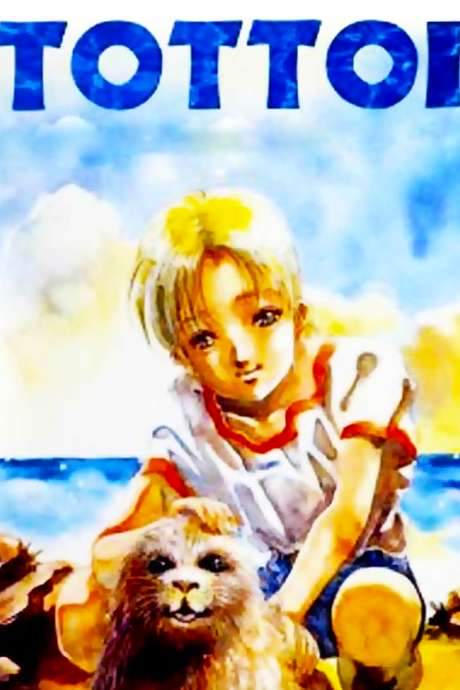
Totto-chan: The Little Girl at the Window (2023) movie poster

Timeline

Totto-chan: The Little Girl at the Window (2023) Timeline Explained – Every Event in Order

Release, runtime and language
2023 · 114 mins · Japanese
Loading streaming availability…
Directed by
Shinnosuke Yakuwa
Starring
Shun Oguri, Anne Watanabe, Karen Takizawa, Koji Yakusho, Liliana Ohno

This heartwarming series recounts the childhood memories of a spirited young girl growing up in Tokyo during World War II. She attends an unusual school that prioritizes learning through fun, freedom, and affection. The school's unique classrooms are repurposed railroad cars, and it's led by the remarkable Sōsaku Kobayashi, a headmaster who championed children’s independence and fostered a strong belief in freedom of expression and playful activity.

On this page (6)
  1. 1 Where to watch
  2. 2 Events in order (15)
  3. 3 Timeline questions answered
  4. 4 Movie threads
  5. 5 Movies like Totto-chan: The Little Girl at the Window
  6. 6 Every angle
Loading streaming availability…

15 events in order · contains spoilers

Totto-chan: The Little Girl at the Window Timeline: Events in Chronological Order

Every key event of Totto-chan: The Little Girl at the Window (2023) in order, scene by scene, with when and where it takes place. Use it to untangle flashbacks, time jumps and parallel storylines, to refresh your memory before the sequel or to find the exact scene you are thinking of.

  1. A Misfit in Public School

    Totto-chan, a young girl living in 1930s Japan, struggles to fit into the rigid structure of the public school system. Her energetic, restless behavior, similar to what would later be recognized as ADHD, makes her a poor fit for the traditional classroom.

    When
    1930s
    Where
    Public elementary school, Japan
  2. Withdrawn from Public School

    Concerned about their daughter's struggles, Totto-chan's wealthy parents decide to withdraw her from the public school system. The decision marks a turning point in her life, as her family searches for a learning environment better suited to her free-spirited nature.

    When
    1930s
    Where
    Japan
  3. Enrollment at an Unconventional School

    Totto-chan is enrolled at an unusual one-room elementary school that takes a radically different approach to education. This school will become the place where she finally feels accepted and able to thrive.

    When
    1930s
    Where
    Japan
  4. Classes in a Converted Streetcar

    Most of the school's classes are held inside a converted streetcar, giving the school its unique charm. Totto-chan finds herself learning in a space unlike anything she experienced at her old school, sparking her curiosity and joy.

    Where
    Converted streetcar classroom
  5. Principal Kobayashi's Progressive Vision

    The school's principal, Sosaku Kobayashi, embraces students with warmth and implements unusual innovations rooted in progressive education. His open-minded philosophy becomes the beating heart of the school and shapes how every child is treated.

  6. Student-Directed Curricula

    Kobayashi introduces student-directed curricula, allowing the children to pursue the subjects that spark their own curiosity each day. This freedom nurtures Totto-chan's natural enthusiasm for learning instead of suppressing it.

  7. Interpretive Dance and Group Activities

    The students take part in interpretive dance and other group activities as part of their education. These creative outlets give the children a chance to express themselves and bond in ways a conventional school never allowed.

  8. Learning Respect for Physical Disability

    Under the principal's guidance, students are taught to respond to physical disability with respect and mutual care. The school becomes a place where children of different abilities learn alongside one another as equals.

  9. The 'Ocean' and 'Mountains' Bento Tradition

    The principal introduces his own cherished tradition: a daily requirement that students bring something from the 'ocean' and the 'mountains' in their bento lunches. This playful practice serves as an early form of food education, later known as shokuiku.

  10. Flourishing Under a New Approach

    Totto-chan blossoms in the nurturing environment, and the school proudly showcases the successes of Kobayashi's unorthodox approach to childhood education. The children grow up confidently, their individuality embraced rather than corrected.

  11. Wartime Austerity Begins

    As war intensifies, austerity programs begin to sweep through Japan and touch every corner of daily life. The school starts to feel the pressure of shortages and wartime demands, threatening the delicate world Kobayashi has built.

    When
    During World War II
    Where
    Japan
  12. The School's Slow Decline

    Under the strain of wartime austerity, the vibrant school gradually declines, its joyful atmosphere dimming little by little. The war also interferes with Totto-chan's learning and undermines her father's career, casting a shadow over the family.

    When
    During World War II
    Where
    Japan
  13. The Firebombing of Tokyo

    The situation becomes catastrophic when the firebombing of Tokyo strikes the city. The attack abruptly shatters the peaceful life that the school community had carefully built together over the years.

    When
    During World War II
    Where
    Tokyo
  14. School Closure and Evacuation

    In the aftermath of the firebombing, the school is forced to close its doors abruptly, ending its remarkable era without warning. The children are evacuated, forced to say goodbye to the beloved place where they had grown and flourished.

    When
    During World War II
    Where
    Tokyo
  15. A Glimpse of the Future

    The film alludes to Tetsuko Kuroyanagi's lifelong success as a television personality, revealing how her unconventional childhood education shaped the woman she became. The story closes by honoring the small school that transformed Totto-chan's life.

Last updated: October 18, 2026 at 17:33

Was this helpful?

Timeline questions answered

Totto-chan: The Little Girl at the Window Timeline Explained: Your Questions Answered

When does it happen, and why in that order? The questions people ask about the chronology of Totto-chan: The Little Girl at the Window (2023): time jumps, flashbacks, cause and effect between scenes and the correct order of events, each answered with spoilers.

Q1

Why was Totto-chan seen as a misfit in her public school?

Totto-chan was seen as a misfit because her energetic, restless behavior clashed with the rigid structure of the 1930s Japanese public school system. Her habits looked similar to what would today be recognized as ADHD, and teachers at her old school treated her spirited nature as a disciplinary problem rather than a learning style. The film's early scenes establish that the traditional classroom punished curiosity instead of encouraging it, which is why her parents decided to pull her out entirely.

Foreshadowing: Her inability to sit still in class foreshadows how much she would flourish once placed in a school that actively channels that energy into creative expression.

  • totto-chan
  • public school
  • misfit
  • adhd
  • rigid education
Q2

Why are the classrooms held inside converted streetcars?

The classrooms are housed inside decommissioned streetcars because the school, led by Principal Sōsaku Kobayashi, embraced unconventional ideas as part of its progressive philosophy. Using streetcars as classrooms turned a boring subject into an adventure and gave the children a uniquely playful space to learn in. For a restless child like Totto-chan, the novelty of learning inside a real train car made school feel exciting instead of confining.

  • streetcar classroom
  • tomoda gakuen
  • kobayashi
  • progressive school
Q3

What made Principal Kobayashi's approach to education so unusual?

Principal Kobayashi built the school around child-led learning rather than fixed lessons, letting students choose the subjects they wanted to explore each day. He also added activities that traditional schools ignored, such as interpretive dance, group exercises, and structured lessons about respecting classmates with physical disabilities. By valuing each child's individuality over obedience to a strict curriculum, he created an environment where students like Totto-chan could finally thrive.

  • kobayashi
  • progressive education
  • child-led learning
  • principal
Q4

Why did students have to bring food from the 'ocean' and the 'mountains' every day?

The 'ocean and mountains' rule was Kobayashi's way of turning lunchtime into a lesson about nutrition, geography, and gratitude for nature. By requiring one item from the sea and one from the land in every bento, children unconsciously learned about balanced meals and where food comes from. This playful practice was an early form of what later became known as shokuiku, or food education, in Japan.

  • ocean mountains bento
  • shokuiku
  • food education
  • kobayashi
Q5

How did World War II cause the school to decline?

As Japan's wartime austerity programs tightened, the school lost access to the resources, freedom, and open atmosphere that defined Kobayashi's philosophy. Food shortages made traditions like the 'ocean and mountains' bento harder to maintain, and the demands of the war effort gradually replaced creative learning with stricter routines. The film shows this decline as a slow dimming of joy, not a single event, which makes the eventual collapse feel even more tragic.

Foreshadowing: The first signs of rationing in the classroom foreshadow the total loss of the school's freedom once the war reaches Tokyo.

  • world war ii
  • austerity
  • wartime school
  • tokyo
Q6

Why did the firebombing of Tokyo force the school to close?

The firebombing devastated large portions of Tokyo, destroying buildings and infrastructure across the city and making it impossible for the school to continue operating safely. In the chaos that followed, authorities ordered the mass evacuation of children from the city to protect them from further attacks. With its students dispersed and its streetcar classrooms destroyed, Kobayashi's school had no choice but to shut down permanently, ending its remarkable era without warning.

  • firebombing
  • tokyo
  • school closure
  • evacuation
Q7

How did Totto-chan's childhood shape the famous Tetsuko Kuroyanagi?

The film suggests that Tetsuko Kuroyanagi's confidence, warmth, and curiosity as an adult television personality trace directly back to the freedom she was given as a child at Kobayashi's school. Being trusted to explore her own interests, speak openly, and treat others with empathy taught her the communication skills that later defined her career. The movie closes by framing the lost school as the unlikely foundation for one of Japan's most beloved public figures.

  • tetsuko kuroyanagi
  • tokyo
  • television personality
  • childhood
Q8

Why did Principal Kobayashi emphasize respect for students with disabilities?

Kobayashi believed that a truly progressive school had to include every child as an equal, so he actively taught his students to support classmates with physical disabilities rather than ignore or pity them. By weaving mutual care into daily routines, he made inclusion a natural part of school life instead of a special lesson. This philosophy shaped Totto-chan's lifelong belief that kindness and respect are core to how a community should function.

  • disability
  • inclusion
  • respect
  • kobayashi
Q9

What happened to Totto-chan after the school was forced to close?

After the firebombing and the order to evacuate, Totto-chan was sent away from Tokyo along with the other students, abruptly ending her time at the only school where she had ever felt accepted. The film does not detail her evacuation in full, but it shifts forward to imply that the lessons she absorbed there stayed with her for life. Her future success as Tetsuko Kuroyanagi is presented as the ultimate proof that the school, though lost, gave her a foundation nothing could take away.

  • evacuation
  • tokyo
  • tokyo firebombing
  • after school
Q10

Why did the war interfere with Totto-chan's father's career?

Totto-chan's father, Moritsuna Kuroyanagi, worked in a role tied to international affairs, which made him a target of wartime suspicion and political pressure as Japan grew more militaristic. The film uses his declining professional fortunes to show how the war invaded even stable, wealthy households that believed they were insulated from it. His struggles mirror the school's collapse, reinforcing the theme that no corner of Japanese life escaped the conflict.

  • moritsuna kuroyanagi
  • father
  • wartime career
  • japan
Q11

How does the film handle the story differently from Tetsuko Kuroyanagi's original book?

The film keeps the warm childhood memories at the heart of the book but compresses the timeline so the war arrives much sooner on screen. Where Kuroyanagi's memoir lets the peace of the school linger for many pages, the movie accelerates toward the firebombing to heighten the emotional contrast between joy and loss. This structural choice allows the animation to tell the same core story in a shorter, more visually dramatic form without losing its essential message about freedom and kindness.

  • original book
  • kuroyanagi memoir
  • animated adaptation
  • war
Q12

What is shokuiku and why does it matter in the story?

Shokuiku is the Japanese practice of food education, which teaches children to understand where their food comes from, how it nourishes them, and how to eat with gratitude. In the film, Kobayashi's 'ocean and mountains' bento rule is shown as a small-scale, playful version of this idea decades before it became a national concept. The tradition matters because it captures his larger philosophy: that everyday routines can be quietly transformed into lessons that shape a child's character for life.

  • shokuiku
  • food education
  • bento
  • ocean mountains

Movie threads

More Movies Like Totto-chan: The Little Girl at the Window, by Mood & Story

Curated lists built around what makes Totto-chan: The Little Girl at the Window tick: the same mood, the same kind of story or the same emotional payoff. Each list explains why these movies belong together.

Animated wartime childhood stories like Totto-chan: The Little Girl at the Window

Tender memories of youth interrupted when history's darkest chapters reach the playground. If you loved Totto-chan: The Little Girl at the Window, discover more animated films that follow young hearts through WWII and similar conflicts. These moving stories balance the warmth of childhood friendship with the heartbreak of losing everything to war, perfect for viewers seeking tender yet devastating historical animation.

  • nostalgic
  • wistful
  • innocent
  • heartbreaking
  • gentle
  • historically grounded
  • Tone: bittersweet, melancholic, nostalgic
  • Pacing: steady, observational
Why these movies?

The story pattern: These films typically unfold in two movements: a luminous first half where school life, friendships, and small adventures paint a portrait of carefree youth, followed by a devastating second half where bombings, evacuations, or political upheaval tear that world apart. The viewer experiences loss of innocence through a child's eyes, making the historical trauma feel personal rather than abstract, and the ending almost always acknowledges that some wounds never fully heal even when life goes on.

Why they belong together: They share a gentle, often hand-drawn visual language, focus on children's daily routines before catastrophe, and resist melodrama in favor of quiet, observational heartbreak. The sadness comes not from spectacle but from the contrast between remembered joy and present grief, with civilian perspectives prioritized over battlefield heroics.

Animated childhood memoirs like Totto-chan: The Little Girl at the Window

Animated stories that turn the small moments of growing up into luminous, bittersweet memories. Looking for more movies like Totto-chan: The Little Girl at the Window? These animated family dramas capture the same nostalgic warmth, gentle pacing, and bittersweet beauty of growing up. Perfect for viewers who love tender coming-of-age stories told through expressive animation and heartfelt storytelling.

  • nostalgic
  • heartwarming
  • tender
  • wistful
  • innocent
  • gentle
  • Tone: nostalgic, heartwarming, wistful
  • Pacing: steady, gentle
Why these movies?

The story pattern: These films unfold episodically, often as a series of vignettes drawn from a remembered childhood. Each scene focuses on a small wonder: a unique classroom, a beloved teacher, a moment of hard-won independence. There is rarely a traditional antagonist, and conflict comes from the passage of time itself — the moment we realize we are no longer children. Endings tend to be bittersweet, acknowledging that what made these memories precious is precisely that they cannot last.

Why they belong together: They share an emphasis on child perspective narration, eccentric educators or mentors, animated visuals that feel handcrafted and personal, and a pace that lets small moments breathe. The emotional register sits between gentle humor and quiet ache, and the school or community becomes a character in its own right.

If you liked this

Movies Like Totto-chan: The Little Girl at the Window

Similar movies to Totto-chan: The Little Girl at the Window: the same genre, themes or kind of story. Each one comes with its own plot summary, timeline and ending explained.

Browse all movie summaries

Every angle

Totto-chan: The Little Girl at the Window (2023) Explained: Plot, Timeline & Characters

Everything about Totto-chan: The Little Girl at the Window in one place: what happens in the plot summary, the timeline in chronological order, the characters and meaning and a spoiler-free summary. What's After the Movie adds the cast, box office and post-credit scenes.

Coming soon on iOS and Android

The Plot Explained Movie Summary App

Plot summaries, endings explained and timelines on your phone. Catch up on any movie in minutes, save your favorites and never miss a twist again.

Be the first to know when we launch. Your email stays private, always.

Learn more about the app