Plot Explained Spoilers guaranteed!
Plot Explained

Browse by genre

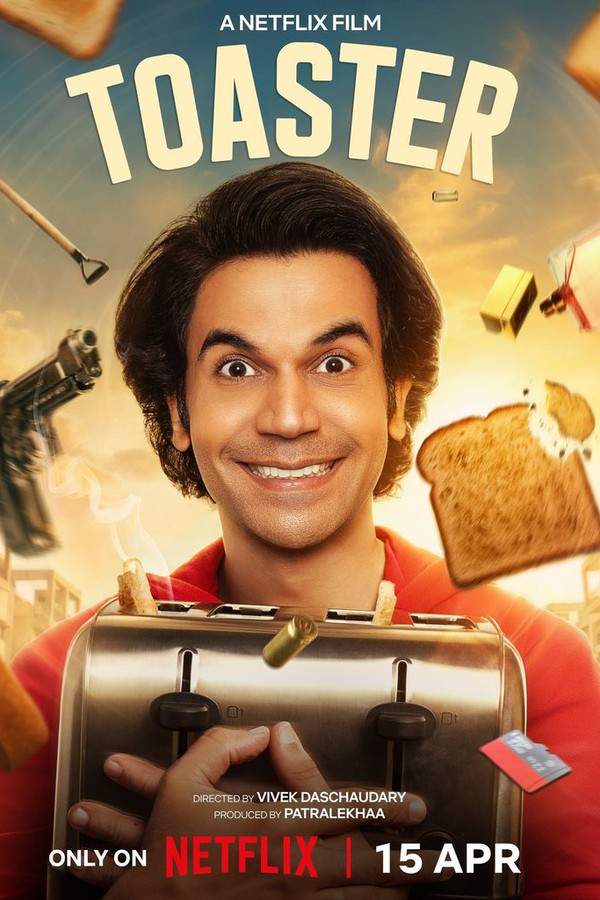
Toaster (2026) movie poster

Plot Summary

Toaster (2026) Plot Summary & Ending Explained

Release, runtime and language
2026 · 2 h · Hindi
Loading streaming availability…
Directed by
Vivek Daschaudary
Starring
Abhishek Banerjee, Sanya Malhotra, Upendra Limaye, Farah Khan, Seema Pahwa, Dev Raaz

Murder and chaos erupt when a miser becomes obsessed with a toaster he gave as a wedding gift.

On this page (6)
  1. 1 Where to watch
  2. 2 What happens: full plot
  3. 3 Plot questions answered
  4. 4 How it ends
  5. 5 Movie threads
  6. 6 Every angle
Loading streaming availability…

Full plot summary · contains spoilers

What Happens in Toaster: Full Plot Summary

The whole story of Toaster (2026) explained, from the opening scene to the final frame: every key event, every twist and what it all adds up to. Read it as a quick recap before the sequel, to check a scene you missed, or to finally understand what really happened.

Ramakant [Rajkummar Rao] is a miserly perfume shop owner who shares a small life with his wife, Shilpa [Sanya Malhotra]. They live as tenants in the building of Mrs. D’Souza [Seema Pahwa], a sharp-witted landlord who also keeps her uneasy son, Glen [Abhishek Banerjee], close by. At a wedding they gift a toaster worth ₹4,999 to the newlyweds, hoping to win favor. But when the couple’s marriage dissolves just one day later, Ramakant tries to reclaim the gift without telling Shilpa. He discovers, to his dismay, that all wedding presents have already been donated to an orphanage, leaving him with no obvious way to get the toaster back. Nandini [Farah Khan], the head of the orphanage, refuses to return the toaster since it’s already in use, setting up a moral and legal tug of war.

That same night, Ramakant’s failed theft attempt is overshadowed by Glen’s swift response, as Glen himself discloses a surprising twist: he steals the toaster shortly after. The next day, the police arrive at Ramakant’s door after Nandini reports the theft and names him as the prime suspect. Meanwhile, Ramakant spots Glen carrying the toaster to a mall to meet a mysterious man, hinting at more trouble to come. In another turn of fate, Mrs. D’Souza passes away, and when Ramakant visits her home to claim the toaster, a drunken Glen confronts him. In the ensuing scuffle, Glen accidentally falls from the balcony to his death, an event that is captured by an elderly neighbour, Malini Pherwani [Archana Puran Singh], who uses the footage to blackmail Ramakant into a sexual relationship.

The pressure mounts as Ramakant’s frequent nights away from home begin to strain his marriage with Shilpa. Desperation pushes Ramakant to seek help from his perfume supplier, Guddu [Vinod Rawat], to intervene with Malini. But Malini proves formidable, overpowering Guddu and killing him, forcing Ramakant to bury the body. Inspector Balagode [Upendra Limaye]—the same officer Glen had encountered at the mall—begins investigating the disappearances while quietly pursuing the same elusive toaster. He grows suspicious of Ramakant as Nandini’s investigation unfolds. When Balagode attempts an arrest, Malini steps in by paying Nandini to drop the charges, tipping the scales in Ramakant’s favor—for the moment.

The tension escalates when the inspector confronts Malini; she appears to kill him and again compels Ramakant to bury another body. Shilpa, who has been secretly following the unfolding events, confronts the pair as they drag Balagode’s body toward the same grave as Guddu. To their shock, Balagode is still alive and seizes them at gunpoint, revealing a critical secret: the toaster contains an SD card with an incriminating video of a high-ranking politician. Unknown to him, Malini had already hidden Ramakant’s footage on the same toaster, creating a precarious web of blackmail.

In the crowded chaos that follows, Malini kills Balagode but is ultimately killed by Ramakant and Shilpa in what they justify as self-defense. The arrival of the politician and his henchmen answers the rustling questions about the blackmail, and Ramakant hands over a card to them, only for the politician to destroy it and release the couple. Yet the battle lines have shifted: Ramakant reveals to Shilpa that he manipulated the situation, ensuring the politician destroys the footage that could implicate him while keeping the politician’s own evidence as leverage.

With the dust settling and the weight of the secrets lifted, Ramakant and Shilpa reconcile and share a quiet moment of relief as they hitch a ride back home, their bond renewed by a precarious victory over a dangerous game of power and betrayal.
Last updated: May 25, 2026 at 16:19

Was this helpful?

Plot questions answered

Toaster Plot Explained: Your Questions Answered

The questions people ask most about Toaster (2026): what happens in the confusing scenes, why the characters do what they do, the twists, hidden details and what the ending means. Each answer contains spoilers.

Q1

Why is Ramakant so desperate to get the toaster back?

Ramakant is a miser who cannot afford to lose the ₹4,999 toaster he gifted at the wedding. When the marriage dissolves in just one day and the toaster gets donated to an orphanage, his obsession stems from the financial loss he cannot accept. The toaster becomes the catalyst for his moral descent as he tries to reclaim it secretly without telling his wife Shilpa.

Foreshadowing: His miserly nature is established early as a core character trait that drives his decisions.

  • ramakant
  • toaster
  • obsession
  • money
  • miser
Q2

How did Glen steal the toaster after Ramakant failed?

After Ramakant's failed theft attempt at the orphanage, Glen himself steals the toaster from the same location shortly after. The exact method isn't shown, but he acts quickly while Ramakant is still dealing with Nandini's refusal, suggesting he was already watching or had his own motives to steal it.

Foreshadowing: Glen's later mysterious meeting at the mall with a buyer implies he had contacts for selling stolen goods.

  • glen
  • toaster
  • steal
  • orphanage
  • theft
Q3

What was on the SD card inside the toaster?

The toaster contained an SD card with an incriminating video of a high-ranking politician. This explains why multiple parties became interested in the device, the footage could expose political corruption, making it extremely valuable for blackmail or leverage.

Foreshadowing: The politician's arrival at the climax confirms this hidden connection.

  • sd card
  • politician
  • video
  • evidence
  • blackmail
  • toaster
Q4

How did Malini get footage of Glen's balcony fall?

Malini, an elderly neighbour, filmed the balcony incident from her window. She captured Glen's fall during the confrontation with Ramakant at Mrs. D'Souza's residence and used this footage to blackmail Ramakant into a sexual relationship.

Foreshadowing: Malini's blackmail becomes central to the escalating conflict and Ramakant's moral corruption.

  • malini
  • video
  • blackmail
  • balcony
  • glen
  • footage
Q5

Why did Malini kill Guddu?

Malini killed Guddu when he tried to intervene on Ramakant's behalf. When Ramakant asked his perfume supplier for help dealing with Malini, she overpowered and killed Guddu, forcing Ramakant to bury the body to prevent the situation from exploding.

Foreshadowing: Her willingness to kill demonstrates how far she'll go to maintain control over Ramakant.

  • malini
  • guddu
  • murder
  • kill
  • body
Q6

How did Glen die - was it an accident or was he pushed?

Glen fell from the balcony during a confrontation with Ramakant at Mrs. D'Souza's residence. Glen, who was drunk, lost his balance and fell in the ensuing scuffle while Ramakant was trying to reclaim the toaster. The exact circumstances remain ambiguous, but it appears to be an accident rather than intentional.

Foreshadowing: The unclear nature of Glen's death creates the mystery that Malini exploits for blackmail.

  • glen
  • balcony
  • fall
  • death
  • accident
Q7

How did the politician get involved with the toaster?

The politician's incriminating video was hidden on the SD card inside the toaster. When Glen stole it to sell to a mysterious buyer, and later when multiple parties tried to recover it, the chain of possession eventually led the politician to appear at the climax to retrieve the evidence personally.

Foreshadowing: The mysterious buyer Glen met at the mall was likely connected to the politician's network.

  • politician
  • toaster
  • evidence
  • blackmail
  • sd card
Q8

What was Ramakant's final plan with the politician?

Ramakant manipulated the situation by handing over a card that destroyed the politician's incriminating footage while keeping the politician's own evidence as leverage. He ensured the politician would destroy Ramakant's compromising footage while remaining exposed to blackmail himself.

Foreshadowing: His cunning is demonstrated throughout as he tries to control each escalating situation.

  • ramakant
  • politician
  • plan
  • leverage
  • manipulation
  • card
Q9

Why did Shilpa help Ramakant bury the bodies?

Shilpa had been secretly following the unfolding events and discovered the truth about the crimes. Rather than go to the police, she chose to protect her husband and themselves by helping dispose of the evidence, showing her complicated moral position and loyalty to Ramakant despite everything.

Foreshadowing: Her secret surveillance earlier explains how she knew to confront them at the graveyard.

  • shilpa
  • bodies
  • burial
  • help
  • graveyard
Q10

Do Ramakant and Shilpa get away with everything in the end?

Yes, the couple survives and reconciles. They hitch a ride home together, their bond renewed by surviving the dangerous game. Ramakant's manipulation ensured the politician destroyed the evidence against him while keeping leverage, allowing them to escape legal consequences.

Foreshadowing: The bittersweet ending reflects their moral compromise and survival despite the corruption.

  • ending
  • reconciliation
  • escape
  • consequences
  • couple

Ending explained

What Happens at the End of Toaster?

How Toaster (2026) ends, in short: the final scene, the last twist and what it means for the characters. The full ending explained, with every spoiler, lives on its own page.

Read the full ending explained

The film’s tumultuous narrative reaches its climax at a desolate amusement park, a location that serves as the graveyard for Malini Pherwani’s dark secrets. Here, the storylines of political corruption and domestic crime finally intersect. The corrupt police chief, Balgaode, meets his end at the hands of Malini, who shoots him to protect her obsessive interest in Ramakant. However, Malini’s own reign of terror concludes moments later when, during a physical struggle with Ramakant and his wife, Shilpa, she loses her balance and plummets to her death, freeing the protagonist from her coercive grip.

The resolution hinges on a clever deception involving the two memory cards hidden inside the toaster. While Glen had hidden a blue card containing the politician Amol Amre’s compromising video, Malini had hidden a red card with footage of Ramakant’s accidental killing of Glen. In the final confrontation, Ramakant and Shilpa exploit Amre’s ignorance of the specific cards. They hand him the red card—the evidence against Ramakant—and convince the politician that the only way to truly destroy the digital threat is to consume it. Amre chews and swallows the card, believing he has erased his own scandal, but in reality, he has destroyed the footage of Ramakant, while the couple retains the blue card containing the politician’s secrets. This twist leaves Ramakant and Shilpa in a surprising position of power, holding the leverage to expose or blackmail Amre as they see fit.

Continue reading the ending (1 more paragraphs)

Following the bloodshed, the film attempts to restore domestic normalcy. Shilpa, initially outraged by Ramakant’s infidelity—albeit forced by Malini’s blackmail—ultimately forgives him. She accepts his declaration that his only true mistake was lying to her, and the film closes with the couple visiting a gurudwara, signaling their reconciliation. A final, humorous note is struck in the mid-credits scene, where Ramakant encounters a customer at his perfume shop played by actor Pratik Gandhi. When Gandhi requests exactly six rupees worth of expensive perfume, it serves as a humorous mirror to Ramakant’s own miserly nature, suggesting that his frugal habits are perhaps more common than he thought.

Toaster ending explained in full

Movie threads

More Movies Like Toaster, by Mood & Story

Curated lists built around what makes Toaster tick: the same mood, the same kind of story or the same emotional payoff. Each list explains why these movies belong together.

Darkly comedic crime spirals like in Toaster

Absurd premises that escalate into deadly serious criminal chaos. Discover movies similar to Toaster that feature absurd premises escalating into serious crime. If you liked the blend of dark comedy and intense thriller elements in Toaster, you'll find more stories here where obsession leads to chaotic criminal consequences.

  • darkly comedic
  • tense
  • chaotic
  • suspenseful
  • unsettling
  • paranoid
  • Tone: dark, tense
  • Pacing: fast, chaotic
Why these movies?

The story pattern: Stories typically begin with a minor incident or peculiar obsession that quickly snowballs into major criminal activity, often involving murder, blackmail, and conspiracy. The narrative structure is fast-paced, with characters making increasingly desperate and morally compromised decisions as they try to control the escalating situation.

Why they belong together: These films are grouped together because they share a unique tonal blend of dark comedy and serious crime thriller, featuring rapid plot escalation from absurd beginnings to deadly consequences. They create a tense, paranoid viewing experience with moments of humor arising from the ridiculousness of the situation contrasted with its grave outcomes.

Movies about moral compromise like Toaster

Stories where characters survive through deception and ethical sacrifice. Find films similar to Toaster that explore themes of moral compromise and bittersweet survival. If you liked how Toaster's characters navigated ethical dilemmas and deception, you'll enjoy these stories about ordinary people making difficult choices in extreme circumstances.

  • morally ambiguous
  • tense
  • psychological
  • unsettling
  • anxious
  • desperate
  • Tone: dark, morally ambiguous
  • Pacing: fast, tense
Why these movies?

The story pattern: These narratives follow characters who start in normal circumstances but become drawn into criminal activities through obsession, accident, or manipulation. The central conflict involves maintaining relationships and survival while compromising ethical values, typically culminating in an ending where characters physically survive but are psychologically scarred or morally diminished.

Why they belong together: This thread groups films that share a focus on moral ambiguity and the heavy emotional weight of ethical compromise. They feature complex character journeys where survival comes at the cost of integrity, creating bittersweet endings that linger on the psychological consequences of difficult choices made under pressure.

Every angle

Toaster (2026) Explained: Plot, Ending, Timeline & Characters

Everything about Toaster in one place: what happens in the plot summary, the timeline in chronological order, the characters and meaning, the ending explained and a spoiler-free summary. What's After the Movie adds the cast, box office and post-credit scenes.

Coming soon on iOS and Android

The Plot Explained Movie Summary App

Plot summaries, endings explained and timelines on your phone. Catch up on any movie in minutes, save your favorites and never miss a twist again.

Be the first to know when we launch. Your email stays private, always.

Learn more about the app