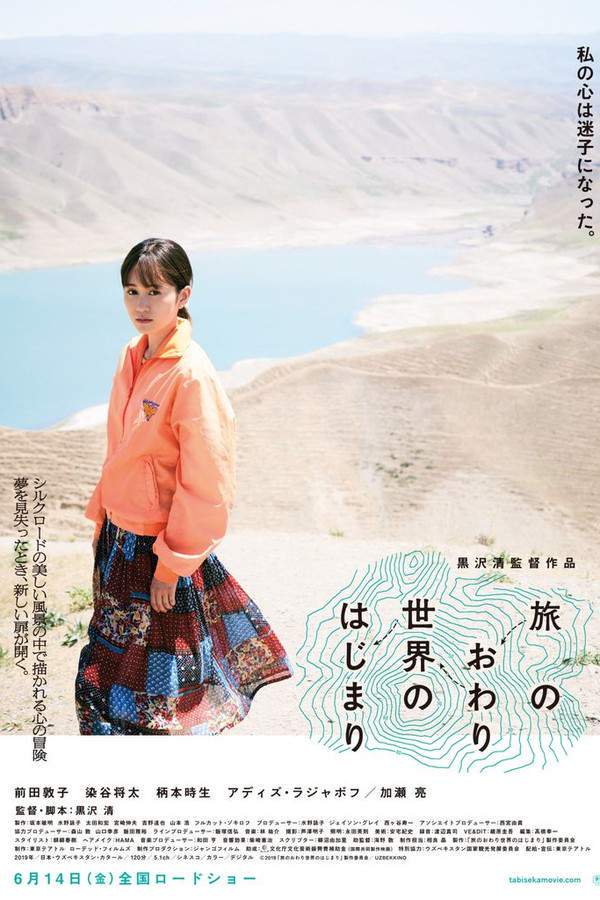
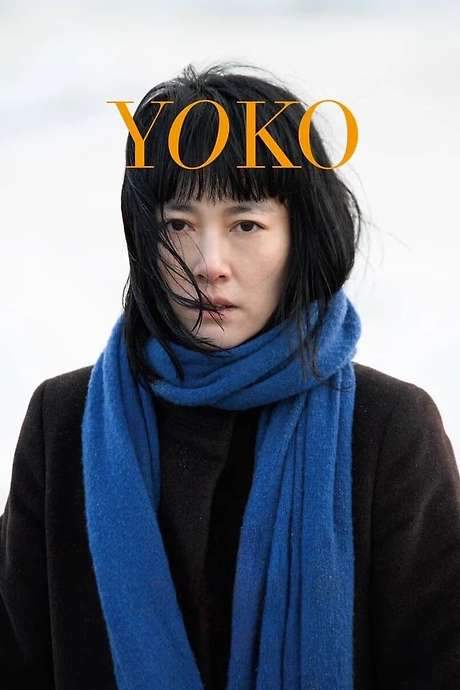
Yoko is a television travel program reporter who travels to Uzbekistan with her crew to shoot an episode for the show. She dreams of becoming a singer, and the film places her upbeat on-screen persona beside a growing internal tension that only appears when she’s alone. What starts as a bright, globe-trotting assignment gradually reveals the gaps between performance and private longing, creating a quiet, observational mood that sticks with you after the credits.
The film unfolds as a mosaic of episodic moments that keep circling back to Yoko’s delicate balance between charm and doubt. In one scene, she wades into a lake in search of a possibly mythical Uzbeki fish, speaking to the moment with curiosity and a touch of whimsy. In another vignette, she proclaims the rice in a bowl of plov as deliciously crunchy, savoring a simple detail that underscores her love of food and sensation. The tone shifts as she endures several nausea-inducing turns on a fun-park pendulum ride, each swing captured with close, almost clinical focus by the cameras, until the crew finally gets enough B-camera footage of her face to tell a story beyond her lines. And in a poignant, humane moment, she tries to liberate a goat named Okoo, only to learn that freeing it would likely invite danger from wild dogs, a realization that underscores the fragility of intention in the face of consequence.
The journey takes the crew to historic cities, with visits to Samarkand and Tashkent that broaden the film’s texture and atmosphere. In Tashkent, a fantasy sequence set at the Navoi Theatre—a building that, as the film notes, had been constructed after the war by Japanese POWs—places Yoko in a dreamlike performance of a classic Italian song in a way that blurs the line between documentary and reverie. The moment is a meditation on memory, art, and the way place can shape longing. During a bazaar exploration, she wanders off with a handheld camera and finds herself filming in a restricted area, a reckless choice that leads to a tense encounter with local authorities. The capture is surprisingly humane; the officers treat her with a rare kindness, a response that becomes more meaningful when she learns that a firefighter boyfriend, who is never actually shown on screen, may have been involved in a devastating oil refinery fire in Tokyo Bay where he was stationed. The only window into his world comes from text messages he exchanges with Yoko, leaving a bittersweet sense of distance and unanswered questions.
As the journey continues, the film returns to the core tensions that tether Yoko to her ambitions. The crew heads into the mountains for a finale that feels both rugged and intimate, once again chasing a likely mythical creature while the singer within Yoko pushes through doubt toward something braver. In this final stretch, Hymne à l'amour returns as a thread that stitches together memory, desire, and the ache of distance, with Yoko imagining Okoo running free against a distant horizon. The result is a patient, lyrical look at a woman who uses travel and performance to explore who she might become, even as the road keeps pulling her toward an uncertain future.
- The closing image lingers on the contrast between public performance and private longing, inviting viewers to consider how travel, culture, and folklore intersect with personal dreams.
- Throughout, the film uses small, intimate beats—food, sound, crowds, and landscape—to build a portrait that is more observational than narrative, letting the audience fill in the gaps with feeling as much as with fact.
- The mood stays measured and reflective, never rushing to resolve the questions it raises about fame, authenticity, and the price of visibility.