Plot Explained Spoilers guaranteed!
Plot Explained

Browse by genre

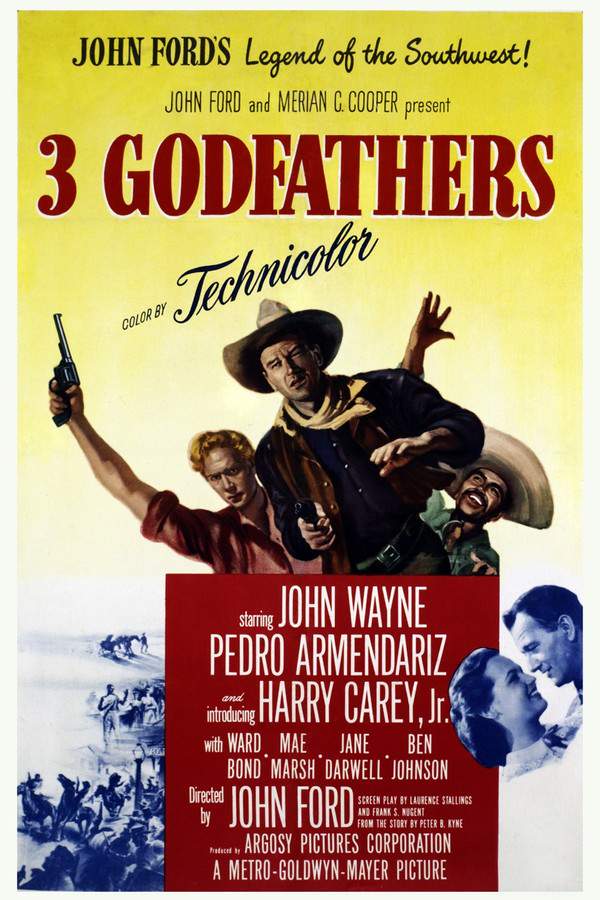
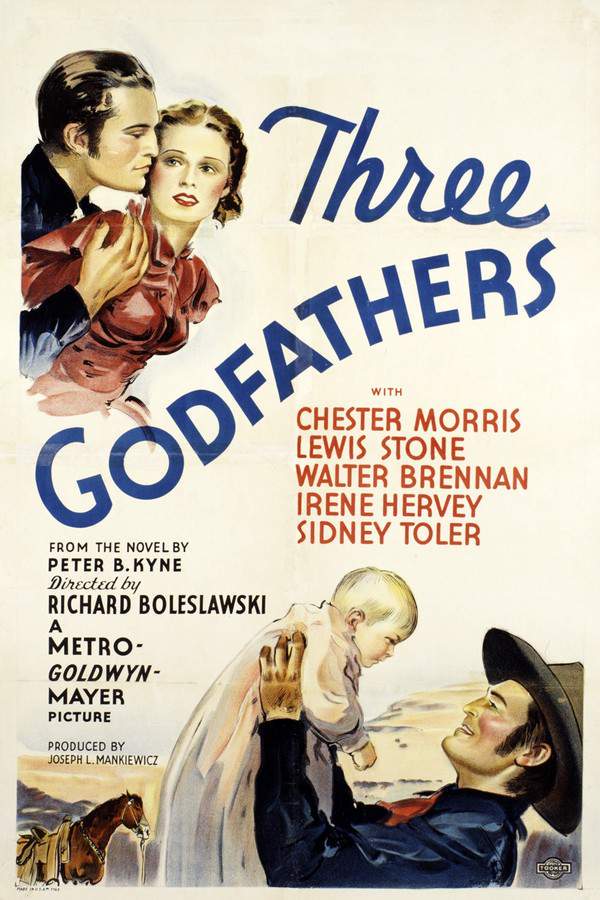
Three Godfathers (1936) movie poster

Plot Summary

Three Godfathers (1936) Plot Summary Explained

Release, runtime and language
1936 · 81 min · English
Directed by
Richard Boleslawski
Starring
Walter Brennan, Chester Morris, Lewis Stone, Irene Hervey, Dorothy Tree, John Sheehan

In the isolated town of New Jerusalem, four outlaws attempt to rob the local bank, leading to a chaotic confrontation. Following the robbery, three bandits escape, relentlessly pursued by a posse across the harsh desert. Their flight takes an unexpected turn when they discover a desperate mother and her newborn child stranded and struggling to survive. Abandoning their horses, the unlikely trio finds themselves responsible for protecting the infant and navigating the unforgiving landscape, forcing them to confront their own values and the true meaning of redemption.

On this page (5)
  1. 1 What happens: full plot
  2. 2 Plot questions answered
  3. 3 Movie threads
  4. 4 Movies like Three Godfathers
  5. 5 Every angle

Full plot summary · contains spoilers

What Happens in Three Godfathers: Full Plot Summary

The whole story of Three Godfathers (1936) explained, from the opening scene to the final frame: every key event, every twist and what it all adds up to. Read it as a quick recap before the sequel, to check a scene you missed, or to finally understand what really happened.

Just before Christmas in the late 1800s, a cynical renegade named Bob Sangster returns to his hometown of New Jerusalem with plans to rob the local bank. He is joined by an eclectic group: James "Doc" Underwood, a tubercular outcast whose philosophical insights bring depth to their misadventures; Sam "Gus" Bartow, an illiterate drifter navigating life on the fringes; and Pedro, a troubadour whose music provides a fragile sense of hope.

Once in town, Bob encounters Molly, the woman he once cherished, now engaged to banker Frank Benson. In a misguided gesture, he presents Molly with his mother’s watch as a wedding gift, but tensions rise when he accuses her of marrying Frank to forget him. This accusation stirs emotions in Molly, who, feeling conflicted about her feelings for Bob, angrily returns the watch. Bob soon exchanges it for drinks at the bar, cleverly convincing the bartender—and himself—that the watch is a cherished memento from his deceased mother.

The following morning, while townsfolk host a pie sale for charity, Bob and his gang execute their bank heist. The crime does not go unnoticed, as a group of armed citizens sets off in pursuit, leading to a violent confrontation in the unforgiving desert. Tragically, Pedro is lost, and Doc sustains injuries during their frantic escape.

Amidst the harsh environment, the remaining outlaws face an even graver challenge when they stumble upon a poisoned water hole. On their treacherous journey towards the next water source, they encounter Mrs. George Marshall, a half-dead woman desperate for help with her infant son. Despite her pleas, Bob, unwilling to take on the responsibility of the child, chooses to set off on his own toward the next water hole.

The next dawn reveals grim news; their horses have perished from the poisoned water. Realizing they cannot walk the distance, the group turns back to New Jerusalem. With their water supply dwindling, they divide the last drops but when Doc suggests buying back Bob’s milk can with his share of their bank loot, an act of altruism amidst despair takes place. Despite his frail state, Doc refuses to abandon the baby, ultimately sacrificing himself. As he recites lines from Macbeth, he bequeaths a portion of his remaining life to Gus and implores him to care for the child.

Haunted yet determined, Gus and Bob press onward, but the harsh desert takes its toll. Madness creeps into Gus, leading him to stray from their path, and Bob, burdened by greed, initially turns his back on the baby. However, a twist of fate strikes when a rattlesnake threatens the infant, compelling him to act with a flicker of redemption by saving the child.

As exhaustion overcomes him, just shy of their destination, he prays for the baby’s well-being and decides to drink from the poisoned water hole, believing that the time allowed for the poison to take effect will be enough to reach New Jerusalem. Bob stumbles into town amidst the angelic sounds of Christmas hymns, collapsing in church just as he entrusts the infant to Molly. With his last breath, he dies knowing that he has done something right. The baby holds the watch tightly in its hand, prompting Molly to clarify to a questioning congregation that it was no theft; it was a legacy from a mother to a son.
Last updated: October 25, 2024 at 10:14

Was this helpful?

Plot questions answered

Three Godfathers Plot Explained: Your Questions Answered

The questions people ask most about Three Godfathers (1936): what happens in the confusing scenes, why the characters do what they do, the twists, hidden details and what the ending means. Each answer contains spoilers.

Q1

Why did Bob leave Mrs. Marshall and her baby in the desert?

Bob initially refused to help Mrs. Marshall and her infant because he was focused solely on his own survival and the survival of his two remaining companions. After being chased by the posse, losing Pedro, and facing the harsh desert conditions with dwindling water supplies, Bob chose to prioritize reaching the next water hole rather than taking on the responsibility of caring for a helpless baby. His decision was driven by desperation and self-preservation, reflecting his cynical, morally bankrupt state at that point in the story.

  • mrs marshall baby abandoned desert bob survival
Q2

How did Doc sacrifice himself for the baby?

Doc, who was already injured and suffering from tuberculosis, insisted on using some of the stolen bank loot to buy back Bob's milk can so they could feed the baby. When their water supply ran critically low, Doc gave his share to the baby rather than keeping it for himself. Weakened by his injuries and illness, Doc eventually succumbed to exhaustion and exposure, but not before reciting lines from Macbeth and bequeathing a portion of his remaining strength to Gus, imploring him to care for the child.

  • doc underwood sacrifice baby tuberculosis death
Q3

What happened after the outlaws found the poisoned water hole?

The outlaws discovered a water hole that was poisoned, causing their horses to die from drinking it. With their horses dead, they realized they could not walk the distance to the next water source. This forced Bob and Gus to turn back toward New Jerusalem, where they would face the danger of the pursuing posse but at least have a chance at finding fresh water and survival.

  • poisoned water horses died desert survival turning back
Q4

Why did Bob drink from the poisoned water hole?

Bob deliberately drank from the poisoned water hole believing that the time it would take for the poison to take effect would be enough for him to reach New Jerusalem and deliver the baby safely to Molly. He calculated that he would die from the poison but would survive long enough to complete his mission of redemption by ensuring the child reached safety. This final act of sacrifice represented his complete transformation from a selfish outlaw to a selfless protector.

  • bob poisoned water sacrifice baby new jerusalem death
Q5

What caused Gus to go mad in the desert?

Gus began losing his grip on reality due to the extreme hardships of desert survival: severe dehydration, exhaustion, heat exhaustion, and the psychological toll of their desperate situation. The combination of watching Doc die, being abandoned by the posse, and facing the merciless desert conditions drove Gus to stray from their path. His descent into madness represented the breaking point of a man pushed beyond his physical and mental limits.

  • gus bartow madness desert hallucinations strayed path
Q6

What was the significance of the rattlesnake encounter?

When a rattlesnake threatened the infant, Bob was forced to act instinctively to save the child. This moment marked a turning point in Bob's character arc, as his greed and selfishness momentarily dissolved into protective paternal instinct. The rattlesnake encounter awakened something in Bob that had been buried beneath years of cynicism, triggering his decision to truly care for the baby rather than abandon it as he had originally planned.

  • rattlesnake baby bob saved child turning point redemption
Q7

Why did Doc recite Macbeth before dying?

Doc quoted Shakespeare's Macbeth as he faced his own death, specifically the famous 'tomorrow and tomorrow and tomorrow' passage about life's meaning being illusionary. This philosophical moment reflected Doc's character as an educated, reflective man facing mortality with acceptance rather than fear. The quote underscored the film's themes of life's fragility and the search for meaning through sacrifice, as Doc used his final moments to urge Gus to continue caring for the child.

  • doc underwood macbeth quote death shakespeare sacrifice
Q8

What did the watch represent at the end of the movie?

The watch, which Bob had originally traded for drinks at the bar, became a symbol of redemption and legacy. Bob's mother had given him the watch, and by the end, Bob had passed it to the infant, who held it tightly when Molly took the child. Molly clarified to the congregation that the watch was not stolen property but rather a legacy from a mother to a son, representing Bob's transformation from a thief into someone capable of giving something meaningful back.

  • watch legacy mother bob baby molly redemption symbolism
Q9

Why did Bob give Molly his mother's watch as a wedding gift?

Bob gave Molly his mother's watch as a misguided attempt to reconnect with her and assert his presence in her life. When Bob returned to New Jerusalem and found Molly engaged to banker Frank Benson, he attempted to win her back by presenting the precious family heirloom. The gesture was both an apology and a claim, Bob was trying to prove his affection while simultaneously expressing resentment about her engagement. Molly rejected the watch and the gesture, returning it to Bob in anger.

  • bob molly watch gift wedding engagement frank benson
Q10

How did the three outlaws achieve redemption?

Each outlaw achieved redemption through sacrifice and transformation. Doc gave his life ensuring the baby would survive. Bob sacrificed himself by drinking poisoned water to deliver the child to safety, dying in church as he entrusted the infant to Molly. Even Gus, who went mad from desert hardship, had earlier demonstrated commitment to the child's survival. Their journey from selfish bank robbers to self-sacrificing protectors of an innocent life represented their collective path to spiritual redemption.

Foreshadowing: The watch Bob traded for drinks foreshadows its ultimate purpose as a legacy passed to the child.

  • redemption outlaws sacrifice bob doc gus salvation spiritual transformation
Q11

What did Bob pray for before entering New Jerusalem?

As Bob staggered through the desert near death, he prayed for the baby's well-being, asking that the child survive and reach safety. His prayer demonstrated his complete transformation from the cynical, self-interested outlaw who had initially abandoned the baby to a man willing to sacrifice everything for an innocent life. This prayer represented the culmination of his spiritual awakening and his desperate hope that his sacrifice would mean something.

  • bob prayer baby survival salvation final moments desert

Movie threads

More Movies Like Three Godfathers, by Mood & Story

Curated lists built around what makes Three Godfathers tick: the same mood, the same kind of story or the same emotional payoff. Each list explains why these movies belong together.

Redemptive Journeys Through Hardship like in Three Godfathers

Flawed characters find purpose and redemption through a selfless sacrifice. Discover movies like Three Godfathers where flawed protagonists find meaning through sacrifice. These films feature desperate characters on punishing journeys who experience a spiritual awakening by protecting something innocent, leading to bittersweet yet powerful conclusions about redemption.

  • redemptive
  • sacrificial
  • desperate
  • melancholic
  • harsh
  • lonely
  • Tone: melancholic, redemptive
  • Pacing: steady, arduous
Why these movies?

The story pattern: Stories in this thread typically begin with characters at a low point, often criminals or outcasts. An external event—usually the need to protect a vulnerable person or ideal—forces them onto a difficult path. The central conflict shifts from external survival to an internal struggle with their own morality, culminating in a sacrifice that grants them redemption, often at a great personal cost.

Why they belong together: These movies are grouped by their shared focus on a specific character arc: the redemption arc earned through selfless action. They combine a heavy emotional weight with a melancholic or bittersweet tone, creating a powerful, cathartic experience centered on the possibility of change even in the darkest circumstances.

Gritty Survival Stories in Hostile Landscapes like Three Godfathers

Stories of sheer endurance against an unforgiving environment. Find movies like Three Godfathers where the fight for survival is against a harsh environment. These gritty stories feature characters pushed to their limits by deserts, winters, or wastelands, creating a tense and desperate atmosphere where every decision is a matter of life or death.

  • harsh
  • desperate
  • gritty
  • lonely
  • punishing
  • grueling
  • Tone: desperate, harsh, melancholic
  • Pacing: steady, relentless
Why these movies?

The story pattern: The narrative pattern is defined by a grueling journey or ordeal set in an environment that is actively trying to kill the characters. The plot is often linear and straightforward, driven by the immediate needs of survival: finding water, shelter, and a path to safety. Conflicts are elemental, and the pacing is steady and relentless, mirroring the constant pressure of the setting.

Why they belong together: These films are united by their immersive and intense atmosphere, generated by the hostile setting. They share a high intensity, a heavy emotional weight due to the life-or-death stakes, and a tone that is often desperate and melancholic. The focus on sheer physical endurance creates a cohesive, gripping viewing experience.

If you liked this

Movies Like Three Godfathers

Similar movies to Three Godfathers: the same genre, themes or kind of story. Each one comes with its own plot summary, timeline and ending explained.

Browse all movie summaries

Every angle

Three Godfathers (1936) Explained: Plot, Timeline & Characters

Everything about Three Godfathers in one place: what happens in the plot summary, the timeline in chronological order, the characters and meaning and a spoiler-free summary. What's After the Movie adds the cast, box office and post-credit scenes.

Coming soon on iOS and Android

The Plot Explained Movie Summary App

Plot summaries, endings explained and timelines on your phone. Catch up on any movie in minutes, save your favorites and never miss a twist again.

Be the first to know when we launch. Your email stays private, always.

Learn more about the app