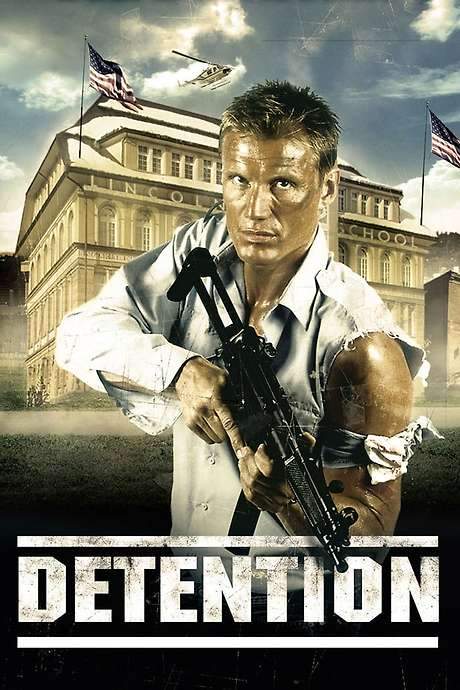
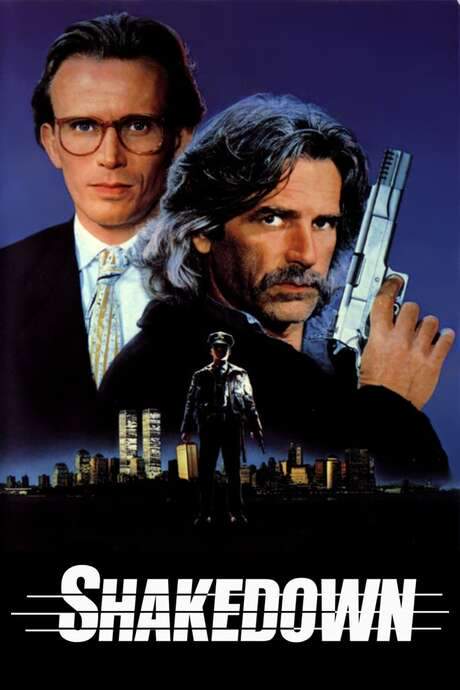
Jonathan Shale, a Vietnam War veteran and mercenary, returns home to Miami after a botched covert operation in Cuba that claimed three members of his platoon. He surprises his girlfriend, Jane Hetzko, at her apartment, and she welcomes him with warmth and relief. Jane Hetzko works as a schoolteacher at inner-city Columbus High School, a rough campus where gang activity casts a long shadow over daily life. The headmaster, portrayed by David Bamber, oversees the school with a wary eye as tensions simmer behind the classroom doors.
From the moment Shale learns about the challenges facing Columbus High, the sense of danger is undeniable. The attack on Jane—an incident she attributes to the KOD, the Kings of Destruction gang—pushes Shale into a radical plan: go undercover. He adopts a convincing cover story as an Ivy League–educated, government-affiliated substitute teacher, stepping into Jane’s classroom with a mix of discipline, strategy, and grit. The first day proves chaotic; the students are unruly, poorly educated, and quick to test a substitute who isn’t afraid to assert himself. Yet Shale’s military training begins to tilt the scales. When the class reacts violently, he uses his self-defense instincts to restore order, and his controlled, confident approach earns him the wary respect of some students who see a reflection of their own struggles in his wartime memories.
As Shale stabilizes the classroom, he forges connections that go beyond lesson plans. He forms a bond with Darrell Sherman, another teacher who becomes an ally in navigating the school’s fraught social terrain. He also encounters Juan Lacas, a student who leads a local gang and is surrounded by a circle of danger. The campus, already a powder keg, becomes a stage for Shale’s attempt to bridge two worlds: the rigid rules of a school and the brutal realities of the streets outside its walls. In short order, Shale gains the students’ trust by showing that he understands the pull of gang life and the consequences it carries, while also making it clear that his aim is to steer them toward safer, more hopeful paths.
Behind the scenes, Shale’s curiosity leads him to install surveillance measures around the school, a move that intensifies the investigation into the layers of risk at Columbus High. Through the cameras, he discovers a troubling pattern: Juan Lacas orchestrated the attack on Jane, and the larger scheme involves a cocaine distribution network tied to the school, orchestrated with the complicity of the school’s administration. The discovery marks a turning point: Shale and a small team move to disrupt the operations, staging a raid on a drug deal. They take the money from the raid and present it as a donation to the school, collecting equipment and materials—music and sports gear—that are badly needed by students who often go without.
Sherman and a student named Lisa become witnesses to the broader conspiracy. Initially, Sherman denies Shale’s claims, arguing that the investigation is an attempt to smear the school’s leadership. Yet the truth surfaces when Sherman and Lisa stumble upon drugs being loaded into one of the school buses as they’re fleeing the campus. In the ensuing chase, Sherman makes a selfless choice, creating a distraction that allows Lisa and Shale to stay one step ahead of the danger. Sherman’s sacrifice adds emotional weight to the unfolding conflict and underlines the high stakes of confronting the narcotics ring wound through the school.
The next day brings new urgency. Jerome, one of Shale’s students, leads a class under the teacher’s temporary absence. Lisa returns to request a word with Shale, insisting that she speak with him about what’s happening. When Jerome discovers Lisa’s concern, he takes her to Jane’s house, certain that Shale will return there. The connection between Shale’s personal life and his professional mission becomes clearer: the attack on Jane is tied to the larger scheme he’s trying to unravel, and the threat soon intensifies as Rolle, the school’s administrator, orders Juan to pursue Jane. Shale goes to Jane’s apartment in an effort to rescue her, only to find himself overwhelmed by the gang’s numbers. He defeats several attackers, killing one and incapacitating another, before a neighbor’s intervention allows a brief window of escape. Yet the situation worsens when Juan uses Jane as a human shield, turning the standoff into a life-and-death confrontation.
In a tense turn of events, Jerome—who had been physically restrained in the apartment—shoots Juan from behind, ending the immediate threat and freeing Jane. Lisa, still reeling from the around-the-clock danger, explains what happened at the school with Mr. Sherman, helping Shale piece together the full scope of the operation. With this new understanding, Shale and his team shift from protecting Jane to attacking the distribution network directly on the school grounds. They face a sprawling, multi-front assault that includes Johnny Glades, a Native American crime lord seeking the return of stolen money; a rival mercenary faction led by Janus; and Rolle himself, who is entangled in the narcotics operation. The battle that follows is chaotic, brutal, and decisive, but Shale and his ally Joey Six manage to eliminate the dealers and survive the encounter as the last men standing.
As the dust settles, Shale and Joey Six walk away from the school grounds with a pragmatic sense of purpose. They discuss future operations in the capacity of substitute teachers, treating their vigilante actions as a temporary measure within a larger mission. The film closes on a note of cautious optimism: even as the streets remain dangerous and the lines between right and wrong remain blurred, Shale’s decision to step into the classroom—against the backdrop of gunfire and betrayal—has altered the course of several lives. The story leaves viewers with a question about what it means to serve, to protect, and to teach, especially in a place where violence and opportunity collide in such a volatile way.