Plot Explained Spoilers guaranteed!
Plot Explained

Browse by genre

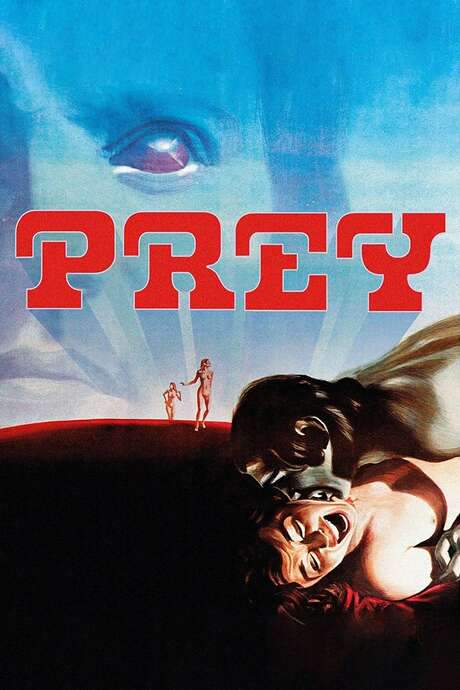
The Prey (1983) movie poster

Timeline

The Prey (1983) Timeline Explained – Every Event in Order

Release, runtime and language
1983 · 80 mins · English
Loading streaming availability…
Directed by
Edwin Brown
Starring
Eric Edwards, Garry Goodrow, Carel Struycken, Jackie Coogan, Lori Lethin, John Leslie

During a sweltering summer, three couples set out for a weekend camping trip in the remote woods of Southern California. Their peaceful retreat quickly turns into a nightmare when they realize a deformed, axe‑wielding figure is lurking nearby, silently stalking their camp and turning the forest into a deadly hunting ground.

On this page (6)
  1. 1 Where to watch
  2. 2 Events in order (12)
  3. 3 Timeline questions answered
  4. 4 Movie threads
  5. 5 Movies like The Prey
  6. 6 Every angle
Loading streaming availability…

12 events in order · contains spoilers

The Prey Timeline: Events in Chronological Order

Every key event of The Prey (1983) in order, scene by scene, with when and where it takes place. Use it to untangle flashbacks, time jumps and parallel storylines, to refresh your memory before the sequel or to find the exact scene you are thinking of.

  1. Origin: 1948 North Point Fire

    In 1948, a wildfire sweeps through North Point in Keen Wild National Forest, devastating the isolated gypsy community living in a cave. The blaze leaves a scar on the landscape and on local memory, setting up a haunting backstory for later events. The tragedy hints at the hidden dangers lurking in the mountains.

    When
    1948
    Where
    North Point, Keen Wild National Forest, Colorado Rockies
  2. Sylvester Murder (1980)

    Frank and Mary Sylvester camping in North Point are murdered with an axe by an unseen figure. Their deaths establish a violent mystery that haunts the region and foreshadow more killings. The killer’s presence hints at a larger threat lurking in the area.

    When
    1980
    Where
    North Point
  3. Three California Couples Arrive

    Weeks after the Sylvesters' deaths, Nancy and Joel, Bobbie and Skip, and Greg and Gail trek into North Point for a hiking trip. They obtain nature permits and chat with forest ranger Mark O'Brien, who warns that few people venture into North Point. The stage is set for a tense encounter with a hidden threat.

    When
    a few weeks after 1980
    Where
    North Point
  4. First Night Attack: Gail

    During their first night, Gail is smothered with her sleeping bag by the unseen killer, a tall man with a burned face. Greg is then attacked, his throat torn open, revealing the killer's brutal method. The group is suddenly ripped from safety into danger.

    When
    First night
    Where
    North Point campsite
  5. Morning Disappearances

    The next morning, Nancy and the others discover Greg and Gail have vanished along with their gear. Nancy notes a blood smear on a nearby tree but dismisses it as an animal mark. The mystery deepens as the group continues their trek.

    When
    Next morning
    Where
    North Point campsite
  6. Police Call Stirs Investigation

    A few weeks into their stay, Mark O'Brien meets head ranger Lester Tile, who informs him that police are investigating the Sylvester disappearance. The conversation links the current danger to the 1948 fire and to the burned gypsy boy. The investigation tightens the sense that North Point hides a long-reaching threat.

    When
    During their stay
    Where
    North Point
  7. Lester Tile's Gypsy Boy Tale

    Lester shares a story about a young gypsy boy wandering the woods after the fire, horribly disfigured. The tale foreshadows the killer's identity and origins. Mark's sense of danger grows as the group continues its trek.

    When
    During stay
    Where
    North Point
  8. Suicide Peak Expedition

    Skip and Joel decide to hike to Suicide Peak to rappel down, while Nancy and Bobbie stay at the base by the river. The group plans their ascent as Mark heads into North Point to search for the Sylvesters. The dangerous landscape becomes a stage for the killers' actions.

    When
    Days later
    Where
    Suicide Peak area
  9. Descent Turned Fatal

    As Joel rappels, the killer breaks Skip's neck and cuts Joel's rope, sending him plummeting to his death. The killer reveals himself as the fully grown gypsy boy with razor-sharp claws. The group realizes the danger is personal and close at hand.

    When
    During rappel
    Where
    Suicide Peak
  10. Nancy and Bobbie's Escape

    Nancy and Bobbie flee down the peak in terror, but Bobbie triggers a deadly booby trap that lifts her into the air and slams her against a tree, killing her. The danger tightens around Nancy as she fights to survive. The sheriff-less isolation of North Point amplifies the terror.

    When
    After the killings
    Where
    Suicide Peak
  11. Final Confrontation: Mark and the Killer

    Cornered by the killer, Nancy is saved when Mark arrives with a tranquilizer and bludgeons the attacker. The killer awakens and, in a final moment, crushes Mark's throat before turning toward Nancy with a disturbing smile. The intense rescue ends without a clear victory for Nancy.

    When
    Climax
    Where
    Suicide Peak
  12. Springtime Revelation

    Months later, in spring, the mountains echo with the crying of an infant coming from a cave, implying that Nancy and the killer have begun a life together. The film ends on an unresolved, ominous note, leaving the killer's fate and Nancy's future uncertain.

    When
    Spring (months later)
    Where
    Mountain cave, North Point

Last updated: October 09, 2025 at 14:42

Was this helpful?

Timeline questions answered

The Prey Timeline Explained: Your Questions Answered

When does it happen, and why in that order? The questions people ask about the chronology of The Prey (1983): time jumps, flashbacks, cause and effect between scenes and the correct order of events, each answered with spoilers.

Q1

Why does the killer stalk and kill these specific campers?

The killer targets anyone who enters his territory, the remote North Point area of Keen Wild National Forest. Since being abandoned as a child after the 1948 wildfire destroyed the gypsy community, he has lived as a feral creature in the caves and considers the forest his domain. The campers represent intruders in his isolated world, and their presence triggers his violent, territorial instincts. There's no personal vendetta against these specific couples; they're simply victims of opportunity who wandered into his hunting ground.

Foreshadowing: Early on, the forest rangers warn the couples that North Point is not a popular destination, hinting at the danger lurking in the area.

  • killer motivation
  • territory
  • campers
  • North Point
  • gypsy boy
Q2

What happened to the gypsy boy after the 1948 wildfire?

After the 1948 wildfire destroyed the gypsy cave community, a young boy survived but was horribly burned and disfigured. He wandered alone through the woods of North Point, living as a feral outcast. Head ranger Lester Tile explains this backstory to Mark O'Brien, revealing that the boy was never rescued or rehabilitated. He grew up in isolation, developing survival skills and a deep knowledge of the forest. The killer encountered in the present day is this now-adult gypsy boy, transformed into a monstrous figure who has spent decades honing his hunting and trapping abilities in the same mountains.

Foreshadowing: Lester Tile's story about the burned gypsy boy directly foreshadows the killer's true identity.

  • gypsy boy
  • 1948 fire
  • burned face
  • origin
  • backstory
Q3

How did the killer survive for so many years living in the forest?

The killer survived by living as a feral hermit in the caves of North Point, hunting wildlife and surviving off the land. His disfigurement made reintegration into society impossible, so he adapted to life in the wilderness. Over approximately 32 years (from 1948 to 1980), he developed exceptional survival skills, learned to set deadly booby traps, and transformed from a traumatized child into a ruthless predator. The isolated nature of Keen Wild National Forest provided the perfect environment for someone wanting to remain hidden while honing his violent skills.

Foreshadowing: The 1948 fire leaves a scar on both the landscape and local memory, establishing the long timeline of the killer's existence in the area.

  • survival
  • forest
  • caves
  • wilderness
  • feral
Q4

Why does Nancy survive the killer's attack when everyone else dies?

Nancy survives because the killer deliberately chooses to keep her alive. Unlike his previous victims whom he kills efficiently, the killer shows unusual interest in Nancy during their confrontation. After killing Mark O'Brien, he approaches Nancy with what the narrative describes as a disturbing, almost affectionate gentleness and a smile. This suggests the killer views Nancy as something other than a victim, perhaps a companion or mate. His predatory patience shifts to a different kind of intent, which is why he doesn't kill her despite having the opportunity.

Foreshadowing: The killer's reaction to Nancy during the climax differs markedly from his treatment of other victims, showing deliberate restraint.

  • Nancy survival
  • final confrontation
  • alive
  • predator
  • intent
Q5

What does the ending imply about what happens to Nancy?

The ending strongly implies that Nancy has formed a terrifying symbiotic bond with the killer. Months after the massacre, the film concludes with the sound of an infant crying from a cave in the mountains. This haunting image suggests that Nancy either became pregnant from her time with the killer or that a child was born from their disturbing relationship. The killer's earlier display of affectionate behavior toward Nancy transforms into a nightmarish scenario where she has been kept alive as a companion, potentially establishing a twisted family unit in the caves. The cycle of horror appears set to continue.

Foreshadowing: The killer's gentle reach toward Nancy at the climax, combined with his calm demeanor, foreshadows his intent to keep her rather than kill her.

  • ending
  • infant
  • cave
  • Nancy
  • bond
  • symbiosis
  • cycle
Q6

How was the killer able to set up so many deadly traps in the forest?

The killer has lived in the North Point area for over 30 years, giving him ample time to study the terrain and construct an elaborate network of deadly traps. His intimate knowledge of the forest, from rope setups at Suicide Peak to spring-loaded mechanisms, demonstrates meticulous preparation and patience. These traps serve as both hunting tools and territorial defenses. The killer operates like a trapper or survivalist, using the environment itself as a weapon. His expertise suggests he has been perfecting his killing methods for decades, refining them with each attempt.

Foreshadowing: The forest's seemingly natural dangers actually hide the killer's handiwork, established early when Nancy dismisses blood on a tree as animal activity.

  • booby traps
  • Suicide Peak
  • traps
  • forest
  • prepped
  • deadly
Q7

Why does the killer kill Mark O'Brien after he tries to save Nancy?

The killer kills Mark O'Brien because the ranger represents the final obstacle between him and Nancy. Mark arrives during the climax with a tranquilizer gun and attacks the killer with a heavy improvised weapon, striking a critical blow that temporarily subdues the attacker. However, the killer quickly recovers and kills Mark by crushing his throat with his bare hands. This murder eliminates the one person capable of stopping him and removes the protective figure Nancy was relying on. With Mark dead, the killer can freely pursue his apparent goal of taking Nancy as his companion.

  • Mark O'Brien
  • ranger
  • killed
  • throat
  • death
  • rescue
Q8

Why is the 1948 wildfire important to the story?

The 1948 wildfire serves as the origin story for the killer and establishes the thematic foundation of the entire film. The fire destroys the gypsy community living in caves at North Point, killing most inhabitants but leaving a young boy horribly burned and abandoned. This traumatic event transforms an innocent child into a monstrous killer through decades of isolation, disfigurement, and feral survival. The fire scarred both the landscape and the killer's psyche, creating the beast that later terrorizes campers. Without this backstory, there would be no explanation for the killer's existence, his knowledge of the forest, or his violent nature.

Foreshadowing: The opening scene establishes the 1948 fire as the definitive origin point that echoes through all subsequent events.

  • 1948 fire
  • wildfire
  • origin
  • gypsy community
  • scar
  • backstory
Q9

Why is the killer so extremely brutal and violent?

The killer's extreme brutality stems from profound psychological and physical trauma. As a child, he witnessed the destruction of his entire community in the wildfire, suffered severe burns that disfigured him beyond recognition, and was abandoned in the woods. This combination of abandonment, isolation, and disfigurement warped his development completely. Living as a feral creature for over 30 years stripped away any remaining humanity, replacing it with pure predatory instinct. His violence is indiscriminate and ritualistic because he views all humans as invaders in his territory. The brutality also reflects his transformation from victim to monster, his killing methods mirror the destructive fire that created him.

Foreshadowing: The burned face and disfigurement visible when Gail is attacked connects directly to the fire trauma.

  • brutality
  • violence
  • trauma
  • disfigurement
  • psychopath
  • feral
Q10

What is the connection between the Sylvester murders and the couples' trip?

The Sylvester murders and the couples' camping trip are linked by location and the killer's continued presence in North Point. Frank and Mary Sylvester were murdered with an axe in 1980 while camping in the same area where the three couples later trek. Their deaths serve as the present-day catalyst for the investigation, prompting Mark O'Brien to meet with head ranger Lester Tile and uncover the gypsy boy legend. The couples stumble into an active killing ground, they arrive weeks after the Sylvesters' deaths, unaware that a killer is already entrenched in the region. Their timing is tragically unlucky, as they enter the killer's territory just as he's established a pattern of violence.

Foreshadowing: The police call about the Sylvester disappearance triggers the investigation that connects past to present.

  • Sylvester murders
  • Frank
  • Mary
  • axe
  • 1980
  • connection
  • timing
Q11

Who is the killer in The Prey?

The killer is the disfigured gypsy boy who survived the 1948 wildfire that destroyed his community. After being burned and abandoned in the North Point woods as a child, he lived in isolation for over three decades, transforming from a traumatized boy into a monstrous, feral adult. Forest ranger Lester Tile tells his backstory to Mark O'Brien, establishing that the burned face and inhuman behavior stem from this origin. The killer has razor-sharp claws (possibly from claw-like prostheses or natural deformation) and exhibits animalistic behavior. He's never given a name in the film, he exists purely as a force of nature, an embodiment of the trauma and horror that the 1948 fire created.

Foreshadowing: Lester Tile's tale about the burned gypsy boy directly foreshadows the killer's reveal.

  • killer identity
  • gypsy boy
  • burned face
  • claws
  • monster
  • origin

Movie threads

More Movies Like The Prey, by Mood & Story

Curated lists built around what makes The Prey tick: the same mood, the same kind of story or the same emotional payoff. Each list explains why these movies belong together.

Relentless Backwoods Slashers like The Prey

Stories of isolated groups hunted by a brutal force in a remote natural setting. If you liked the terrifying survival story of The Prey, explore more movies where a remote natural setting becomes a deadly hunting ground. These films feature similar feelings of isolation, a methodical killer, and the desperate fight for survival against a brutal force in the wilderness.

  • brutal
  • suspenseful
  • survival horror
  • oppressive
  • anxious
  • tense
  • Tone: dark, brutal, fearful
  • Pacing: steady, relentless
Why these movies?

The story pattern: The narrative typically follows a simple, direct structure: an isolated group enters a remote location, a threat is introduced, and a methodical hunt ensues. The conflict is primal, pitting civilization against a savage force, with survival as the sole objective and escape from the environment as the key challenge.

Why they belong together: Movies are grouped here for their shared focus on the 'hunter vs. hunted' dynamic in a wilderness setting. They create a cohesive experience through oppressive atmosphere, a steady, relentless pace of attack, and the constant, high-intensity fear of being stalked by a brutal, often unexplained, antagonist.

Movies with Bleak Endings like The Prey

Horror stories where survival offers no escape and the cycle of terror continues. For viewers who appreciated the disturbing and hopeless conclusion of The Prey, this section collects similar horror films with bleak and unforgiving endings. These movies often feature survivors scarred by trauma, cyclical horrors, or resolutions that offer no catharsis, only a lasting sense of dread.

  • bleak
  • disturbing
  • heavy
  • hopeless
  • tragic
  • uneasy
  • Tone: dark, bleak, disturbing
  • Pacing: steady, culminating
Why these movies?

The story pattern: The emotional journey in these films is a descent into darkness with no reprieve. Characters may survive the immediate threat, but they are left psychologically broken, physically captured, or faced with the terrifying knowledge that the evil has won or will inevitably return. The story arc rejects conventional hope.

Why they belong together: These films are united by their commitment to a pessimistic and emotionally heavy conclusion. They share a dark tone and use their endings to reinforce themes of inescapable fate, perpetual cycles of violence, or the fragility of sanity, creating a powerfully disturbing and memorable viewing experience.

If you liked this

Movies Like The Prey

Similar movies to The Prey: the same genre, themes or kind of story. Each one comes with its own plot summary, timeline and ending explained.

Browse all movie summaries

Every angle

The Prey (1983) Explained: Plot, Timeline & Characters

Everything about The Prey in one place: what happens in the plot summary, the timeline in chronological order, the characters and meaning and a spoiler-free summary. What's After the Movie adds the cast, box office and post-credit scenes.

Coming soon on iOS and Android

The Plot Explained Movie Summary App

Plot summaries, endings explained and timelines on your phone. Catch up on any movie in minutes, save your favorites and never miss a twist again.

Be the first to know when we launch. Your email stays private, always.

Learn more about the app