Plot Explained Spoilers guaranteed!
Plot Explained

Browse by genre

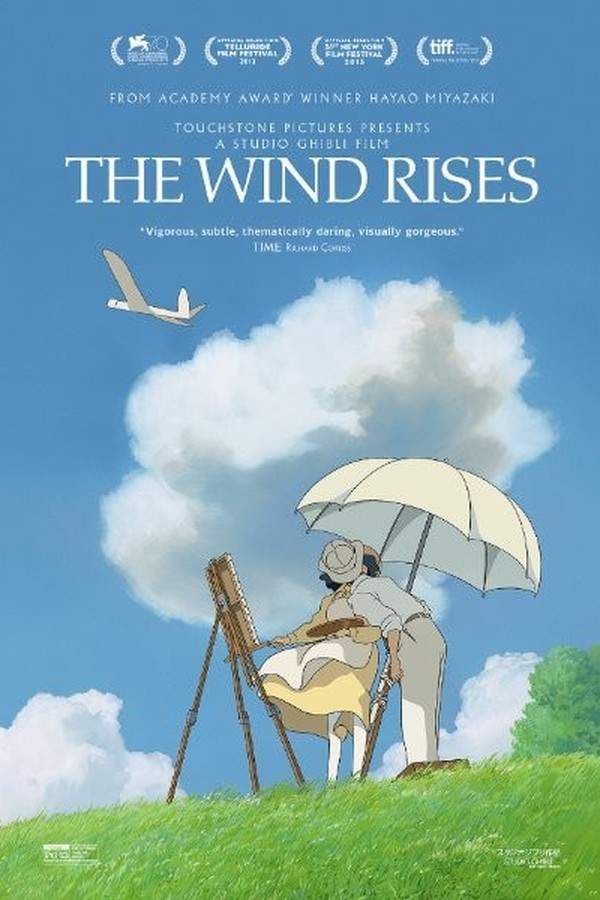
The Wind Rises (2013) movie poster

Timeline

The Wind Rises (2013) Timeline Explained – Every Event in Order

Release, runtime and language
2013 · 126 min · Japanese
Loading streaming availability…
Directed by
Hayao Miyazaki

A young man named Jiro Horikoshi pursues his dream of becoming an aircraft designer in 1920s Japan. Despite his nearsightedness, he rises through the ranks of a leading engineering company, driven by a passion for creating elegant and powerful airplanes. His career and personal life are intertwined with significant historical events, and he experiences a tender romance with Nahoko. The story explores themes of beauty, dreams, and the complex relationship between innovation and conflict as Japan approaches war.

On this page (7)
  1. 1 Where to watch
  2. 2 Events in order (15)
  3. 3 Timeline questions answered
  4. 4 The book behind the movie
  5. 5 Movie threads
  6. 6 Movies like The Wind Rises
  7. 7 Every angle
Loading streaming availability…

15 events in order · contains spoilers

The Wind Rises Timeline: Events in Chronological Order

Every key event of The Wind Rises (2013) in order, scene by scene, with when and where it takes place. Use it to untangle flashbacks, time jumps and parallel storylines, to refresh your memory before the sequel or to find the exact scene you are thinking of.

  1. Jiro's Dream of Aviation

    In 1918, a young Jiro Horikoshi dreams of becoming a pilot, only to have his dreams dashed by his nearsightedness. Inspired by a magazine article, he begins to dream of soaring through the skies, guided by his idol, Giovanni Battista Caproni.

    When
    1918
  2. Meeting Caproni in Dreams

    As Jiro dreams, he encounters Caproni, who shares his wisdom about the significance of designing aircraft over piloting them. This moment solidifies Jiro's aspiration to become an aeronautical engineer rather than a pilot.

  3. Pursuing Engineering

    Five years later, Jiro enrolls at Tokyo Imperial University as an aeronautical engineering student. This pivotal decision positions him to contribute to the world of aviation despite the challenges he faces.

    When
    1923
    Where
    Tokyo Imperial University
  4. The Great Kantō Earthquake

    During a visit home, Jiro meets Nahoko Satomi and her maid Kinu. Their brief interaction turns chaotic as the Great Kantō earthquake strikes, injuring Kinu and setting the stage for Jiro and Nahoko's relationship.

    When
    1923
  5. Graduation and New Beginnings

    In 1925, Jiro graduates alongside his friend Kiro Honjo, and both secure positions at Mitsubishi. They are tasked with developing a fighter plane during the challenging period of the Great Depression.

    When
    1925
    Where
    Mitsubishi
  6. The Mitsubishi 1MF9 Failure

    While working on the Mitsubishi 1MF9, Jiro faces disappointment when the plane breaks apart during testing and is rejected. This setback highlights the difficulties in their endeavors to create effective aviation technology.

    When
    1928
  7. Journey to Weimar Republic

    In 1929, Jiro and Honjo travel to the Weimar Republic to acquire a production license for the Junkers G.38. Despite being welcomed by Hugo Junkers, they encounter bureaucratic challenges that hinder their progress.

    When
    1929
    Where
    Weimar Republic
  8. Return to Japan

    Disheartened by Japan's technological lag, Jiro returns home while Honjo stays behind to work on the Mitsubishi G4M. This decision shapes the future of their respective careers in aviation.

    When
    1930
    Where
    Japan
  9. The Fighter Plane Competition

    By early 1932, Jiro achieves the role of chief designer for a fighter plane competition sponsored by the Imperial Navy. Unfortunately, his design fails testing in 1933, marking another professional setback for him.

    When
    1933
  10. Reunion with Nahoko

    After the failure of his design, Jiro retreats to a summer resort where he fortuitously reunites with Nahoko. Their connection deepens into romance, providing Jiro with emotional support during challenging times.

    When
    1933
    Where
    Karuizawa
  11. Nahoko's Illness

    Devastating news impacts Jiro when he learns that Nahoko has tuberculosis. This prompts him to seek her father's permission to marry her, even as Nahoko wishes to wait until she is fully recovered.

    When
    1934
  12. Private Marriage Ceremony

    With the help of Jiro's supervisor Kurokawa and his wife, the couple organizes a private marriage ceremony. They cherish their time together, even as Jiro's sister, Kayo, warns of the uncertain future due to Nahoko's illness.

    When
    1934
  13. Nahoko's Farewell Letters

    As Jiro prepares for a critical test flight of his prototype, Nahoko writes farewell letters aware of her declining health. This emotional burden weighs heavily on Jiro during what should be a moment of triumph.

    When
    1935
  14. Dreams and Regret

    By 1945, in the aftermath of World War II, Jiro finds himself in dreams once again, conversing with Caproni. He shares his regret that his aircraft designs were used in war, reflecting on the consequences of his creations.

    When
    1945
  15. Embracing the Future

    In a poignant farewell, Nahoko's spirit encourages Jiro to embrace life as they both walk into a dream world with Caproni. This final connection encapsulates their shared passion for aviation and the love they shared.

Last updated: November 16, 2024 at 18:52

Was this helpful?

Timeline questions answered

The Wind Rises Timeline Explained: Your Questions Answered

When does it happen, and why in that order? The questions people ask about the chronology of The Wind Rises (2013): time jumps, flashbacks, cause and effect between scenes and the correct order of events, each answered with spoilers.

Q1

Why did Jiro Horikoshi become an aircraft designer instead of a pilot?

Jiro's dream of becoming a pilot was shattered when he discovered he was nearsighted, making him ineligible for flight training. However, his idol Giovanni Battista Caproni appeared in his dreams and taught him that creating aircraft is more significant than flying them. This insight redirected Jiro's passion toward designing airplanes rather than piloting them.

Foreshadowing: The film's opening sequence establishes Jiro's dream of flight and his nearsightedness as the key reason he must pursue engineering instead of piloting.

  • Jiro Horikoshi
  • pilot
  • nearsighted
  • aircraft designer
  • Caproni
Q2

How did Jiro meet Nahoko and what happened during the Great Kantō earthquake?

Jiro first met Nahoko Satomi during a trip home from Tokyo Imperial University in 1923, accompanied by her maid Kinu. When the devastating Great Kantō earthquake struck, Kinu broke her leg and Jiro helped bring her to safety. The chaotic evacuation forced Jiro and Nahoko to work together, though they departed without learning each other's names.

Foreshadowing: This initial meeting establishes the foundation for their later romantic relationship, with Jiro leaving before exchanging names setting up their reunification years later.

  • Nahoko Satomi
  • Great Kantō earthquake
  • Kinu
  • first meeting
Q3

Why was Jiro Horikoshi hiding at Kurokawa's house?

Jiro went into hiding at his supervisor Kurokawa's residence because he had befriended a German tourist named Hans Castorp, who was critical of Nazi Germany and had warned Jiro about Hitler's regime. Castorp was forced to flee from Japan's Special Higher Police, and Jiro's association with him made it unsafe for Jiro to remain in public.

Foreshadowing: Castorp's warnings about the Nazis and his hurried departure foreshadow the escalating political tensions that will consume Japan.

  • Kurokawa
  • Hans Castorp
  • Special Higher Police
  • hiding
Q4

What happened to Nahoko - did she die in The Wind Rises?

Yes, Nahoko died from tuberculosis. Despite marrying Jiro in a private ceremony with her father's blessing, her condition steadily deteriorated. She wrote farewell letters to Jiro and discreetly left their home to return to the sanatorium. A sudden gust of wind during Jiro's test flight hints at the moment of her passing, and by 1945, she appears only as a spirit in Jiro's dreams.

Foreshadowing: Jiro's sister Kayo, a doctor, warns him early that tuberculosis is incurable, establishing the tragic fate that awaits Nahoko despite their happiness together.

  • Nahoko death
  • tuberculosis
  • sanatorium
  • farewell letters
Q5

Why does Jiro Horikoshi regret creating the Zero fighter?

Jiro regrets that his beautiful aircraft designs, particularly the A6M Zero fighter, were used for warfare and destruction during World War II. In his 1945 dream conversation with Caproni, he expresses sorrow that his magnificent creations were turned into weapons. Caproni reassures him that despite this tragic application, Jiro's dream of creating beautiful flying machines was ultimately realized.

Foreshadowing: The film's recurring theme of beauty versus destruction runs throughout, with Jiro's dream of elegant aircraft contrasted against the reality of wartime deployment.

  • Zero fighter
  • regret
  • war
  • Caproni
  • beautiful aircraft
Q6

What is the significance of Jiro's dream conversations with Caproni?

The dream sequences with Giovanni Battista Caproni represent Jiro's internal guidance system throughout his life. Caproni, the real Italian aircraft designer, appears in Jiro's dreams to offer wisdom about the purpose of aviation and the beauty of creation. These sequences allow Jiro to reflect on his choices, find motivation during failures, and ultimately reconcile with the moral complexities of his work.

Foreshadowing: The dreams appear at key turning points - when Jiro chooses engineering over piloting, after his design failures, and at the end to provide closure.

  • Caproni
  • dreams
  • mentorship
  • aviation philosophy
Q7

Why did Jiro's earlier aircraft designs like the 1MF9 and 1MF10 fail?

Both the Mitsubishi 1MF9 and the 1MF10 failed during testing phases. The 1MF9 broke apart in midair during its 1928 test flight and was rejected by the Imperial Army. The 1MF10, designed for the Imperial Navy's 1932 competition, also failed testing in 1933. These failures were part of Japan's technological lag in aeronautics during the 1920s and early 1930s compared to European manufacturers.

Foreshadowing: These repeated failures establish Jiro's perseverance and set up his eventual breakthrough with the Zero fighter design.

  • Mitsubishi 1MF9
  • 1MF10
  • design failure
  • testing
Q8

How did Jiro's relationship with Nahoko develop over the years?

Jiro and Nahoko first met during the 1923 Great Kantō earthquake but left without exchanging names. They reunited by chance at a Karuizawa summer resort in 1933 after Jiro's design failure. Their romance blossomed with help from German tourist Hans Castorp. Nahoko's tuberculosis diagnosis prompted Jiro to seek marriage permission from her father, leading to a private ceremony despite her declining health.

Foreshadowing: Their relationship parallels Jiro's career struggles - marked by separation, unexpected reunions, and ultimately overshadowed by tragedy.

  • Nahoko relationship
  • Karuizawa
  • romance
  • marriage
Q9

What does the ending of The Wind Rises mean - is Jiro dead?

The ending in 1945 shows Jiro in a dream state conversing with Caproni and being visited by Nahoko's spirit, suggesting he may have died. However, this is left ambiguous - it could represent Jiro reflecting on his past, or it could be a metaphorical death-and-rebirth as he chooses to embrace life going forward. Nahoko's spirit encourages him to live forward, and he walks into the dream kingdom with Caproni, unified by their shared passion for aviation.

Foreshadowing: The dream sequences throughout the film have always existed outside normal time, making the ending's reality deliberately uncertain.

  • ending
  • death
  • dreams
  • afterlife
  • Nahoko spirit
Q10

How does Japan's defeat in World War II connect to Jiro's story in 1945?

By 1945, Japan has lost the war, and Jiro reflects on his life's work with regret that his aircraft were used for destruction. The Zero fighter, his greatest achievement, became famous for its role in kamikaze attacks during the war's final stages. This defeat forces Jiro to confront the moral ambiguity of his creations - beautiful machines used for terrible purposes.

Foreshadowing: The film foreshadows this reckoning throughout by repeatedly showing Jiro's ambivalence about war while continuing to pursue his engineering dream.

  • World War II defeat
  • 1945
  • Zero fighter
  • Japan surrender

Movie threads

More Movies Like The Wind Rises, by Mood & Story

Curated lists built around what makes The Wind Rises tick: the same mood, the same kind of story or the same emotional payoff. Each list explains why these movies belong together.

Movies about the moral weight of creation like The Wind Rises

Stories of creators whose beautiful innovations come with a heavy moral cost. If you were fascinated by the ethical dilemmas in The Wind Rises, this section features similar movies about creators and innovators. These films explore the bittersweet relationship between artistic passion and responsibility, showcasing stories where achieving a dream comes with a profound moral cost, much like Jiro's journey with his aircraft designs.

  • moral dilemma
  • contemplative
  • somber
  • artistic passion
  • ethical conflict
  • historical reflection
  • Tone: melancholic, contemplative
  • Pacing: steady, reflective
Why these movies?

The story pattern: Narratives in this thread follow a character's passionate pursuit of a creative or engineering ideal. The central conflict arises when their creation is co-opted for purposes contrary to their original, beautiful vision, often related to war or exploitation. The climax is not about success or failure, but about a character's poignant reckoning with the legacy of their life's work.

Why they belong together: These films are grouped by their shared exploration of a specific moral quandary: the duality of creation. They share a melancholic tone and a heavy emotional weight, focusing on characters who are deeply passionate yet must confront the unintended consequences of their genius. The pacing is often steady, allowing for deep reflection on these complex themes.

Dreamlike romantic dramas with bittersweet endings like The Wind Rises

Ethereal love stories intertwined with illness, loss, and a nostalgic gaze. If you loved the poignant romance in The Wind Rises, discover more movies with a similar dreamy and melancholic love story. These films feature tender relationships shadowed by fate, such as terminal illness, set against a nostalgic and visually beautiful backdrop, resulting in a powerfully bittersweet emotional journey.

  • doomed romance
  • melancholic
  • dreamlike
  • tender
  • nostalgic
  • terminal illness
  • Tone: melancholic, tender, nostalgic
  • Pacing: steady, contemplative
Why these movies?

The story pattern: The narrative pattern involves a central romance that is intensely beautiful but fundamentally impermanent. A looming threat, such as a character's illness or an approaching war, casts a shadow over the relationship. The story is less about overcoming the tragedy and more about cherifying the fleeting moments of love, often culminating in a farewell that is both heartbreaking and beautiful.

Why they belong together: These movies are united by a specific emotional blend: a dreamlike, nostalgic atmosphere combined with the heavy weight of a doomed romance. They share a melancholic tone, steady pacing that lets emotions breathe, and a focus on the tenderness and fragility of human connection in the face of mortality or historical forces.

If you liked this

Movies Like The Wind Rises

Similar movies to The Wind Rises: the same genre, themes or kind of story. Each one comes with its own plot summary, timeline and ending explained.

Browse all movie summaries

Every angle

The Wind Rises (2013) Explained: Plot, Timeline & Characters

Everything about The Wind Rises in one place: what happens in the plot summary, the timeline in chronological order, the characters and meaning and a spoiler-free summary. What's After the Movie adds the cast, box office and post-credit scenes.

Coming soon on iOS and Android

The Plot Explained Movie Summary App

Plot summaries, endings explained and timelines on your phone. Catch up on any movie in minutes, save your favorites and never miss a twist again.

Be the first to know when we launch. Your email stays private, always.

Learn more about the app