Plot Explained Spoilers guaranteed!
Plot Explained

Browse by genre

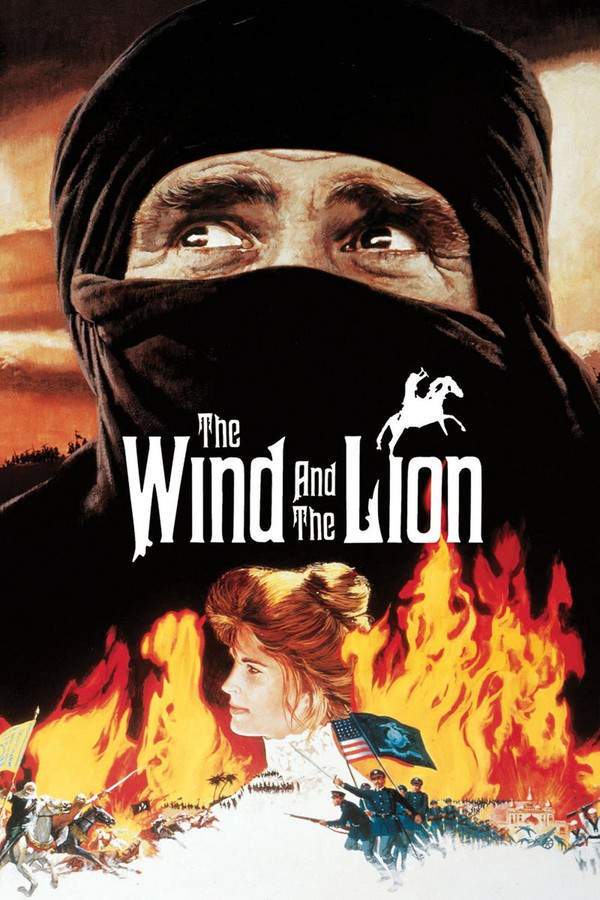
The Wind and the Lion (1975) movie poster

Plot Summary

The Wind and the Lion (1975) Plot Summary Explained

Release, runtime and language
1975 · 119 min · English
Directed by
John Milius
Starring
Candice Bergen, Sean Connery, John Huston, Brian Keith, Vladek Sheybal, Nadim Sawalha

Set in 1920s Morocco, this adventure follows President Roosevelt’s efforts to secure the release of an American photojournalist held captive by a charismatic and cunning Moroccan leader. The story blends historical events with a thrilling narrative of bravery and political intrigue, showcasing the beauty of the Moroccan landscape as the unlikely hero undertakes a daring rescue mission.

On this page (5)
  1. 1 Where to watch
  2. 2 What happens: full plot
  3. 3 Plot questions answered
  4. 4 Movie threads
  5. 5 Every angle

Where to watch

Where to Watch The Wind and the Lion (1975)

Where can you watch The Wind and the Lion? Stream, rent or buy it in the US, including on Amazon Video, Apple TV Store and Fandango At Home: current JustWatch availability with up-to-date prices.

Streaming availability powered by JustWatch

Full plot summary · contains spoilers

What Happens in The Wind and the Lion: Full Plot Summary

The whole story of The Wind and the Lion (1975) explained, from the opening scene to the final frame: every key event, every twist and what it all adds up to. Read it as a quick recap before the sequel, to check a scene you missed, or to finally understand what really happened.

In the early years of the 20th century, Morocco stands on the brink of chaos as European powers such as Germany, France, and the British Empire vie for control. This political landscape sets the stage for a gripping confrontation among rival factions seeking dominance. Mulai Ahmed er Raisuli, the audacious leader of a group of Berber rebels, emerges with a singular goal: to dethrone the corrupt Sultan Abdelaziz and his conniving uncle, the Bashaw of Tangier. Driven by a profound mistrust of the Europeans, Raisuli perceives them as puppet masters manipulating the Sultan to their advantage.

In a daring act, he kidnaps American expatriate Eden Pedecaris and her children, William and Jennifer, during a bold raid on their home. The shocking murder of Sir Joshua Smith, Eden's close friend, provides a grim backdrop to Raisuli’s audacious actions. His ransom demands are intentionally outrageous, crafting a situation designed to ignite an international incident that would destabilize the Sultan’s rule.

Meanwhile, in Washington D.C., President Theodore Roosevelt sees the kidnapping as a pivotal moment to showcase America's emerging military strength amid his re-election campaign. Ignoring the cautioning perspective of Secretary of State John Hay, Roosevelt resolves to leverage the crisis as a political tool to bolster his authority.

As the situation escalates, American Consul Samuel Gummeré finds himself at a stalemate, unable to negotiate a peaceful resolution. In response, Roosevelt dispatches the South Atlantic Squadron, commanded by Admiral French Ensor Chadwick, driven by a complex mix of motivations: prioritizing the safe return of the hostages while simultaneously asserting America’s dominance over European nations.

Amidst this turmoil, the Pedecaris family is held captive in the rugged Rif Mountains. While her children become captivated by Raisuli's rugged persona, Eden struggles to see past his violent actions, branding him a ruthless criminal. Their attempts to flee, aided by one of Raisuli's dedicated followers, ultimately fail when they are captured by a band of desert marauders.

Fortuitously, Raisuli tracks them down, eliminating their captors with lethal precision. He clarifies that his intentions were never to harm the family but to use them as leverage against the Sultan. As Eden and Raisuli’s relationship deepens, she begins to understand his tragic past, which includes years of imprisonment at the hands of his own brother, the Bashaw.

This riveting drama blurs the lines between ally and adversary as each character maneuvers through a hazardous world of deception, political intrigue, and adventure. The stakes heighten when Gummeré, Captain Jerome, and the Sultan face escalating tensions that prompt a decisive military intervention. Confronted by European interference, they embark on a mission to seize control from the Sultan, unexpectedly catching the European legations off guard as their forces linger in distant Fez.

The Marines swiftly overpower the Bashaw’s palace guards, capturing him and compelling negotiations under force. Ultimately, the Bashaw yields to Raisuli’s demands under pressure. However, during a precarious hostage exchange, Raisuli is betrayed and taken captive by German and Moroccan troops under von Roerkel’s leadership. Jerome and a handful of Marines are determined to secure the safe return of Eden and her children, while Raisuli's ally, the Sherif of Wazan, orchestrates a counterattack by the Berber tribe against the combined European and Moroccan forces.

In a shocking twist, Eden fights back against Jerome, cleverly convincing him and his men at gunpoint to rescue Raisuli. She bases her actions on a promise made by President Roosevelt, assuring that Raisuli would remain unharmed if the Pedecaris family returned safely. This pivotal move ignites a chaotic three-way battle: Berbers and Americans on one side, Germans and Moroccans on the other, leading to Raisuli’s dramatic rescue.

Back in the United States, Roosevelt is celebrated for orchestrating this triumph, as the Pedecaris family returns to Tangier. In a reflective moment, he reads a letter from Raisuli that reveals striking similarities between the two leaders, underlining their shared commitment to honor and integrity amidst the chaos of their times.

Last updated: November 17, 2024 at 22:15

Was this helpful?

Plot questions answered

The Wind and the Lion Plot Explained: Your Questions Answered

The questions people ask most about The Wind and the Lion (1975): what happens in the confusing scenes, why the characters do what they do, the twists, hidden details and what the ending means. Each answer contains spoilers.

Q1

Why does Raisuli specifically target the American family for kidnapping?

Raisuli kidnaps Eden Pedecaris and her children as a strategic move to provoke an international incident. His goal is to destabilize the corrupt Sultan Abdelaziz and expose European manipulation of Moroccan politics. By taking American hostages, he knows President Roosevelt will be forced to respond, drawing international attention to his cause against the Sultan and the European powers backing him.

Foreshadowing: Raisuli's earlier demands for outrageous ransom make clear he seeks conflict, not money.

  • raisuli
  • kidnapping
  • pedecaris
  • international incident
  • sultan
Q2

Why does President Roosevelt decide to send the South Atlantic Squadron to Morocco?

Roosevelt sees the kidnapping as a political opportunity to demonstrate America's military power during his re-election campaign. He wants to assert U.S. dominance over European nations competing for influence in Morocco. While he claims to prioritize the safe return of the hostages, his actions are driven by a mix of political ambition and genuine concern, overriding Secretary of State John Hay's cautionary advice.

Foreshadowing: Roosevelt's character is established early as a leader who acts decisively and uses crises to strengthen his position.

  • roosevelt
  • military
  • navy
  • south atlantic squadron
  • political campaign
Q3

Why does Eden convince the Marines to rescue Raisuli instead of leaving him captive?

Eden fights to rescue Raisuli because she made a promise to President Roosevelt that Raisuli would remain unharmed if her family returned safely. After learning about Raisuli's tragic past, years of imprisonment by his own brother the Bashaw, and seeing his genuine intention was never to harm her family, she believes he deserves protection. Her action creates a three-way battle between Berbers, Americans, and the combined German-Moroccan forces.

Foreshadowing: Eden's growing understanding of Raisuli's history and motivations throughout her captivity sets up her surprising loyalty to him.

  • eden
  • raisuli
  • rescue
  • promise
  • marines
  • betrayal
Q4

What is the relationship between Raisuli and the Bashaw of Tangier?

Raisuli and the Bashaw of Tangier are brothers. The Bashaw imprisoned Raisuli for years before the events of the film, treating him as a political prisoner. This family betrayal fuels Raisuli's intense hatred for his brother and his determination to dethrone the Sultan, whom the Bashaw serves. The Bashaw represents the corrupt Moroccan leadership that Raisuli seeks to overthrow.

Foreshadowing: Eden's discovery of Raisuli's tragic imprisonment history reveals the deep family conflict driving his rebellion.

  • raisuli
  • bashaw
  • brother
  • imprisonment
  • family conflict
Q5

Why do William and Jennifer become fascinated with Raisuli while in captivity?

The children are captivated by Raisuli's charismatic and rugged personality. Unlike their mother who sees him as a violent criminal, William and Jennifer experience him as a powerful, exciting figure who controls his domain. Their young minds are drawn to his authority and the adventure of their situation, creating a bond that contrasts sharply with Eden's more cautious and judgmental perspective.

Foreshadowing: The children's reactions contrast with Eden's initial view of Raisuli, highlighting how perception varies based on perspective.

  • william
  • jennifer
  • children
  • raisuli
  • captivity
  • fascination
Q6

What happens when Eden and her children try to escape from Raisuli?

Eden and her children attempt to escape with help from one of Raisuli's loyal followers, but their escape fails when desert marauders recapture them. This dangerous situation prompts Raisuli to track them down, eliminating the marauders and reaffirming his control over the family. The failed escape demonstrates the harsh reality of the desert and reinforces why escape is nearly impossible without Raisuli's knowledge.

Foreshadowing: The failed escape increases tension and sets up Raisuli's dramatic rescue of the family from the marauders.

  • escape
  • failed
  • marauders
  • recapture
  • Rif Mountains
Q7

How do Germany, France, and Britain become involved in the Morocco crisis?

European powers have been vying for control over Morocco, using the weak Sultan Abdelaziz as a puppet. Their competing interests create tension throughout the crisis. When the U.S. military intervenes and the Marines capture the Bashaw, European legations are caught off guard because their forces are stationed in distant Fez. German and Moroccan troops ultimately capture Raisuli during the hostage exchange, aligning with European opposition to Raisuli's rebellion.

Foreshadowing: The political instability in Morocco from European interference is established in the opening scenes.

  • european powers
  • germany
  • france
  • britain
  • morocco
  • sultan
  • legations
Q8

What are Admiral French Ensor Chadwick's orders regarding the South Atlantic Squadron?

Admiral Chadwick commands the South Atlantic Squadron with dual objectives: securing the safe return of the Pedecaris family and demonstrating American military strength against European influence in Morocco. His forces are tasked with a coordinated military intervention that includes capturing the Bashaw to pressure negotiations, ultimately contributing to the complex three-way battle that unfolds.

Foreshadowing: Roosevelt's decision to deploy the squadron reflects his strategy of using military force for political leverage.

  • admiral chadwick
  • south atlantic squadron
  • military
  • mission
  • rescue
Q9

What does Raisuli's letter to Roosevelt reveal at the end of the film?

In the final scene, Roosevelt reads a letter from Raisuli that reveals striking similarities between the two leaders. Both are charismatic, honor-driven men who operate outside conventional boundaries to achieve their goals. Despite being on opposite sides of the conflict, Raisuli acknowledges they share values of integrity and leadership, creating a bittersweet reflection on the complex nature of honor amid political turmoil.

Foreshadowing: The film builds toward this parallel by showing both leaders making bold, decisive moves throughout the crisis.

  • roosevelt
  • raisuli
  • letter
  • honor
  • similarity
  • comparison
Q10

How do the U.S. Marines capture the Bashaw of Tangier?

U.S. Marines launch a swift assault on the Bashaw's palace in Tangier, overpowering his guards and capturing him directly. This military action puts immense pressure on the Bashaw to negotiate under duress, ultimately forcing him to yield to Raisuli's demands. The capture demonstrates America's willingness to use decisive force to achieve its objectives in Morocco.

Foreshadowing: The military intervention is triggered by the stalemate in negotiations and European interference.

  • marines
  • bashaw
  • capture
  • tangier
  • palace
  • assault
Q11

How does Eden's view of Raisuli change throughout her captivity?

Eden initially views Raisuli as a ruthless criminal and violent outlaw. However, as she spends time in captivity, her perception shifts. She learns about his tragic past, imprisonment by his own brother, and realizes his intentions were never to harm her family. She comes to understand his fight against the Sultan and European control as a noble cause, ultimately leading her to risk everything to save him.

Foreshadowing: The growth of understanding between Eden and Raisuli develops through conversations and shared experiences in the Rif Mountains.

  • eden
  • perception
  • raisuli
  • change
  • understanding
  • captivity

Movie threads

More Movies Like The Wind and the Lion, by Mood & Story

Curated lists built around what makes The Wind and the Lion tick: the same mood, the same kind of story or the same emotional payoff. Each list explains why these movies belong together.

Sweeping historical adventures like The Wind and the Lion

Thrilling political crises and daring missions set against epic historical backdrops. If you enjoyed the political intrigue and bold action of The Wind and the Lion, explore movies like these that blend real historical settings with thrilling narratives of crisis, leadership, and daring rescue missions in far-off lands.

  • sweeping
  • tense
  • adventurous
  • bold
  • political
  • cinematic
  • Tone: tense, dramatic, adventurous
  • Pacing: fast, sweeping
Why these movies?

The story pattern: Stories in this thread typically revolve around a geopolitical crisis that forces an unlikely hero or leader into action. The narrative unfolds rapidly across diplomatic halls and rugged terrain, escalating from a tense standoff to a physical confrontation, often involving military intervention and complex motivations.

Why they belong together: These films are grouped by their shared high-intensity, fast-paced energy, tense tone driven by political brinkmanship, and the epic, cinematic scale of their historical settings. They combine adventurous action with the weight of political decision-making.

Honor-driven stories with bittersweet endings like The Wind and the Lion

Complex characters navigate moral gray areas where victory comes with a cost. If you appreciated the complex relationship between Eden and Raisuli and the morally nuanced conclusion of The Wind and the Lion, you'll find similar movies here. These films explore honorable characters in conflict, leading to endings that are triumphant yet tinged with loss.

  • dramatic
  • honorable
  • bittersweet
  • tense
  • character-driven
  • morally complex
  • Tone: tense, dramatic, bittersweet
  • Pacing: fast, character-driven
Why these movies?

The story pattern: The narrative pattern follows charismatic antagonists or rivals whose mutual respect and codes of honor create a compelling dynamic. The central conflict forces difficult choices, and while the immediate crisis is resolved, the ending acknowledges the lasting emotional and moral complexities, avoiding a purely happy conclusion.

Why they belong together: Movies in this thread share a focus on character-driven honor, a moderate level of narrative complexity, and a bittersweet emotional payoff. The tone balances tense action with dramatic character interactions, resulting in a medium emotional weight that lingers after the credits.

Every angle

The Wind and the Lion (1975) Explained: Plot, Timeline & Characters

Everything about The Wind and the Lion in one place: what happens in the plot summary, the timeline in chronological order, the characters and meaning and a spoiler-free summary. What's After the Movie adds the cast, box office and post-credit scenes.

Coming soon on iOS and Android

The Plot Explained Movie Summary App

Plot summaries, endings explained and timelines on your phone. Catch up on any movie in minutes, save your favorites and never miss a twist again.

Be the first to know when we launch. Your email stays private, always.

Learn more about the app