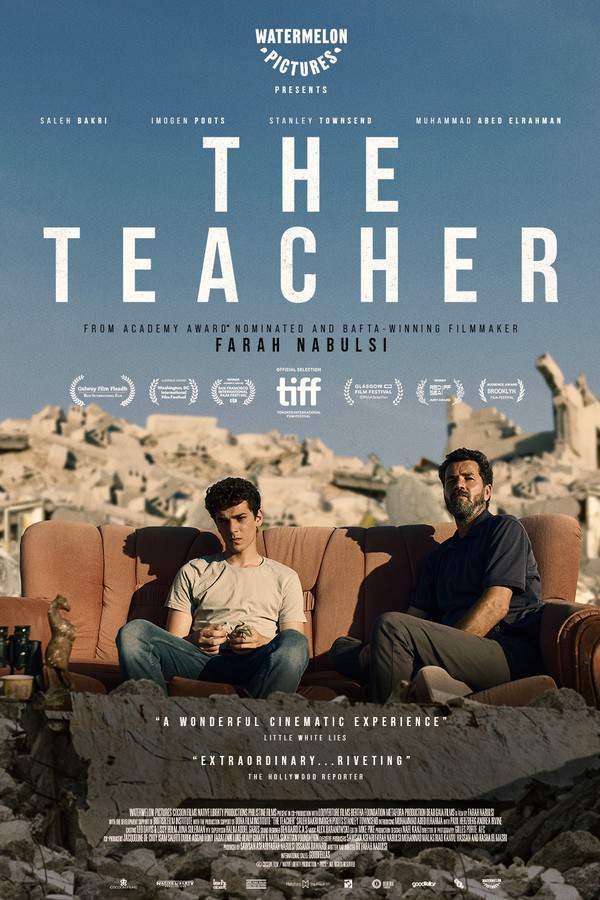
A Palestinian school teacher grapples with the conflict between his involvement in political resistance and his growing emotional connections. He finds himself drawn to one of his students and a volunteer worker, navigating complex relationships amidst a challenging environment.
Warning: spoilers below!
Haven’t seen The Teacher yet? This summary contains major spoilers. Bookmark the page, watch the movie, and come back for the full breakdown. If you're ready, scroll on and relive the story!
Read the complete plot breakdown of The Teacher (2025), including all key story events, major twists, and the ending explained in detail. Discover what really happened, and what it all means.
In a modest Paris suburb, a young French-language teacher named Julien enters the middle school with a quiet conviction to connect with his students and foster their growth. He makes light efforts to reach out, offering encouragement and informal support after class to pupils who seem most in need, especially the shy student Leslie. His approach feels earnest, even if it sometimes clashes with the school’s more rigid routines.
When Leslie misreads Julien’s well-meaning gesture, a rumor takes hold and escalates into a formal accusation. Leslie writes to the deputy principal alleging inappropriate behavior, turning a single misinterpretation into a mountain of trouble. The accusation becomes a spark that detonates a broader conflict: Leslie’s older brother steps into the fray, threats are voiced, and rumors ripple through hallways and playgrounds. What follows is a growing crisis that none of the adults at the school seem prepared to manage.
Julien seeks support from colleagues and the administration, but fear of reputational damage and the weight of the scandal drive silence from those who might defend him. His colleagues’ reluctance to take a side—paired with his own inflexible, uncompromising stance on discipline—drives a widening rift between him and the people who might have backed him. His insistence on accountability for minor disciplinary issues, rather than backing down or offering concessions, deepens the divide and isolates him in a climate where appearances often outrun truth.
In parallel, Julien is carrying a hidden burden: he is not open about his sexuality at the school. As the harassment intensifies, an intimate video from his private life begins circulating, placing his secret at the center of the controversy and magnifying the personal attack he already endures. The combination of professional scrutiny and private exposure heightens the pressure, casting the conflict in a deeply intimate light and forcing him to confront the vulnerability he has kept hidden.
The narrative unfolds without a clear vindication or resolution. By the end, Julien has changed in ways that feel less like triumph and more like erosion. The once-idealistic mentor grows hardened and embittered, his demeanor turning sharp and contradictory to the very tenderness he once offered. The film preserves a stark, almost clinical tone as it traces how a scaffold of fear, rumor, and secrecy can corrupt a person who began with generous intentions, presenting a quiet critique of how institutions and communities handle scandal, difference, and personal truth.
Last updated: August 28, 2026 at 07:33
Explore frequently asked questions about The Teacher (2025) with spoiler-rich answers covering the full plot summary, major story beats, character motivations, hidden details, and ending meaning. This movie summary FAQ helps explain confusing scenes, plot twists, and narrative decisions in clear, searchable detail.
Leslie misread one of Julien's well-meaning gestures of encouragement and informal support, interpreting it as something inappropriate. She then wrote a formal letter to the deputy principal alleging misconduct, which turned a single misinterpretation into a serious institutional accusation against him in The Teacher.
Julien's habit of offering extra attention to quieter students like Leslie foreshadows the moment that attention gets reframed as suspicious.
The accusation spreads through several channels in The Teacher: Leslie's volatile older brother confronts the school and issues threats, rumors ripple through hallways and playgrounds, and the student body becomes divided. With no one in authority stepping in to de-escalate, the situation snowballs from a formal complaint into a sustained campaign of harassment against Julien.
The school's already anxious atmosphere, established in Julien's first weeks, makes it primed to overreact once a scandal surfaces.
Fear of reputational damage and concern about the school's standing drove most of Julien's colleagues to remain silent during the scandal in The Teacher. Rather than risk their own positions by taking his side, they chose caution, leaving Julien to face the escalating crisis largely on his own.
The school's rigid routines and reputation-conscious culture, established early in the term, foreshadow the collective silence that follows.
The narrative deliberately refuses a cathartic resolution, framing the outcome as a quiet corruption of Julien's idealism rather than a triumph of justice in The Teacher. By withholding vindication, the film emphasizes how institutions, communities, and fear can collectively fail a person even when the original accusation was unfounded.
The steady progression from accusation to exposure, with no meaningful administrative intervention, signals early that no clean resolution is coming.
The once-idealistic mentor emerges hardened and embittered in The Teacher, his demeanor turning sharp and contradictory to the tenderness he once offered students. He becomes more cynical, less trusting, and more brittle, an outcome the film presents as a troubling erosion rather than a personal victory.
His early warmth and idealism, framed as rare virtues in a rigid environment, make their later loss feel especially pointed.
The film leaves the exact source of the leak ambiguous, but as the harassment around Julien intensifies, the intimate video from his private life begins spreading through the school's networks and hallways. The exposure shifts the conflict from a professional accusation into a humiliating public attack on his personal identity in The Teacher.
Julien's concealment of his sexuality throughout the early term sets up how devastating its public exposure will become.
By leaving Julien hardened and isolated without a formal resolution, The Teacher critiques how schools and communities prioritize reputation and conformity over truth or individual welfare. The bleak conclusion suggests that fear, rumor, and silence can collectively destroy a person's standing, with no mechanism in place to reverse the damage once a scandal takes hold.
The colleagues' early reluctance to engage with Julien's idealism foreshadows the institutional abandonment that defines the ending.
Julien is depicted as rigid and uncompromising in his principles, insisting on accountability even for minor disciplinary issues rather than softening his stance to win allies. This inflexibility, while rooted in his sense of integrity, deepens his isolation and prevents the reconciliation that might have resolved the crisis in The Teacher.
His early insistence on nurturing students through structure rather than leniency hints at the inflexibility that will later cost him support.
Leslie's volatile older brother confronts the school directly and makes threats, turning what began as a written complaint into a more dangerous and aggressive situation in The Teacher. His intervention introduces a physical and social threat that the administration is unprepared to handle, accelerating the atmosphere of intimidation around Julien.
The tension already present in Leslie's household, hinted at through her misinterpretation, foreshadows the volatility her brother brings to the school.
Still wondering what the ending of The Teacher (2025) really means? Here’s a spoiler-heavy breakdown of the final scene, major twists, and the deeper themes that shape the film’s conclusion.
The ending of “The Teacher” sees Devika taking control of her life and seeking justice in her own way. After discovering the extent of the abuse she endured, she doesn’t wait for legal or societal systems to act but instead decides to confront her attackers directly. She locates them, infiltrates their space, and arranges a meeting in a shady lodge where she is met with hostility and violence from the boys. However, instead of succumbing to fear, Devika fights back, using her skills and her wrath to punish the perpetrators physically. She records their threats and, with the help of her supporters, manages to arrest the boys, symbolizing her reclaiming her agency and dignity. This act of rebellion is her way of showing that she won’t be silenced or victimized anymore. By refusing to go back to her husband and opting to stay independent, she completes her journey from vulnerability to empowerment. Her choice not to abort her pregnancy signals her readiness to face her new reality, accepting both the pain and the strength she has gained. The film closes with Devika stepping into her new life, having confronted her fears and taken justice into her own hands, leaving her past behind and forging her own path forward.
Last updated: June 25, 2025 at 08:44
Discover curated groups of movies connected by mood, themes, and story style. Browse collections built around emotion, atmosphere, and narrative focus to easily find films that match what you feel like watching right now.
Stories where one false claim escalates into public destruction and institutional abandonment.Looking for movies like The Teacher where an accusation escalates into public destruction? These dramatic thrillers follow innocent protagonists trapped by false claims, institutional cowardice, and viral exposure, offering bleak social commentary and a refusal to offer easy redemption or vindication.
These films unfold with methodical, almost procedural dread: a single accusation, letter, or rumor lands, then escalates through stages of social pressure, institutional retreat, public exposure, and finally isolation. The narrative rarely delivers a courtroom catharsis or a triumphant clearing of the accused's name. Instead, it watches the protagonist's identity, relationships, and reputation corrode in real time, often ending in cynicism, exile, or a hollow survival that carries no justice.
They share a slow, steady escalation of social dread rather than action-driven tension, a heavy focus on shame, privacy violation, and the cowardice of bystanders, and an ending that refuses the comfort of vindication. The emotional texture is heavy and bleak, prioritizing quiet devastation over spectacle.
Character studies in how good people are quietly hollowed out by the systems they serve.If you liked The Teacher's portrait of an idealistic teacher slowly losing faith, these are similar dramas and social thrillers featuring good people ground down by institutional failure. Each one traces a disillusionment arc from belief to bitterness, refusing happy endings and focusing on the quiet corruption of hope.
The story usually opens with a sympathetic, idealistic figure whose principles feel admirable and even inspiring. Pressure then mounts in stages: a small compromise, a moral test that is failed by others, a betrayal by the institution meant to protect them, and finally a crisis that exposes the cost of naive faith. The ending rarely restores the protagonist's former belief. Instead, it frames their transformation into a colder, more guarded person as a quiet loss, a kind of survival that still feels like defeat.
They center on interior character change rather than external action, lean on heavy emotional weight and bleak or bittersweet resolutions, and share a steady, observational pacing. Themes of institutional failure, hidden identity, public exposure, and the gap between idealism and reality run through them, making them feel tonally and structurally cohesive.
Don't stop at just watching - explore The Teacher in full detail. From the complete plot summary and scene-by-scene timeline to character breakdowns, thematic analysis, and a deep dive into the ending - every page helps you truly understand what The Teacher is all about. Plus, discover what's next after the movie.
Track the full timeline of The Teacher with every major event arranged chronologically. Perfect for decoding non-linear storytelling, flashbacks, or parallel narratives with a clear scene-by-scene breakdown.
Discover the characters, locations, and core themes that shape The Teacher. Get insights into symbolic elements, setting significance, and deeper narrative meaning - ideal for thematic analysis and movie breakdowns.
What really happened at the end of The Teacher? This detailed ending explained page breaks down final scenes, hidden clues, and alternate interpretations with expert analysis and viewer theories.