Plot Explained Spoilers guaranteed!
Plot Explained

Browse by genre

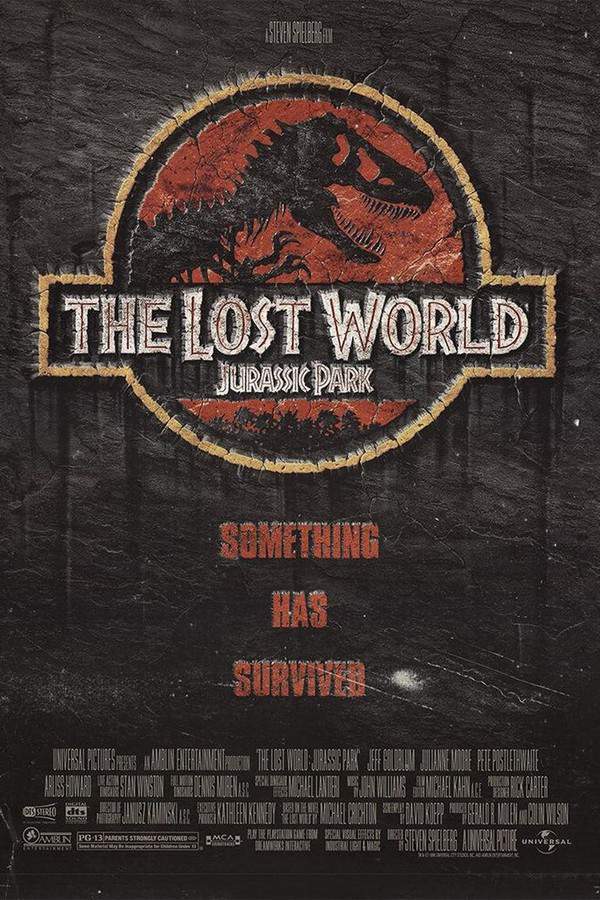
The Lost World (1992) movie poster

Plot Summary

The Lost World (1992) Plot Summary Explained

Release, runtime and language
1992 · 99 mins · English
Directed by
Timothy Bond
Starring
David Warner, Eric McCormack, Fidelis Cheza, John Rhys-Davies, Tamara Gorski, Darren Peter Mercer

Unfazed by ridicule from fellow scientists, Professor Challenger (John Rhys‑Davies) leads an expedition to verify rumors of prehistoric creatures still thriving in an uncharted African jungle. He is accompanied by a thrill‑seeking journalist, his arch‑rival and a daring adventurer, embarking on a perilous trek through mysterious, treacherous terrain rife with deception. David Warner, Eric McCormack and Tamara Gorski co‑star.

On this page (5)
  1. 1 What happens: full plot
  2. 2 Plot questions answered
  3. 3 Movie threads
  4. 4 Movies like The Lost World
  5. 5 Every angle

Full plot summary · contains spoilers

What Happens in The Lost World: Full Plot Summary

The whole story of The Lost World (1992) explained, from the opening scene to the final frame: every key event, every twist and what it all adds up to. Read it as a quick recap before the sequel, to check a scene you missed, or to finally understand what really happened.

Edward Malone, Eric McCormack, a curious junior reporter craving a bold story, is sent to interview Professor Challenger, John Rhys-Davies, an intrepid explorer who insists he is on the trail of the legendary lost world hidden somewhere in Central Africa. Challenger’s bold claim is met with sarcasm by the British scientific community, yet funding arrives from the family of Jenny Nilson, Tamara Gorski, a wildlife photographer whose connections heighten the intrigue surrounding the expedition. The mission is officially led by the stern and often quarrelsome Professor Summerlee, David Warner, who agrees to bring Malone and Nilson along but resists inviting Challenger. Reluctantly, Challenger hands Summerlee a mysterious map to be opened only at a road-end village on a precise date, a directive that promises both danger and discovery. As the party prepares to depart, Malone’s newsboy friend Jim, Darren Peter Mercer, secretly stows away, setting the stage for an unpredictable journey.

In Africa, the group is joined by a capable local guide named Malu, Nathania Stanford, and a Portuguese scout named Gomez, whose motives and loyalties become murky as the trek unfolds. When Summerlee finally examines Challenger’s map, it appears blank, and Challenger suddenly materializes, compelling Summerlee to accept his guidance after all. Together they locate the cliff that matches the illustration and ascend to the surprising world above, only to find themselves temporarily stranded when Gomez reveals a hidden past connection to Challenger’s earlier expedition. The ascent leads them into a landscape populated by towering ferns, strange flora, and, most strikingly, dinosaurs—ranging from a pair of Anatotitan to a thriving pterodactyl rookery perched overhead.

The group faces immediate peril: Jim, Malone, and Malu narrowly escape a carnivorous predator, a Tyrannosaurus-like menace that underscores the peril of this uncharted realm. Back at their camp, their colleagues have vanished, and a stark discovery awaits—two neighboring tribes, one painted with skeletal motifs, conduct human sacrifices to the very carnivorous creatures that stalk the land. Malone hatches a distraction to buy time, enabling the others to flee toward a second village where the inhabitants wear clothes instead of paint. Through Malu’s translations, the explorers learn a history of division within the tribes—shamans once coaxed some members into venerating the dinosaurs, fracturing the community long ago.

Summerlee, applying his scientific lens, hypothesizes that the strange necklaces worn by the sacrificial participants provided essential nutrients or immunization that allowed these dinosaurs to endure in a world otherwise dominated by extinction. The expedition ultimately seeks to use modern knowledge to benefit the lost world’s people: irrigation and horticulture are introduced to stabilize their environment, and a cure emerges for a prehistoric plague threatening the tribes. The skeletal tribes’ leader is slain, the warring factions reunite, and the chief reveals a concealed cave that promises a return route to their own world, urging the team to come back if they are ever needed again.

On the return to the river, the group is ambushed by Gomez. Wounded, Gomez is left to the jungle with the chilling directive, > Let the jungle have him. < Malu remains in Africa, choosing to stay, while Malone, Jenny Nilson, and Jim sail back home. In London, the Royal Zoological Society remains unconvinced by Challenger and Summerlee’s claims until Jim reveals a baby pterodactyl he has brought back, a tangible proof that their tale is more than mere fantasy. The team celebrates their achievement, yet the newly discovered creature Percival is not content to be confined to a zoo, and in a pivotal moment they decide to release him back to the lost world, where his true home awaits.

Last updated: October 09, 2025 at 15:00

Was this helpful?

Plot questions answered

The Lost World Plot Explained: Your Questions Answered

The questions people ask most about The Lost World (1992): what happens in the confusing scenes, why the characters do what they do, the twists, hidden details and what the ending means. Each answer contains spoilers.

Q1

Why does Professor Summerlee initially refuse to include Challenger in the expedition?

Professor Summerlee refuses Challenger because he dismisses the idea of a lost world as fantasy and considers Challenger an unreliable showman rather than a serious scientist. Summerlee represents the skeptical British scientific establishment, and his initial refusal creates tension within the expedition. Challenger only joins after the map mysteriously appears and he reappears to guide the team personally.

Foreshadowing: Earlier scenes show the scientific community ridiculing Challenger's claims at a lecture, establishing Summerlee's skeptical worldview.

  • professor summerlee
  • professor challenger
  • scientific skepticism
  • expedition leader
  • rejection
Q2

Why does the map appear blank when Summerlee first examines it?

The map appears blank because Challenger intentionally uses a special method to reveal it only at the precise location and date specified in his instructions. When Summerlee examines the map at the road-end village on the correct date, the map's true contents become visible, allowing the expedition to locate the cliff leading to the lost world.

Foreshadowing: Challenger explicitly tells Summerlee to open the map only at the road-end village on a precise date, hinting at a deliberate timing mechanism.

  • map
  • blank map
  • mysterious map
  • cliff
  • location
  • secret date
Q3

Why does Gomez betray the expedition and strand them on the plateau?

Gomez reveals a hidden past connection to Challenger's earlier expedition. He was part of a previous group that attempted to reach the lost world but was stranded or wronged somehow during that failed attempt. This personal vendetta against Challenger motivates Gomez to strand the current expedition as revenge, betraying the group when they ascend to the plateau.

Foreshadowing: Gomez's motives become murky during the trek, and the timeline notes his loyalties are uncertain from the start.

  • gomez
  • betrayal
  • revenge
  • plateau
  • stranded
  • previous expedition
Q4

What is the connection between the painted tribes and the dinosaurs?

The tribes practice human sacrifices to the carnivorous dinosaurs, painting themselves with skeletal motifs to appear as allies rather than prey. Through Malu's translations, the explorers learn that centuries ago, shamans persuaded some tribe members to venerate the dinosaurs, causing a split in the community between those who worship the creatures and those who oppose them.

Foreshadowing: Early encounters show the danger of the carnivorous dinosaurs, establishing why the tribes developed such extreme religious practices for survival.

  • tribes
  • dinosaur worship
  • sacrifice
  • skeletal paint
  • shamans
  • division
Q5

How do the necklaces protect the dinosaurs from extinction?

Summerlee hypothesizes that the vegetation necklaces worn by the sacrificial participants provide essential nutrients or immunization that allow the dinosaurs to survive in an environment where they should have gone extinct. The necklaces essentially function as a primitive form of protection, passing on immunity or sustenance through the ritualistic connection between the tribe and the creatures.

Foreshadowing: The necklaces are prominently worn during the sacrificial rituals, suggesting they hold more than symbolic meaning.

  • necklaces
  • nutrients
  • immunization
  • extinction
  • summerlee theory
  • survival
Q6

Why does Malu decide to stay in Africa instead of returning to London?

Malu chooses to remain in Africa, likely feeling a deeper connection to her homeland after serving as the guide through the lost world. The decision reflects her roots and possibly her desire to help her people after the expedition's interventions. The narrative leaves her choice somewhat open, but her local knowledge and identity suggest she finds greater purpose staying in Africa.

Foreshadowing: Malu's role as a capable local guide from the start establishes her strong connection to African territory.

  • malu
  • stays
  • africa
  • guide
  • home
  • choice
Q7

Why does Challenger leave the wounded Gomez in the jungle?

After Gomez ambushes the group on their return journey, he is shot and wounded. Challenger shows no mercy, leaving him with the chilling directive 'Let the jungle have him.' This reflects Challenger's ruthless side and his pragmatic approach to betrayal, he treats Gomez as a threat who brought his fate upon himself, showing the harsh realities of survival in the lost world.

Foreshadowing: Gomez's earlier betrayal of stranding the group establishes his treachery, making his fate a consequence of his actions.

  • gomez
  • challenger
  • jungle
  • ambush
  • left behind
  • death
Q8

Why does the team decide to release Percival back into the Lost World?

The team releases Percival because they recognize that the baby pterodactyl belongs in its natural habitat, not confined in a zoo. After proving their discovery to the Royal Zoological Society, they choose to let Percival return to the lost world where he can live freely, accepting that some discoveries are not meant to be caged even for scientific study.

Foreshadowing: The earlier tension between scientific discovery and natural freedom is established when the team struggles with keeping a prehistoric creature in modern society.

  • percival
  • pterodactyl
  • zoo
  • release
  • freedom
  • nature
  • baby
Q9

What causes the two warring tribes to finally reconcile?

The skeleton tribe's leader is killed during the conflict, removing the main obstacle to peace. Additionally, the expedition helps both tribes by introducing irrigation, horticulture, and a cure for the prehistoric plague affecting them. These acts of assistance, combined with the removal of the aggressive leadership, enable the tribes to reunite under the chief who reveals the hidden cave return route.

Foreshadowing: The division between tribes stems from the ancient split over dinosaur worship, and the expedition's interventions directly address the sources of conflict.

  • tribes
  • reconcile
  • unite
  • leader
  • peace
  • chief
  • cure
Q10

Why does the expedition decide to help the local tribe fight the plague?

The expedition uses their modern knowledge to help stabilize the lost world's environment by introducing irrigation and horticulture techniques. They also develop a cure for the prehistoric plague threatening the tribes. This aligns with their goal of using scientific knowledge to benefit the lost world's people, transforming their expedition from pure exploration to humanitarian assistance.

Foreshadowing: Summerlee's scientific approach and the expedition's purpose of verifying prehistoric life suggest a natural progression to applying knowledge for help.

  • plague
  • cure
  • irrigation
  • horticulture
  • help
  • tribe
  • science
Q11

How does the expedition prove their discovery to the Royal Zoological Society?

The Royal Zoological Society remains skeptical of Challenger and Summerlee's claims until Jim reveals the baby pterodactyl he has brought back. This tangible specimen serves as undeniable proof that their story is more than fantasy, convincing the scientific community of the lost world's existence.

Foreshadowing: Throughout the journey, Jim's presence as a stowaway and his curiosity establish him as the one who would secretly bring back evidence.

  • royal zoological society
  • proof
  • pterodactyl
  • jim
  • skepticism
  • science
Q12

What allows the dinosaurs to survive in the isolated plateau?

The lost world exists on a high plateau cut off from the outside world, creating a unique ecosystem where dinosaurs continue to thrive. The theory about the necklaces providing nutrients and immunization helps explain their survival despite the outside world experiencing mass extinction. The isolated environment creates a natural preserve where prehistoric life persisted.

Foreshadowing: The expedition discovers the plateau contains towering ferns and strange flora, suggesting an environment that supports ancient life forms.

  • dinosaurs
  • survival
  • plateau
  • extinction
  • isolation
  • ecosystem
  • prehistoric

Movie threads

More Movies Like The Lost World, by Mood & Story

Curated lists built around what makes The Lost World tick: the same mood, the same kind of story or the same emotional payoff. Each list explains why these movies belong together.

Movies about scientific expeditions like The Lost World

Journeys of discovery where science meets danger in forgotten lands. If you enjoyed the sense of discovery in The Lost World, explore more movies about perilous expeditions. These films feature teams venturing into unknown territories, facing natural dangers and making groundbreaking finds, perfect for fans of adventure and scientific exploration stories.

  • adventurous
  • mysterious
  • thrilling
  • dangerous
  • discovery
  • tense
  • Tone: hopeful, adventurous
  • Pacing: steady, methodical
Why these movies?

The story pattern: The narrative typically begins with a call to adventure based on a scientific hypothesis or rumor. A diverse team is assembled, facing skepticism from the outside world. The journey is a steady progression through treacherous terrain, punctuated by discoveries and life-threatening encounters with the environment or its inhabitants. The climax often involves a race for survival and a bittersweet validation of their quest.

Why they belong together: These films are grouped by their core premise of exploration and discovery. They share a hopeful yet dangerous tone, a steady pacing that builds tension, and a focus on the triumph and tragedy of pushing the boundaries of the known world.

Movies with bittersweet endings like The Lost World

Adventures that end with a wistful mix of triumph and loss. Fans of The Lost World's ending, where success is tinged with melancholy, will appreciate these films. Discover similar adventure and fantasy stories where the heroes return home victorious but forever marked by their journey, offering a more thoughtful and emotionally resonant conclusion.

  • bittersweet
  • hopeful
  • wistful
  • reflective
  • adventurous
  • thrilling
  • Tone: bittersweet, hopeful
  • Pacing: steady
Why these movies?

The story pattern: The journey is the focus, but the emotional arc hinges on the return. Characters overcome great obstacles and often succeed in their primary mission, yet the resolution acknowledges a cost. This could be the loss of a companion, the conscious choice to leave a wondrous place, or the realization that some things are meant to remain wild and free, leading to a reflective and satisfyingly complex conclusion.

Why they belong together: These movies share a specific emotional cadence: the adventure is thrilling, but the finale is not purely triumphant. They balance hope with wistfulness, creating a memorable and weighted ending that lingers with the viewer long after the credits roll.

If you liked this

Movies Like The Lost World

Similar movies to The Lost World: the same genre, themes or kind of story. Each one comes with its own plot summary, timeline and ending explained.

Browse all movie summaries

Every angle

The Lost World (1992) Explained: Plot, Timeline & Characters

Everything about The Lost World in one place: what happens in the plot summary, the timeline in chronological order, the characters and meaning and a spoiler-free summary. What's After the Movie adds the cast, box office and post-credit scenes.

Coming soon on iOS and Android

The Plot Explained Movie Summary App

Plot summaries, endings explained and timelines on your phone. Catch up on any movie in minutes, save your favorites and never miss a twist again.

Be the first to know when we launch. Your email stays private, always.

Learn more about the app