Year: 1958
Runtime: 101 mins
Language: English
Director: Byron Haskin
Set just after the American Civil War, businessman Victor Barbicane creates a new energy source, Power X, and uses it to launch a moon‑bound projectile. He is joined by his aide Ben Sharpe, his rival Stuyvesant Nicholl, and Nicholl’s daughter Virginia. Believing Power X defies God, Nicholl sabotages the craft, forcing the crew to race against time to repair it and secure their return to Earth.
Find where to stream, rent, or buy From the Earth to the Moon (1958) in the US with current JustWatch availability, up-to-date pricing, and platform listings for subscription, rental, and digital purchase options.
Warning: spoilers below!
Haven’t seen From the Earth to the Moon yet? This summary contains major spoilers. Bookmark the page, watch the movie, and come back for the full breakdown. If you're ready, scroll on and relive the story!
Read the complete plot breakdown of From the Earth to the Moon (1958), including all key story events, major twists, and the ending explained in detail. Discover what really happened, and what it all means.
Victor Barbicine, Joseph Cotten, a munitions producer, unveils a new explosive called Power X, which he insists is far more powerful than anything previously devised. Stuyvesant Nicholl, George Sanders, a skeptical metallurgist, dismisses the claim and backs a wager of $100,000 ($2.4 million today) that Power X cannot ruin his invention—the hardest metal known to science. Barbicane then stages a demonstration with a modest cannon and, to everyone’s surprise, obliterates Nicholl’s material and even tears a swath through the surrounding countryside.
President Ulysses S. Grant, Morris Ankrum, intervenes, urging Barbicane to cease work after several wary nations warn that advancing Power X could be construed as an act of war. Barbicane agrees, but a curious discovery soon reshapes his plans: fragments of Nicholl’s metal recovered from the demonstration have been transformed into a remarkably strong yet lightweight ceramic. This breakthrough sparks the idea of building a spaceship to travel to the Moon, and Barbicane enlists Nicholl’s help to construct the vessel. At the same time, Nicholl’s daughter, Virginia, Debra Paget, and Barbicane’s assistant, Ben Sharpe, Don Dubbins, find themselves drawn to one another, adding a human current to the looming scientific mission.
With the ship finally completed, Barbicane, Nicholl, and Sharpe launch into space amid grand fanfare. Once beyond Earth’s atmosphere, Nicholl—a man of deep religious conviction—confesses that he has sabotaged the voyage, convinced that Barbicane has violated divine law. The crisis deepens when Virginia is discovered to have stowed away aboard the craft. In a tense moment, Nicholl agrees to cooperate with Barbicane in a bid to save her. Sharpe is knocked unconscious, and he and Virginia are placed in the ship’s safest compartment, separated from the main crew. In a calculated move, Barbicane and Nicholl fire their rockets in a way that sends the young couple back toward Earth, while the two scientists remain aboard a separate section that lands on the Moon, with no way off. From their lunar post, they manage to signal to the returning pair that they have reached the Moon and survived the perilous journey, preserving a hopeful bridge between science, faith, and family.
Last updated: October 09, 2025 at 10:51
Explore frequently asked questions about From the Earth to the Moon (1958) with spoiler-rich answers covering the full plot summary, major story beats, character motivations, hidden details, and ending meaning. This movie summary FAQ helps explain confusing scenes, plot twists, and narrative decisions in clear, searchable detail.
Nicholl sabotaged the mission because he believed Barbicane's use of Power X defied God's laws. As a deeply religious man, Nicholl felt that attempting to travel to the Moon was a violation of divine authority, so he sabotaged the vessel to prevent what he considered a blasphemy.
Earlier, Nicholl is introduced as a skeptic who dismisses Barbicane's claims, but his deeper motivation is revealed to be religious conviction rather than mere scientific doubt.
During the demonstration, Power X destroyed Nicholl's supposedly indestructible metal, but something unexpected happened: the fragments transformed into a ceramic that was both remarkably strong and lightweight. This breakthrough gave Barbicane the idea to build a Moon-bound spacecraft using this new material.
The demonstration scene shows Power X's unprecedented destructive power, hinting at its potential for transformation rather than just destruction.
After discovering Virginia stowed away and with Sharpe knocked unconscious during the crisis, Barbicane and Nicholl devised a rescue plan. They fired the rockets in a calculated way that sent the young couple's compartment back toward Earth while the two scientists remained aboard a separate section destined for the Moon. This sacrifice ensured at least two survivors would make it home safely.
The sabotage crisis creates the immediate need for a difficult decision that forces the crew to split up.
The spaceship was designed as a single mission without a return mechanism. When they separated the vessel to send Virginia and Sharpe back to Earth, Barbicane and Nicholl remained aboard the section that landed on the Moon. With no propulsion system to launch them back, they were permanently stranded.
The mission was always one-way in concept, with the ceramic material enabling travel but not return capabilities.
Virginia stowed away to be with Ben Sharpe, with whom she had developed a romantic connection during the ship's construction phase. Her love for Sharpe motivated her to risk the dangerous journey, though her presence complicated the already crisis-ridden mission.
The romance between Virginia and Sharpe develops during the preparation scenes, building toward her desperate decision to join the mission.
President Grant intervened after nervous nations warned that continued development of Power X could be interpreted as an act of war. With the destructive power already demonstrated, international tensions rose, and Grant requested Barbicane cease work for global safety reasons.
The demonstration shows Power X's devastating capability, making it clear why governments would view it as a threat.
From their lunar post, Barbicane and Nicholl managed to send a signal to Earth, confirming they had successfully landed on the Moon and survived the journey. This communication established contact between the stranded scientists and the returning couple, providing a hopeful conclusion despite their separation.
The mission's success depended on establishing communication, which was built into the original mission design.
The $100,000 wager (worth about $2.4 million today) represented Nicholl's challenge that Power X could not destroy his invention, the hardest metal known to science. Barbicane accepted, and the demonstration proved Power X could indeed obliterate the material, winning Barbicane the bet but also setting the entire chain of events in motion.
The wager establishes the initial conflict between the two men and directly leads to the ceramic discovery.
Discover curated groups of movies connected by mood, themes, and story style. Browse collections built around emotion, atmosphere, and narrative focus to easily find films that match what you feel like watching right now.
Early science fiction tales of groundbreaking discovery and perilous journeys.If you enjoyed the 19th-century ambition of From the Earth to the Moon, this collection highlights movies with similar themes of groundbreaking invention and perilous exploration. You'll find stories about visionary scientists and adventurers who risk everything to reach a new frontier.
Stories in this thread typically follow a clear arc of ambitious conception, fraught execution, and a journey into the unknown. They feature characters driven by a mix of scientific curiosity and personal rivalry, facing crises that test their ingenuity and resolve, often with a bittersweet cost for their achievements.
Movies are grouped here for their shared focus on pre-modern or early technological eras, the blend of historical adventure with science fiction concepts, and the tangible sense of wonder mixed with danger that defines the pioneering spirit.
High-stakes adventures where victory comes with a poignant personal cost.Fans of the emotional conclusion of From the Earth to the Moon will appreciate this selection of movies where success is shadowed by sacrifice. These films explore the idea that great achievements often have a bittersweet cost, blending hopeful outcomes with a touch of poignant loss.
The narrative pattern involves a clear goal that is achieved, but the path to success forces characters to make difficult choices or endure personal tragedies. The ending delivers on the mission's objective while acknowledging the sacrifices made, creating a layered emotional resolution that is neither purely happy nor sad.
These films are connected by their shared emotional structure—a balance of hopeful accomplishment and poignant sacrifice. They deliver a satisfying conclusion to the central plot while leaving room for reflection on the price of victory, creating a resonant and thoughtful viewer experience.
Don't stop at just watching - explore From the Earth to the Moon in full detail. From the complete plot summary and scene-by-scene timeline to character breakdowns, thematic analysis, and a deep dive into the ending - every page helps you truly understand what From the Earth to the Moon is all about. Plus, discover what's next after the movie.
Track the full timeline of From the Earth to the Moon with every major event arranged chronologically. Perfect for decoding non-linear storytelling, flashbacks, or parallel narratives with a clear scene-by-scene breakdown.
Discover the characters, locations, and core themes that shape From the Earth to the Moon. Get insights into symbolic elements, setting significance, and deeper narrative meaning - ideal for thematic analysis and movie breakdowns.
Discover movies like From the Earth to the Moon that share similar genres, themes, and storytelling elements. Whether you’re drawn to the atmosphere, character arcs, or plot structure, these curated recommendations will help you explore more films you’ll love.
From the Earth to the Moon (1958) Scene-by-Scene Movie Timeline
From the Earth to the Moon (1958) Movie Characters, Themes & Settings
From the Earth to the Moon (1958) Spoiler-Free Summary & Key Flow
Movies Like From the Earth to the Moon – Similar Titles You’ll Enjoy
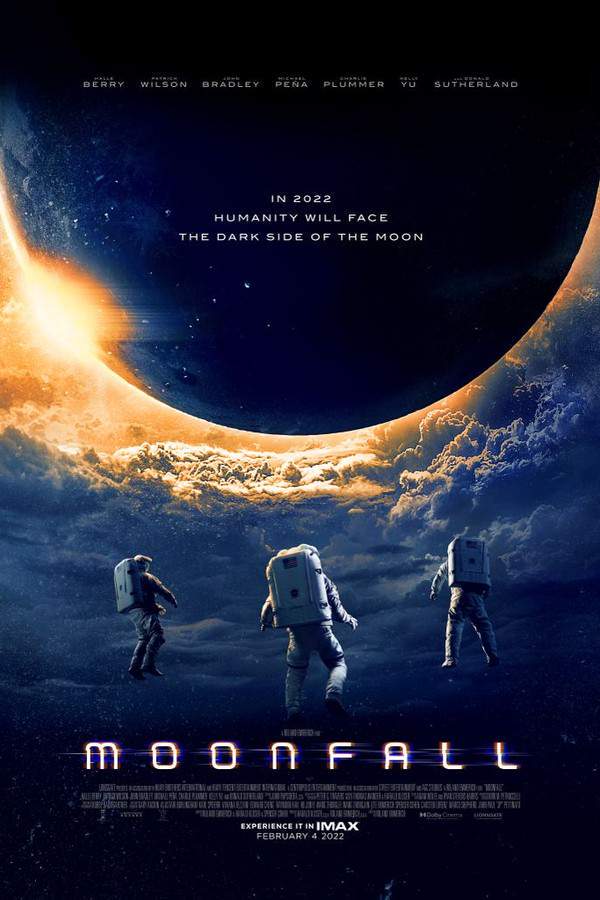
Moonfall (2022) Plot Summary & Ending Explained
Earthstorm (2006) Film Overview & Timeline
The Dark Side of the Moon (1990) Spoiler-Packed Plot Recap
Project Moon Base (1953) Plot Summary & Ending Explained
Rocketship X-M (1950) Movie Recap & Themes
Destination Moon (1950) Full Summary & Key Details
Destination Moonbase-Alpha (1978) Plot Summary & Ending Explained
First Men in the Moon (1964) Spoiler-Packed Plot Recap
12 to the Moon (1960) Movie Recap & Themes
Conquest of Space (1955) Plot Summary & Ending Explained
Moon Zero Two (1969) Ending Explained & Film Insights
From the Earth to the Moon (1000) Movie Recap & Themes
Mission Stardust (1967) Plot Summary & Ending Explained
Jules Verne’s Rocket to the Moon (1967) Film Overview & Timeline
Missile to the Moon (1958) Detailed Story Recap