







Plot Explained Spoilers guaranteed!
Plot Explained

Browse by genre

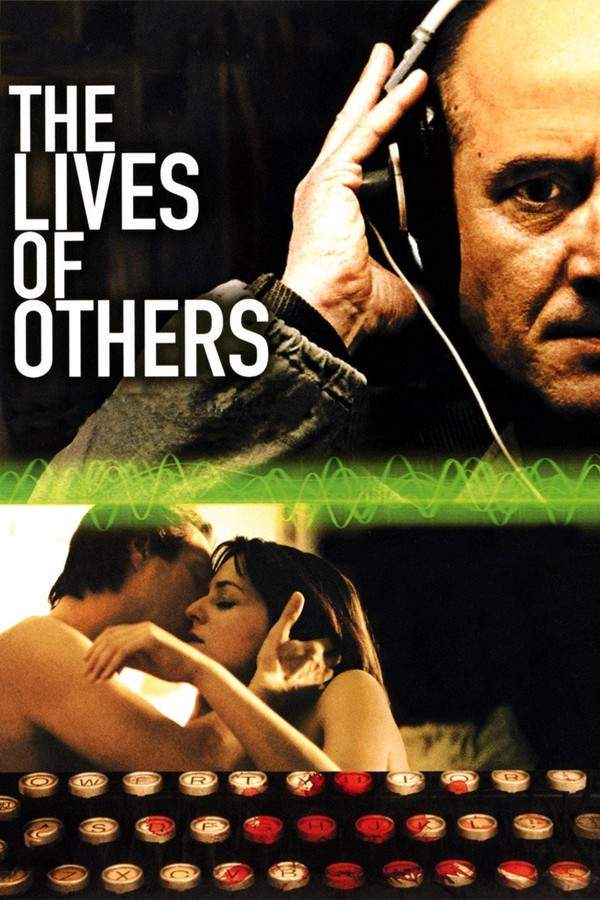
The Lives of Others (2006) movie poster

Timeline

The Lives of Others (2006) Timeline Explained – Every Event in Order

Release, runtime and language
2006 · 137 min · German
JustWatch #3,170 21
Directed by
Florian Henckel von Donnersmarck
Starring
Martina Gedeck, Sebastian Koch, Ulrich Mühe
Budget
$2M

During the Cold War in Berlin, a Stasi captain is assigned to spy on a playwright and his partner, believing them to be dissidents. Through intensive surveillance, he becomes increasingly familiar with their lives and artistic work. As years pass, the captain's initial certainty begins to erode, challenging his beliefs and forcing him to confront the moral compromises inherent in a repressive regime facing political upheaval.

On this page (6)
  1. 1 Where to watch
  2. 2 Events in order (15)
  3. 3 Timeline questions answered
  4. 4 Movie threads
  5. 5 Movies like The Lives of Others
  6. 6 Every angle

Where to watch

Where to Watch The Lives of Others (2006)

Where can you watch The Lives of Others? Stream, rent or buy it in the US, including on Amazon Video, Apple TV Store and Fandango At Home: current JustWatch availability with up-to-date prices.

Streaming availability powered by JustWatch

15 events in order · contains spoilers

The Lives of Others Timeline: Events in Chronological Order

Every key event of The Lives of Others (2006) in order, scene by scene, with when and where it takes place. Use it to untangle flashbacks, time jumps and parallel storylines, to refresh your memory before the sequel or to find the exact scene you are thinking of.

  1. Assignment to Monitor Dreyman

    In 1984 East Germany, Stasi Hauptmann Gerd Wiesler, known by his code name HGW XX/7, receives an assignment from his superior, Lt. Col. Anton Grubitz. He is instructed to surveil playwright Georg Dreyman, whose loyalty to the regime has kept him off the Stasi’s radar.

    When
    1984
    Where
    East Germany
  2. Intrigued by Dreyman

    As Wiesler begins his surveillance, he becomes increasingly intrigued by Dreyman, who appears to embody the ideals of the regime despite his fame. Wiesler's perspective starts to shift as he grapples with the dichotomy of his role as a Stasi agent.

    Where
    Dreyman's apartment
  3. Minister Hempf's True Motive Revealed

    Wiesler discovers that the true motive for the surveillance is not political but personal; Minister of Culture Bruno Hempf has a romantic interest in Dreyman's girlfriend, actress Christa-Maria Sieland. This revelation shakes Wiesler's faith in the Stasi's intentions.

    Where
    East Germany
  4. Dreyman Confronts Sieland

    Dreyman soon learns about Sieland's affair with Hempf and pleads with her to be true to herself. This leads to a painful moment of reconciliation filled with sorrow and the consequences of their choices.

    Where
    Dreyman's apartment
  5. Jerska's Haunting Score

    Dreyman receives a haunting score from his friend Albert Jerska, a director whose career has been ruined by censorship. This score inspires Dreyman and serves as a poignant reminder of the artistic spirit crushed by the regime.

    Where
    East Germany
  6. Dreyman's Suicide Article

    Determined to expose the grim realities of East Germany, Dreyman decides to write an article revealing the concealed suicide rates. He stages a defection attempt with friends, unaware that Wiesler is silently assisting them.

    Where
    East Germany
  7. Typewriter Smuggled from the West

    A sympathetic editor from the West manages to smuggle a unique typewriter to Dreyman, which he conceals beneath the floorboards. This typewriter becomes the tool through which he anonymously authors an explosive article for the magazine Der Spiegel.

    Where
    East Germany
  8. Shockwaves from the Article

    The publication of Dreyman's article sends shockwaves through the Stasi and the government. It puts Minister Hempf on high alert, intensifying his determination to unmask Dreyman's involvement in the article.

    Where
    East Germany
  9. Sieland Betrays Dreyman

    Under pressure, Sieland reveals Dreyman's connection to the article, putting both of them in grave danger. Tensions escalate as loyalty and betrayal intertwine in their relationship.

    Where
    East Germany
  10. Tragedy Strikes

    In a heartbreaking turn of events, Dreyman chases after Sieland when he realizes her betrayal. Tragedy strikes when she is accidentally killed by a truck, leaving Dreyman devastated and further questioning his choices.

    Where
    East Germany
  11. Consequences for Wiesler

    After the investigation concludes, Wiesler faces the repercussions of his decision to go against the Stasi's directives. He is assigned to a meaningless desk job, reflecting the fate of those who cross the regime.

    Where
    East Germany
  12. The Fall of the Berlin Wall

    Years later, as the Berlin Wall falls, Dreyman contemplates his past actions and the impact of the Stasi surveillance on his life. He and Hempf share a chilling moment revealing the extent of Dreyman's monitoring.

    When
    Late 1989
    Where
    Berlin
  13. Dreyman Uncovers the Truth

    Two years after the wall's fall, Dreyman finally investigates his Stasi files and discovers the truth about Wiesler's actions. He learns that Wiesler had protected his anonymity and hidden the typewriter that facilitated his article.

    Where
    East Germany
  14. Encounter with Wiesler

    Upon discovering Wiesler's humble new life as a mailman, Dreyman grapples with the decision to approach him. Fate brings them closer when they meet again during a book promotion event.

    Where
    Bookstore
  15. A Gesture of Gratitude

    In a poignant moment, Wiesler finds Dreyman's novel dedicated 'To HGW XX/7, in gratitude.' This acknowledgment of his sacrifices leaves a profound impact on Wiesler, who chooses to keep the book, symbolizing their unspoken bond.

    Where
    Bookstore

Last updated: November 16, 2024 at 18:19

Was this helpful?

Timeline questions answered

The Lives of Others Timeline Explained: Your Questions Answered

When does it happen, and why in that order? The questions people ask about the chronology of The Lives of Others (2006): time jumps, flashbacks, cause and effect between scenes and the correct order of events, each answered with spoilers.

Q1

Why was Dreyman actually under surveillance?

The official reason was political, Dreyman was a prominent playwright. However, the real motive was personal: Minister of Culture Bruno Hempf wanted Dreyman surveilled because he was attracted to Dreyman's girlfriend, actress Christa-Maria Sieland. Wiesler discovered this truth early in the surveillance and felt disappointed by the Stasi's corrupt intentions.

Foreshadowing: Hempf's interest in Sieland is hinted at early when he attends Dreyman's plays and makes advances toward her.

  • stasi surveillance
  • hempf
  • sieland
  • motive
  • political surveillance
Q2

How did Wiesler protect Dreyman during the investigation?

Wiesler deliberately concealed evidence that could have exposed Dreyman. He did not report the staged defection attempt, which would have revealed Dreyman's contacts. Most importantly, when searching Dreyman's apartment after the article was published, Wiesler found the hidden typewriter but chose not to report it, thereby protecting Dreyman's anonymity and preventing his arrest.

Foreshadowing: Wiesler's growing discomfort with the surveillance mission becomes apparent early as he listens to the couple's intimate conversations.

  • wiesler protection
  • typewriter
  • anonymity
  • stasi investigation
  • secret help
Q3

What motivated Dreyman to write the suicide article?

Two factors motivated Dreyman. First, his friend Albert Jerska, a censored director, gave him a haunting score and later committed suicide, a direct consequence of the regime crushing artistic expression. Second, Dreyman wanted to expose the GDR's concealed suicide rates, which he believed were artificially low due to government cover-ups. The article was published in Der Spiegel.

Foreshadowing: Jerska's score and his subsequent suicide directly inspire Dreyman's decision to take political action.

  • suicide article
  • jerska
  • der spiegel
  • dissent
  • censored director
Q4

How did Dreyman get the typewriter for his article?

A sympathetic editor from West Germany smuggled a unique typewriter into East Germany specifically for Dreyman. This was a dangerous operation, as possessing such a device was illegal. Dreyman hid the typewriter beneath his floorboards, where he wrote the anonymous article exposing the GDR's concealed suicide rates.

Foreshadowing: The risky nature of this operation foreshadows the danger Dreyman puts himself and those around him in.

  • typewriter
  • der spiegel
  • smuggled
  • floorboards
  • west germany editor
Q5

Why did Sieland betray Dreyman to the Stasi?

Sieland was coerced by Minister Hempf, who had been pressuring her sexually in exchange for career favors. When the Stasi investigation intensified, Hempf threatened to expose her affairs unless she revealed Dreyman's connection to the article. Under this immense pressure, Sieland disclosed the information, believing it would protect herself and Dreyman from worse consequences.

Foreshadowing: Sieland's earlier affair with Hempf and her conflicted loyalty create the groundwork for her eventual betrayal.

  • sieland betrayal
  • hempf coercion
  • stasi pressure
  • actress
Q6

What happened to Wiesler after the investigation concluded?

Wiesler faced consequences for his disobedience. Rather than being punished severely, he was reassigned to a meaningless desk job, effectively sidelined from meaningful work. This was a common practice for Stasi officers who fell out of favor, silent demotion rather than public punishment. Years later, after the Berlin Wall fell, he worked as a humble mailman.

Foreshadowing: Wiesler's growing moral conflict throughout the surveillance sets up his eventual reassignment.

  • wiesler demotion
  • desk job
  • stasi consequences
  • mailman
Q7

When does Dreyman learn that Wiesler helped protect him?

Dreyman learns the truth two years after the Berlin Wall falls, when he finally requests access to his Stasi files. The files reveal that Wiesler had protected his anonymity and hidden the typewriter. This discovery comes years after the events themselves, when both men have moved on with their lives.

Foreshadowing: The files serve as a delayed revelation, connecting the past events to their later significance.

  • stasi files
  • wiesler truth
  • berlin wall
  • discovery
  • anonymity
Q8

What does the dedication at the end mean?

In the final scene, Dreyman's new novel 'Sonate vom Guten Menschen' is dedicated 'To HGW XX/7, in gratitude.' This is Dreyman's way of publicly acknowledging and thanking Wiesler for his silent protection, even though Wiesler never revealed himself. When Wiesler finds this in the bookstore and chooses to keep the book, he finally accepts acknowledgment of his moral choices.

Foreshadowing: The code name HGW XX/7 was used throughout the film, making this dedication a direct acknowledgment of Wiesler's actions.

  • dedication
  • hgw xx7
  • sonate vom guten menschen
  • gratitude
  • bookstore scene
Q9

Why did Wiesler begin to question his work as a Stasi officer?

Wiesler's transformation occurred gradually as he spent months eavesdropping on Dreyman and Sieland. He witnessed genuine human connection, artistic passion, and moral integrity in people who were supposed to be enemies of the state. The revelation that the surveillance was driven by Hempf's personal lust rather than political necessity further eroded his faith in the regime. Observing the human cost of oppression made him increasingly uncomfortable with his role.

Foreshadowing: Wiesler's initial intrigue with Dreyman as an ideal regime figure foreshadows his later moral awakening.

  • wiesler transformation
  • moral awakening
  • stasi doubts
  • surveillance
  • human connection
Q10

How did Sieland die?

Sieland died in a tragic accident. After Dreyman discovered she had betrayed him to the Stasi, he chased her down the street in anger and desperation. In the chaos, she ran into the road and was struck by a truck, killing her. This tragic end underscores the destructive ripple effects of the regime's coercion and surveillance on ordinary citizens.

Foreshadowing: The escalating tension between Dreyman and Sieland after her betrayal builds toward this fatal confrontation.

  • sieland death
  • truck accident
  • betrayal consequences
  • tragic ending

Movie threads

More Movies Like The Lives of Others, by Mood & Story

Curated lists built around what makes The Lives of Others tick: the same mood, the same kind of story or the same emotional payoff. Each list explains why these movies belong together.

Moral Awakening Stories like The Lives of Others

Characters find their humanity while serving a dehumanizing system. Explore a collection of movies like The Lives of Others, focusing on character-driven dramas where individuals experience a profound crisis of conscience within a rigid, often political, system. These films share a heavy emotional weight and a steady, thoughtful pacing that builds towards moments of quiet redemption or sacrifice.

  • thoughtful
  • somber
  • cathartic
  • tense
  • moral dilemma
  • oppressive
  • Tone: thoughtful, tense, melancholic
  • Pacing: steady, character-driven
Why these movies?

The story pattern: The narrative pattern follows a protagonist, initially a committed believer or functionary in a rigid system, whose exposure to the human cost of that system triggers a gradual internal transformation. The conflict is largely psychological, with the climax centered on a personal, often secret, choice that defines their redemption.

Why they belong together: These films are grouped together because they share a deep focus on the individual's internal moral struggle against a powerful, impersonal backdrop. They create a similar viewing experience of heavy, thoughtful tension, driven by character transformation rather than overt action.

Claustrophobic Thrillers with an atmosphere like The Lives of Others

Stories where the feeling of being watched creates relentless tension. If you liked the tense, oppressive atmosphere of The Lives of Others, discover more movies that masterfully build a sense of constant surveillance and psychological claustrophobia. These political thrillers and paranoid dramas share a high intensity and a steady pacing that methodically increases unease.

  • claustrophobic
  • tense
  • paranoid
  • oppressive
  • suspenseful
  • voyeuristic
  • Tone: tense, oppressive, paranoid
  • Pacing: steady, methodical build
Why these movies?

The story pattern: The narrative unfolds within a tightly controlled environment where characters are acutely aware their every move might be monitored. The plot often revolves around the cat-and-mouse game between the watcher and the watched, exploring themes of privacy, power, and the psychological erosion caused by living under a microscope.

Why they belong together: These movies are united by their ability to generate a specific, palpable mood of anxiety and confinement through the theme of surveillance. They share a similar high-tension, steady-paced vibe that keeps viewers on edge, fully immersed in a world of secrets and observation.

If you liked this

Movies Like The Lives of Others

Similar movies to The Lives of Others: the same genre, themes or kind of story. Each one comes with its own plot summary, timeline and ending explained.

Browse all movie summaries

Every angle

The Lives of Others (2006) Explained: Plot, Timeline & Characters

Everything about The Lives of Others in one place: what happens in the plot summary, the timeline in chronological order, the characters and meaning and a spoiler-free summary. What's After the Movie adds the cast, box office and post-credit scenes.

Coming soon on iOS and Android

The Plot Explained Movie Summary App

Plot summaries, endings explained and timelines on your phone. Catch up on any movie in minutes, save your favorites and never miss a twist again.

Be the first to know when we launch. Your email stays private, always.

Learn more about the app