Plot Explained Spoilers guaranteed!
Plot Explained

Browse by genre

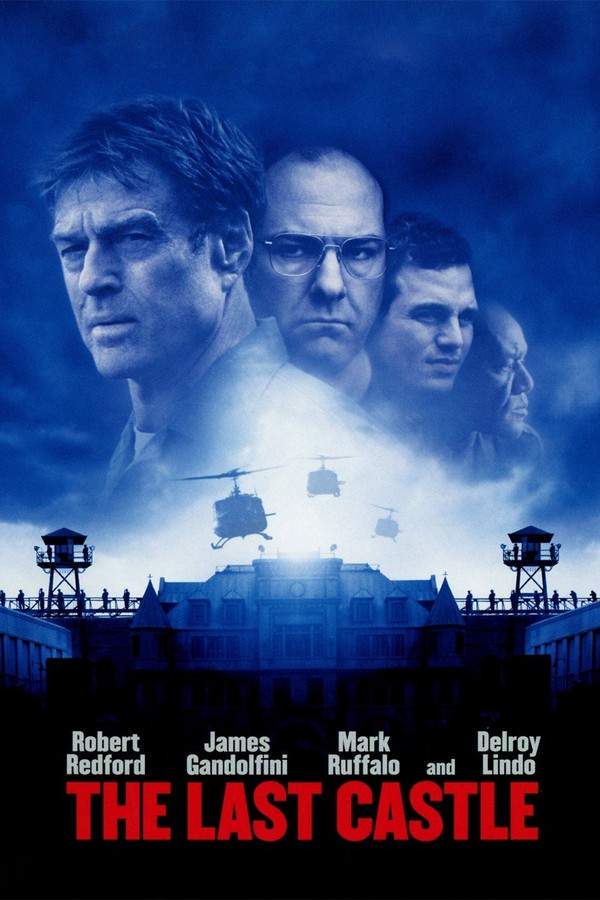
The Last Castle (2001) movie poster

Plot Summary

The Last Castle (2001) Plot Summary Explained

Release, runtime and language
2001 · 131 min · English
Directed by
Rod Lurie
Starring
Robert Redford, James Gandolfini
Budget
$72M

A decorated three-star general, unjustly imprisoned, finds himself a prisoner within the walls of the infamous maximum-security fortress known as The Castle. Faced with corruption and brutality, he unexpectedly ignites a rebellion among the 1,200 inmates. He leads a daring uprising against the ruthless warden and the prison guards, challenging the established order within the formidable institution.

On this page (6)
  1. 1 Where to watch
  2. 2 What happens: full plot
  3. 3 Plot questions answered
  4. 4 Movie threads
  5. 5 Movies like The Last Castle
  6. 6 Every angle

Where to watch

Where to Watch The Last Castle (2001)

Where can you watch The Last Castle? Stream, rent or buy it in the US, including on Hoopla, YouTube Free and Amazon Video: current JustWatch availability with up-to-date prices.

Streaming availability powered by JustWatch

Full plot summary · contains spoilers

What Happens in The Last Castle: Full Plot Summary

The whole story of The Last Castle (2001) explained, from the opening scene to the final frame: every key event, every twist and what it all adds up to. Read it as a quick recap before the sequel, to check a scene you missed, or to finally understand what really happened.

Lieutenant General Eugene Irwin (Robert Redford) finds himself in a maximum-security military prison, serving a ten-year sentence for disobeying a presidential order that led to the tragic deaths of eight soldiers during a mission in Burundi. The prison's commandant, Colonel Winter (James Gandolfini), initially admires Irwin but quickly becomes offended by a remark he overhears. Irwin criticizes Winter's collection of military artifacts, particularly a set of used Civil War bullets, suggesting that no true combat veteran would ever hold such items in esteem. This comment stings Winter, who has never experienced combat, leading to a rapid decline in his respect for Irwin.

In an effort to maintain some justice within the prison's harsh environment, Irwin intervenes when a guard attempts to punish a prisoner, Corporal Ramon Aguilar, who made the mistake of saluting him in the yard. As Irwin witnesses the ongoing brutality within the facility, he hopes to foster unity among the inmates by constructing a "castle wall" using stone and mortar that symbolizes their resilience. However, Winter, envious of the respect Irwin commands, orders the wall's destruction. In a heart-wrenching moment, Aguilar bravely stands in front of a bulldozer, only to be struck down by a rubber bullet fired at close range by a sharpshooter under Winter's command.

After the devastation of the wall, Irwin and the prisoners honor Aguilar, who bravely attempted to assert their dignity, by paying their respects in formation. When Winter tries to reconcile with Irwin, he is met with scorn and called a disgrace, prompting the general's refusal to entertain any further conversation. The atmosphere shifts as the prisoners adopt military-like behavior around Irwin, which infuriates the commandant. Seeking an edge, Winter enlists the help of Yates (Mark Ruffalo), an anti-social inmate with a background as an Apache pilot, offering a reduced sentence in exchange for information on Irwin's plans.

Irwin deftly plots to incite chaos within the prison to reveal Winter's inadequacies as a leader to Brigadier General Wheeler (Delroy Lindo), who is set to visit. In anticipation of Wheeler's arrival, Winter receives a threatening letter about a supposed kidnapping scheme orchestrated by the inmates. However, when the situation escalates, he uncovers that it was a ruse designed by Irwin to test the guards’ responses in the event of a real uprising.

As the riot unfolds, the prisoners arm themselves with improvised weapons resembling those from medieval times, successfully commandeering an armored vehicle and a prison helicopter. They reach out to Wheeler, informing him of the siege, but Winter, racing against time and his own failing command, resorts to threatening the prisoners with live ammunition. Irwin, aware of the severity of the moment, commands his men to raise the American flag upside down—a distress signal that underscores their plight.

In a clash of wills, Winter tries to order his men to open fire on Irwin, yet they rebel against his command, demonstrating their loyalty to the general. In a shocking twist, Winter, unable to enforce his authority, takes matters into his own hands and fatally shoots Irwin. However, as Winter faces being arrested by his own second-in-command, Captain Peretz, the flag is ultimately raised correctly, symbolizing not just their struggle but their respect for camaraderie and sacrifice.

As Brigadier General Wheeler arrives at the prison, accompanied by the distressing sight of Winter being led away in handcuffs, the story concludes with the inmates embarking on a new mission: to build a memorial wall, honoring both Aguilar's and Irwin's bravery, forever etched into the stone—reminders of their shared humanity within the confines of a cruel prison system.

Last updated: October 27, 2024 at 23:00

Was this helpful?

Plot questions answered

The Last Castle Plot Explained: Your Questions Answered

The questions people ask most about The Last Castle (2001): what happens in the confusing scenes, why the characters do what they do, the twists, hidden details and what the ending means. Each answer contains spoilers.

Q1

Why was General Irwin sent to military prison?

General Irwin was sentenced to ten years in a maximum-security military prison for disobeying a presidential order during a mission in Burundi. His disobedience tragically resulted in the deaths of eight soldiers. Despite being a decorated three-star general, he faced imprisonment for prioritizing his soldiers' safety over following direct orders.

Foreshadowing: The opening establishes Irwin as a man of principle who values his men over political obedience, setting the stage for his later rebellion.

  • general irwin imprisonment
  • burundi mission
  • disobeyed presidential order
  • prison sentence
Q2

Why did Colonel Winter become hostile toward General Irwin?

Winter initially admired Irwin but quickly turned hostile after overhearing Irwin criticize his collection of military artifacts, particularly used Civil War bullets. Irwin remarked that no true combat veteran would hold such items in esteem. Since Winter never experienced combat, this comment deeply offended him and caused his respect to turn to resentment.

Foreshadowing: Winter's collection of unearned military memorabilia hints at his insecurity and need for validation.

  • colonel winter
  • general irwin conflict
  • military artifacts
  • winter's jealousy
Q3

Why did the prisoners build the castle wall?

General Irwin proposed building a castle wall using stone and mortar as a symbol of unity and resilience among the 1,200 inmates. The wall represented their dignity and hope within the oppressive prison environment. It was meant to foster camaraderie and provide a tangible reminder that they could create something meaningful despite their circumstances.

Foreshadowing: Irwin's leadership style focuses on unity and purpose, which he tries to establish early through this project.

  • castle wall
  • prison unity
  • inmate solidarity
  • irwin leadership
Q4

Why did Colonel Winter order Aguilar's death?

Winter ordered the destruction of the castle wall out of jealousy over the respect Irwin commanded among the inmates. When Aguilar bravely stood in front of a bulldozer to protect the wall, Winter ordered a sharpshooter to fire a rubber bullet at close range, killing him. This act demonstrated Winter's willingness to use lethal force to maintain power and crush any challenge to his authority.

Foreshadowing: Winter's earlier jealousy and declining respect for Irwin foreshadow his escalation to violence.

  • aguilar death
  • colonel winter
  • castle wall destruction
  • inmate sacrifice
Q5

Why did General Irwin orchestrate the prison riot?

Irwin devised the riot to expose Colonel Winter's incompetence as a commander to Brigadier General Wheeler, who was scheduled to visit. He sent a fake kidnapping threat letter to test how the guards would respond to a crisis. When the riot erupted, Winter's inability to control the situation became evident, allowing Irwin to demonstrate that he, not Winter, was the true leader.

Foreshadowing: Irwin's careful planning throughout the film shows his strategic military mind at work.

  • prison riot
  • irwin plan
  • expose winter
  • brigadier general wheeler
Q6

Why did the prison guards refuse to fire on the inmates?

When Colonel Winter ordered his men to open fire on Irwin during the riot, the guards rebelled against his command. Despite being the warden, Winter had lost all credibility and respect among his own troops. The guards demonstrated their loyalty to Irwin instead, recognizing him as the real leader and refusing to kill a man they admired.

Foreshadowing: The guards' growing respect for Irwin throughout the film builds to this moment of mutiny.

  • guards mutiny
  • winter's command
  • inmate uprising
  • military loyalty
Q7

What did raising the American flag upside down signify?

Raising the American flag upside down was Irwin's distress signal, traditionally used to indicate a nation or group in grave danger and requiring immediate assistance. By commanding this act, Irwin signaled to outside authorities that the prisoners were in crisis and being abused, using a universally recognized symbol of emergency to draw attention to their plight.

Foreshadowing: The flag appears earlier in the film, establishing its symbolic importance to the military men.

  • upside down flag
  • distress signal
  • american flag
  • prison uprising meaning
Q8

Why did Colonel Winter shoot General Irwin?

Winter shot Irwin in a desperate final act as he watched his authority crumble. When the guards refused to follow his orders and his command fell apart, Winter confronted Irwin directly and shot him. This represented Winter's complete breakdown, he could not accept losing control and chose to eliminate the man who had outmaneuvered him rather than face the consequences of his own failures.

Foreshadowing: Winter's inability to accept criticism and his escalating aggression throughout the film build to this violent climax.

  • winter kills irwin
  • colonel winter
  • general irwin death
  • final confrontation
Q9

Why did Yates agree to spy on Irwin for Winter?

Yates, an antisocial inmate with a background as an Apache pilot, agreed to work with Winter in exchange for a reduced sentence. Winter offered him freedom as incentive to gather information about Irwin's plans. However, the film suggests Yates may have been playing a double role, potentially feeding information to both sides.

Foreshadowing: Yates' military background as an Apache pilot hints at his strategic value to both factions.

  • yates spy
  • mark ruffalo character
  • reduced sentence
  • apache pilot
Q10

What is the significance of the memorial wall at the end?

The memorial wall honors both Corporal Ramon Aguilar and General Irwin, who were killed during the uprising. The prisoners begin building it as a permanent tribute to their bravery and sacrifice. The wall represents their shared humanity and defiance against the cruelty of the prison system, ensuring their struggle and dignity are remembered.

Foreshadowing: The original castle wall project planted the seed for this lasting memorial.

  • memorial wall
  • aguilarr irwin tribute
  • prison ending
  • sacrifice honored

Movie threads

More Movies Like The Last Castle, by Mood & Story

Curated lists built around what makes The Last Castle tick: the same mood, the same kind of story or the same emotional payoff. Each list explains why these movies belong together.

Prison Rebellion Stories Like The Last Castle

Inspiring stories of the oppressed rising up against a corrupt authority. If you enjoyed The Last Castle, you'll appreciate these movies about organized uprisings against corrupt authority. Discover stories of inmates, soldiers, or citizens who risk everything to challenge their oppressors, featuring tense standoffs and heavy emotional stakes.

  • defiant
  • tense
  • hopeful
  • gritty
  • oppressive
  • righteous anger
  • Tone: tense, defiant, bleak
  • Pacing: steady, building to a climax
Why these movies?

The story pattern: The narrative follows a clear arc of injustice, organization, and revolt. A charismatic leader emerges among the oppressed, uniting them against a clearly defined antagonist. The story builds tension through small acts of defiance that escalate into a high-stakes, often violent, confrontation.

Why they belong together: They are grouped by their shared focus on righteous rebellion, the dynamics of building unity among the downtrodden, and the intense, cathartic climax of challenging absolute power. The tone is consistently defiant and tense.

Movies with Bittersweet Endings Like The Last Castle

Stories where a hard-won victory comes with a profound personal cost. Find movies similar to The Last Castle that explore themes of honor and sacrifice. These films feature heavy emotional weight and end on a bittersweet note, where justice is achieved but at a great personal cost to the hero.

  • bittersweet
  • melancholic
  • heavy
  • solemn
  • tragic victory
  • sacrifice
  • Tone: bittersweet, melancholic, heavy
  • Pacing: steady, dramatic
Why these movies?

The story pattern: The journey is driven by a moral imperative, leading to a climax where the protagonist must make the ultimate sacrifice to secure a larger victory. The ending validates their struggle but is undercut by the tragedy of their loss, leaving a feeling of solemn respect rather than pure celebration.

Why they belong together: They share a specific emotional arc: a heavy, dramatic build-up culminating in a victory that feels earned yet is deeply poignant due to the death or profound sacrifice of a central character. The ending feel is consistently bittersweet.

If you liked this

Movies Like The Last Castle

Similar movies to The Last Castle: the same genre, themes or kind of story. Each one comes with its own plot summary, timeline and ending explained.

Browse all movie summaries

Every angle

The Last Castle (2001) Explained: Plot, Timeline & Characters

Everything about The Last Castle in one place: what happens in the plot summary, the timeline in chronological order, the characters and meaning and a spoiler-free summary. What's After the Movie adds the cast, box office and post-credit scenes.

Coming soon on iOS and Android

The Plot Explained Movie Summary App

Plot summaries, endings explained and timelines on your phone. Catch up on any movie in minutes, save your favorites and never miss a twist again.

Be the first to know when we launch. Your email stays private, always.

Learn more about the app