The Inventor

The Inventor

Year: 2023

Runtime: 1 h 32 m

Language: English

Director: Pierre-Luc Granjon

Echo Score: 61

Budget: $10M

AnimationAdventureComedyFamily

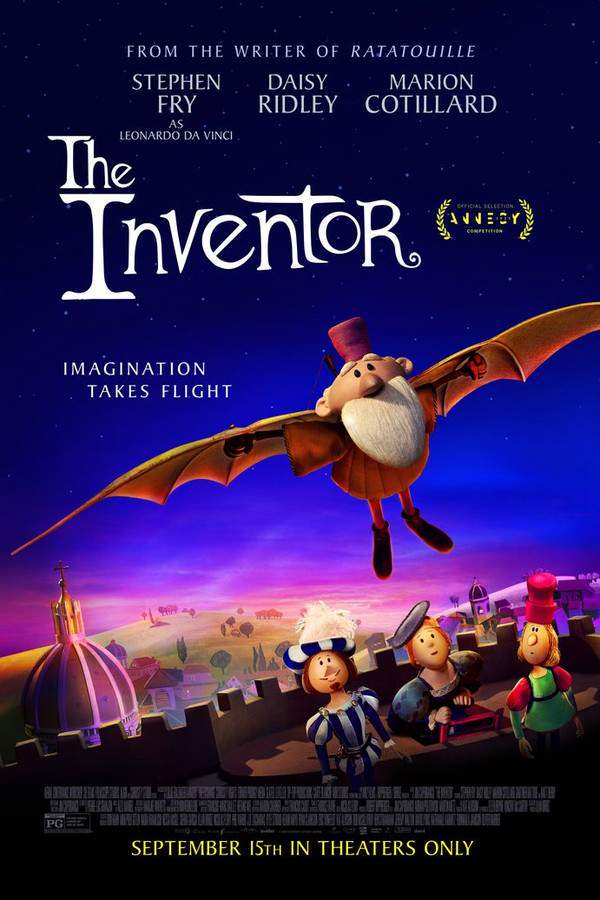
Driven by a desire to understand the secrets of life, Leonardo da Vinci leaves Italy and travels to the French royal court. There, the brilliant inventor dedicates himself to his work, experimenting with groundbreaking flying machines, studying human anatomy through dissection, and creating inventive devices. As he pursues his scientific inquiries, he confronts profound philosophical questions about the nature of existence and his place in the world.

Warning: spoilers below!

Haven’t seen The Inventor yet? This summary contains major spoilers. Bookmark the page, watch the movie, and come back for the full breakdown. If you're ready, scroll on and relive the story!

The Inventor (2023) – Full Plot Summary & Ending Explained

Read the complete plot breakdown of The Inventor (2023), including all key story events, major twists, and the ending explained in detail. Discover what really happened, and what it all means.

In Rome, 1516, Leonardo da Vinci, Stephen Fry, curiously experiments with a mirror-based device that resembles a telescope, peering at the Moon to uncover clues about oceans, life, and the soul. The moment is watched by members of the Papal Court, and in a room where Zoroastro unveils a body for scientific probing, the Pope, Matt Berry, sternly orders Leonardo to halt further exploration of God’s works.

A soldier arrives with news of a Milanese defeat at Marignano and a shift in Leonardo’s role: he is named a military engineer for the moment. Yet his pragmatic mind pushes toward peace, and he persuades the Pope to consider an accord with Francis I, Gauthier Battoue. With that pivot, Leonardo travels to Amboise, where Francis invites him to the royal court and sets him on a path that blends spectacle with science.

On arrival, Leonardo and his assistant Cecco are sent to the ambitious Remorantin castle project, where he first encounters Marguerite, Daisy Ridley. Removing himself from Rome’s orbit, Leonardo continues his quest to understand the soul, and Marguerite becomes a collaborative partner in reshaping his ambitions. She helps steer him away from the castle’s traditional plans toward something bolder: an Ideal City that embodies harmony, proportion, and humanity’s potential.

As Francis plans a grand festival to impress leaders like Emperor Charles V and King Henry VIII, Leonardo faces a choice between grand architectural prestige and the deeper, quieter work of his own invention. He temporarily sets aside the sprawling Ideal City to craft practical devices and other showpieces that Francis can parade before rival courts, including an impressive equestrian statue of Francis himself.

Illness curtails Leonardo’s momentum, and when the Papal Court visits, he contemplates sharing his research on the soul. Cecco’s doubts echo in the room, yet Leonardo remains convinced of a profound discovery—the so-called “Secret to Life itself.” The tensions between faith, science, and power come to a head as he prepares a final, dazzling demonstration of the Solar System. In this sequence, the Sun is embodied by Francis in a bold performance that captures the era’s appetite for wonder and control.

The finale unfolds with a memorable musical moment—an interpretation of a song about a life well spent—while Leonardo’s journey culminates in a celestial ascent. He appears to drift toward the Milky Way, leaving viewers to ponder whether his departure marks a literal death or a dramatic crossing into a new realm of understanding.

Last updated: October 09, 2025 at 16:13

Was this helpful?

The Inventor (2023) Plot Questions Answered – Summary FAQ

Explore frequently asked questions about The Inventor (2023) with spoiler-rich answers covering the full plot summary, major story beats, character motivations, hidden details, and ending meaning. This movie summary FAQ helps explain confusing scenes, plot twists, and narrative decisions in clear, searchable detail.

Q1

Why does the Pope order Leonardo to stop his investigations?

A.

The Pope orders Leonardo to halt his scientific work because he views it as an overreach into divine mysteries. When Leonardo uses a mirror-based device to study the Moon and when Zoroastro reveals a human body for dissection, the Pope sees this as probing 'God's works.' The Pope's decree reflects the central conflict between faith and science that permeates the film, with religious authority rejecting Leonardo's attempts to understand the soul and the secrets of life.

The early Moon study foreshadows Leonardo's lifelong obsession with discovering life beyond what religious authority permits.

poperoman inquisitionscientific freedomfaith vs sciencereligious authority
Q2

Why does Leonardo leave Italy for the French court?

A.

Leonardo leaves Italy after being recruited by King Francis I, who becomes impressed by Leonardo's inventions and invites him to the French royal court. The political situation also shifts: after the Milanese defeat at Marignano, there's a push for peace with France, and Leonardo argues for negotiating with Francis I. The Pope ultimately permits Leonardo to leave, opening a new chapter where Leonardo can pursue his scientific inquiries away from Vatican restrictions.

This journey marks Leonardo's transition from constrained exploration in Rome to greater intellectual freedom in France.

francis ifranceroyal courtinvitationpolitical exile
Q3

Who is Marguerite and what role does she play?

A.

Marguerite is a woman Leonardo meets at the Remorantin castle project in France. She becomes his collaborative partner and helps reshape his ambitions by steering him away from traditional castle plans toward the ambitious Ideal City concept, an urban vision embodying harmony, proportion, and humanity's potential. Her companionship encourages Leonardo to persevere in his search for the soul, particularly during his confrontation with Death away from Rome's influence.

Marguerite's support symbolizes the value of collaboration in intellectual pursuits, contrasting with Leonardo's isolated work in Rome.

margueriteideal citycollaborationarchitecturecreative partnership
Q4

Why does Leonardo abandon the Ideal City project?

A.

Leonardo sets aside the Ideal City project because King Francis I orders him to create devices and spectacles for a grand festival intended to impress visiting monarchs including Emperor Charles V and King Henry VIII. Under royal pressure, Leonardo pivots to developing military devices and an equestrian statue of Francis himself, practical inventions that showcase the king's power. This shift reveals the tension between Leonardo's visionary intellectual goals and the demands of courtly patronage.

The Ideal City represents Leonardo's pure artistic and philosophical vision, which repeatedly yields to practical and political demands throughout the film.

ideal cityfrancis ifestivalcourt spectaclepatronage
Q5

What is the Secret to Life that Leonardo claims to have discovered?

A.

During his illness, Leonardo proclaims he has discovered the 'Secret to Life itself,' though the film leaves the exact nature of this discovery ambiguous. This claim intensifies the debate between science and faith at the French court. The proclamation represents the culmination of his lifelong pursuit, to understand the soul, the cosmos, and humanity's place within it. The ambiguity allows the film to maintain its philosophical tension without resolving whether Leonardo's research produced a definitive answer or remained a work in progress.

Leonardo's moon studies and soul research throughout the film build toward this moment of claimed discovery.

secret to lifesoul researchdiscoveryscientific pursuitlegacy
Q6

What happens during the Solar System demonstration?

A.

Leonardo stages an elaborate Solar System show where Francis I himself plays the Sun in a grand performance illustrating the cosmic order and humanity's place within it. The demonstration fuses art, engineering, and religious symbolism into one sweeping spectacle, reflecting the Renaissance era's appetite for wonder and its efforts to reconcile scientific inquiry with celestial philosophy. This climactic performance represents the peak of Leonardo's courtly contributions.

The demonstration incorporates Leonardo's astronomical studies and serves as his final attempt to share his cosmic understanding with the world.

solar systemfrancis ispectacleastronomycosmic order
Q7

Does Leonardo die at the end or ascend to the Milky Way?

A.

The film's ending is deliberately ambiguous. Leonardo appears to drift toward the Milky Way in a celestial ascent that viewers must interpret, it's unclear whether this represents his literal death, a metaphorical transcendence, or a symbolic crossing into a new realm of understanding. The sequence follows a musical moment about a life well spent, leaving his fate open to interpretation while suggesting his legacy transcends his earthly existence.

His lifelong pursuit of the soul and cosmos foreshadows this final journey beyond ordinary perception.

deathmilky wayascensionafterlifetranscendenceending interpretation
Q8

Why does Leonardo face opposition from both the Pope and Cecco?

A.

Leonardo faces opposition from the Pope because the Vatican views his scientific investigations, especially his dissection studies and attempts to understand the soul, as crossing religious boundaries by probing 'God's works.' Later, his assistant Cecco opposes Leonardo's decision to reveal his soul research publicly during his illness, arguing for caution. Both conflicts represent the broader tension between scientific ambition and institutional resistance, whether religious or personal.

Cecco's doubts echo the earlier Papal resistance, reinforcing Leonardo's isolation despite his genius.

popececcooppositionreligious conflictscientific freedomdisciple doubts
Q9

Why does Leonardo shift from military engineering to peaceful inventions?

A.

While briefly appointed as a military engineer after the Milanese defeat at Marignano, Leonardo's nature pushes toward peace rather than warfare. He persuades the Pope to consider negotiating with Francis I rather than continuing conflict, demonstrating his preference for diplomacy over military solutions. This character trait aligns with his overall pursuit of knowledge for understanding life rather than destruction, setting the stage for his later creative work at the French court.

Leonardo's peacemaking foreshadows his later choice between grand architectural prestige and the quieter work of invention.

military engineerpeacediplomacymarignanofrancis i
Q10

What is the significance of Leonardo's Moon study with the mirror device?

A.

In 1516 Rome, Leonardo uses a mirror-based telescope device to examine the Moon's surface, seeking evidence of seas, signs of life, and clues about the soul. This early scientific inquiry demonstrates his boundary-pushing approach to understanding existence. The moment establishes his core motivation, pursuing knowledge that religious authority considers forbidden, and foreshadows his lifelong quest to unlock the secrets of life and cosmos.

This Moon study sets up Leonardo's later claim to have discovered the Secret to Life and his celestial ascent at the film's climax.

moontelescopeastronomysoul searchscientific curiosity
Mobile App Preview

Coming soon on iOS and Android

The Plot Explained Mobile App

From blockbusters to hidden gems - dive into movie stories anytime, anywhere. Save your favorites, discover plots faster, and never miss a twist again.

Sign up to be the first to know when we launch. Your email stays private, always.

Explore Movie Threads

Discover curated groups of movies connected by mood, themes, and story style. Browse collections built around emotion, atmosphere, and narrative focus to easily find films that match what you feel like watching right now.

Whimsical Inventor Biographies like The Inventor

Stories of brilliant minds whose creativity blends wonder with deep philosophical questions.If you enjoyed the blend of creative genius and personal reflection in The Inventor, you'll like these movies. This thread gathers films about inventors and artists, from historical figures to fictional creators, that balance visual whimsy with a thoughtful exploration of life's big questions.

inventivephilosophicalreflectivewhimsicalmelancholichistoricalcreativeinquisitive

Narrative Summary

These films follow the life and work of a creative genius, often in their later years. The narrative is driven by their projects and inventions, but the core conflict is internal—a philosophical struggle with legacy, purpose, and the nature of existence. The tone balances spectacular imagination with quiet, personal reflection.

Why These Movies?

Movies are grouped here for their unique combination of a whimsical, inventive visual style with a deeply philosophical and reflective core. They share a focus on the creative process as a vehicle for exploring profound ideas, resulting in an experience that is both visually delightful and intellectually engaging.

Philosophical Animation for Families like The Inventor

Animated films that use their medium to ponder life's big questions without losing their sense of wonder.Looking for more movies like The Inventor? This thread features animated films that balance adventurous storytelling with deep philosophical inquiry. These stories are perfect for viewers who enjoy animation that is both visually charming and intellectually stimulating, exploring complex ideas in an accessible format.

philosophicalinquisitivewhimsicalreflectiveadventurousfamily-friendlythought-provokingmelancholic

Narrative Summary

Narratives in this thread often follow a protagonist on a literal or metaphorical quest for knowledge. The external plot provides structure and spectacle, but the emotional core revolves around answering profound questions about life, death, and the soul. The pacing is steady, allowing space for reflection amidst the adventure, and endings are often thoughtful or ambiguous.

Why These Movies?

These films are united by their ability to use the animated medium to tackle sophisticated themes in a way that feels organic and engaging for a broad audience. They share a specific mood mix: the whimsy and inventiveness of animation is paired with a genuinely reflective and inquisitive emotional weight.

Unlock the Full Story of The Inventor

Don't stop at just watching - explore The Inventor in full detail. From the complete plot summary and scene-by-scene timeline to character breakdowns, thematic analysis, and a deep dive into the ending - every page helps you truly understand what The Inventor is all about. Plus, discover what's next after the movie.

The Inventor Timeline

Track the full timeline of The Inventor with every major event arranged chronologically. Perfect for decoding non-linear storytelling, flashbacks, or parallel narratives with a clear scene-by-scene breakdown.

The Inventor Timeline

Characters, Settings & Themes in The Inventor

Discover the characters, locations, and core themes that shape The Inventor. Get insights into symbolic elements, setting significance, and deeper narrative meaning - ideal for thematic analysis and movie breakdowns.

Characters, Settings & Themes in The Inventor

The Inventor Spoiler-Free Summary

Get a quick, spoiler-free overview of The Inventor that covers the main plot points and key details without revealing any major twists or spoilers. Perfect for those who want to know what to expect before diving in.

The Inventor Spoiler-Free Summary

More About The Inventor

Visit What's After the Movie to explore more about The Inventor: box office results, cast and crew info, production details, post-credit scenes, and external links - all in one place for movie fans and researchers.

More About The Inventor

Similar Movies to The Inventor

Discover movies like The Inventor that share similar genres, themes, and storytelling elements. Whether you’re drawn to the atmosphere, character arcs, or plot structure, these curated recommendations will help you explore more films you’ll love.