#27,3774 Year: 1996
Runtime: 91 min
Language: English
Directors: Gary Trousdale, Kirk Wise
Budget: $100M
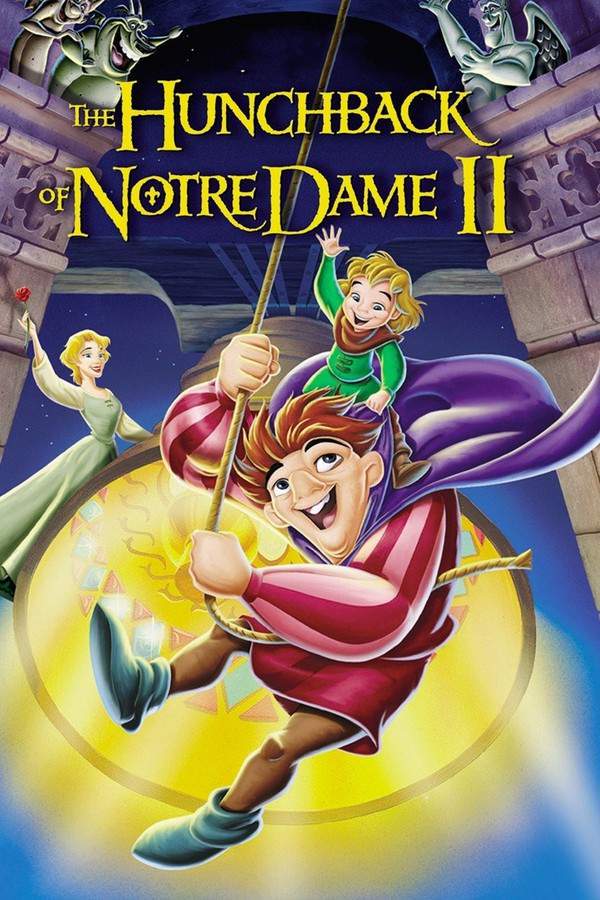
A deformed bell-ringer named Quasimodo yearns to be accepted by Parisian society. Living in the iconic Notre Dame Cathedral, he embarks on a journey of self-discovery, encountering a beautiful Roma woman named Esmeralda and facing the cruelty of a power-hungry captain. He must confront prejudice and danger while striving to protect those he cares about and find his place in the world.
Find where to stream, rent, or buy The Hunchback of Notre Dame (1996) in the US with current JustWatch availability, up-to-date pricing, and platform listings for subscription, rental, and digital purchase options.
Warning: spoilers below!
Haven’t seen The Hunchback of Notre Dame yet? This summary contains major spoilers. Bookmark the page, watch the movie, and come back for the full breakdown. If you're ready, scroll on and relive the story!
Explore the full timeline and setting of The Hunchback of Notre Dame (1996). Follow every major event in chronological order and see how the environment shapes the story, characters, and dramatic tension.
Last updated: October 22, 2024 at 22:03
Meet the key characters of The Hunchback of Notre Dame (1996), with detailed profiles, motivations, and roles in the plot. Understand their emotional journeys and what they reveal about the film’s deeper themes.
Last updated: October 22, 2024 at 22:03
Explore the central themes of The Hunchback of Notre Dame (1996), from psychological, social, and emotional dimensions to philosophical messages. Understand what the film is really saying beneath the surface.
Last updated: October 22, 2024 at 22:03
Browse frequently asked questions about The Hunchback of Notre Dame (1996) focused on characters, relationships, themes, symbols, setting, and story context. This movie info FAQ gives spoiler-aware explanations for character arcs, world details, and thematic interpretation so readers can better understand what the film is really about.
The story is set in Paris, France, during the late 15th century. The primary location is the iconic Notre Dame Cathedral, which serves as both Quasimodo's home and the epicenter of the film's dramatic events. Paris during this period was a city of significant political power and cultural richness under King Louis XI.
The film is set in 1482, a period in French history marked by political turbulence and social inequality. This era saw the monarchy consolidating power while the divide between nobility and marginalized groups widened. The specific year places the story in the late medieval period, just before the French Renaissance.
The film explores several profound themes including unrequited love, justice and injustice, and isolation. These themes intertwine to create a emotionally heavy narrative about prejudice, societal rejection, and the human desire for connection and acceptance.
Unrequited love is central to the story, primarily shown through Quasimodo's feelings for Esmeralda. His affection represents a poignant blend of beauty and tragedy, as his physical appearance makes him socially unworthy in the eyes of both society and the one he loves. This theme explores the pain of loving someone who may never return those feelings.
Isolation is embodied most powerfully through Quasimodo, whose physical disfigurement leads to his complete rejection by Parisian society. Confined to the cathedral tower, he experiences profound emotional loneliness despite desperately yearning for human connection. The theme examines how external appearances can trap people in internal solitude.
Quasimodo is the deformed bell-ringer of Notre Dame Cathedral, a gentle yet lonely character shaped by years of isolation. Despite his intimidating appearance, he possesses a kind heart and a deep longing for acceptance. His journey involves discovering his worth beyond societal prejudice and finding the courage to protect those he cares about.
Esmeralda is a free-spirited Roma dancer who becomes a symbol of resistance against oppression. She displays remarkable courage and compassion, standing up for the marginalized despite the danger it brings her. Her relationships with both Quasimodo and Captain Phoebus reveal her complexity as a character navigating societal expectations.
Claude Frollo is the Archdeacon of Notre Dame, a religious leader consumed by obsessive desire. His internal conflict between his religious duties and his forbidden passions drives much of the tragedy in the story. Frollo serves as a cautionary figure whose unchecked obsession leads to destructive consequences for himself and others.
Captain Phoebus is a noble soldier whose charm and charisma draw him to Esmeralda. He represents the tension between personal desire and military duty, facing moral conflicts throughout the story. His character navigates between following orders and following his heart amid the chaos surrounding him.
Gringoire is a poet and dreamer whose naive nature frequently leads him into trouble. He provides an alternative perspective on love and loyalty through his unconventional marriage to Esmeralda. His character highlights the struggle of artistic ambition confronting the harsh realities of medieval Parisian society.
Paris is depicted as the City of Light, rich in history, art, and political power during the late 15th century. The city features a complex social hierarchy where the nobility thrive while marginalized groups like the Roma face persecution. Notre Dame Cathedral stands as the grandest symbol of both religious authority and architectural beauty.
The theme of justice and injustice is prominently displayed through Esmeralda's wrongful accusation and execution. The story illustrates how a flawed system perpetuates inequality, with the marginalized being easily condemned without fair trial. This injustice sparks rebellion against the oppressive societal norms that govern Paris.
Discover curated groups of movies connected by mood, themes, and story style. Browse collections built around emotion, atmosphere, and narrative focus to easily find films that match what you feel like watching right now.
Stories set in oppressive worlds where doomed love and tragic fate intertwine.Explore movies like The Hunchback of Notre Dame that blend dark, gothic settings with heavy emotional themes of tragic love and societal prejudice. If you were moved by the melancholy tone and bittersweet ending of the animated classic, these stories offer similar experiences of doomed romance and haunting beauty.
Narratives in this thread often follow characters trapped by their circumstances, whether by societal status, physical deformity, or a corrupt environment. The central conflict arises from a clash between pure, often unrequited, love and a powerful force of oppression, such as religious fanaticism or rigid class structures. The plot builds steadily toward an inevitable tragic climax, but often leaves a sliver of hope or poignant connection in its wake.
Movies are grouped here for their shared atmosphere of gothic melancholy, their focus on tragic character arcs, and their emotionally heavy exploration of themes like unrequited love and social injustice. They create a cohesive viewing experience defined by a specific, somber mood and narrative structure.
Heart-wrenching stories of lonely souls yearning for acceptance and connection.Find similar movies to The Hunchback of Notre Dame that explore the poignant theme of unrequited love. If Quasimodo's yearning for Esmeralda resonated with you, these films feature characters whose pure hearts face the pain of loving someone they can never be with, often set against a backdrop of societal judgment.
The narrative pattern revolves around a protagonist, often an outcast, who develops a deep, pure love for someone beyond their reach. This love is typically selfless and protective. The story explores their internal struggle with longing and loneliness, while external forces of prejudice or circumstance create insurmountable barriers. The arc is deeply emotional, focusing on personal growth through heartbreak rather than romantic conquest.
These movies are unified by their central theme of unrequited love and the emotional journey of an outcast protagonist. They share a heavy emotional weight, a melancholic tone, and a focus on the character's internal world of yearning and self-discovery, making the recommendation thread feel coherent and targeted.
Don't stop at just watching - explore The Hunchback of Notre Dame in full detail. From the complete plot summary and scene-by-scene timeline to character breakdowns, thematic analysis, and a deep dive into the ending - every page helps you truly understand what The Hunchback of Notre Dame is all about. Plus, discover what's next after the movie.
Read a complete plot summary of The Hunchback of Notre Dame, including all key story points, character arcs, and turning points. This in-depth recap is ideal for understanding the narrative structure or reviewing what happened in the movie.
Track the full timeline of The Hunchback of Notre Dame with every major event arranged chronologically. Perfect for decoding non-linear storytelling, flashbacks, or parallel narratives with a clear scene-by-scene breakdown.