Plot Explained Spoilers guaranteed!
Plot Explained

Browse by genre

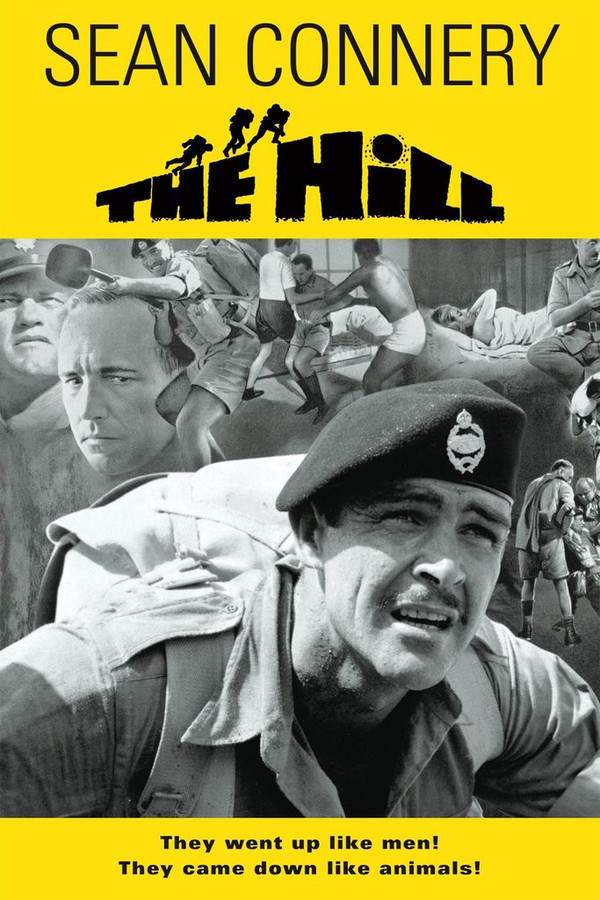
The Hill (1965) movie poster

Timeline

The Hill (1965) Timeline Explained – Every Event in Order

Release, runtime and language
1965 · 123 min · English
Loading streaming availability…
Directed by
Sidney Lumet
Starring
Sean Connery, Roy Kinnear, Harry Andrews, Ian Hendry, Ian Bannen, Ossie Davis

During World War II, five British soldiers find themselves trapped in a harsh Libyan detention camp. Sergeant Major Roberts' conviction casts a shadow over their situation, and as punishment, they are forced to repeatedly climb a steep, man-made hill under the scorching desert sun. Staff Sergeant Williams, a merciless and cruel leader, dictates their grueling ordeal, testing their physical and mental endurance. The soldiers must confront not only the punishing conditions but also the question of whether compassion or despair will ultimately define their survival.

On this page (6)
  1. 1 Where to watch
  2. 2 Events in order (14)
  3. 3 Timeline questions answered
  4. 4 Movie threads
  5. 5 Movies like The Hill
  6. 6 Every angle
Loading streaming availability…

14 events in order · contains spoilers

The Hill Timeline: Events in Chronological Order

Every key event of The Hill (1965) in order, scene by scene, with when and where it takes place. Use it to untangle flashbacks, time jumps and parallel storylines, to refresh your memory before the sequel or to find the exact scene you are thinking of.

  1. Five new prisoners arrive at the glasshouse

    In the Libyan desert, the glasshouse prison accepts five new inmates: Roberts, McGrath, Stevens, Bartlett, and King. They are quickly absorbed into a tense hierarchy as guards eye them with suspicion. The arrival sets the stage for a clash between inmates and camp authorities.

    When
    early morning
    Where
    Glasshouse, Libyan desert camp
  2. A brutal NCO guard arrives and asserts control

    A newly arrived NCO begins enforcing harsh punishments against the newcomers. He uses excessive force to establish authority and signals that discipline will be brutal and uncompromising.

    When
    shortly after arrival
    Where
    Glasshouse camp
  3. Punishments escalate with the hill drill

    The guard orders the prisoners to repeatedly climb a man-made hill at the camp's center. The brutal regimen, intensified by desert heat, wears the men down and heightens tensions.

    When
    afternoon
    Where
    Center of camp, hill
  4. Stevens dies during the punishment

    During another round of hill drills, Stevens collapses and dies from exhaustion. His death crystallizes the brutality of the regime and inflames the prisoners' anger.

    When
    afternoon
    Where
    Hill area
  5. Roberts arrives and challenges Williams

    Roberts, a former Royal Tank Regiment sergeant major, arrives with McGrath and openly challenges Williams' brutality. He questions the legitimacy of the punishment and what it says about the camp's leadership.

    When
    after Stevens' death
    Where
    Glasshouse / main yard
  6. A power struggle forms among the leadership

    Tensions rise as Williams, the conscience Harris, and the Regimental Sergeant Major Wilson vie for control of the camp. Each man advocates a different approach to discipline and order.

    When
    ongoing
    Where
    Command area
  7. Roberts openly defies Williams

    Roberts continues to challenge Williams' methods, defending the prisoners and undermining Williams' authority. The confrontation signals a broader contest over who leads the camp.

    When
    confrontation
    Where
    Yard / cell vicinity
  8. Williams beats Roberts in an empty cell

    In a tense power play, Williams attacks Roberts in an empty cell while others watch. The brutality exposes how far Williams will go to maintain control.

    When
    evening
    Where
    Empty cell
  9. King refuses to wear the uniform

    King endures racial abuse from the RSM and chooses to refuse wearing his uniform and submitting to army discipline. His act becomes a highlighted stand against abuse.

    When
    late
    Where
    HQ area
  10. Medical officer and Harris decide to report the abuse

    The medical officer and Harris confront the abuse, deciding to document it and report Williams and the RSM to higher authorities. Their growing conscience fuels the plan to expose the misconduct.

    When
    night
    Where
    Medical wing
  11. RSM tries to blackmail the medical officer

    The RSM attempts to blackmail the medical officer by citing Stevens' fit-for-punishment rating. The pressure only strengthens the resolve to expose the abuse.

    When
    following night
    Where
    Medical wing
  12. Roberts is briefly left hopeful but is beaten again

    Roberts lingers alone in his cell, thinking the group’s resistance has won. Williams returns to beat him again, reigniting the conflict and keeping the prisoners in fear.

    When
    shortly after the attempt to report
    Where
    Cell
  13. King and McGrath intervene and confront Williams

    King and McGrath intervene to defend Roberts, attacking Williams as the tension reaches its peak. The scene centers the prisoners' solidarity against the brutal leadership.

    When
    final
    Where
    Prison block
  14. Climax fades to black as revolt erupts

    The film ends with the attempted revolt as prisoners confront Williams. Roberts pleads 'you'll muck it up' while King and McGrath act, and the screen fades to black.

    When
    final
    Where
    Glasshouse / yard

Last updated: October 09, 2025 at 15:43

Was this helpful?

Timeline questions answered

The Hill Timeline Explained: Your Questions Answered

When does it happen, and why in that order? The questions people ask about the chronology of The Hill (1965): time jumps, flashbacks, cause and effect between scenes and the correct order of events, each answered with spoilers.

Q1

Why does Stevens die during the hill drill?

Stevens collapses and dies from exhaustion during one of the repeated hill-climbing punishments. The brutal regimen, intensified by the scorching desert heat and the relentless physical demands, overwhelms his body. His death crystallizes the extreme brutality of Williams' regime and serves as a turning point that inflames the prisoners' anger against their captors.

Foreshadowing: Earlier punishments had already been escalating in intensity, with the hill drills wearing the men down before Stevens' fatal collapse.

  • stevens death
  • hill drill
  • exhaustion
  • desert heat
  • prisoner abuse
Q2

Why is Staff Sergeant Williams so cruel to the prisoners?

Williams acts as a merciless leader who uses excessive force to establish absolute authority over the prisoners. He dictates their grueling ordeal with seemingly sadistic intent, testing both physical and mental endurance. His cruel methods appear designed to break the prisoners' spirits and maintain control through fear, though the film does not explicitly explain his deeper motivations.

Foreshadowing: Williams establishes his brutal approach immediately upon arrival, using excessive force against newcomers to signal that discipline will be uncompromising.

  • staff sergeant williams
  • cruelty
  • prison guard
  • sadism
  • authority
Q3

Why does King refuse to wear his uniform?

King endures racial abuse from the Regimental Sergeant Major and chooses to refuse wearing his uniform as an act of defiance against army discipline and the abuse he suffers. His refusal becomes a highlighted stand against the mistreatment, demonstrating personal resistance even within the oppressive camp environment.

Foreshadowing: Tensions between inmates and camp authorities were established from the moment the five new prisoners arrived, with guards eyeing them with suspicion.

  • king
  • uniform refusal
  • racial abuse
  • defiance
  • resistance
Q4

Why does Roberts keep challenging Williams despite being beaten?

Roberts, a former Royal Tank Regiment sergeant major, arrives at the camp with a strong sense of military discipline and justice. He questions the legitimacy of the cruel punishments and views Williams' methods as unjust and illegitimate. His continued defiance stems from his belief in fair treatment and his refusal to let Williams exercise unchecked brutality over the prisoners, even when it results in repeated beatings.

Foreshadowing: Upon arrival, Roberts openly challenges Williams' brutality immediately, questioning what the punishment says about the camp's leadership.

  • roberts
  • defiance
  • sergeant major
  • williams
  • challenge authority
Q5

What happens at the end of The Hill?

The film ends with an attempted revolt as King and McGrath intervene to defend Roberts, attacking Williams as the tension reaches its peak. Roberts pleads 'you'll muck it up' while King and McGrath act against the brutal guard, but the screen fades to black before showing the outcome. The ending is ambiguous regarding whether compassion or despair ultimately defines the soldiers' survival, leaving the result of the revolt uncertain.

Foreshadowing: Tensions had been building throughout the film through the power struggle between Williams and the prisoners, culminating in this final confrontation.

  • final scene
  • revolt
  • ending
  • cliffhanger
  • king mcgrath
Q6

Why are the prisoners forced to climb the hill repeatedly?

The hill drill serves as the primary punishment method imposed by Williams, forcing prisoners to repeatedly climb a steep, man-made hill at the camp's center under the scorching desert sun. The brutal regimen is designed to physically and mentally exhaust the prisoners, breaking their resistance through relentless punishment. The hill becomes a symbol of their ordeal and the oppressive nature of Williams' control.

Foreshadowing: After punishments escalate, the guard specifically orders the prisoners to climb the man-made hill, establishing it as the central tool of torment.

  • hill drill
  • punishment
  • climbing
  • desert
  • physical torture
Q7

Why do Harris and the medical officer decide to report the abuse?

Harris, who serves as the conscience among the camp leadership, and the medical officer witness the extreme abuse and Stevens' death. Confronted with the brutality, they decide to document the misconduct and report Williams and the RSM to higher authorities. Their decision represents a moral choice to expose the abuse rather than complicity through silence.

Foreshadowing: Stevens' death crystallizes the brutality and provides the catalyst for the medical officer and Harris to take action.

  • harris
  • medical officer
  • report abuse
  • whistleblower
  • conscience
Q8

Why does Roberts get beaten again after thinking the resistance worked?

Roberts is briefly left hopeful after the attempt to report the abuse, thinking the group's resistance has achieved something. However, Williams returns to beat him again, reigniting the conflict and keeping the prisoners in fear. This moment demonstrates Williams' relentless determination to maintain control and crush any hope of resistance among the inmates.

Foreshadowing: The power struggle between Roberts and Williams had been ongoing, with Williams determined to break Roberts' defiance.

  • roberts beaten
  • resistance
  • hope
  • williams retaliation
Q9

What is the power struggle between Williams, Harris, and Wilson?

A three-way power struggle forms among the camp's leadership: Williams, the brutal enforcer; Harris, who acts as the conscience advocating for fair treatment; and the Regimental Sergeant Major Wilson. Each man advocates a different approach to discipline and order. Williams represents ruthless control, Harris represents morality, and Wilson represents traditional military authority. Their competing philosophies create tension within the camp's hierarchy.

Foreshadowing: From the early days of the prisoners' arrival, tensions were already rising as different leadership philosophies clashed.

  • power struggle
  • williams
  • harris
  • wilson
  • leadership conflict
Q10

Why does the RSM try to blackmail the medical officer?

Following the decision to report the abuse, the Regimental Sergeant Major attempts to blackmail the medical officer by citing Stevens' fit-for-punishment rating. The RSM uses this information to pressure the medical officer into dropping the report, attempting to protect himself and Williams from accountability. However, the pressure only strengthens their resolve to expose the misconduct.

Foreshadowing: The RSM had been complicit in the abuse from the beginning, making him desperate to prevent the truth from emerging.

  • rsm blackmail
  • medical officer
  • stevens fit rating
  • cover up

Movie threads

More Movies Like The Hill, by Mood & Story

Curated lists built around what makes The Hill tick: the same mood, the same kind of story or the same emotional payoff. Each list explains why these movies belong together.

Brutal Endurance Movies Like The Hill

Stories where characters face relentless physical and psychological torment from a sadistic system. If you liked the relentless torment and struggle for survival in The Hill, explore more movies where characters are pushed to their absolute limits by cruel authority. These films share a similar vibe of oppressive tension, psychological abuse, and a desperate fight for endurance in the face of inhumane treatment.

  • brutal
  • oppressive
  • relentless
  • desperate
  • punishing
  • claustrophobic
  • Tone: tense, bleak, brutal
  • Pacing: steady, relentless
Why these movies?

The story pattern: The narrative pattern follows a group or individual subjected to a punishing, often repetitive, physical or psychological ordeal by a merciless antagonist. The story focuses intensely on the survival struggle, with minimal subplots, building a sense of claustrophobia and desperation as the characters' endurance is systematically broken down.

Why they belong together: These movies are grouped by their shared atmosphere of extreme oppression, a central conflict defined by sadistic power dynamics, and a heavy emotional weight derived from witnessing sustained cruelty and the raw will to survive.
Claustrophobic Prison Dramas Similar to The Hill

Confinement narratives where the setting itself becomes a character of psychological pressure. Find more movies like The Hill that capture the tense, claustrophobic feel of a harsh institution. These similar dramas explore themes of inhumane treatment, military or prison discipline, and the psychological breakdown of characters trapped in a brutal system with no escape.

  • claustrophobic
  • oppressive
  • psychological
  • institutional
  • tense
  • desperate
  • Tone: tense, bleak, oppressive
  • Pacing: steady, deliberate
Why these movies?

The story pattern: The narrative unfolds within a single, confined location that symbolizes the larger oppressive forces at play. The plot is driven by internal power dynamics, rebellion against authority, and the psychological unraveling of individuals under immense systemic pressure, often leading to an ambiguous or bleak resolution.

Why they belong together: They share a defining claustrophobic atmosphere, a focus on the psychological impact of institutional confinement, and themes of dehumanization and the struggle for dignity within an unforgiving system.

If you liked this

Movies Like The Hill

Similar movies to The Hill: the same genre, themes or kind of story. Each one comes with its own plot summary, timeline and ending explained.

Browse all movie summaries

Every angle

The Hill (1965) Explained: Plot, Timeline & Characters

Everything about The Hill in one place: what happens in the plot summary, the timeline in chronological order, the characters and meaning. What's After the Movie adds the cast, box office and post-credit scenes.

Coming soon on iOS and Android

The Plot Explained Movie Summary App

Plot summaries, endings explained and timelines on your phone. Catch up on any movie in minutes, save your favorites and never miss a twist again.

Be the first to know when we launch. Your email stays private, always.

Learn more about the app