Plot Explained Spoilers guaranteed!
Plot Explained

Browse by genre

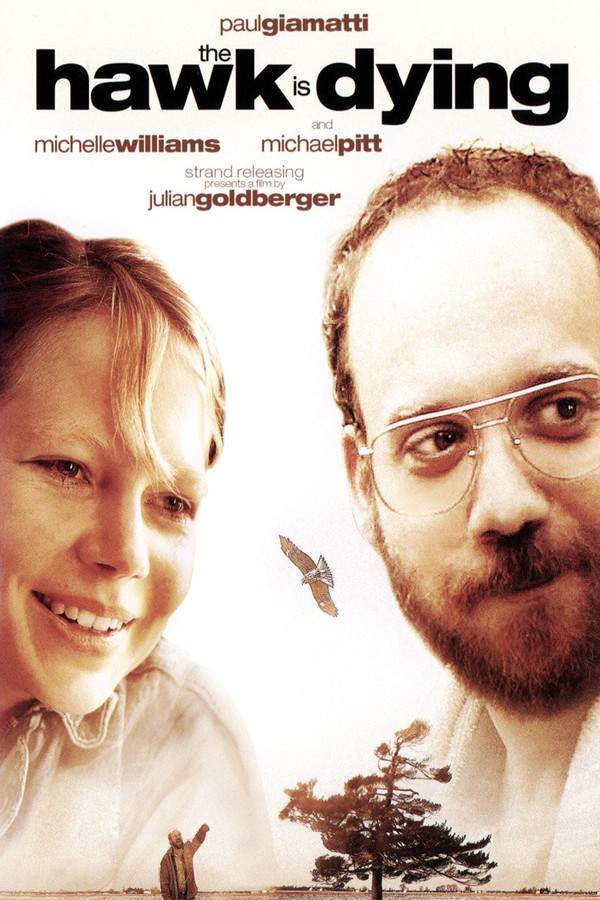
The Hawk Is Dying (2007) movie poster

Plot Summary

The Hawk Is Dying (2007) Plot Summary Explained

Release, runtime and language
2007 · English
Loading streaming availability…
Directed by
Julian Goldberger

George Gattling, an auto upholsterer, faces a life falling apart due to family struggles and a longing for someone unattainable. Following a devastating event, he unexpectedly finds comfort in a wild red-tail hawk. Determined to overcome adversity, George embarks on a challenging and ultimately heartbreaking attempt to befriend and tame the powerful bird, symbolizing his own fight for control and peace.

On this page (6)
  1. 1 Where to watch
  2. 2 What happens: full plot
  3. 3 Plot questions answered
  4. 4 Movie threads
  5. 5 Movies like The Hawk Is Dying
  6. 6 Every angle
Loading streaming availability…

Full plot summary · contains spoilers

What Happens in The Hawk Is Dying: Full Plot Summary

The whole story of The Hawk Is Dying (2007) explained, from the opening scene to the final frame: every key event, every twist and what it all adds up to. Read it as a quick recap before the sequel, to check a scene you missed, or to finally understand what really happened.

George Gattling, an auto upholsterer from Gainesville, Florida, finds himself feeling alienated both in the world and within his own skin. Seeking an escape from his humdrum existence, he embarks on a journey to train a wild red-tailed hawk. As the owner of University Custom Auto Shop, he bears the weight of being the discontented head of his family, which includes his divorced sister, Precious, and her 20-year-old autistic son, Fred. Unbeknownst to him, he also serves as an unwitting subject in the life study of young psychology student Betty, who works at the auto shop.

George harbors a profound aspiration to capture and train hawks, a time-honored practice that demands not just skill but also extreme personal sacrifice. This shared enthusiasm for bird training bonds him with Fred, providing a unique escape from the monotony of life. The tranquil moments spent tracking these majestic creatures in the pre-dawn hours allow George to momentarily detach from the absurdity of modern civilization.

After years filled with disappointment, George, alongside his nephew Fred, finally succeeds in capturing a breathtaking red-tailed hawk. However, tragedy strikes when Fred dies unexpectedly during the night, drowning in his water bed, leaving George heartbroken. In his devastation, George becomes convinced that his survival is intricately linked to the hawk he has captured. Surgeoning with determination, he resolves to tame her—committing to a period of absolute deprivation, wherein neither he nor the bird will eat or sleep until they succeed. As he plunges deeper into this struggle, he finds himself engaged in a tense showdown with a creature that would rather die than submit.

To those around him, George's relentless pursuit appears increasingly irrational; his family begins to worry about his sanity as he inches closer to his goal. Only Betty recognizes the profound necessity for George to confront his inner turmoil, understanding that this journey to the brink is essential for his salvation. She observes as George enters a realm where senses are heightened and emotions run raw—a realm where one can truly perceive the “blood of things.”

Last updated: November 08, 2024 at 02:22

Was this helpful?

Plot questions answered

The Hawk Is Dying Plot Explained: Your Questions Answered

The questions people ask most about The Hawk Is Dying (2007): what happens in the confusing scenes, why the characters do what they do, the twists, hidden details and what the ending means. Each answer contains spoilers.

Q1

Why does George want to train a wild hawk?

George seeks an escape from his monotonous life and profound sense of alienation. As an auto upholsterer in Gainesville feeling disconnected from both the world and his own identity, training a hawk represents his quest for freedom and purpose, a way to break free from the weight of his family responsibilities and the absurdity he perceives in modern civilization.

Foreshadowing: Early scenes establish George's discontent and his desire to find meaning outside his daily routine.

  • george Gattling
  • hawk training
  • alienation
  • escape
  • purpose
Q2

How does Fred's death impact George?

Fred drowns unexpectedly in his water bed during the night, devastating George. This tragedy compounds George's existing feelings of isolation and loss. In his grief, George becomes convinced that his own survival is now intrinsically linked to the hawk he has captured, viewing the bird as essential to his existence and driving him toward extreme measures.

Foreshadowing: The bond between George and Fred was built through their shared passion for hawking, making the loss devastating.

  • fred death
  • tragedy
  • grief
  • water bed
  • impact
Q3

Why does George think his survival depends on the hawk?

After Fred's sudden death, George develops an unwavering belief that his own survival is tied to the hawk he captured. This connection stems from his desperate need to find meaning in the aftermath of tragedy, George sees the hawk as crucial to his existence, a symbol of something he must overcome or achieve to justify his own continued survival.

Foreshadowing: The timing of Fred's death directly precedes George's intensified belief in the hawk's importance to his survival.

  • survival
  • hawk
  • belief
  • connection
  • tragedy
Q4

What does 'the blood of things' mean in the film?

The 'blood of things' refers to a heightened state of perception George experiences during his extreme training. As he enters a realm of raw emotion and intensified senses through sleep and food deprivation, he becomes aware of profound existential truths, deeper realities of life that most people overlook amid modern distractions. Betty recognizes this state as essential for George's confrontation with his inner turmoil.

Foreshadowing: This concept emerges as George pushes himself to the brink during the hawk training process.

  • blood of things
  • perception
  • heightened senses
  • existential truth
  • awareness
Q5

Why does Betty understand George's obsession?

Betty, a psychology student secretly studying George's behavior at his auto shop, recognizes that his extreme journey is necessary for his salvation. She understands George must confront his inner turmoil directly, even though his methods appear irrational to others. While George's family worries about his sanity, Betty sees his descent into desperation as an essential passage toward personal transformation.

Foreshadowing: Betty's role as an observer throughout the film gives her unique insight into George's psychological state.

  • betty
  • understanding
  • psychology
  • salvation
  • inner turmoil
Q6

What does the hawk represent in the story?

The red-tailed hawk symbolizes George's own struggle for freedom, control, and peace. Like the bird that would rather die than submit, George battles against the constraints of his life and identity. The hawk becomes a mirror for George's internal fight, his attempt to tame it reflects his desire to overcome the adversity in his own existence and find meaning through extreme personal sacrifice.

Foreshadowing: The description emphasizes that George and the hawk are engaged in parallel struggles against submission.

  • hawk symbolism
  • freedom
  • control
  • sacrifice
  • struggle
Q7

Why does George undergo such extreme deprivation to train the hawk?

George commits to a torturous regimen where neither he nor the hawk will eat or sleep until they succeed. He believes this sacrifice is necessary, both to prove his commitment and because he views the hawk's taming as directly connected to his survival after Fred's death. The extreme method reflects George's desperate state and his willingness to push himself to the brink of sanity.

Foreshadowing: The intensity escalates after Fred's death when George becomes fully convinced the hawk's taming is essential to his existence.

  • deprivation
  • training method
  • sacrifice
  • falconry
  • extremity
Q8

Does George succeed in taming the hawk?

The film's ending is deliberately ambiguous. The summary describes George's standoff with the hawk as both 'heartbreaking' and 'essential for his salvation,' leaving the outcome uncertain. The focus is on the symbolic battle, George's intense struggle to dominate the wild creature mirrors his internal fight, but whether he achieves actual taming is left open to interpretation.

Foreshadowing: The intense showdown between George and the hawk represents the culmination of his journey throughout the film.

  • taming
  • ending
  • outcome
  • success
  • ambiguity
Q9

Why does George's family worry about his mental state?

George's family observes his increasingly irrational behavior as he becomes consumed by the hawk training. His commitment to extreme deprivation and his belief that his survival depends on taming the bird appear delusional. Their concern escalates as they watch him inch closer to his goal, unable to understand why he must undergo such suffering to achieve something they see as pointless or impossible.

Foreshadowing: The family's worry builds progressively as George's behavior becomes more obsessive following Fred's death.

  • family concern
  • mental state
  • irratiional behavior
  • precious
  • worry
Q10

How does hawking create a bond between George and Fred?

The shared passion for tracking and capturing hawks provides a vital connection between George and his nephew Fred. These pre-dawn outings allow both to escape the monotony of their daily lives, Fred from the challenges of autism, George from his responsibilities and discontent. The activity becomes their unique escape, creating moments of genuine connection before Fred's tragic death.

Foreshadowing: The bonding over hawking is established early as a source of joy and escape for both characters.

  • bonding
  • fred
  • hawking
  • escape
  • connection

Movie threads

More Movies Like The Hawk Is Dying, by Mood & Story

Curated lists built around what makes The Hawk Is Dying tick: the same mood, the same kind of story or the same emotional payoff. Each list explains why these movies belong together.

Movies about obsessive grief like The Hawk Is Dying

Characters consumed by loss find a desperate, often painful, path to salvation. If you were moved by the raw portrayal of grief and obsession in The Hawk Is Dying, you'll find similar stories here. These movies explore characters using a singular, often difficult focus to cope with devastating loss, resulting in heavy, melancholic, and deeply introspective films.

  • grieving
  • obsessive
  • melancholic
  • raw
  • introspective
  • desperate
  • Tone: melancholic, raw, introspective
  • Pacing: slow, deliberate, character-driven
Why these movies?

The story pattern: The narrative typically begins with a sudden, devastating loss that shatters the protagonist's world. In response, they latch onto a specific, often unconventional, goal or relationship—like taming a wild animal or completing a project—as a means to avoid their pain or find meaning. The story follows their grueling, solitary struggle, where the line between healing and self-destruction becomes dangerously blurred, leading to an emotionally charged and often open-ended conclusion.

Why they belong together: Movies in this thread share a core focus on the psychological fallout of grief. They are united by a melancholic tone, slow pacing that allows for deep character immersion, and a heavy emotional weight. The central theme is not just sadness, but the transformative, and sometimes destructive, power of obsession as a coping mechanism.


Slow burn psychological dramas about mental unraveling like The Hawk Is Dying

Slow, atmospheric films where a character's reality begins to crumble under pressure. For viewers who appreciated the slow, oppressive atmosphere and focus on a character's fragile mental state in The Hawk Is Dying. This collection features meditative dramas where the primary conflict is internal, exploring themes of faltering sanity, isolation, and symbolic struggles for control.

  • oppressive
  • meditative
  • introspective
  • claustrophobic
  • unraveling
  • symbolic
  • Tone: oppressive, melancholic, meditative
  • Pacing: slow, atmospheric, deliberate
Why these movies?

The story pattern: These stories unfold slowly, often with a minimalist plot. The central conflict is internal, charting a character's psychological decline due to grief, trauma, or isolation. The narrative uses symbolic imagery—like a wild animal or a specific location—to externalize the character's inner turmoil. The pacing is deliberate, emphasizing long takes and a heavy atmosphere to immerse the audience in the character's increasingly unstable perspective.

Why they belong together: These films are grouped by their shared cinematic approach to psychology. They possess a slow, deliberate pacing, a melancholic or bleak tone, and a medium to high emotional intensity derived from psychological tension rather than external action. The experience is defined by a meditative, often oppressive, immersion into a character's fracturing mind.

If you liked this

Movies Like The Hawk Is Dying

Similar movies to The Hawk Is Dying: the same genre, themes or kind of story. Each one comes with its own plot summary, timeline and ending explained.

Browse all movie summaries

Every angle

The Hawk Is Dying (2007) Explained: Plot, Timeline & Characters

Everything about The Hawk Is Dying in one place: what happens in the plot summary, the timeline in chronological order, the characters and meaning and a spoiler-free summary. What's After the Movie adds the cast, box office and post-credit scenes.

Coming soon on iOS and Android

The Plot Explained Movie Summary App

Plot summaries, endings explained and timelines on your phone. Catch up on any movie in minutes, save your favorites and never miss a twist again.

Be the first to know when we launch. Your email stays private, always.

Learn more about the app