





Plot Explained Spoilers guaranteed!
Plot Explained

Browse by genre

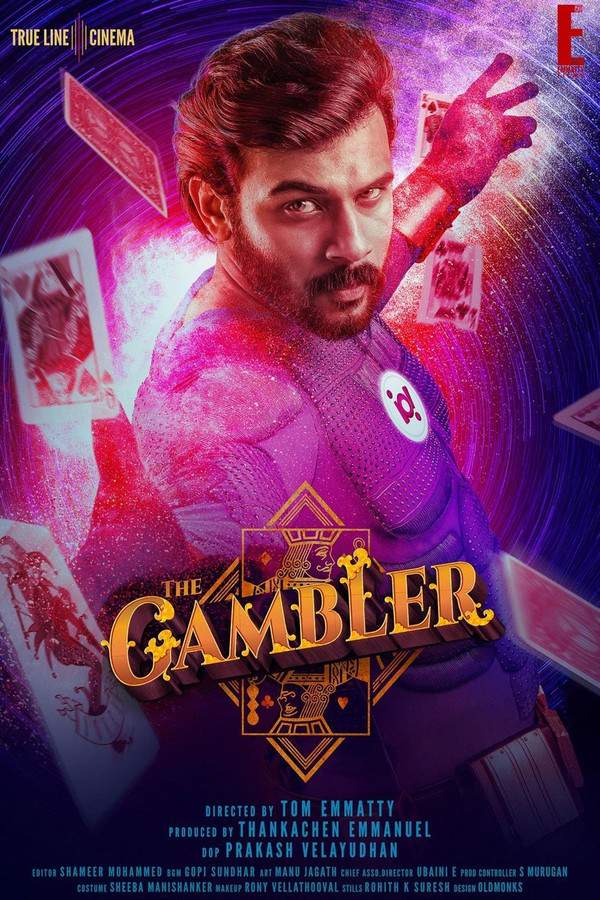
The Gambler (1974) movie poster

Timeline

The Gambler (1974) Timeline Explained – Every Event in Order

Release, runtime and language
1974 · 111 min · Malayalam
Directed by
Karel Reisz
Starring
James Caan, Burt Young, Paul Sorvino, Lauren Hutton, Morris Carnovsky, Jacqueline Brookes

In the bustling city that never sleeps, Axel Freed, a respected English professor, struggles with a dangerous secret: a compulsive gambling addiction. His obsession leads him into the high-stakes world of illegal betting, where he accumulates overwhelming debt and risks losing everything. As his life spirals out of control, Freed must confront his demons and fight for a chance at redemption before it’s too late.

On this page (7)
  1. 1 Where to watch
  2. 2 Events in order (13)
  3. 3 Timeline questions answered
  4. 4 The book behind the movie
  5. 5 Movie threads
  6. 6 Movies like The Gambler
  7. 7 Every angle

Where to watch

Where to Watch The Gambler (1974)

Where can you watch The Gambler? Stream, rent or buy it in the US, including on Amazon Video, Apple TV Store and Fandango At Home: current JustWatch availability with up-to-date prices.

Streaming availability powered by JustWatch

13 events in order · contains spoilers

The Gambler Timeline: Events in Chronological Order

Every key event of The Gambler (1974) in order, scene by scene, with when and where it takes place. Use it to untangle flashbacks, time jumps and parallel storylines, to refresh your memory before the sequel or to find the exact scene you are thinking of.

  1. Professor's controversial lesson on excellence

    Jim Bennett delivers a provocative lecture on literary excellence, arguing that true mastery is rare and that many aspiring writers fail to reach it. He challenges conventional paths to success and probes what it takes to be exemplary. He also hints at Amy Phillips as a potential prodigy, while noticing the talent of Dexter and Lamar.

    When
    During class
    Where
    Los Angeles university classroom
  2. Mother's money and a reluctant concession

    After class, Jim visits his mother, Roberta, at the family estate and asks for money to cover his debts. She coldly tells him she will not give him any more money. Despite her refusal, Jim manipulates the situation and convinces her to provide enough to pay off his debts, setting in motion his next gamble.

    When
    Afternoon
    Where
    Roberta Bennett's luxury estate
  3. Debt relief hopes and a hard-boiled warning

    Back in the day, Jim contemplates borrowing from Frank to consolidate his debts and buy time. Frank confronts him with a demand, asking him to admit, I am not a man. The exchange underscores the brutal leverage Jim will rely on to survive his gambling spiral.

    When
    Evening
    Where
    Frank's office
  4. Money gambled away with Amy by his side

    Jim convinces Roberta to provide enough money to cover his debts, then immediately gambles it away in a casino, doing so with Amy by his side. The spree marks a tipping point, as financial relief is followed by a dangerous rush of risk. The act deepens Jim's entanglement with Amy and his self-destructive cycle.

    When
    Evening
    Where
    Los Angeles casino
  5. Kidnapping and a brutal ultimatum

    Neville kidnaps Jim, ties him up and tortures him, forcing him to face the consequences of his debts. The captor delivers an ultimatum: influence Lamar to win by seven points or less, or Amy will be killed. Jim endures the torture as he is pressed to choose between personal loyalty and moral compromise.

    When
    Night
    Where
    Neville's underground gambling den
  6. A big loan and looming threats

    Jim seeks help from Frank and is told to pursue a new path by building a safe future; Frank lends him 260,000 dollars to pay Lee and avoid his immediate debt. Frank's loan comes with threats to Jim's personal life if he cannot repay, underscoring the high-stakes paranoia of the gambling world. Jim accepts the money and prepares to play a high-risk game.

    When
    Next day
    Where
    Frank's office
  7. Attack and the path to high-stakes gambling

    Lee's men ambush Jim when he goes to ask Lee to stake him 150,000, making it clear that the only way to flatten his debts is to gamble and win. The threat of violence looms as Jim is pressed to take a reckless risk to restore his standing. He leaves defeated, but still intent on finding a way out.

    When
    Soon after meeting Frank
    Where
    Lee's casino/office
  8. Bribing Lamar to shave points

    Jim uses the 150,000 to bribe Lamar into shaving points in the college semifinal, convincing the star that a certain outcome will benefit them both. The plan illustrates the corruption behind elite sport and Jim's willingness to manipulate others for survival. The subterfuge succeeds, linking the bribe to upcoming gambling opportunities.

    When
    Semifinal day
    Where
    Lamar's arena
  9. Dexter heads to Vegas to place the bets

    Jim's associate Dexter is sent to Las Vegas to place bets with the money Jim has obtained from Frank, turning the plan into an international gambit. The Vegas trip heightens the stakes as true risk is measured in real-time cash and tense wagers. The success of this venture determines whether Jim can begin paying off his debt.

    When
    Before the semifinal
    Where
    Las Vegas
  10. Payback from the Vegas windfall

    Lamar's points allow Jim to reap a windfall that enables him to pay Neville back, then deny any knowledge of the large bet placed in Vegas. The payback marks a critical shift from desperation to calculated control, though Jim remains morally compromised. He consolidates his gains and prepares for the final move.

    When
    After the Vegas game
    Where
    Neville's location
  11. The final roulette gamble to settle debts

    Jim convinces both Lee and Frank to meet him in a neutral gambling den and wagers enough money to pay each of them off with a single roulette spin. The tension peaks as the wheel spins and Jim confronts the ultimate gamble against his two biggest creditors. He wins and leaves the club with the money, declaring relief.

    When
    Night
    Where
    Neutral gambling den
  12. A blunt refusal

    Frank tracks Jim and offers to reclaim the cream of his debt, but Jim refuses with a blunt reply. The standoff cements Jim's resolve to sever himself from the creditors at least for the moment. The confrontation underscores the price of his freedom.

    When
    Moments after spin
    Where
    Neutral den
  13. Debt-free, for now, and a new dawn with Amy

    With debts cleared, Jim rushes through the city to Amy's apartment despite being broke. He embraces Amy, feeling a hard-won freedom from his self-destructive cycle, even as the world around him remains dangerous. The night ends with a cautious sense of relief and a fragile future.

    When
    Late night
    Where
    Amy's apartment and city streets

Last updated: December 04, 2025 at 15:33

Was this helpful?

Timeline questions answered

The Gambler Timeline Explained: Your Questions Answered

When does it happen, and why in that order? The questions people ask about the chronology of The Gambler (1974): time jumps, flashbacks, cause and effect between scenes and the correct order of events, each answered with spoilers.

Q1

Why does Jim gamble away his mother's money right after she gives it to him?

Jim manipulates his mother Roberta into giving him money to pay off his debts, but immediately gambles it away because his compulsion is stronger than any rational financial decision. This moment establishes his self-destructive pattern - he knows the consequences yet cannot stop himself. The fact that he does this with Amy beside him deepens his entanglement with her in his downward spiral.

Foreshadowing: Earlier in class, Jim delivers a harsh lesson about perfection, suggesting he holds himself to impossible standards while simultaneously failing them.

  • jim bennett
  • gambling addiction
  • money
  • roberta
  • compulsion
Q2

Why does Neville force Jim to bribe Lamar into shaving points?

Neville tortures Jim and gives him an ultimatum: convince Lamar to win a college basketball semifinal by seven points or less, or Amy will be killed. This is Neville's way of making Jim do his bidding while also profiting from the fixed game. The threat to Amy forces Jim into moral compromise he would otherwise never consider.

  • neville baraka
  • lamar
  • bribe
  • threat
  • ultimatum
  • college basketball
Q3

How does Jim Bennett manage to pay off both Lee and Neville?

Jim orchestrates a complex scheme: he uses $150,000 from Frank to bribe Lamar into shaving points in a college semifinal, then sends Dexter to Las Vegas to place a massive bet with $260,000. When Lamar's fixed performance wins, the Vegas bet pays off enough for Jim to pay Neville and clear his debts to Lee. The scheme works, but leaves him morally compromised.

Foreshadowing: Jim's lecture about rare excellence foreshadows his rare success - he achieves the impossible through corruption.

  • lee
  • neville
  • debts
  • vegas
  • lamar
  • dexter
  • payoff
Q4

Why does Jim choose to bribe Lamar specifically?

Jim chooses Lamar because he's a college basketball player whose performance directly affects gambling odds. By bribing Lamar to win by seven or fewer points, Jim creates a predictable outcome that he can bet on through Dexter in Las Vegas. The plan leverages the college game as a tool to win big enough to pay off his massive debts.

Foreshadowing: Jim calls out Lamar by name in class, noting his basketball talent but criticizing his lack of attention.

  • lamar
  • bribe
  • basketball
  • fix
  • points
  • college game
Q5

Why does Jim refuse to admit "I am not a man" to Frank?

When Frank demands Jim admit he's not a man as condition for borrowing money, Jim refuses because despite his self-destructive behavior, his pride won't allow him to degrade himself completely. This moment reveals Jim's internal conflict - he knows he's failing but cannot fully surrender his sense of identity. It's a rare display of defiance against the powerful loan sharks controlling him.

  • frank
  • pride
  • admission
  • loan shark
  • dignity
Q6

What happens to Amy after Jim is kidnapped by Neville?

Neville threatens to kill Amy if Jim doesn't cooperate with the bribe scheme. Jim is tortured and forced to choose between his own safety and Amy's life. This coercion is what drives Jim into the plan to bribe Lamar - he's not just trying to save himself, but to protect Amy from Neville's violence.

  • amy
  • neville
  • kidnap
  • threat
  • amy phillips
Q7

Why does Jim propose meeting at a neutral gambling den for the final bet?

Jim convinces both Lee and Frank to meet at a neutral location for a single roulette spin that could settle all debts. By making it neutral, he prevents either creditor from cheating or ambushing him during the bet. It's his final desperate move - one spin to end everything rather than continue living under their threats.

  • roulette
  • neutral den
  • lee
  • frank
  • final bet
  • debt
Q8

What is the significance of Jim's lecture about literary excellence?

Jim's controversial lecture argues that true mastery is rare and most aspiring writers fail. He calls out students like Dexter and Lamar by name, criticizes their lack of dedication, and singles out Amy as potentially successful. This scene establishes Jim as a man who preaches perfection yet fails to practice it himself - he's a hypocrite whose words ring hollow given his gambling addiction.

Foreshadowing: Jim later proves his lecture hollow by destroying his own life through gambling.

  • lecture
  • excellence
  • shakespeare
  • students
  • amy
  • dexter
  • lamar
  • literature
Q9

Does Jim end up with Amy at the end of The Gambler?

Yes, after winning the final roulette bet and clearing his debts, Jim runs through the city to Amy's apartment and embraces her. Though he's now broke, he's free from the immediate danger of his debts. The ending is bittersweet - he has a chance at a relationship with Amy but remains financially devastated and hasn't truly overcome his gambling addiction.

Foreshadowing: A fragile mutual interest develops between them earlier when Jim notices Amy working at the gambling house.

  • amy
  • relationship
  • ending
  • apartment
  • love
Q10

What does Jim mean when he says "I am not a gambler" at the end?

After winning the final roulette spin and leaving the money at the club, Jim declares "I am not a gambler" - a paradoxical statement given everything that's happened. This likely reflects his desire to distinguish himself from the lifestyle he was forced into, or perhaps he's in denial. The line underscores the movie's theme: even after winning, he cannot truly escape his addiction or the world he's been living in.

  • quote
  • i am not a gambler
  • denial
  • self-image
  • ending
Q11

How much money does Jim Bennett owe in The Gambler?

Jim owes $260,000 to Lee, the owner of an underground gambling ring, and another $50,000 to loan shark Neville Baraka, totaling $310,000. He faces a brutal seven-day deadline to pay or face death. This massive debt drives the entire plot and creates the life-or-death tension that defines the movie.

  • debt
  • 260000
  • 50000
  • lee
  • neville
  • money
  • owes
Q12

Why does Jim run through the city to reach Amy at the end?

After winning the final roulette bet and telling Frank "Fuck you," Jim runs miles through the city to Amy's apartment. This physical act of running symbolizes his break from the entrapment of debt and threats. He's broke but free - the running represents his freedom and hope for a new beginning, though the movie deliberately leaves his recovery uncertain.

  • running
  • amy
  • apartment
  • freedom
  • escape
  • hope

Movie threads

More Movies Like The Gambler, by Mood & Story

Curated lists built around what makes The Gambler tick: the same mood, the same kind of story or the same emotional payoff. Each list explains why these movies belong together.

Gritty urban thrillers with desperate urgency like The Gambler

A frantic race against time through a gritty cityscape of vice and violence. If you enjoyed the fast-paced, high-stakes tension of The Gambler, this section features movies like it. Discover similar crime dramas and thrillers about desperate characters racing against time through dangerous cityscapes, facing violent consequences and moral decay in gritty urban underworlds.

  • gritty
  • desperate
  • anxious
  • claustrophobic
  • cynical
  • violent
  • Tone: dark, tense, cynical
  • Pacing: fast, urgent, relentless
Why these movies?

The story pattern: These narratives often follow a character who has made one bad decision, triggering a cascade of events that force them deeper into a criminal underworld. The plot is propelled by a clear deadline or external threat, creating a relentless forward momentum. The journey is typically linear, a downward spiral of escalating stakes and violence, with the urban setting amplifying the feeling of being trapped and hunted.

Why they belong together: They share a distinct combination of a gritty, realistic urban atmosphere, a fast-paced narrative driven by urgency, and a high-intensity tone that maintains constant tension. The shared experience is one of being swept up in a chaotic, dangerous situation with little room to breathe.

Movies about self-destructive intellectuals like The Gambler

Intelligent characters who use intellect to justify their own catastrophic downfall. For viewers who liked the complex character study in The Gambler, this section collects movies about brilliant but self-destructive protagonists. These dramas explore the psychological turmoil of educated individuals battling addiction and moral compromise, blending intellectual dialogue with heavy emotional weight.

  • self-destructive
  • introspective
  • morally compromised
  • existential
  • desperate
  • philosophical
  • Tone: dark, heavy, introspective
  • Pacing: steady, character-driven
Why these movies?

The story pattern: The narrative pattern follows a character who possesses education, charm, or a position of respect, which contrasts sharply with their secret, debilitating weakness. The plot explores the gap between their self-awareness and their actions, often through internal monologues or sophisticated dialogue that rationalizes bad choices. The climax is not just about escaping a tangible threat, but about confronting the intellectual and emotional foundations of their own ruin, leading to a bittersweet or heavy resolution.

Why they belong together: They are grouped by their focus on a specific character archetype: the morally compromised intellectual. The similarity lies in the thematic exploration of addiction, existential crisis, and the conflict between a character's potential and their reality, all delivered with a heavy emotional weight and a dark, thoughtful tone.

If you liked this

Movies Like The Gambler

Similar movies to The Gambler: the same genre, themes or kind of story. Each one comes with its own plot summary, timeline and ending explained.

Browse all movie summaries

Every angle

The Gambler (1974) Explained: Plot, Timeline & Characters

Everything about The Gambler in one place: what happens in the plot summary, the timeline in chronological order, the characters and meaning and a spoiler-free summary. What's After the Movie adds the cast, box office and post-credit scenes.

Coming soon on iOS and Android

The Plot Explained Movie Summary App

Plot summaries, endings explained and timelines on your phone. Catch up on any movie in minutes, save your favorites and never miss a twist again.

Be the first to know when we launch. Your email stays private, always.

Learn more about the app