Plot Explained Spoilers guaranteed!
Plot Explained

Browse by genre

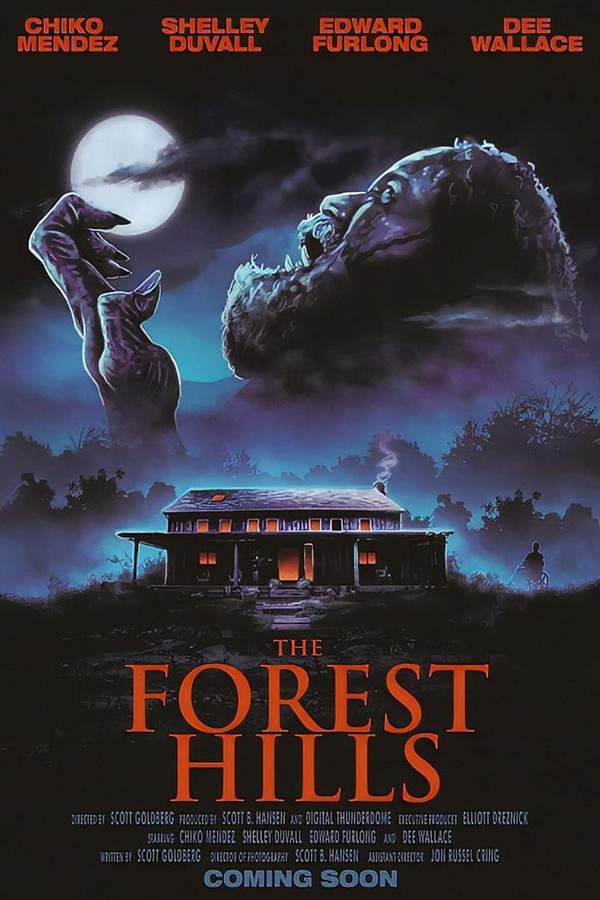
The Forest Hills (2024) movie poster

Timeline

The Forest Hills (2024) Timeline Explained – Every Event in Order

Release, runtime and language
2024 · 1 h 22 m · English
Directed by
Scott Goldberg
Starring
Shelley Duvall, Dee Wallace, Edward Furlong, Felissa Rose, Stacey Nelkin, Marianne Hagan

Haunted by disturbing nightmares, Rico finds his mental state deteriorating while staying in the Catskill Mountains. He struggles to distinguish between reality and the unsettling horrors that intrude upon his waking hours, leading him on a terrifying descent into madness.

On this page (4)
  1. 1 Events in order (11)
  2. 2 Timeline questions answered
  3. 3 Movie threads
  4. 4 Every angle

11 events in order · contains spoilers

The Forest Hills Timeline: Events in Chronological Order

Every key event of The Forest Hills (2024) in order, scene by scene, with when and where it takes place. Use it to untangle flashbacks, time jumps and parallel storylines, to refresh your memory before the sequel or to find the exact scene you are thinking of.

  1. Camping trip and head injury

    Rico heads out for a solo camping trip in the Catskill Mountains, where a traumatic head injury marks the start of his descent into madness. After the accident, his grip on reality begins to fray as unsettling thoughts take hold. The harsh wilderness serves as the catalyst for the nightmare to come.

    Where
    Catskill Mountains
  2. Return home and first visions

    Upon returning to his ordinary life, Rico is plagued by nightmarish visions and a growing belief that he is transforming into a werewolf. The line between his dreams and waking life becomes increasingly blurred. These early visions foreshadow the danger he carries inside him.

    Where
    Rico's home
  3. Reunion with Mama

    Rico reconnects with his estranged mother, Mama, who is terminally ill with lung cancer. Their relationship is tense and abusive, intensifying Rico's fragile mental state. Her presence amplifies the feeling that his inner demons are closing in.

    Where
    Mama's home
  4. Seeking solace with friends

    Rico turns to his friend Billy and his sister Emily for support, hoping for stability and understanding. However, his erratic behavior and sudden anger create distance between him and those he relies on. The social ties that once offered comfort begin to fray.

    Where
    Billy's home / Emily's home
  5. Nightmares intensify

    Nightmares of transformation, violence, and death become a regular torment for Rico. He wakes distressed, unable to separate dream from reality. The dreams deepen his conviction that something monstrous lurks inside him.

    Where
    Rico's home
  6. Belief in a stalking werewolf

    Rico grows convinced that another werewolf is stalking him, further blurring the lines between delusion and perception. He scans the world for signs, reading danger where there may be none. This paranoia fuels his erratic actions.

    Where
    Hometown
  7. Violent outbursts alienate loved ones

    Episodes of violence surge, pushing away friends and family who want to help. His explosive behavior destroys trust and isolates him further. The fear of the inner monster mirrors the hostility he faces from those around him.

    Where
    Various around home
  8. Beginning of the killing spree

    As Rico's grip on reality weakens, he begins a killing spree targeting those he perceives as threats or manifestations of his inner demons. The murders are depicted with intense gore and practical effects, illustrating his spiraling madness. The violence marks a dark pivot from fear to action.

    Where
    Area around hometown
  9. Campfire transformation scene

    One particularly gruesome scene unfolds around a campfire, echoing classic werewolf lore. The setting heightens the sense that Rico's inner beast is breaking free. The image lingers as a chilling centerpiece of his collapse.

    Where
    Campsite/forest
  10. Non-linear narrative and flashbacks

    The film uses flashbacks and hallucinations to illustrate Rico's deteriorating mind, weaving past traumas into the present. The non-linear structure blurs memory with perception, making it hard to discern what is real. This narrative technique deepens the sense of psychological unraveling.

  11. Confrontation with inner demons

    The story builds toward a confrontation between Rico and his inner demons, a climactic encounter that tests his will to survive or succumb. The struggle is as much about self-acceptance as it is about external violence. The outcome hinges on Rico facing what he has become.

Last updated: January 28, 2026 at 12:46

Was this helpful?

Timeline questions answered

The Forest Hills Timeline Explained: Your Questions Answered

When does it happen, and why in that order? The questions people ask about the chronology of The Forest Hills (2024): time jumps, flashbacks, cause and effect between scenes and the correct order of events, each answered with spoilers.

Q1

Why does Rico believe he is turning into a werewolf?

Rico's belief that he is transforming into a werewolf stems directly from the traumatic head injury he sustained during his solo camping trip in the Catskill Mountains. The head injury marks the beginning of his sharp descent into madness, causing him to experience vivid nightmares, hallucinations, and an inability to distinguish between reality and his distorted perceptions. These disturbing visions of transformation, violence, and death become increasingly convincing to him as his mental state deteriorates, leading him to genuinely believe something monstrous is happening to his body.

Foreshadowing: The unsettling thoughts that take hold immediately after his accident foreshadow the werewolf conviction that consumes him.

  • rico werewolf delusion head injury camping trip hallucinations
Q2

What causes Rico's mental deterioration?

The catalyst for Rico's complete mental breakdown is the traumatic head injury he suffers while hiking alone in the Catskill Mountains. After the accident, his grip on reality begins to fray significantly. The injury triggers a cascade of psychological effects: nightmarish visions intrude on his waking hours, he cannot separate dreams from reality, and his grip on reality weakens progressively. This organic brain trauma combined with existing psychological vulnerabilities creates the foundation for his descent into violent madness.

Foreshadowing: The wilderness accident is framed as the catalyst for everything that follows.

  • rico head injury mental breakdown cause catskill mountains
Q3

Why is Rico's relationship with his mother so strained?

Rico's relationship with his mother Mama is deeply strained because she is verbally abusive and unsupportive, despite being terminally ill with lung cancer. Their reunion after Rico's return home does not bring healing or comfort, instead, Mama's presence intensifies his fragile mental state. The abusive dynamic between them adds significant psychological pressure to Rico's already deteriorating mind, creating additional emotional turmoil that contributes to his inability to recover. Her terminal illness also adds a layer of guilt and complexity to their interactions.

Foreshadowing: The tense reunion sets up the emotional isolation that compounds Rico's breakdown.

  • mama rico relationship abusive mother terminal illness
Q4

Why does Rico think another werewolf is stalking him?

Rico's conviction that another werewolf is stalking him emerges from his paranoid delusional thinking, which is a symptom of his worsening mental state. As his ability to distinguish reality from imagination collapses, he begins scanning his surroundings for signs of danger, interpreting ordinary occurrences as evidence of a supernatural threat. This belief represents the peak of his paranoia, he perceives the world as hostile and filled with predators, when in reality there is no werewolf. The delusion serves to externalize his internal fears and provides a focus for his terror.

Foreshadowing: His paranoia builds gradually from earlier visual disturbances.

  • rico werewolf stalking paranoia delusion stalking werewolf
Q5

What triggers Rico's killing spree?

Rico's killing spree is triggered by his complete loss of grip on reality, combined with his paranoid belief that certain people represent threats or manifestations of his inner demons. As his mental state collapses, he begins perceiving others as dangerous predators rather than ordinary people. He targets those he views as embodiments of the threats he fears, both real individuals who try to help him and strangers he misperceives as dangerous. The violence represents the final stage of his transformation from frightened victim to active aggressor, driven by his inability to separate genuine threats from his delusions.

Foreshadowing: His violent outbursts alienating friends and family foreshadow the killing spree.

  • rico killing spree murder motivation paranoia madness
Q6

Is the werewolf real or just Rico's delusion?

The werewolf transformation appears to be entirely a delusion caused by Rico's traumatic brain injury and psychological deterioration. The film presents his beliefs about becoming a werewolf as symptoms of his mental illness rather than actual supernatural events. His vivid nightmares and waking visions of transformation are depicted as products of his fragmenting mind. While the film uses classic werewolf imagery, especially in the campfire scene, the narrative framing suggests these are hallucinatory experiences reflecting his internal sense of becoming something monstrous, not literal shape-shifting.

Foreshadowing: The early visions are introduced as part of his disturbed mental state.

  • werewolf real delusion supernatural rico psychological
Q7

What is the significance of the campfire scene?

The campfire scene serves as the visual centerpiece of Rico's psychological collapse, depicting a gruesome moment that echoes classic werewolf lore. Set in a natural, primitive environment reminiscent of his original camping trip, the scene represents the supposed breaking free of his inner beast. The campfire setting heightens the primal, feral atmosphere and connects directly to werewolf mythology. Beyond the horror elements, the scene symbolizes Rico's complete surrender to the most violent aspects of his delusions, a moment where his self-control evaporates and he acts out the monster he believes he has become.

Foreshadowing: The scene echoes the wilderness location where his injury first occurred.

  • campfire scene werewolf transformation gore practical effects
Q8

Why does the film use a non-linear structure?

The non-linear narrative structure, utilizing flashbacks and hallucinatory sequences, actively illustrates Rico's deteriorating mental state. By weaving past traumas into the present and blurring memory with perception, the film makes it genuinely difficult for viewers to discern what is real versus what is hallucinated. This technique mirrors Rico's own inability to separate his dreams from waking reality. The structure also allows the audience to experience his psychological unraveling firsthand rather than simply being told about it, creating an immersive sense of confusion and dread that reflects his fractured consciousness.

Foreshadowing: The technique itself represents his mind's inability to process events sequentially.

  • nonlinear narrative flashbacks hallucinations psychological thriller structure
Q9

Why do Billy and Emily distance themselves from Rico?

Billy and Emily distance themselves from Rico because his erratic behavior and violent outbursts make him dangerous and unpredictable. Despite their initial willingness to offer support, Rico's sudden anger episodes and escalating aggression create an insurmountable wall between them. His explosive behavior destroys the trust they had built, and they become unable to help him without putting themselves at risk. Their rejection is not cruel, it is a protective response to his genuinely threatening actions. This isolation further compounds Rico's loneliness and accelerates his descent into complete psychological collapse.

Foreshadowing: Their growing distance is shown early as Rico's behavior becomes more volatile.

  • billy emily friends reject rico violent outbursts isolation
Q10

What happens in the final confrontation with Rico's inner demons?

The final confrontation forces Rico to face the consequences of a mind pushed to its absolute edge. This climactic encounter represents both an external and internal battle, he must confront the manifestations of his psychological collapse while also grappling with his own identity and capacity for violence. The struggle is as much about self-acceptance and self-understanding as it is about physical confrontation. The outcome reflects the film's bleak tone, implying no redemptive arc, only further psychological collapse as Rico confronts what he has become without any possibility of healing or reconciliation.

Foreshadowing: The buildup through his escalating violence and isolation leads inevitably to this breaking point.

  • confrontation inner demons climax ending psychological collapse
Q11

Why do Rico's nightmares intensify over time?

Rico's nightmares intensify progressively because his mental state deteriorates without intervention or treatment. Each nightmare of transformation, violence, and death adds to his conviction that something monstrous is happening inside him. The dreams both reflect and reinforce his declining grip on reality, waking terrors blend with sleeping visions until he cannot tell them apart. This escalation is cyclical: the more vivid the nightmares, the more убежден he becomes in his werewolf transformation, which in turn feeds more intense and disturbing dreams. The mounting psychological pressure eventually pushes him from fear into action.

Foreshadowing: The nightmares begin shortly after his return and worsen with each passing day.

  • nightmares intensify rico werewolf transformation violent dreams
Q12

What role does Mama's terminal illness play in the story?

Mama's terminal lung cancer serves multiple purposes in the narrative. It adds another layer of emotional weight and hopelessness to Rico's situation, his mother is dying, and their relationship is too damaged to find healing before her death. Her illness also creates guilt and complexity for Rico, as he must process her approaching death while simultaneously battling his own psychological crisis. The combination of his mother's terminal diagnosis and his own perceived transformation into a monster creates a bleak parallel: both are undergoing a kind of death, one literal and one psychological. Her presence in the story amplifies the overall darkness and removes any possibility of family support as a stabilizing force.

Foreshadowing: The timing of their reunion during her illness adds urgency to their unresolved relationship.

  • mama terminal illness lung cancer death rico relationship

Movie threads

More Movies Like The Forest Hills, by Mood & Story

Curated lists built around what makes The Forest Hills tick: the same mood, the same kind of story or the same emotional payoff. Each list explains why these movies belong together.

Psychological Descent Movies like The Forest Hills

Stories where fractured minds unravel, blurring reality with terrifying delusions. Explore more films that depict a terrifying descent into madness, where characters struggle against hallucinations and paranoia. If you liked the psychological unraveling in The Forest Hills, you'll find similar chilling journeys here.

  • psychological horror
  • descent into madness
  • unreliable narrator
  • paranoid
  • disturbing
  • trauma
  • Tone: dark, unsettling, paranoid
  • Pacing: variable, tense
Why these movies?

The story pattern: These narratives follow protagonists whose grip on reality weakens, often triggered by trauma or mental illness. The plot structure is frequently non-linear, using flashbacks and hallucinations to mirror the character's confusion, leading them to a point where they can no longer distinguish truth from nightmare.

Why they belong together: Movies are grouped here for their shared focus on internal horror. The core similarity is the visceral, first-hand experience of a character's mental collapse, prioritizing psychological terror over external threats to create a uniquely unsettling and immersive dread.

Bleak Horror Films similar to The Forest Hills

Horror experiences that offer no escape, ending in despair and dread. Discover more horror movies with a dark tone and bleak endings. If you appreciated the grim, hopeless atmosphere and heavy emotional weight of The Forest Hills, this collection is for you.

  • bleak
  • grim
  • oppressive
  • disturbing themes
  • heavy
  • gory
  • Tone: dark, bleak, grim
  • Pacing: variable, builds dread
Why these movies?

The story pattern: The stories in this thread typically follow characters confronting inescapable fates, whether internal demons or external forces. The narrative arc is often a downward spiral, with any hope gradually extinguished, culminating in an ending that confirms the characters' suffering or destruction.

Why they belong together: These films are united by their commitment to a dark, pessimistic tone and emotionally devastating conclusions. They share a high intensity and focus on disturbing themes, creating a cohesive experience for viewers seeking horror without redemption or relief.

Every angle

The Forest Hills (2024) Explained: Plot, Timeline & Characters

Everything about The Forest Hills in one place: what happens in the plot summary, the timeline in chronological order, the characters and meaning and a spoiler-free summary. What's After the Movie adds the cast, box office and post-credit scenes.

Coming soon on iOS and Android

The Plot Explained Movie Summary App

Plot summaries, endings explained and timelines on your phone. Catch up on any movie in minutes, save your favorites and never miss a twist again.

Be the first to know when we launch. Your email stays private, always.

Learn more about the app