Plot Explained Spoilers guaranteed!
Plot Explained

Browse by genre

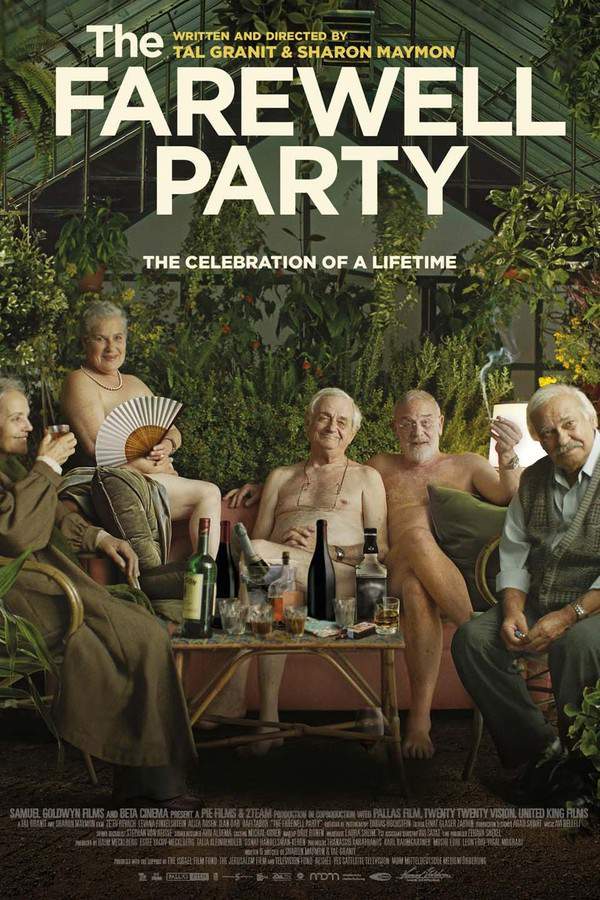
The Farewell Party (2015) movie poster

Plot Summary

The Farewell Party (2015) Plot Summary Explained

Release, runtime and language
2015 · 95 min · Hebrew
JustWatch #10,763 7
Directed by
Sharon Maymon, Tal Granit
Starring
Aliza Rosen, Hilla Sarjon, Ilan Dar, Levana Finkelstein, Raffi Tavor, Yosef Carmon

Levana and Yehezkel enjoy a loving and comfortable life in a retirement home, content in their golden years. However, unforeseen challenges emerge, forcing them to re-examine their enduring marriage. They must confront the realities of aging and the potential for loss, ultimately discovering the resilience and depth of their commitment to one another as they face an uncertain future.

On this page (6)
  1. 1 Where to watch
  2. 2 What happens: full plot
  3. 3 Plot questions answered
  4. 4 Movie threads
  5. 5 Movies like The Farewell Party
  6. 6 Every angle

Where to watch

Where to Watch The Farewell Party (2015)

Where can you watch The Farewell Party? Stream, rent or buy it in the US, including on Amazon Prime Video, Hoopla and Kanopy: current JustWatch availability with up-to-date prices.

Streaming availability powered by JustWatch

Full plot summary · contains spoilers

What Happens in The Farewell Party: Full Plot Summary

The whole story of The Farewell Party (2015) explained, from the opening scene to the final frame: every key event, every twist and what it all adds up to. Read it as a quick recap before the sequel, to check a scene you missed, or to finally understand what really happened.

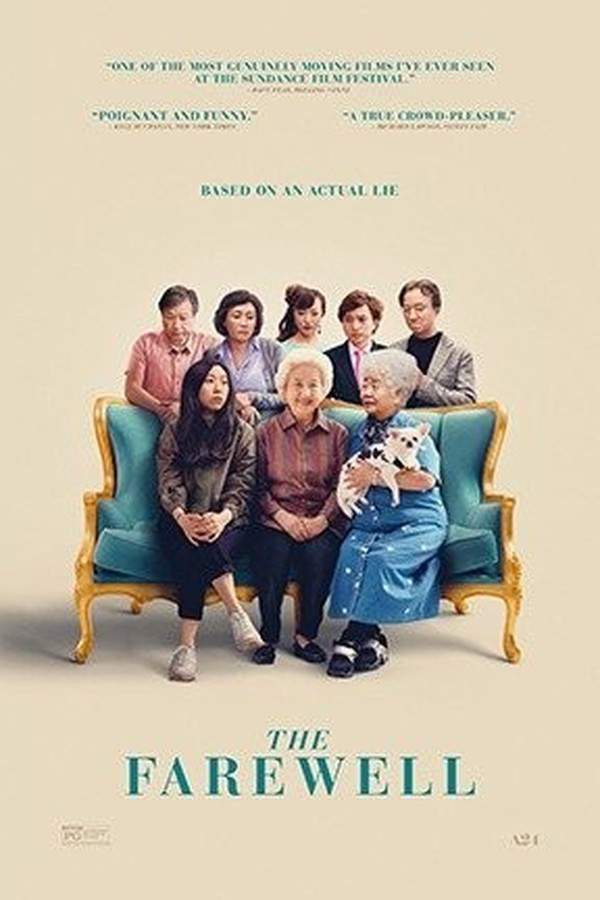
The cinematic experience commences with an intriguing disclaimer that reads: "based on a true lie." This captivating phrase sets a distinctive tone for a narrative that challenges traditional storytelling norms. We meet Billi, portrayed by Awkwafina, a vibrant young woman living in the bustling environment of New York City alongside her parents, Haiyan (Tzi Ma) and Jian (Diana Lin). Even though a considerable distance separates her from her grandmother, Nai Nai (Shuzehen Zhou), who resides in China, Billi nurtures a deep connection with her. They maintain a special bond, sharing intimate phone conversations where Billi confides in her grandmother about her life's highs and lows.

Yet, unbeknownst to Billi, Nai Nai carries an immense secret. During a hospital visit with her sister, Little Nai Nai (Hong Lu), she receives life-altering news. As Billi and Nai Nai converse on the phone about their upcoming plans to reconnect, the conversation is cloaked in hidden truths.

Struggling to find her footing in life, Billi's discussion with Nai Nai soon shifts to a more somber tone. In a moment of vulnerability, she reveals her recent disappointment—a rejection letter from the Guggenheim fellowship—while keeping this heavy burden concealed from those around her.

Upon visiting her family, tensions simmer just beneath the surface. Jian expresses her apprehensions about Billi's stagnant trajectory and financial uncertainty. During a heartfelt exchange, Billi learns of her parents’ hastily planned trip to China for their nephew, Hao Hao, and his rushed wedding to Aiko (whose grasp of Chinese is minimal). However, this sudden journey carries a complexity that unfolds gradually.

When Billi queries her father, Haiyan, on the urgency of the trip, he hesitates before revealing the heartbreaking reality: Nai Nai has been diagnosed with stage four lung cancer. The family finds itself grappling with the dilemma of concealing this devastating truth from their cherished grandmother, fearing that its revelation might prove too heavy for her heart to bear. Knowing that Billi's emotions would betray the family's secret, her parents decide against allowing her to accompany them.

This intricate web of relationships, cultural traditions, and veiled secrets paves the way for a heartfelt exploration of love, family ties, and the concept of mortality. As Billi’s arrival in China stirs a mixture of emotions among her family, the tension in the air becomes tangible. While Billi's parents wear grim expressions, Nai Nai's welcoming demeanor contrasts sharply, leaving Jian to reconcile her conflicting feelings.

Amidst wedding preparations that showcase the cultural divide between America and China, Billi manages to keep her worries under wraps. However, her attempts to discuss Nai Nai’s health are thwarted at every turn, leaving her grappling with frustration and a sense of helplessness. The plot thickens when Nai Nai experiences a severe coughing fit that necessitates a hospital visit, compelling Billi to confront her beloved grandmother's precarious wellbeing yet again.

In a conversation with Dr. Lee, Billi learns that Nai Nai's symptoms may stem from a lingering pneumonia and not a more serious condition. The doctor proposes adjustments to Nai Nai’s treatment while also suggesting an X-ray to rule out further issues. Meanwhile, Billi's father and uncle, Haibin, provide insights into the contrasting mindsets of American and Chinese cultures, emphasizing that in China, one’s existence is deeply intertwined with family and society.

Struggling with this newfound perspective, Billi shares her aspirations of remaining in China to care for Nai Nai. However, Jian firmly insists she should return home, questioning the impact she could truly have on her family’s situation. Regrettably, their discussion revisits the painful memory of Billi’s grandfather's passing, leaving her feeling marginalized and uncertain of her role within the family structure.

As the wedding festivities unfold, Nai Nai, ever the dutiful matriarch, subtly reminds Billi to fulfill her responsibilities as a guest. With a gentle nudge, she encourages Billi to wear a warm smile and extend her greetings to the guests, even as Billi's thoughts race ahead, clouded by concerns about the looming medical tests.

The atmosphere thickens as celebration takes center stage, with Haibin becoming emotional as he expresses his joy through tears. Billi finds her voice amidst the revelry, joining her father on stage for an impromptu karaoke performance of "Killing Me Softly." Such moments of laughter are short-lived, however, as Hao Hao's tears echo the unresolved emotions of the day.

Little Nai Nai's innocent quest for her camera leads to fortuitous events, enabling Billi to collaborate with her to manipulate Mrs. Gao’s test results, altering the diagnosis to suggest less menacing outcomes—"benign shadows." As Nai Nai gleefully announces her results to the family, declaring, "You've all been worrying for nothing! I told you, I'm fine!", the room fills with mixed relief and joy.

In a touching parting gesture, Nai Nai gifts Billi an envelope, representing a token meant for Hao Hao, urging her granddaughter to indulge in something special rather than dismiss it for practical responsibilities. Billi shares her disappointment regarding the fellowship, prompting Nai Nai to impart valuable wisdom—it’s not just about what one does in life, but the essence of how they choose to do it.

As Billi prepares to journey back to New York, Nai Nai holds her in an embrace, whispering assurances of their paths crossing again soon. With Billi returning home to the bustling streets of New York, she finds herself standing at a crossroads, pondering her future. In a moment of spontaneity, she releases a primal grunt, reminiscent of Nai Nai’s life-affirming lessons.

The film closes on a stirring note, intertwining the fictional narrative with real-life footage of the true Nai Nai, who has transcended her stage four cancer diagnosis six years later, embodying strength and resilience.
Last updated: November 17, 2024 at 13:38

Was this helpful?

Plot questions answered

The Farewell Party Plot Explained: Your Questions Answered

The questions people ask most about The Farewell Party (2015): what happens in the confusing scenes, why the characters do what they do, the twists, hidden details and what the ending means. Each answer contains spoilers.

Q1

Why does Billi's family hide her grandmother's cancer diagnosis?

Billi's family hides Nai Nai's terminal lung cancer diagnosis from her because they believe the truth would be too emotionally devastating for her to handle. In Chinese cultural context, the family feels responsible for protecting her mental state and believe revealing a terminal illness could hasten her decline. Billi's parents also worry that her emotional nature would betray the secret, which is why they initially refuse to let her travel to China with them.
Foreshadowing: The film's opening establishes the family's protective dynamic through Billi's close relationship with Nai Nai, showing why they would go to great lengths to shield her.

  • cancer diagnosis
  • family secret
  • Nai Nai
  • cultural traditions
Q2

Why wasn't Billi allowed to travel to China with her parents initially?

Billi's parents specifically excluded her from the trip because they feared she couldn't keep the secret about Nai Nai's cancer. Having witnessed Billi's emotional vulnerability when she confided about her Guggenheim rejection, they knew her reactions would give away the devastating news. Her mother Jian explicitly states that Billi's presence would only add to the family's burden.

Foreshadowing: Earlier scenes show Billi breaking down about her career setbacks, demonstrating her tendency to wear her emotions openly.

  • Billi
  • travel
  • family trip
  • secrets
Q3

What do Billi and Little Nai Nai do with the test results?

Billi and Little Nai Nai manipulate Nai Nai's medical test results to show a false diagnosis. They alter the findings to indicate "benign shadows" rather than the actual cancerous tumors. When Nai Nai receives this falsified good news and announces she's fine, the family experiences relief, though the deception continues.

Foreshadowing: Earlier, Billi observes Dr. Lee discussing the test results with concern, giving her the opportunity to access and modify them.

  • test results
  • diagnosis
  • hospital
  • manipulation
  • lie
Q4

What does the "based on a true lie" disclaimer mean?

The opening disclaimer "based on a true lie" refers to the film's inspiration from director Lulu Wang's real grandmother, while acknowledging the central deception. It's a play on the standard "based on a true story" phrasing, highlighting the paradox of a family lying to protect their beloved grandmother while claiming to act in her best interest.

Foreshadowing: The disclaimer sets up the film's central theme of truth versus protection that plays out throughout the narrative.

  • disclaimer
  • true story
  • opening
  • Lulu Wang
Q5

What cultural differences are shown between American and Chinese family values?

The film explores how American culture emphasizes individual achievement and personal expression, while Chinese culture prioritizes family collective responsibility and social harmony. Billi's father and uncle explain that in China, one's existence is deeply intertwined with family and society, individual desires are secondary to family obligations. This contrast creates tension when Billi wants to stay and care for Nai Nai, but her mother insists she return home.

Foreshadowing: The rushed wedding for Hao Hao and Aiko demonstrates traditional Chinese family priorities over individual romantic compatibility.

  • cultural differences
  • American
  • Chinese
  • family values
  • individualism
Q6

Does Nai Nai really survive her cancer in the ending?

Yes, the ending reveals that the real-life Nai Nai (Lulu Wang's grandmother) actually survived her stage four lung cancer for at least six years after diagnosis. The film closes with footage of the real elderly woman, demonstrating that the family's protective lie didn't lead to the tragedy they feared. However, Billi still returns to an uncertain future, having experienced the profound emotional weight of the deception.

Foreshadowing: Dr. Lee's earlier suggestion that Nai Nai's symptoms might stem from pneumonia rather than cancer plant a seed of hope that the film's ending confirms.

  • Nai Nai
  • survival
  • ending
  • cancer
  • real life
Q7

Why does Billi make a primal grunt at the end of the film?

When Billi returns to New York and stands on a city street, she lets out a primal grunt, a sound her grandmother Nai Nai made throughout the film as an expression of raw, unfiltered living. This moment symbolizes Billi internalizing her grandmother's philosophy about living authentically and without reservation. It's her way of carrying Nai Nai's spirit with her as she faces her own uncertain future.

Foreshadowing: Nai Nai makes similar grunting sounds throughout the film during everyday activities, representing her zest for life despite circumstances.

  • Billi
  • ending
  • primal grunt
  • Nai Nai
  • philosophy
Q8

What does Nai Nai mean when she tells Billi "it's not what you do, it's how you do it"?

When Nai Nai gives Billi an envelope of money and learns about her Guggenheim rejection, she offers this wisdom to comfort her granddaughter. Nai Nai is saying that success isn't measured by external achievements or accolades, but by the heart and intention one puts into their efforts. This philosophy aligns with the film's theme of valuing genuine connection over conventional measures of accomplishment.

Foreshadowing: This moment occurs during their intimate parting, as Nai Nai recognizes Billi's insecurity about her career and life direction.

  • wisdom
  • Nai Nai
  • Guggenheim
  • success
  • life lesson
Q9

Why is Hao Hao's wedding so rushed in the film?

The wedding between Hao Hao and Aiko appears rushed because the family is using it as a pretext to gather everyone together while Nai Nai is still relatively healthy. Given her terminal diagnosis, the family wants to celebrate a joyful occasion while she can participate. Aiko's limited Chinese language skills also highlight the cultural divide, suggesting the marriage may have practical rather than purely romantic origins.

Foreshadowing: Billi learns about the rushed trip to China for the wedding early in the film, with the true urgency only revealed when her father explains Nai Nai's diagnosis.

  • wedding
  • Hao Hao
  • Aiko
  • rushed
  • family gathering

Movie threads

More Movies Like The Farewell Party, by Mood & Story

Curated lists built around what makes The Farewell Party tick: the same mood, the same kind of story or the same emotional payoff. Each list explains why these movies belong together.

Bittersweet family dramas about difficult truths like The Farewell Party

Stories where love forces families to confront painful realities together. If you liked The Farewell Party, explore more movies like it that delve into the complex dynamics of families facing tough choices. These similar drama stories capture the bittersweet feeling of love intertwined with difficult truths and ethical struggles.

  • heartfelt
  • reflective
  • anxious
  • tender
  • nostalgic
  • uncertain
  • Tone: bittersweet, heartfelt
  • Pacing: steady, contemplative
Why these movies?

The story pattern: Narratives in this thread typically follow a family unit as an external crisis, such as a terminal illness, forces them to re-evaluate their relationships and confront a shared lie or secret. The plot unfolds through intimate conversations and gatherings, focusing on the emotional fallout and the resilience of familial bonds.

Why they belong together: Movies are grouped here for their shared focus on the bittersweet intersection of deep familial love and the burden of difficult choices. They share a steady, character-driven pace, a medium intensity that prioritizes emotional nuance over spectacle, and a heavy emotional weight centered on moral dilemmas.

Quiet meditations on aging and legacy like The Farewell Party

Character-driven stories exploring the challenges and reflections of later life. Discover movies similar to The Farewell Party that offer a quiet and reflective look at aging. These films share a steady pace and bittersweet tone, exploring themes of legacy, love in later life, and the emotional challenges of growing older.

  • reflective
  • nostalgic
  • tender
  • heartfelt
  • melancholic
  • wise
  • Tone: bittersweet, tender
  • Pacing: steady, slow burn
Why these movies?

The story pattern: Stories unfold through the daily lives and interactions of older protagonists, often set in communities like retirement homes. The conflict is internal and relational rather than action-based, revolving around themes of memory, loss, autonomy, and the meaning of a life lived. The journey is one of quiet acceptance and reconnection.

Why they belong together: These films are united by their central focus on elderly characters and the specific emotional landscape of aging. They share a steady, deliberate pacing that allows for reflection, a medium intensity that avoids melodrama, and a tone that seamlessly blends warmth with the inherent sadness of facing life's final chapters.

If you liked this

Movies Like The Farewell Party

Similar movies to The Farewell Party: the same genre, themes or kind of story. Each one comes with its own plot summary, timeline and ending explained.

Browse all movie summaries

Every angle

The Farewell Party (2015) Explained: Plot, Timeline & Characters

Everything about The Farewell Party in one place: what happens in the plot summary, the timeline in chronological order, the characters and meaning and a spoiler-free summary. What's After the Movie adds the cast, box office and post-credit scenes.

Coming soon on iOS and Android

The Plot Explained Movie Summary App

Plot summaries, endings explained and timelines on your phone. Catch up on any movie in minutes, save your favorites and never miss a twist again.

Be the first to know when we launch. Your email stays private, always.

Learn more about the app