Plot Explained Spoilers guaranteed!
Plot Explained

Browse by genre

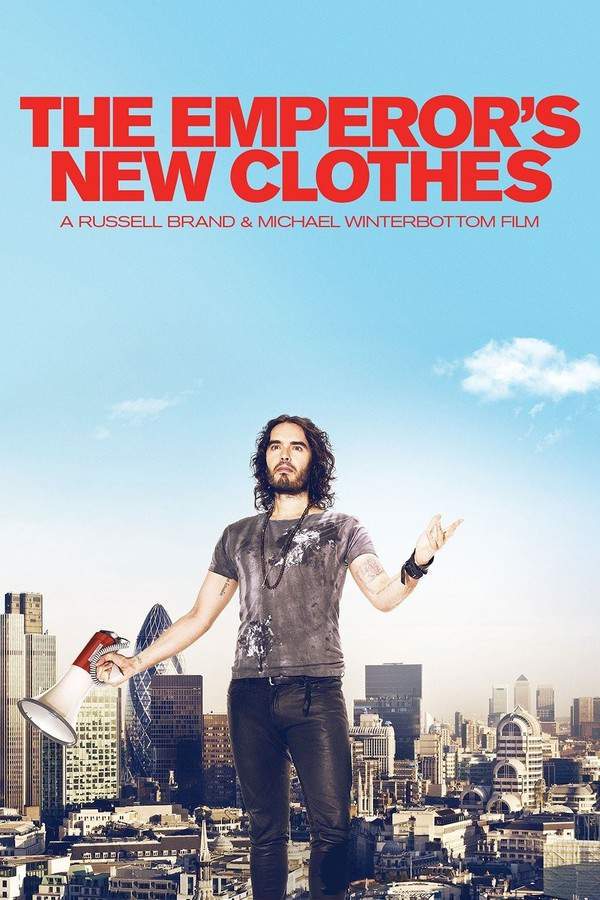
The Emperor's New Clothes (2015) movie poster

Timeline

The Emperor's New Clothes (2015) Timeline Explained – Every Event in Order

Release, runtime and language
2015 · 101 min · English
Loading streaming availability…
Directed by
Michael Winterbottom

Russell Brand and director Michael Winterbottom explore the complexities of economics and their effect on people’s lives in this documentary. Through humor and insightful commentary, the film examines global policies and their devastating consequences, highlighting the growing inequality and stark realities of a deeply divided world. It offers a candid look at the human cost of economic decisions.

On this page (6)
  1. 1 Where to watch
  2. 2 Events in order (13)
  3. 3 Timeline questions answered
  4. 4 Movie threads
  5. 5 Movies like The Emperor's New Clothes
  6. 6 Every angle
Loading streaming availability…

13 events in order · contains spoilers

The Emperor's New Clothes Timeline: Events in Chronological Order

Every key event of The Emperor's New Clothes (2015) in order, scene by scene, with when and where it takes place. Use it to untangle flashbacks, time jumps and parallel storylines, to refresh your memory before the sequel or to find the exact scene you are thinking of.

  1. The 2008 Financial Crisis

    The global financial system collapses in 2008, triggering one of the most severe economic downturns in modern history. Banks fail, markets tumble, and ordinary people are left to bear the fallout. The documentary draws on archival footage from this period to ground its story in real events.

    When
    2008
  2. The Great Recession Follows

    The financial crisis leads into the Great Recession, an extended period of economic hardship felt around the world. The documentary incorporates archival footage from this era to show the lasting damage done to ordinary citizens. This material serves as the backdrop against which the film measures how little has changed.

    When
    Late 2000s
  3. A 'My Booky Wook' Film Is Considered

    Director Michael Winterbottom and Russell Brand previously discussed producing a film version of Brand's first memoir, 'My Booky Wook'. The pair weighed how to bring Brand's autobiography to the screen. Ultimately, the idea was abandoned as the two moved in a different creative direction.

  4. A New Direction: Tackling Inequality

    Rather than adapting the memoir, Winterbottom and Brand turn their attention to a documentary about wealth and inequality in the aftermath of the 2008 financial crisis. The project takes aim at why the world's financial systems remain unchanged despite widespread hardship. This new concept becomes the foundation of the film.

  5. Winterbottom Talks to the BBC

    In October 2014, Winterbottom tells the BBC that the film will explore why 'nothing has changed' since the 2008 financial crisis. He frames the documentary as a direct response to the stagnation that followed the crash. The statement offers an early preview of the film's central argument.

    When
    October 2014
  6. Exposing the 'Ludicrous Extremes' of Society

    Winterbottom explains that the film is about inequality and why the 1 percent of the world's wealthy seem to have so much while the rest of the world has not quite so much. He argues that everyone already knows what is going on in the world, so the idea is to point out the ludicrous extremes of society. This framing becomes the mission statement of the production.

    When
    October 2014
  7. Shooting Begins

    The documentary begins shooting in October, marking the official start of production. With Winterbottom directing and Brand fronting the film, the crew sets out to capture both historical context and present-day commentary. Filming combines archival material with newly staged segments.

    When
    October 2014
  8. Comedic Send-Ups in London's Financial District

    Russell Brand performs comedic send-ups in the financial districts of London, using humor to confront the world of high finance. The sketches blend satire with genuine criticism of the banking industry. These comedic segments become a signature element of the documentary.

    Where
    Financial district, London
  9. Comedic Send-Ups in New York's Financial District

    The production also stages Brand's comedic send-ups in the financial district of New York. Like the London segments, these pieces juxtapose playful provocation with serious questions about wealth and power. Filming in both cities underscores the global nature of the financial system being critiqued.

    Where
    Financial district, New York
  10. Targeting Lord Rothermere's 'Non-Dom' Tax Status

    In one of the film's key scenes, Brand attempts to confront Lord Rothermere, the billionaire owner of the Daily Mail. The subject of the confrontation is Rothermere's 'non-dom' tax status, through which he avoids paying taxes in the United Kingdom by claiming residence elsewhere. Brand takes this grievance directly to the media mogul's doorstep.

    Where
    London
  11. Ringing the Bell at Rothermere's Mansion

    Brand arrives at Lord Rothermere's London mansion and rings the front doorbell. Through the intercom, he asks to speak with Rothermere in person, hoping to press the billionaire directly on his tax arrangements. The moment captures Brand's confrontational approach to the film's subject matter.

    Where
    Lord Rothermere's mansion, London
  12. An Answer Through the Intercom

    An unseen person responds to Brand's request through the intercom at Rothermere's mansion. He is told that Rothermere does indeed live there, confirming the billionaire's presence at the property. The brief exchange underscores how inaccessible the billionaire remains, even to someone standing at his own front door.

    Where
    Lord Rothermere's mansion, London
  13. Assembling the Finished Film

    The completed documentary pairs archival footage from the 2008 financial crisis and the Great Recession with Brand's comedic send-ups. By mixing historical record with satire, the film builds a portrait of a system that has continued unchecked. The final cut embodies Winterbottom's goal of showing why nothing has changed since the crash.

Last updated: October 28, 2026 at 07:16

Was this helpful?

Timeline questions answered

The Emperor's New Clothes Timeline Explained: Your Questions Answered

When does it happen, and why in that order? The questions people ask about the chronology of The Emperor's New Clothes (2015): time jumps, flashbacks, cause and effect between scenes and the correct order of events, each answered with spoilers.

Q1

Why does the documentary focus on the 1 percent?

Michael Winterbottom says the film asks why the richest 1 percent have so much while most people have so little, exposing what he calls the "ludicrous extremes" of society. The Emperor's New Clothes therefore treats inequality as the central issue exposed by the financial crisis and its lasting damage. Brand's staged confrontations and archival footage connect unequal wealth distribution to the consequences felt by ordinary people.

Foreshadowing: Winterbottom's October 2014 BBC statement already frames the project around why "nothing has changed" since the crash.

  • wealth inequality
  • one percent
  • economic inequality
  • michael winterbottom
  • financial crisis
  • russell brand
Q2

How does the film connect the banking collapse to lasting inequality?

The Emperor's New Clothes presents a clear chain: when the global financial system collapsed, banks failed and markets tumbled, bringing severe hardship to ordinary people, yet wealth afterward remained concentrated among the richest 1 percent. Lord Rothermere's non-dom tax status is used as a concrete example of how someone at the top can remain insulated by tax rules even after the wider economy suffers.

  • banking collapse
  • wealth concentration
  • tax avoidance
  • economic inequality
  • great recession
  • lord rothermere
Q3

Why does Russell Brand confront Lord Rothermere?

Brand goes to Rothermere's mansion to challenge the Daily Mail owner's use of "non-dom" tax status, which allows him to avoid UK taxes by claiming residence elsewhere. The confrontation turns the documentary's general argument about inequality into a direct challenge to one wealthy figure's tax arrangements.

Foreshadowing: Brand's earlier financial-district send-ups establish his confrontational style before he carries it to Rothermere's mansion.

  • russell brand
  • lord rothermere
  • non-dom tax
  • daily mail
  • tax avoidance
  • wealth inequality
Q4

What is Lord Rothermere's non-dom tax status?

Brand challenges Rothermere's claim to "non-dom" status, which the film says lets him avoid UK taxes by claiming residence elsewhere. Because Rothermere owns the Daily Mail and is a billionaire, Brand uses the case to show how the tax system can preserve extraordinary private wealth while ordinary people carry the effects of economic hardship.

  • non-dom status
  • lord rothermere
  • uk taxes
  • tax avoidance
  • daily mail
  • private wealth
Q5

Why does the film use archival footage from the 2008 crisis?

Archival footage grounds the documentary in real events rather than leaving inequality as an abstract argument. The material about the crash, bank failures, and the Great Recession shows how financial decisions produced prolonged hardship for ordinary people, supplying the evidence for Winterbottom's claim that little changed afterward.

  • archival footage
  • 2008 financial crisis
  • great recession
  • ordinary people
  • systemic inequality
  • archival evidence
Q6

How did the 2008 financial crisis lead to the Great Recession?

When the global financial system collapsed, banks failed and markets tumbled, triggering a prolonged period of economic hardship. The film treats the 2008 crisis and Great Recession as connected stages: the first is the shock, while the second reveals its lasting damage to ordinary people.

  • 2008 financial crisis
  • great recession
  • global financial system
  • bank failures
  • market crash
  • economic hardship
Q7

Why does Russell Brand use comedy in a documentary about economic damage?

In The Emperor's New Clothes, Brand's comic send-ups use satire to challenge banks, wealth, and power from inside the financial districts. The humor does not soften the film's argument; it makes the polemic more accessible and confrontational while offering sardonic relief from the severity of the archival material.

  • russell brand
  • comedy send-ups
  • financial satire
  • wealth and power
  • documentary style
  • economic inequality
Q8

Why does Brand's confrontation with Rothermere end at the intercom?

During the sequence, an unseen person confirms that Rothermere lives at the mansion, but Brand does not receive a face-to-face meeting with him. The staged scene uses that lack of access to underline the documentary's argument: immense wealth can remain insulated from direct questioning even at a person's own front door.

  • russell brand
  • lord rothermere
  • mansion
  • intercom
  • wealth inequality
  • media mogul
Q9

Why was the documentary filmed in both London and New York?

London and New York are major global financial centers, so filming in both makes clear that the documentary is critiquing an interconnected financial system rather than one local banking culture. The locations also place Brand's comic challenges directly in the physical centers of wealth and power.

  • london
  • new york
  • global finance
  • financial districts
  • wealth and power
  • international inequality
Q10

Why does the documentary end without showing a solution to inequality?

The Emperor's New Clothes is structured as an indictment of a persistent system, not as a conventional story in which a crisis produces a visible solution. Its final movement from evidence of economic damage to scrutiny of elite wealth leaves the larger problem unresolved, reinforcing that the social consequences of the 2008 collapse remain unresolved.

  • ending explained
  • unresolved ending
  • systemic inequality
  • financial crisis
  • economic reform
  • documentary conclusion
Q11

Why was the planned My Booky Wook film adaptation abandoned?

The production history does not identify one personal dispute; Winterbottom and Brand abandoned the memoir adaptation when they moved in a different creative direction. Their new project became The Emperor's New Clothes, combining archival material about the financial crisis with staged comic challenges to wealth and inequality.

  • my booky wook
  • russell brand
  • michael winterbottom
  • memoir adaptation
  • documentary pivot
  • production history
Q12

What roles do Russell Brand and Michael Winterbottom play in the documentary?

Michael Winterbottom directs and frames the inquiry into inequality, while Russell Brand fronts the film through his comic performances and public commentary. Their collaboration explains the documentary's hybrid form: serious archival analysis and reflective interviews sit beside provocative, staged send-ups.

  • michael winterbottom
  • russell brand
  • director
  • documentary host
  • staged sketches
  • interviews

Movie threads

More Movies Like The Emperor's New Clothes, by Mood & Story

Curated lists built around what makes The Emperor's New Clothes tick: the same mood, the same kind of story or the same emotional payoff. Each list explains why these movies belong together.

Darkly Comic Economic Polemics Like The Emperor's New Clothes

Satire sharpens the indictment, exposing how institutions conceal harm behind polished systems. Discover movies like The Emperor's New Clothes: darkly comic documentaries and issue-driven films that use wit, archival evidence, and confrontation to challenge powerful institutions. These stories pair intellectual skepticism with grim human consequences, creating a polemical experience that is entertaining without becoming escapist.

  • dark comedy
  • satirical
  • thought-provoking
  • confrontational
  • cerebral
  • grim
  • Tone: dark, satirical, confrontational
  • Pacing: variable, alternating comedy and evidence
Why these movies?

The story pattern: The narrative alternates between energetic comic commentary, provocative encounters, and sobering evidence. It gradually connects systemic failures to their effects on ordinary people, then directs scrutiny toward the officials, corporations, and wealthy elites responsible. The argument gains force without offering a conventional resolution.

Why they belong together: These films share a darkly comic but confrontational tone. Their humor functions as a weapon rather than an escape, sharpening criticism of banks, governments, corporations, and other entrenched institutions while archival material and real-world consequences preserve an emotional sense of urgency.
Economic Inequality Films Like The Emperor's New Clothes

Financial collapse becomes a human story when policy, wealth, and social division remain unresolved. Explore movies like The Emperor's New Clothes: documentaries and dramas examining financial crises, bank bailouts, tax avoidance, wealth concentration, and the human toll of policy. This thread follows stories that expose how economic systems distribute prosperity and hardship unevenly, often ending with the larger crisis still unresolved.

  • economic crisis
  • inequality
  • social justice
  • human cost
  • unresolved
  • institutional failure
  • Tone: somber, urgent, unresolved
  • Pacing: variable, evidence driven
Why these movies?

The story pattern: These narratives move from images of crisis and disruption toward the institutions shaping them. Personal hardship and archival evidence expose unequal outcomes, while scrutiny of elite wealth and corporate power reveals the systems behind the suffering. Reform does not arrive, leaving the structural crisis open-ended.

Why they belong together: The shared focus is the human cost of economic decisions and the unequal distribution of wealth and risk. Their dark, emotionally heavy presentations connect policy to lived consequences, and their ambiguous conclusions reflect a systemic problem that remains larger than any individual victim or institution.

If you liked this

Movies Like The Emperor's New Clothes

Similar movies to The Emperor's New Clothes: the same genre, themes or kind of story. Each one comes with its own plot summary, timeline and ending explained.

Browse all movie summaries

Every angle

The Emperor's New Clothes (2015) Explained: Plot, Timeline & Characters

Everything about The Emperor's New Clothes in one place: what happens in the plot summary, the timeline in chronological order, the characters and meaning and a spoiler-free summary. What's After the Movie adds the cast, box office and post-credit scenes.

Coming soon on iOS and Android

The Plot Explained Movie Summary App

Plot summaries, endings explained and timelines on your phone. Catch up on any movie in minutes, save your favorites and never miss a twist again.

Be the first to know when we launch. Your email stays private, always.

Learn more about the app