Plot Explained Spoilers guaranteed!
Plot Explained

Browse by genre

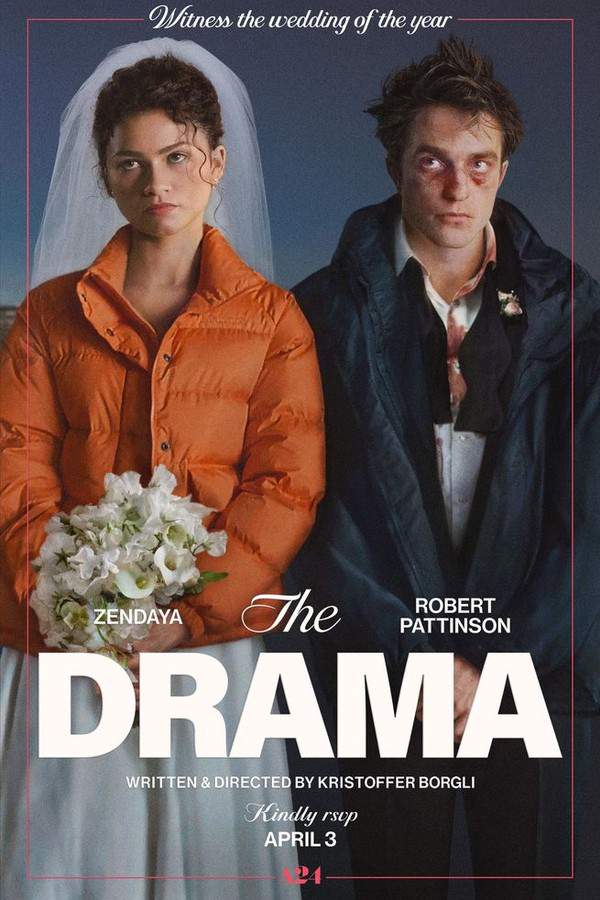
The Drama (2026) movie poster

Ending Explained

The Drama (2026) Ending Explained – Final Scene & Meaning

Release, runtime and language
2026 · 1 h 46 m · English
Echo score 67
Loading streaming availability…
Directed by
Kristoffer Borgli
Starring
Mamoudou Athie, Robert Pattinson, Zendaya, Sydney Lemmon, Alana Haim, Anna Baryshnikov
Budget
$28M

Just days before their wedding, Charlie’s world is turned upside‑down when Emma confesses a shocking secret from her past. What should be a time of love and anticipation becomes an emotional crisis, forcing Charlie to question everything he thought he knew about his fiancée. As the ceremony draws near, their bond is tested, and they must decide whether their love can survive the truth.

On this page (6)
  1. 1 Where to watch
  2. 2 What happens at the end
  3. 3 Final events in order
  4. 4 Ending questions answered
  5. 5 Movie threads
  6. 6 Every angle
Loading streaming availability…

Ending explained · contains spoilers

What Happens at the End of The Drama?

How The Drama (2026) ends, what the final scene means, which earlier moments set it up and how to read the ending if the film leaves it open. The full ending explained, with every spoiler.

The ending of The Drama finds its central couple, Emma and Charlie, attempting to rebuild their relationship in the quiet aftermath of a catastrophic wedding day. Following the chaos—where Rachel's incendiary maid of honor speech and Charlie's own erratic behavior led to a physical altercation and the ceremony's collapse—the two find themselves at a diner. This location is significant; it was Emma's romanticized idea of a post-wedding celebrity tradition, a small burger and a moment of peace. Charlie arrives first, bloodied and defeated, his physical injuries mirroring the emotional wounds he has sustained and inflicted. When Emma enters, still in her wedding dress, the tension is palpable. She initially walks past him, ignoring his greeting in a painful callback to their first meeting, suggesting she is not ready to simply forgive and forget.

However, the film's conclusion offers a fragile hope. Emma sits across from Charlie and initiates a "do-over," proposing they pretend they have never met before. This roleplay is a direct callback to an earlier moment in their crisis when Charlie was too overwhelmed to play along. Now, in the harsh fluorescent light of the diner, he accepts the olive branch. The ending suggests that while the public spectacle of their wedding was a disaster, the private bond between them might survive. They had already secured their marriage license days prior, meaning legally, the union exists even if the ceremony was a failure. By choosing to reintroduce themselves as strangers, they acknowledge that the people they were when they got engaged no longer exist; the shocking revelation of Emma's past and Charlie's subsequent betrayal has fundamentally changed them. The ending posits that their future depends on accepting these new versions of themselves, stripped of the idealized "perfect couple" narrative they tried to project.

The film's moral ambiguity is central to understanding this resolution. Emma's past—planning a school shooting at age fifteen that was only averted because another student carried out a similar attack first—is a deeply disturbing revelation. Yet, the narrative challenges the audience to weigh intent versus action. Emma committed no physical harm; she was a lonely, radicalized teenager who found a support system that helped her grow into a compassionate adult. Conversely, Rachel, who acts as the film's antagonist, has committed tangible harm in her own past, such as locking a disabled child in a closet, yet positions herself as the moral arbiter of Emma's life. Charlie's failure was his inability to see the woman Emma had become, instead obsessing over the frightened child she once was. The diner scene represents a mutual agreement to stop digging up old wounds and to focus on the present reality of their love, however flawed and bruised it may be. The film closes on the idea that people are not defined solely by their darkest thoughts, and that a relationship can survive the truth if both parties are willing to start over.
Last updated: April 20, 2026 at 13:29

Was this helpful?

The last 4 events

How The Drama Ends: The Final Events in Order

The last events of The Drama (2026) in chronological order, the run-up to the ending explained above. The complete timeline has all 15 events, scene by scene.

Open the full timeline
  1. Bathroom confrontation and blame

    In the bathroom, Emma overhears Misha discussing a school shooting with another guest. She pulls Misha into a private room to confront her, and Misha blames Charlie by saying he kissed her first, leaving Emma shocked.

    When
    during the reception
    Where
    wedding venue bathroom
  2. Reception chaos and accusations

    Charlie delivers an awkward speech reaffirming his love for Emma, asks the guests to stop gossiping, and apologizes for cheating on her with Misha. Blake then confronts and attacks Charlie.

    When
    during the reception
    Where
    wedding venue
  3. Aftermath: search for Emma

    A bloodied and miserable Charlie returns to their apartment in search of Emma, but she is not there.

    When
    immediately after the wedding chaos
    Where
    apartment
  4. Final reunion at the diner

    Emma arrives at their favorite diner and sits across from him. They reintroduce themselves as if meeting for the first time, sharing a quiet, hopeful smile.

    When
    shortly after the diner meeting
    Where
    their favorite diner

Ending questions answered

The Drama Ending: Your Questions Answered

The questions people ask most about the ending of The Drama (2026): what the final scene means, how the twist works, what happens to each character and how to read the ending. Each answer contains spoilers.

Q1

Why does Emma propose a do-over at the end of the movie?

Emma proposes the do-over because she wants to reset their relationship without the weight of everything that happened, the revelation of her past, Charlie's betrayal, and the disaster of their wedding day. By pretending they've never met, she's offering Charlie a chance to see her for who she is now, rather than obsessing over who she was at fifteen. This is her way of saying they can only move forward if they stop dredging up old wounds.

Foreshadowing: Earlier in the film, Charlie was too overwhelmed to play along when Emma suggested a similar do-over during their crisis.

  • emma
  • charlie
  • do-over
  • diner
  • reconciliation
  • relationship reset
Q2

Are Emma and Charlie actually married at the end?

Yes, they are legally married despite the ceremony collapsing. The film reveals they obtained their marriage license days before the wedding, meaning the union exists on paper even though the public ceremony was a disaster. This detail is crucial because it means their final scene at the diner isn't about deciding whether to get married, it's about deciding whether to stay married.

  • marriage license
  • legal marriage
  • ceremony
  • wedding
  • charlie
  • emma
Q3

Why is the diner the location of the final scene?

The diner matters because it's Emma's romanticized vision of a post-wedding tradition, a small burger after the chaos, a moment of peace. She imagined this before everything fell apart. Charlie arriving first, bloodied and defeated, shows he's returned to her even after everything. The harsh fluorescent lighting contrasts with the idealization they had, making their reconciliation feel earned rather than easy.

  • diner
  • wedding dress
  • bloodied
  • charlie
  • location
  • final scene
Q4

Why does Emma initially walk past Charlie in the diner?

Emma walks past Charlie as a painful callback to their first meeting, where she ignored his greeting. This moment shows she's not ready to simply forgive and forget, she needs to assert some control and distance before she can sit with him. It demonstrates that the relationship damage is real and cannot be swept away easily.

Foreshadowing: The film establishes early on that Emma initially ignored Charlie when they first met.

  • emma
  • charlie
  • first meeting
  • walk past
  • callback
  • forgiveness
Q5

What does the do-over represent for their future?

The do-over represents accepting that the people they were when they got engaged no longer exist. Emma's revelation and Charlie's subsequent actions have fundamentally changed them. By starting fresh as strangers, they're acknowledging they can't go back to their old dynamic, they must build something new that accounts for everything they've learned about each other.

  • do-over
  • new versions
  • accept change
  • fresh start
  • future
Q6

Why does the film suggest Emma isn't defined by her past?

The film argues that intent differs from action, Emma planned a school shooting but never carried it out, and she became a completely different person through a support system that helped her grow. Meanwhile, Rachel, who judges Emma harshly, actually committed real harm by locking a disabled child in a closet. The ending suggests people are complex and shouldn't be reduced to their darkest thoughts, especially when they've clearly transformed.

  • emma past
  • school shooting
  • intent vs action
  • transformation
  • rachel
  • moral ambiguity
Q7

What was Charlie's failure in the relationship?

Charlie couldn't see the woman Emma had become. Instead of accepting the person she is now, a compassionate adult who was once a troubled teenager, he obsessed over the frightened child she was at fifteen. His inability to let go of her past is what drove the wedge between them, not the revelation itself.

  • charlie
  • failure
  • emma past
  • obsession
  • seeing who she became
Q8

Is the ending hopeful or ambiguous?

The ending offers fragile hope rather than certainty. Emma and Charlie choose to try, but the film leaves their future uncertain by design. The diner scene shows they're willing to start over, yet the lingering tension and the fact that they're still in their wedding clothes suggests the road ahead is difficult. The film refuses to promise a fairy-tale ending while still validating their choice to try.

  • ambiguous ending
  • hopeful
  • reconciliation
  • uncertain future
  • fragile
Q9

Why is Rachel positioned as the antagonist despite her own past?

Rachel serves as the film's moral foil, she judges Emma for planning a shooting while having actually harmed people herself, like locking a disabled child in a closet. Her hypocrisy highlights the film's argument that people are not simple heroes or villains. Rachel represents the societal impulse to condemn others while ignoring one's own flaws.

  • rachel
  • antagonist
  • hypocrisy
  • moral foils
  • past actions
Q10

What happened to Charlie that left him bloodied?

Charlie got bloodied during the physical altercation at the wedding that led to the ceremony's collapse. His bloodied state physically mirrors the emotional wounds both he and Emma have sustained throughout the film. It shows the cost of their conflict while also demonstrating his willingness to come to her despite being hurt.

  • charlie
  • bloodied
  • fight
  • wedding chaos
  • physical injury
Q11

Why is the marriage license reveal important to the ending?

The marriage license revelation changes the entire interpretation of the final scene. Many films end with couples deciding to get married, but Emma and Charlie are already legally married, they just need to decide if they want to stay that way. This shifts the question from "will they" to "can they," making their reconciliation feel more grounded and realistic.

  • marriage license
  • legal marriage
  • important reveal
  • ending interpretation

Movie threads

More Movies Like The Drama, by Mood & Story

Curated lists built around what makes The Drama tick: the same mood, the same kind of story or the same emotional payoff. Each list explains why these movies belong together.

Tense pre-wedding crisis dramas like The Drama

Couples on the brink as long-buried secrets threaten to destroy their future. Discover movies like The Drama where a couple's wedding plans are shattered by a shocking secret. These emotionally heavy stories explore relationship crises, moral dilemmas, and the tense question of whether love can survive the truth.

  • tense
  • anxious
  • strained
  • emotional
  • uncomfortable
  • awkward
  • Tone: tense, emotional, strained
  • Pacing: steady, building pressure
Why these movies?

The story pattern: These narratives typically begin with a happy couple on the cusp of marriage, only to have their foundation shattered by a sudden, painful revelation from the past. The story then follows the tense, emotional unraveling of their relationship as they grapple with betrayal, doubt, and the immense social pressure of the approaching wedding date, often leading to an ambiguous or bittersweet resolution.

Why they belong together: They are grouped by their shared high-stakes premise of a wedding threatened by secrets, a consistently tense and anxious tone, heavy emotional weight from relationship breakdowns, and a steady pacing that builds dread towards a climactic decision point.

Emotionally heavy secrets and lies dramas like The Drama

Characters sinking under the weight of a truth too heavy to bear. If you liked The Drama, explore more movies about devastating secrets that create emotional quicksand for the characters. These tense, heavy dramas focus on the psychological fallout of traumatic revelations and moral dilemmas.

  • tense
  • uncomfortable
  • paranoid
  • introspective
  • emotional
  • anxious
  • Tone: tense, uncomfortable, paranoid
  • Pacing: steady, deliberate
Why these movies?

The story pattern: The narrative pattern revolves around a pivotal, traumatic confession that acts as a catalyst. The story then meticulously charts the corrosive aftermath, focusing on the psychological strain, eroding trust, and the characters' desperate attempts to navigate a new, unsettling reality. The pacing is often steady, building a sense of inescapable dread and leading to an emotionally complex or ambiguous conclusion.

Why they belong together: They are united by a core theme of a devastating secret and its intense psychological fallout. They share a high-intensity, tense mood, heavy emotional weight, and a focus on internal character crises over external action, creating a consistently uncomfortable and introspective viewing experience.

Every angle

The Drama (2026) Explained: Plot, Ending, Timeline & Characters

Everything about The Drama in one place: what happens in the plot summary, the timeline in chronological order, the characters and meaning, the ending explained and a spoiler-free summary. What's After the Movie adds the cast, box office and post-credit scenes.

Coming soon on iOS and Android

The Plot Explained Movie Summary App

Plot summaries, endings explained and timelines on your phone. Catch up on any movie in minutes, save your favorites and never miss a twist again.

Be the first to know when we launch. Your email stays private, always.

Learn more about the app