

Plot Explained Spoilers guaranteed!
Plot Explained

Browse by genre

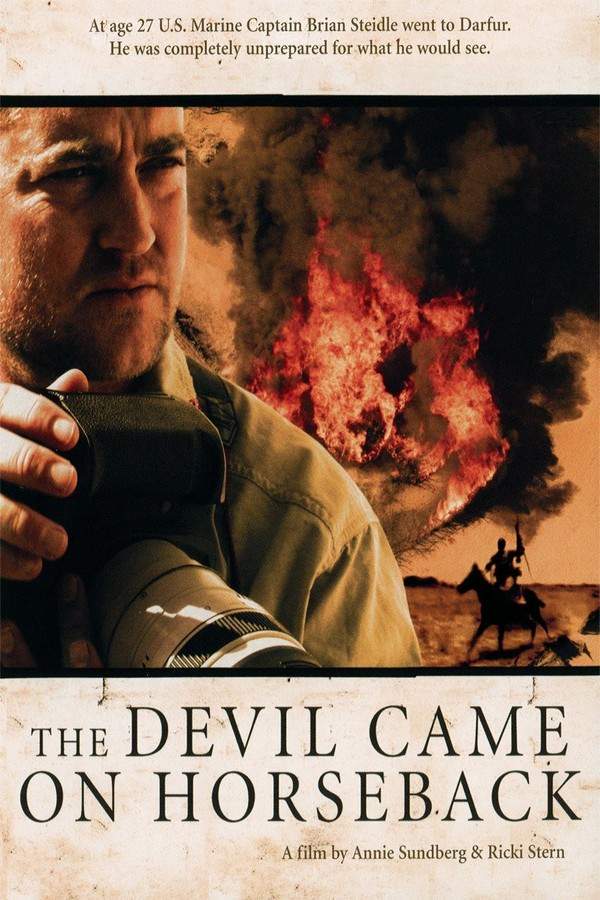
The Devil Came on Horseback (2007) movie poster

Timeline

The Devil Came on Horseback (2007) Timeline Explained – Every Event in Order

Release, runtime and language
2007 · 85 min · Arabic
Directed by
Anne Sundberg, Ricki Stern

During his deployment in Darfur, Sudan, U.S. Marine Captain Briahn Steidle documented horrific scenes of violence as an Arab-led government carried out genocide against black Africans. Through exclusive photographs and firsthand accounts, the film reveals the devastating impact on the civilian population, depicting incidents of gunfire, hostage situations, and the inability to protect innocent lives. The documentary offers a powerful and disturbing look at the realities of the conflict.

On this page (6)
  1. 1 Where to watch
  2. 2 Events in order (14)
  3. 3 Timeline questions answered
  4. 4 Movie threads
  5. 5 Movies like The Devil Came on Horseback
  6. 6 Every angle

Where to watch

Where to Watch The Devil Came on Horseback (2007)

Where can you watch The Devil Came on Horseback? Stream, rent or buy it in the US, including on Apple TV Store: current JustWatch availability with up-to-date prices.

Streaming availability powered by JustWatch

14 events in order · contains spoilers

The Devil Came on Horseback Timeline: Events in Chronological Order

Every key event of The Devil Came on Horseback (2007) in order, scene by scene, with when and where it takes place. Use it to untangle flashbacks, time jumps and parallel storylines, to refresh your memory before the sequel or to find the exact scene you are thinking of.

  1. Arrival in Darfur

    Brian Steidle arrives in Darfur, Sudan, as a military observer under the African Union. His initial mission is to monitor the ongoing conflict and report on the conditions of the region, where tensions are high due to the brutal actions of the Arab-run government against black African citizens.

    Where
    Darfur, Sudan
  2. First Impressions

    Upon arrival, Steidle witnesses firsthand the devastation inflicted upon the local communities. The stark reality of the situation begins to unfold as he encounters families whose lives have been shattered by violence and displacement.

    Where
    Darfur, Sudan
  3. Exclusive Access

    As an official observer, Steidle gains access to areas that are otherwise unreachable by journalists. This unique position allows him to document the atrocities occurring behind closed doors, deepening his understanding of the crisis.

    Where
    Darfur, Sudan
  4. Photographic Evidence

    Steidle begins to capture exclusive photographs that document the suffering of the Darfuri people. These images serve as powerful evidence of the government's systematic efforts to eliminate black African citizens.

    Where
    Darfur, Sudan
  5. Witnessing Atrocities

    As time passes, Steidle witnesses more horrific acts, including killings and destruction of villages. The weight of these experiences burdens him, and he struggles with the moral implications of silently observing such brutality.

    Where
    Darfur, Sudan
  6. Growing Frustration

    Steidle becomes increasingly frustrated with the inaction of the international community in response to the crisis. His reports are met with indifference, causing him to question the effectiveness of his role as an observer.

    Where
    Darfur, Sudan
  7. Resignation

    After months of witnessing the ongoing suffering and feeling powerless, Steidle makes the difficult decision to resign from his position. He recognizes that simply observing is not enough; action is necessary to bring attention to the crisis.

    Where
    Darfur, Sudan
  8. Return to the U.S.

    Steidle returns to the United States determined to expose the truth he witnessed in Darfur. He feels compelled to share the stories and images of those affected by the violence, advocating for action from the international community.

    Where
    United States
  9. Activism Begins

    Back in the U.S., Steidle starts to engage in activism to raise awareness about the genocide in Darfur. He uses his photographs and firsthand accounts to educate others and mobilize support for the affected communities.

    Where
    United States
  10. Public Speaking

    Steidle embarks on a journey of public speaking, sharing his experiences and advocating for change. His compelling narrative draws attention to the urgent need for international intervention in Darfur.

    Where
    Various locations in the U.S.
  11. Documentary Screening

    The film 'The Devil Came on Horseback' is released, featuring Steidle's journey from soldier to activist. The documentary garners attention and helps to raise awareness about the ongoing conflict in Darfur.

    Where
    Various film festivals
  12. Impact on Awareness

    Through the documentary and his activism, Steidle significantly impacts public awareness of the Darfur crisis. His efforts inspire others to take action and demand accountability from their governments.

  13. Continued Advocacy

    Steidle continues his work as a passionate advocate for human rights and justice in Darfur. He collaborates with various organizations to push for policy changes and support for the displaced individuals.

  14. Long-term Commitment

    Steidle's commitment to the cause remains strong as he works to ensure that the voices of the victims are heard. Despite the challenges, he persists in raising awareness and promoting changes that can help the vulnerable population.

Last updated: December 31, 2024 at 18:09

Was this helpful?

Timeline questions answered

The Devil Came on Horseback Timeline Explained: Your Questions Answered

When does it happen, and why in that order? The questions people ask about the chronology of The Devil Came on Horseback (2007): time jumps, flashbacks, cause and effect between scenes and the correct order of events, each answered with spoilers.

Q1

Why did Brian Steidle resign from his position as a military observer?

Steidle resigned because he felt that simply observing the atrocities was not enough. After months of witnessing killings, destruction of villages, and systematic violence against black African citizens, he became disillusioned with his role. His reports to the international community were met with indifference, and he could no longer stand by passively while such brutality unfolded. He believed that taking action and exposing the truth was more important than remaining in his official position.

Foreshadowing: Earlier in the timeline, Steidle's growing frustration with international inaction is documented, showing his psychological transition from observer to someone who felt compelled to act.

  • brian steidle resignation
  • military observer
  • darfur
  • inaction
Q2

How was Steidle able to access areas that journalists couldn't reach?

As a military observer for the African Union, Steidle had official status and military credentials that granted him unparalleled access to restricted areas of Darfur. This unique vantage point allowed him to document atrocities occurring behind closed doors, areas that were otherwise unreachable by international journalists due to government restrictions and safety concerns.

Foreshadowing: The timeline notes that Steidle's role as an official observer provided 'unparalleled access to areas of the country that were otherwise unreachable by journalists.'

  • journalist access
  • military observer
  • darfur
  • exclusive access
Q3

Why did the international community fail to act on Steidle's reports?

The documentary highlights the frustrating inertia of global powers in responding to the escalating human rights violations in Darfur. Despite Steidle's firsthand reports and photographic evidence of systematic genocide, the international community remained largely indifferent. The film portrays this inaction as a moral failure, showing how bureaucratic politics and geopolitical self-interest prevented meaningful intervention.

Foreshadowing: Steidle's growing frustration is documented in the timeline as his reports 'are met with indifference,' setting up the central conflict of the film.

  • international community
  • inaction
  • genocide
  • human rights
Q4

What impact did Steidle's photographs have on the Darfur crisis?

Steidle's photographs served as powerful, undeniable evidence of the systematic efforts to eliminate black African citizens in Darfur. These images documented the suffering of civilians, destroyed villages, and acts of violence that might otherwise have remained hidden. When he returned to the United States, he used these images alongside firsthand accounts to educate the public and advocate for international action.

Foreshadowing: The timeline specifically highlights 'Photographic Evidence' as a key turning point, showing how these images became central to his advocacy.

  • photographs
  • evidence
  • darfur
  • awareness
  • documentation
Q5

Why did Steidle become an activist after returning to the United States?

Steidle became an activist because he felt morally compelled to share what he witnessed. After resigning, he returned to the U.S. 'armed with harrowing images and the poignant stories of lives that had been systematically torn apart.' He believed that exposing the truth was the only way to force meaningful international intervention and help the affected communities.

Foreshadowing: The film explicitly shows Steidle's transformation from 'soldier to observer, then to witness, and ultimately transforming into a passionate activist and moral hero.'

  • activism
  • brian steidle
  • advocacy
  • united states
Q6

What was significant about Steidle's role as a military observer in Darfur?

Steidle's position as a U.S. Marine captain serving as a military observer for the African Union gave him a unique perspective on the genocide. He was able to witness events firsthand while having official access that no civilian journalist could obtain. This dual role, as both a witness and an official observer, placed him in a position to document atrocities that the world might otherwise never have seen.

Foreshadowing: The summary describes Steidle as having 'unparalleled access to areas of the country that were otherwise unreachable by journalists.'

  • military observer
  • african union
  • access
  • documentation
Q7

Who was carrying out the genocide in Darfur according to the documentary?

According to the documentary, an Arab-led government was systematically carrying out genocide against black African citizens in Darfur, Sudan. The film depicts this as a deliberate, government-sponsored campaign of violence that included shootings, hostage situations, and the destruction of entire villages, aimed at eradicating the province's black African population.

Foreshadowing: The description clearly establishes the Arab-led government as the perpetrator of violence against black African citizens from the opening of the film.

  • arab government
  • genocide
  • black africans
  • darfur
  • sudan
Q8

What impact did the documentary have on public awareness of Darfur?

The documentary significantly impacted public awareness by bringing Steidle's firsthand account and exclusive photographs to a wide audience. Through film festivals and screenings, the film helped mobilize public support and put pressure on governments to take action. The documentary is described as having 'significantly impacted public awareness of the Darfur crisis' and inspiring others to demand accountability.

Foreshadowing: The timeline notes that through the documentary and activism, Steidle 'significantly impacts public awareness,' which was the film's central goal.

  • documentary impact
  • awareness
  • film festival
  • public awareness
Q9

What happened to the villages Steidle witnessed being destroyed?

Steidle witnessed the systematic destruction of villages throughout Darfur as part of the government's campaign against black African communities. These villages were attacked, burned, and demolished, forcing residents to flee or be killed. The destruction was not random but part of a calculated effort to eliminate black African citizens from the region.

Foreshadowing: The timeline documents 'Witnessing Atrocities' including 'destruction of villages' as a key moment in Steidle's experience.

  • villages destroyed
  • burning
  • displacement
  • villages
Q10

What moral dilemma did Steidle face as an observer?

Steidle struggled with the moral implications of silently observing such brutality. As a military observer, his role was to monitor and report, but witnessing killings and destruction without being able to protect innocent lives caused him deep moral conflict. He describes feeling 'powerless' and burdened by the weight of these experiences, eventually leading him to conclude that passive observation was complicit.

Foreshadowing: The timeline documents Steidle's 'struggles with the moral implications of silently observing such brutality,' which directly led to his resignation.

  • moral dilemma
  • observation
  • guilt
  • powerless

Movie threads

More Movies Like The Devil Came on Horseback, by Mood & Story

Curated lists built around what makes The Devil Came on Horseback tick: the same mood, the same kind of story or the same emotional payoff. Each list explains why these movies belong together.

Witnesses to Atrocity like in The Devil Came on Horseback

Personal stories of individuals documenting horrific acts of violence and injustice. Films that focus on the act of bearing witness to horrific events, similar to The Devil Came on Horseback. If you were moved by the personal journey of documenting injustice, you'll find similar powerful and emotionally charged documentaries and dramas here.

  • harrowing
  • urgent
  • disturbing
  • frustrating
  • powerful
  • activist
  • Tone: dark, urgent, disturbing
  • Pacing: steady, deliberate
Why these movies?

The story pattern: Stories in this thread typically follow a character—a journalist, a soldier, an activist, or an ordinary person—who is thrust into a situation of extreme violence or systemic oppression. The narrative arc charts their journey from initial observation through shock, disillusionment, and ultimately a sense of responsibility to share what they have seen, often at great personal cost.

Why they belong together: These movies are grouped by their shared focus on the visceral, firsthand experience of witnessing. They create a profound emotional connection through a single perspective, emphasizing the personal toll of encountering evil and the transformative power of speaking out, resulting in a viewing experience that is both devastating and motivating.


Activist Documentaries like The Devil Came on Horseback

Films that move from exposing an injustice to demanding change. Powerful documentaries that serve as a call to action, similar to The Devil Came on Horseback. If you appreciated the film's transition from observation to advocacy, explore these movies that combine shocking truth with a hopeful drive for change.

  • urgent
  • powerful
  • activist
  • hopeful
  • frustrating
  • emotionally charged
  • Tone: dark, hopeful, urgent
  • Pacing: steady, purposeful
Why these movies?

The story pattern: The narrative pattern often begins with the discovery of a grave injustice, presented through undeniable evidence like footage, photographs, or firsthand accounts. The second act deepens the investigation, revealing the mechanisms and human cost of the problem. The final act pivots towards hope, showcasing resistance, advocacy efforts, and clear pathways for viewer engagement, turning despair into purposeful energy.

Why they belong together: These films are united by their shared goal of creating real-world impact. They blend a dark, sobering look at reality with a thread of hopeful activism. The pacing is steady and deliberate to ensure the message is absorbed, and the ending, while acknowledging immense tragedy, points toward a potential for change, making the emotional journey heavy but not entirely bleak.

If you liked this

Movies Like The Devil Came on Horseback

Similar movies to The Devil Came on Horseback: the same genre, themes or kind of story. Each one comes with its own plot summary, timeline and ending explained.

Browse all movie summaries

Every angle

The Devil Came on Horseback (2007) Explained: Plot, Timeline & Characters

Everything about The Devil Came on Horseback in one place: what happens in the plot summary, the timeline in chronological order, the characters and meaning and a spoiler-free summary. What's After the Movie adds the cast, box office and post-credit scenes.

Coming soon on iOS and Android

The Plot Explained Movie Summary App

Plot summaries, endings explained and timelines on your phone. Catch up on any movie in minutes, save your favorites and never miss a twist again.

Be the first to know when we launch. Your email stays private, always.

Learn more about the app