











Plot Explained Spoilers guaranteed!
Plot Explained

Browse by genre

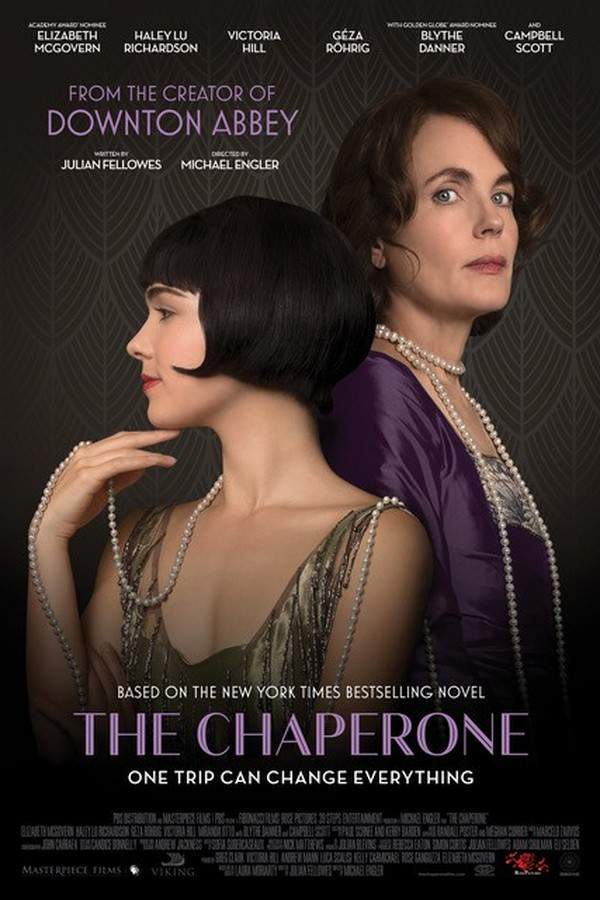
The Chaperone (2019) movie poster

Timeline

The Chaperone (2019) Timeline Explained – Every Event in Order

Release, runtime and language
2019 · 103 min · English
Echo score 66
JustWatch #23,408 1
Directed by
Michael Engler
Starring
Miranda Otto, Géza Röhrig, Bill Hoag, Haley Lu Richardson, Campbell Scott, Blythe Danner

In 1920s New York, a young, ambitious 15-year-old named Louise Brooks leaves her small town to pursue a career in dance. As she navigates the vibrant and challenging world of performance, a more reserved chaperone is assigned to watch over her. The chaperone’s presence creates a tension between Louise’s desire for independence and the societal constraints of the era, leading to a complex relationship and a test of both their principles.

On this page (6)
  1. 1 Where to watch
  2. 2 Events in order (14)
  3. 3 Timeline questions answered
  4. 4 Movie threads
  5. 5 Movies like The Chaperone
  6. 6 Every angle

Where to watch

Where to Watch The Chaperone (2019)

Where can you watch The Chaperone? Stream, rent or buy it in the US, including on PBS, WETA+ and Hoopla: current JustWatch availability with up-to-date prices.

Streaming availability powered by JustWatch

14 events in order · contains spoilers

The Chaperone Timeline: Events in Chronological Order

Every key event of The Chaperone (2019) in order, scene by scene, with when and where it takes place. Use it to untangle flashbacks, time jumps and parallel storylines, to refresh your memory before the sequel or to find the exact scene you are thinking of.

  1. Invitation to Denishawn and chaperone decision

    In 1922, Louise Brooks is invited to study dance at the Denishawn school in New York City. Norma Carlisle, a Wichita, Kansas resident, volunteers to accompany her as a chaperone after watching her recital. Norma's husband is wary, but their sons support her decision.

    When
    1922
    Where
    Wichita, Kansas
  2. Farewell at the Wichita rail station

    At the rail station in Wichita, Louise and Norma share a tense goodbye before departure. Norma emphasizes that Louise's stay in NYC will depend on her behavior and their agreement. The separation underscores the stakes of the journey ahead.

    When
    1922
    Where
    Wichita, Kansas
  3. Train journey and differences emerge

    On the way to New York, the two women observe their differing temperaments: the younger Louise questions everything while Norma clings to traditional norms. Norma dreams aloud of her own childhood train trip from NYC to Kansas. The journey foreshadows the cultural clash they will navigate in the city.

    When
    1922
    Where
    En route to New York City
  4. Norma cautions Louise about men

    In their train cabin, Norma warns Louise to avoid unaccompanied men, arguing that society values 'untouched' brides. Louise resists the old rules and asserts her independence, challenging Norma's expectations. The moment highlights Norma's own unresolved unhappiness.

    When
    1922
    Where
    Train, en route to NYC
  5. Arrival in New York: bustle vs. belonging

    Arriving in New York City, Louise revels in the noise and bustle while Norma feels out of place. Louise wants to explore the city, but Norma insists they stay in until Denishawn class begins. The cultural clash continues as they begin their NYC chapter.

    When
    1922
    Where
    New York City
  6. Norma meets Floyd and a warning

    Before Louise's first class, Norma meets Floyd, a man who works at Denishawn. He warns her that the address Louise has given could be in a dangerous area of the city. The encounter heightens Norma's protective instincts and hints at peril in the urban environment.

    When
    1922
    Where
    New York City, Denishawn
  7. Norma seeks birth mother; is turned away

    Norma attempts to contact her birth mother by visiting the old nun-run orphanage, only to be turned away. The moment underscores Norma's unresolved origins and the obstacles she faces in seeking family. A later flashback reveals more about her past with her husband and his infidelity.

    When
    1922
    Where
    Orphanage (birth mother search)
  8. Louise rises at Denishawn

    Louise becomes the lead at Denishawn, signaling her ascent as a dancer. Ted, a Denishawn teacher, singles her out as a rising star, while Ms. St. Denis cautions him to temper his enthusiasm. Norma's moment of pride sits beside her own growing discomfort with NYC life.

    When
    1922
    Where
    Denishawn, New York City
  9. Norma taps into the orphanage file

    Norma flirts with the orphanage's handyman Joseph Schmidt to gain access to the file on Mary O'Dell. He explains his own past, including losing custody of his daughter Greta and a wartime-related imprisonment. The scene reveals how Norma begins to unearth her own roots through Joseph's help.

    When
    1922
    Where
    Orphanage Office
  10. Mary O'Dell letter discovered

    Norma finds a letter from Mary O'Dell in the orphanage file addressed to a Mary O'Dell, with a MA address, and contemplates reestablishing contact. The discovery deepens Norma's longing for a connection to her birth family. Joseph's help continues to bridge Norma to her past.

    When
    1922
    Where
    Orphanage Office
  11. Theatre outing changes Norma's view

    A theatre outing reveals that NYC audiences are not segregated, startling Norma and broadening her view of city life. Norma reflects on her earlier Wichita mindset and explains that she married her lawyer Mr. Carlisle when she was orphaned at 16. The experience fractures her old assumptions about propriety and marriage.

    When
    1922
    Where
    Theatre, New York City
  12. Mr. Carlisle’s infidelity and Norma’s divorce

    A flashback reveals Norma's husband married her to stifle his homosexuality, a plan that fails to bring happiness. Norma ultimately throws him out after learning of his infidelity. The memory underscores the unconformity of norms she once accepted.

    When
    1922
    Where
    Norma's home (flashback)
  13. Louise and Joseph's plan to join the troupe

    Louise spends the night with Joseph at the orphanage and a nun notices her leaving. Joseph and Greta appear at Norma's apartment; they propose that Louise join the Denishawn troupe with Norma and Joseph accompanying her as her 'brother' to explain their ties. The plan foreshadows the trio's future in NYC and Wichita.

    When
    1922
    Where
    Orphanage / Norma's apartment
  14. Twenty years later: Louise's success and Norma's help

    In Wichita twenty years later, Norma finds Louise hiding at her parents' home, her career having tanked. Norma gives Louise $100 to start over in NYC, and Louise goes on to reinvent herself as a best-selling writer, with two of her silent films surviving today.

    When
    Circa 1942
    Where
    Wichita, Kansas

Last updated: March 05, 2026 at 18:40

Was this helpful?

Timeline questions answered

The Chaperone Timeline Explained: Your Questions Answered

When does it happen, and why in that order? The questions people ask about the chronology of The Chaperone (2019): time jumps, flashbacks, cause and effect between scenes and the correct order of events, each answered with spoilers.

Q1

Why did Norma volunteer to be Louise's chaperone?

Norma volunteered after watching Louise's dance recital, moved by a desire to protect the young girl while she pursued her dreams in New York. However, Norma also had her own hidden agenda: she hoped the trip would give her the chance to search for her birth mother, whom she had never known after being left at an orphanage as a child.

Foreshadowing: The film hints at Norma's deeper motivation early on when she mentions dreaming of a childhood train trip, revealing her unresolved connection to her past.

  • Norma Carlisle
  • Louise Brooks
  • chaperone
  • birth mother
  • orphanage
Q2

What did Norma discover about her birth mother?

Norma found a letter from Mary O'Dell in the orphanage files, addressed to someone with a Massachusetts address. This indicated her birth mother had been trying to make contact at some point, offering Norma a potential connection to her biological family that she had long sought.

Foreshadowing: Norma's earlier rejection by the nun-run orphanage establishes the obstacles she faces in her search.

  • Norma Carlisle
  • birth mother
  • Mary O'Dell
  • orphanage
  • adoption
Q3

Why was Norma's marriage to Mr. Carlisle unhappy?

Norma's husband married her to hide his homosexuality, a marriage of convenience that brought neither partner fulfillment. Norma later discovered his infidelity and ultimately threw him out, revealing why she felt trapped and unfulfilled in her domestic life in Wichita.

Foreshadowing: The tense goodbye at the rail station and Norma's willingness to leave her husband for an extended trip hint at underlying marital problems.

  • Mr. Carlisle
  • Norma marriage
  • infidelity
  • homosexuality
  • divorce
Q4

What happened to Louise Brooks after Denishawn?

After her time at Denishawn, Louise Brooks went on to become a famous silent film actress, with two of her films surviving today. However, around 1942, her career had faltered and she returned to Wichita to live with her parents before Norma helped her restart her life in New York City.

Foreshadowing: Louise's rise to lead dancer at Denishawn signals her potential for stardom.

  • Louise Brooks
  • silent film
  • Denishawn
  • acting career
  • success
Q5

What happened between Louise and Floyd?

Louise was seen flirting with Floyd, a Denishawn employee who also studied at Columbia. When Norma discovered them together at a diner, it represented Louise's growing independence and defiance of the strict rules at Denishawn that required dancers to remain 'pure and untarnished.'

Foreshadowing: Floyd's warning to Norma about the dangerous neighborhood hints at his genuine concern for their safety.

  • Louise Brooks
  • Floyd
  • Denishawn
  • romance
  • independence
Q6

Why did Louise return to Wichita in her 30s?

By around 1942, Louise's career as a silent film actress had faltered, and she returned to Wichita to hide at her parents' house. Norma found her there and gave her $100 to start over in New York City, allowing Louise to reinvent herself as a best-selling writer.

Foreshadowing: The tension between Louise's ambition and the challenges of show business foreshadows the instability in her career.

  • Louise Brooks
  • Wichita
  • career failure
  • reinvention
  • writer
Q7

How did the theatre outing change Norma's perspective?

When Norma attended a theatre performance in NYC, she was surprised to discover the audience was not segregated, a stark contrast to the racial norms in Wichita. This experience, combined with witnessing Louise's artistic achievements, began to crack Norma's rigid worldview and her assumptions about propriety and marriage.

Foreshadowing: Norma's earlier strict adherence to rules about chaperoning and her opposition to Louise's independence set up this moment of transformation.

  • Norma Carlisle
  • theatre
  • NYC
  • segregation
  • transformation
Q8

What was Joseph's backstory at the orphanage?

Joseph Schmidt, the orphanage handyman, explained that he had lost custody of his daughter Greta when her mother died, and his brief imprisonment after World War I led him to work at the orphanage to remain close to her. He helped Norma access the files in exchange for nothing more than kindness, forming a connection that would last beyond their time in New York.

Foreshadowing: Joseph's willingness to help Norma break into the office during mass shows his deep desire to assist anyone seeking family connection.

  • Joseph Schmidt
  • Greta
  • orphanage
  • World War I
  • daughter
Q9

What did Norma's dream about the train trip represent?

During the train journey to New York, Norma dreaming aloud about her childhood train trip from New York to Kansas represented her deep-seated longing to understand her origins. This formative journey marked the beginning of her adoptive life in Wichita, and her revisit to these memories through Louise's journey reflects her unresolved feelings about being orphaned and adopted.

Foreshadowing: The dream foreshadows Norma's later search for her birth mother at the orphanage.

  • Norma Carlisle
  • train
  • dream
  • childhood
  • adoption
Q10

What were the Denishawn rules and why did they matter?

Denishawn's strict code required new dancers to abstain from drinking, smoking, and any behavior that might tarnish their image of being 'pure and untarnished.' These rules represented the era's expectations of female performers, creating tension with Louise's rebellious spirit and Norma and Louise's eventual transgressions.

Foreshadowing: Louise's lead role at Denishawn puts her in conflict with these expectations.

  • Denishawn
  • rules
  • purity
  • dancers
  • Ruth St. Denis
Q11

What happened to Norma and Joseph after New York?

The film implies Norma and Joseph grew close during their time in New York, with Joseph and his daughter Greta eventually appearing at Norma's apartment. The plan involved Joseph posing as Norma's brother to explain their connection, suggesting they remained together as a family unit, though the film leaves their exact future somewhat open.

Foreshadowing: Their shared secrets and Joseph's help with the orphanage files deepen their bond.

  • Norma Carlisle
  • Joseph Schmidt
  • Greta
  • relationship
  • future
Q12

Why did Louise resist Norma's chaperone rules?

Louise challenged Norma's protective rules because she saw them as antiquated in the modern, fast-paced world of 1920s New York. She wanted to explore the city's possibilities freely, questioning why she should adhere to old-fashioned standards when the world was changing around her. This generational clash defined much of their relationship.

Foreshadowing: Louise's early questioning of everything during the train journey sets up this ongoing tension.

  • Louise Brooks
  • independence
  • Norma Carlisle
  • rebellion
  • 1920s

Movie threads

More Movies Like The Chaperone, by Mood & Story

Curated lists built around what makes The Chaperone tick: the same mood, the same kind of story or the same emotional payoff. Each list explains why these movies belong together.

Movies about intergenerational conflict like The Chaperone

Stories where youthful rebellion and cautious tradition collide in pivotal eras. If you liked the dynamic between Louise and her chaperone in The Chaperone, explore other films about clashing generations and the personal growth that comes from unexpected relationships in changing times.

  • nostalgic
  • reflective
  • societal tension
  • clashing generations
  • subtle rebellion
  • melancholic
  • Tone: bittersweet, reflective, nuanced
  • Pacing: steady, character-driven
Why these movies?

The story pattern: The typical narrative follows the evolving relationship between two characters from different generations, often an older guardian or mentor and a younger charge. Initial friction gives way to mutual understanding and influence, with each character learning from the other's perspective, usually against a backdrop of significant societal shifts.

Why they belong together: These movies are grouped together because they share a focus on character-driven drama rooted in generational differences. They explore themes of mentorship, rebellion, and societal change, often with a bittersweet tone as characters navigate personal liberation and the constraints of their era.


Movies about personal liberation and societal repression like The Chaperone

Journeys of self-discovery that challenge social norms, often with complex outcomes. Fans of The Chaperone's exploration of Louise Brooks's artistic ambition in the restrictive 1920s will appreciate these other stories of characters seeking self-discovery against societal constraints.

  • societal tension
  • melancholic
  • empowering
  • self-discovery
  • artistic ambition
  • sexual identity
  • Tone: bittersweet, melancholic, empowering
  • Pacing: steady
Why these movies?

The story pattern: The narrative pattern follows a protagonist's quest for authenticity and freedom, whether through art, identity, or relationships. They confront societal pressures and personal demons, leading to a climax that offers liberation but is often bittersweet, acknowledging the costs of defying convention.

Why they belong together: These films are united by their central theme of an individual's struggle against repression. They share a similar emotional journey, blending hope with melancholy, and often feature strong character arcs where the price of freedom is a key element of the story.

If you liked this

Movies Like The Chaperone

Similar movies to The Chaperone: the same genre, themes or kind of story. Each one comes with its own plot summary, timeline and ending explained.

Browse all movie summaries

Every angle

The Chaperone (2019) Explained: Plot, Timeline & Characters

Everything about The Chaperone in one place: what happens in the plot summary, the timeline in chronological order, the characters and meaning and a spoiler-free summary. What's After the Movie adds the cast, box office and post-credit scenes.

Coming soon on iOS and Android

The Plot Explained Movie Summary App

Plot summaries, endings explained and timelines on your phone. Catch up on any movie in minutes, save your favorites and never miss a twist again.

Be the first to know when we launch. Your email stays private, always.

Learn more about the app