











Plot Explained Spoilers guaranteed!
Plot Explained

Browse by genre

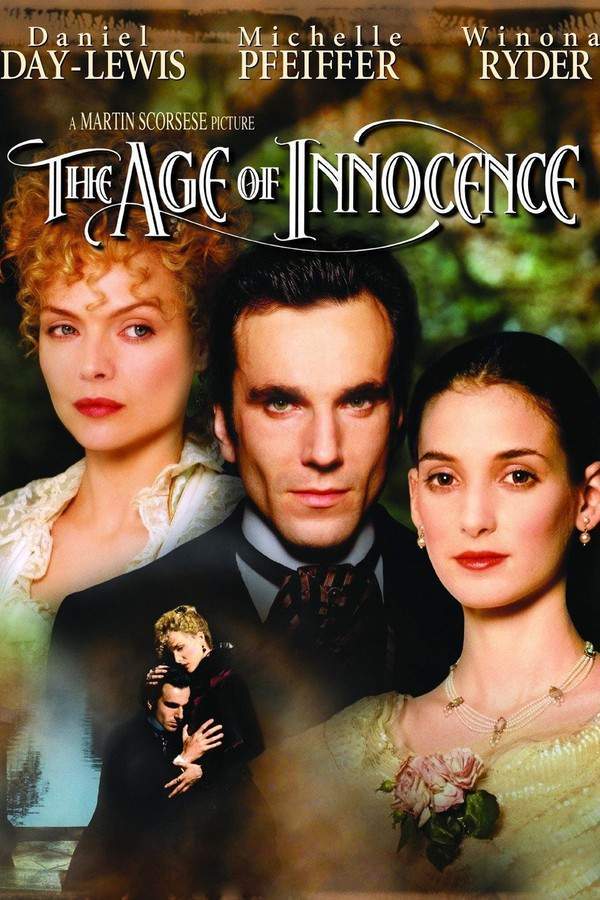
The Age of Innocence (1993) movie poster

Timeline

The Age of Innocence (1993) Timeline Explained – Every Event in Order

Release, runtime and language
1993 · 139 min · English
JustWatch #1,354 18
Directed by
Martin Scorsese
Starring
Michelle Pfeiffer, Daniel Day-Lewis, Winona Ryder
Budget
$34M

In 1870s New York, lawyer Newland Archer is engaged to the refined May Welland, representing the pinnacle of societal expectations. His life is disrupted by the return of May’s cousin, the Countess Ellen Olenska, who has lived abroad and is now considered a social outcast. As Newland becomes increasingly drawn to Ellen's unconventional spirit and experiences, he finds himself torn between his duty, his love for May, and a forbidden passion that threatens to shatter the foundations of his privileged world.

On this page (7)
  1. 1 Where to watch
  2. 2 Events in order (12)
  3. 3 Timeline questions answered
  4. 4 The book behind the movie
  5. 5 Movie threads
  6. 6 Movies like The Age of Innocence
  7. 7 Every angle

Where to watch

Where to Watch The Age of Innocence (1993)

Where can you watch The Age of Innocence? Stream, rent or buy it in the US, including on Amazon Prime Video, Tubi TV and Amazon Video: current JustWatch availability with up-to-date prices.

Streaming availability powered by JustWatch

12 events in order · contains spoilers

The Age of Innocence Timeline: Events in Chronological Order

Every key event of The Age of Innocence (1993) in order, scene by scene, with when and where it takes place. Use it to untangle flashbacks, time jumps and parallel storylines, to refresh your memory before the sequel or to find the exact scene you are thinking of.

  1. Old-money rules define New York society

    In the 1870s, New York City's elite live by strict codes of conduct and ostracize anyone who defies them. Archer, a gentleman lawyer, is groomed for a society marriage to May Welland. The return of Ellen Olenska upends the social balance and tests the tribe's rules.

    When
    1870s
    Where
    New York City
  2. Ellen returns and faces ostracism

    Ellen returns from a disastrous marriage and is subjected to the era's double standards and ostracism. Archer, moved by her plight, helps restore her standing by arranging a dinner for her hosted by the van der Leudens. The event marks a rare challenge to the social code.

    When
    early 1870s
    Where
    New York City
  3. Beaufort enters society and falters financially

    Beaufort, newly admitted to high society by marriage, is wealthy but morally compromised. His flirtations with Ellen and his philandering fuel the community's loathing; when a financial panic comes, the elite refuse to bail him out.

    When
    1870s
    Where
    New York City
  4. Engagement and growing attraction

    Archer asks May to marry him; she accepts, though she senses he is not fully committed. Archer finds Ellen's unconventional views intriguing and feels drawn to a life beyond May's comfortable superficiality.

    When
    1870s
    Where
    New York City
  5. Divorce threat and community pressure

    Ellen's attempt to divorce the Count is met with threats to publicize her adultery. The Wellands pressure Archer to intervene, and Archer reluctantly urges Ellen to call off the divorce to protect the family's honor.

    When
    1870s
    Where
    New York City
  6. Love realized, but not yet acted on

    Archer realizes he loves Ellen and tries to push May toward rushing the wedding. May, sensing the tension, asks him if his love is genuine, and he reassures her.

    When
    1870s
    Where
    New York City
  7. Confession and departure

    Archer cannot keep the truth inside and confesses his love to Ellen, who loves him back but tells him they are not ready for such a temptation. She chooses to move to Washington to escape temptation.

    When
    late 1870s
    Where
    New York; Washington, D.C.
  8. Secret meetings intensify, wedding approaches

    May accelerates the wedding schedule, but Ellen declines the invitation to attend. Archer and Ellen resume secret meetings, though his elaborate deception fuels May's suspicions.

    When
    late 1870s
    Where
    New York; Washington, D.C.
  9. Farewell and a painful confession

    Ellen departs for Europe with the help of Mrs. Mingott's funds; Archer and Ellen still feel the pull but keep it secret. May hosts a lavish farewell party, and reveals to Archer that she is pregnant, hinting she understood more than he admitted.

    When
    late 1870s
    Where
    New York
  10. A quarter-century later

    A quarter-century passes as Archer and May raise three children. May dies of pneumonia, and the old social codes that once bound them fade away. Archer’s son Ted becomes engaged to Beaufort’s mistress’s daughter, signaling a shifting world.

    When
    circa 1900
    Where
    New York
  11. Paris trip intended to reconnect

    Ted invites Archer on a father-son holiday in Paris so he can meet Ellen again. Ted reveals that on May’s deathbed she confessed to him that she once urged Archer to give up what he wanted most, and Archer responds with a sharp line: 'She never asked me.'

    When
    early 1900s
    Where
    Paris
  12. Final moment: a door remains closed

    Archer and Ted reach Ellen's apartment, but Archer cannot bring himself to visit her and sends Ted in his place. He walks away along the Paris streets, reflecting on what might have been and the stubborn grip of the past.

    When
    early 1900s
    Where
    Paris

Last updated: October 09, 2025 at 15:47

Was this helpful?

Timeline questions answered

The Age of Innocence Timeline Explained: Your Questions Answered

When does it happen, and why in that order? The questions people ask about the chronology of The Age of Innocence (1993): time jumps, flashbacks, cause and effect between scenes and the correct order of events, each answered with spoilers.

Q1

Why does Countess Ellen Olenska return to New York despite knowing she will face ostracism?

Ellen returns to New York after leaving her husband, the Polish Count Olenska, because her marriage became intolerable due to his infidelities. She seeks to reclaim her independence and find support among her Welland family relatives. However, her decision to seek a divorce marks her as a social outcast in 1870s New York, where women are expected to endure unhappy marriages rather than defy convention. Her return represents a bold assertion of personal freedom over societal expectations.

  • ellen olenska
  • return
  • divorce
  • social outcast
  • independence
Q2

Why does Newland Archer risk his reputation to help Ellen Olenska?

Archer is initially outraged by the double standards that punish Ellen for seeking freedom while excusing men like Beaufort for similar conduct. His sympathy is deepened as he becomes drawn to Ellen's unconventional worldview, which contrasts sharply with the superficiality of the society around him. By arranging the van der Luydens to host a dinner for Ellen, Archer demonstrates his defiance of the very codes he is expected to uphold.

  • newland archer
  • ellen olenska
  • social codes
  • dinner party
  • sympathy
Q3

Why does Ellen Olenska refuse to be with Archer even though she loves him?

Ellen loves Archer but refuses to pursue a relationship because she refuses to be the reason his life is destroyed. She explains that she was prepared to endure scandal for her own divorce, but Archer and May were not prepared to face the consequences of an affair. Ellen chooses to remove herself from the situation rather than tear apart Archer's marriage and social position.

  • ellen olenska
  • love
  • sacrifice
  • refuse
  • marriage
  • scandal
Q4

Why does May Welland ask Archer to confirm his love is genuine before their wedding?

May senses Archer's emotional distance and his growing attachment to Ellen. Her question is an attempt to secure reassurance and reaffirm his commitment. Archer's answer satisfies her temporarily, but the exchange reveals May's awareness of the threat Ellen poses to their engagement. She chooses to proceed with the wedding rather than confront the truth directly.

  • may welland
  • wedding
  • love
  • confirmation
  • suspicion
Q5

Why does Ellen Olenska move to Washington to escape her feelings for Archer?

Ellen moves to Washington to avoid the temptation of her love for Archer. She recognizes that staying in New York, where they would continue to meet secretly, would eventually lead to a scandal that would destroy Archer's life and marriage. By removing herself, Ellen attempts to protect both Archer and his future with May from the consequences of their passion.

  • ellen olenska
  • washington
  • escape
  • temptation
  • sacrifice
Q6

Why does May reveal her pregnancy to Archer at Ellen's farewell party?

May hosts the farewell party for Ellen and reveals her pregnancy as a deliberate assertion of her claim over Archer. The timing is strategic, she is signaling to both Ellen and Archer that their relationship is over and that she has secured Archer's future through motherhood. The revelation also confirms that May understood all along that Archer's feelings for Ellen remained unresolved.

  • may welland
  • pregnancy
  • farewell party
  • claim
  • ellen
Q7

What is the significance of May's deathbed confession to her son Ted?

On her deathbed, May tells Ted that she once asked Archer to give up the thing he wanted most. However, Archer later tells Ted that May never actually asked him this. This revelation exposes May's manipulative approach, she allowed Archer to believe she was pure and innocent while using passive means to control him. It also suggests Ellen may have left based on a false premise about May's knowledge and wishes.

Foreshadowing: Earlier, May accelerates the wedding and reveals her pregnancy, hinting at her awareness of Archer's feelings.

  • may welland
  • deathbed
  • confession
  • ted
  • manipulation
Q8

Why does Archer refuse to knock on Ellen's door when he reaches her apartment in Paris?

After decades of repression, Archer finally has the opportunity to see Ellen when his son Ted brings him to Paris. However, he cannot bring himself to knock on her door. Instead, he sends Ted alone and walks away. This moment represents Archer's final choice to remain committed to duty and memory rather than fulfill his long-repressed desire. He chooses to preserve the idealized image of what might have been rather than face the reality.

Foreshadowing: Throughout the film, Archer consistently chooses social obligation over personal passion.

  • archer
  • paris
  • ellen
  • door
  • final choice
  • sacrifice
Q9

How have New York's social codes changed by the time Archer visits Paris?

By the early 1900s, approximately twenty-five years after the main events, the rigid old-money social codes have relaxed significantly. This is symbolized by Archer's son Ted becoming engaged to the daughter of Beaufort's mistress, an engagement that would have been unthinkable in the 1870s. The softening of social rules allows for more flexibility in relationships and removes some of the constraints that once defined the elite world Archer inhabited.

  • society
  • change
  • 1900
  • beaufort
  • ted
  • engagement
Q10

Why does Archer go through with his marriage to May when he loves Ellen?

Archer marries May because he is deeply conditioned by the social codes of his world. Even after confessing his love to Ellen, he cannot bring himself to defy society completely. May's pregnancy and the accelerated wedding proceed without complications. Archer chooses the path of least resistance, a comfortable, respectable life, over the scandal and disruption that pursuing Ellen would have caused. His marriage becomes stable but emotionally empty.

  • archer
  • marry
  • may
  • duty
  • society
  • pregnancy
Q11

What role does Mrs. Mingott play in Ellen's departure to Europe?

Mrs. Mingott, Archer's wealthy and influential mentor, arranges the financial support that enables Ellen to return to Europe. Despite her advanced age and being bedridden, Mrs. Mingott exercises significant power within the family structure. Her willingness to fund Ellen's departure demonstrates that even the oldest members of the elite can sometimes bend the rules when they choose to act with compassion, though Ellen's departure still represents a defeat for her independence.

  • mrs mingott
  • financial support
  • europe
  • ellen
  • allowance
Q12

Why does the New York elite refuse to help Beaufort during the financial panic?

Beaufort, a financier who gained status through marriage into the Townsend family, is morally compromised by his philandering and flirtations with Ellen. Although he is wealthy, the elite members resent his upstart origins. When a financial panic threatens his fortune, the very society that embraced him withdraws support. This episode reveals the transactional nature of elite loyalty, acceptance is conditional on behavior that serves the group's interests.

  • beaufort
  • financial panic
  • elite
  • society
  • support
  • fall

Movie threads

More Movies Like The Age of Innocence, by Mood & Story

Curated lists built around what makes The Age of Innocence tick: the same mood, the same kind of story or the same emotional payoff. Each list explains why these movies belong together.

Movies about repressed high society love like The Age of Innocence

Stories of intense romantic longing constrained by rigid social rules. Find more movies like The Age of Innocence that delve into forbidden love within aristocratic or highly structured settings. If you enjoyed the tension between passion and propriety, these similar romance and drama stories explore the same themes of sacrifice and yearning in elegant, oppressive worlds.

  • yearning
  • oppressive
  • sophisticated
  • romantic melancholic
  • repressed
  • elegant
  • Tone: melancholic, restrained, bittersweet
  • Pacing: slow, deliberate
Why these movies?

The story pattern: The narrative typically follows a character, often established within a privileged class, whose life is upended by an outsider or a transgressive love. The central conflict is internal and external, pitting intense personal feelings against the unyielding pressure of social conventions, frequently resulting in a bittersweet resolution where duty triumphs over desire.

Why they belong together: Movies in this thread are grouped by their focus on the immense pressure of societal expectations in elite worlds and the resulting emotional repression. They share a sophisticated, melancholic tone, a slow-burning pace that mirrors the deliberate nature of high society, and a core theme of sacrifice for the sake of appearance and stability.

Movies about bittersweet sacrifice like The Age of Innocence

Character-driven dramas where profound personal sacrifice defines the story. Discover films similar to The Age of Innocence that are defined by a central theme of emotional sacrifice. If the poignant choice to give up a great love for duty resonated with you, these recommendations feature character-driven dramas with a melancholic feel and bittersweet conclusions about the cost of conformity.

  • melancholic
  • bittersweet
  • poignant
  • yearning
  • regretful
  • contemplative
  • Tone: melancholic, bittersweet, poignant
  • Pacing: slow, reflective
Why these movies?

The story pattern: The plot revolves around a pivotal, heart-wrenching decision where a character voluntarily gives up their chance at profound happiness. The story often follows the aftermath of this choice, exploring the quiet, lifelong emotional consequences and the 'what if' that echoes through a seemingly stable but emotionally hollow life.

Why they belong together: These films are connected by their deep exploration of sacrifice as the central emotional engine. They share a melancholic and reflective tone, a deliberate pacing that allows the weight of the choice to settle, and a bittersweet ending that acknowledges the pain of loss alongside the acceptance of a different, often lonelier, path.

If you liked this

Movies Like The Age of Innocence

Similar movies to The Age of Innocence: the same genre, themes or kind of story. Each one comes with its own plot summary, timeline and ending explained.

Browse all movie summaries

Every angle

The Age of Innocence (1993) Explained: Plot, Timeline & Characters

Everything about The Age of Innocence in one place: what happens in the plot summary, the timeline in chronological order, the characters and meaning and a spoiler-free summary. What's After the Movie adds the cast, box office and post-credit scenes.

Coming soon on iOS and Android

The Plot Explained Movie Summary App

Plot summaries, endings explained and timelines on your phone. Catch up on any movie in minutes, save your favorites and never miss a twist again.

Be the first to know when we launch. Your email stays private, always.

Learn more about the app