Plot Explained Spoilers guaranteed!
Plot Explained

Browse by genre

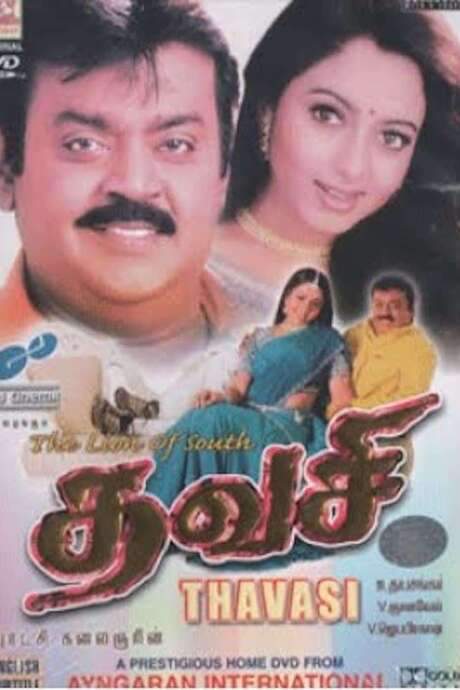
Thavasi (2001) movie poster

Timeline

Thavasi (2001) Timeline Explained – Every Event in Order

Release, runtime and language
2001 · 165 mins · Tamil
Loading streaming availability…
Directed by
Udayasankar
Starring
Easwari Rao, Nassar, Murali Mohan, Ponnambalam, Delhi Ganesh, Mayilsamy

A noble and just man makes the ultimate sacrifice after he imposes an unjust sentence on a male from a poor family.

On this page (5)
  1. 1 Where to watch
  2. 2 Events in order (14)
  3. 3 Timeline questions answered
  4. 4 Movie threads
  5. 5 Every angle
Loading streaming availability…

14 events in order · contains spoilers

Thavasi Timeline: Events in Chronological Order

Every key event of Thavasi (2001) in order, scene by scene, with when and where it takes place. Use it to untangle flashbacks, time jumps and parallel storylines, to refresh your memory before the sequel or to find the exact scene you are thinking of.

  1. Thavasi's stature and marriage plans

    Thavasi is introduced as an influential do-gooder landlord who commands respect in the village. He and his wife arrange the marriage of their son Boopathi to Priyadarshini, laying out the social order of the community. The setup shows how status and duty influence personal choices in this rural setting.

    When
    Early
    Where
    Village
  2. Sankarapandi's dark past

    Sankarapandi's brutal history is revealed: he raped and killed Thavasi's sister after marrying her. Despite this, he seeks to knot his daughter with Boopathi, continuing his grip on the family through marriage. The tension here underscores themes of vengeance and lineage.

    When
    Early
    Where
    Village
  3. Thavasi insults Sankarapandi

    Thavasi openly insults Sankarapandi to protect his prestige and boldness. In response, Sankarapandi moves to have his daughter married to Thangarasu, Maragathammal's son, instead of Boopathi. The confrontation reshapes the alliances in the village.

    When
    Early
    Where
    Village
  4. Boopathi and Priyadarshini's engagement

    Boopathi's engagement with Priyadarshini is formalized, and the two young people grow fond of each other through chance encounters. The romance runs against rigid familial calculations, foreshadowing future conflict. The engagement sets the foundation for a love-driven arc within a web of duty.

    When
    Soon after
    Where
    Village
  5. Thangarasu accused of jewel theft

    Shortly after, Thangarasu is accused of stealing temple jewels, and Thavasi quickly judges him guilty. The accusation reveals the fragility of appearances and the sway of a powerful patriarch's verdict. This decision sows seeds of tragedy that will unfold.

    When
    Soon after
    Where
    Temple precinct
  6. Thangarasu's suicide

    The next day, Thangarasu dies by suicide, unable to bear the stigma of the accusation. The film implies his innocence, hinting at a miscarriage of justice. His death becomes a catalyst for questioning Thavasi's judgment.

    When
    The next day
    Where
    Village
  7. Mute thief arrested

    A mute person is arrested as the thief, challenging the certainty of the earlier verdict. Maragathammal's doubts about Thavasi's infallible judgment begin to spread. The community begins to sense that truth may lie beyond rigid pride.

    When
    Following day
    Where
    Village
  8. Restitution for the wronged family

    To atone for the wrong done to Maragathammal's son, Thavasi decides to give Boopathi to Maragathammal as a form of restitution. The gesture upends Boopathi's status and tests loyalties within the household. It marks a turning point in how power and justice are managed.

    When
    After the verdict
    Where
    Thavasi's home
  9. Maragathammal's hostility toward Boopathi

    Maragathammal despises Boopathi after receiving him as a son, and treats him badly. Boopathi endures mistreatment while keeping faith in truth and duty. The mistreatment fuels his resilience and moral stance.

    When
    Shortly after
    Where
    Maragathammal's house
  10. Sankarapandi's daughter's arranged engagement

    Sankarapandi intends for his daughter to marry Boopathi, now a son of Maragathammal, as part of the arranged match. The convoluted alliances keep shifting as commitments tie and re-tie around lineage. The dynamic shifts the stakes for everyone involved.

    When
    Before Boopathi's marriage
    Where
    Village
  11. Boopathi's courageous acts of reform

    Before his own marriage, Boopathi rescues Thanagarasu's mentally slow sister from a sexual assault by Kottai Perumal and helps reform Karmegam, Thangarasu's brother-in-law who mistreated his wife for dowry. These acts reveal Boopathi's hidden courage and his influence in changing people around him. The acts also start to realign the village's moral compass.

    When
    Before marriage
    Where
    Village
  12. Truth comes to light in a chance encounter

    In a chance encounter before his marriage, Boopathi meets Sankarapandi's daughter again and discovers the mute thief's secret. He captures the thief and forces a confession that Sankarapandi staged the theft and Thangarasu's murder, making it appear as suicide. The truth begins to crack the façade of the earlier judgments.

    When
    Before marriage
    Where
    On the road
  13. Justice exposed and accountability

    The confession exposes Sankarapandi as the mastermind behind the jewel theft and Thangarasu's murder, overturning Thavasi's earlier verdict. It suggests that the real crime was hidden in plain sight and that justice depends on uncovering the truth. The village must confront the consequences of its past decisions.

    When
    Climax
    Where
    Village
  14. Resolution: marriage and new beginnings

    Boopathi finally marries Priyadarshini, and their union culminates in Priyadarshini's pregnancy with twins. The story closes on a note of renewal despite the earlier injustices. The twins symbolize a new chapter and a chance at a more just order in the village.

    When
    End
    Where
    Village

Last updated: October 09, 2025 at 16:38

Was this helpful?

Timeline questions answered

Thavasi Timeline Explained: Your Questions Answered

When does it happen, and why in that order? The questions people ask about the chronology of Thavasi (2001): time jumps, flashbacks, cause and effect between scenes and the correct order of events, each answered with spoilers.

Q1

Why did Thavasi quickly accuse Thangarasu of stealing the temple jewels?

Thavasi was a respected, influential landlord known for his strong sense of judgment and justice in the village. When the temple jewels went missing, he relied on his reputation and confidence in his own judicial abilities to swiftly declare Thangarasu guilty without thoroughly investigating the matter. This haste was driven by his position as a community leader accustomed to making decisive rulings.

Foreshadowing: Early scenes establish Thavasi as a proud man who values his reputation for being just and infallible.

  • thavasi
  • thangarasu
  • temple jewels
  • accusation
  • judgment
Q2

Why did Thangarasu kill himself after being accused of theft?

Thangarasu took his own life because he could not bear the devastating social stigma of being labeled a thief in his village. The wrongful accusation from someone as respected as Thavasi damaged his honor and made it impossible for him to live peacefully. The film implies he was innocent but felt crushed by the weight of the accusation and the loss of his reputation.

Foreshadowing: The swiftness of Thavasi's verdict hints at the danger of judging without complete evidence.

  • thangarasu
  • suicide
  • accusation
  • shame
  • village
Q3

Why did Thavasi give his own son Boopathi to Maragathammal?

After learning that a mute person was arrested as the real thief, Thavasi realized his judgment had been wrong and that Thangarasu was innocent. To atone for this grave injustice and restore his honor, Thavasi offered Boopathi to Maragathammal as a form of restitution, giving her a son to replace the one she lost to suicide. This was his attempt at moral redemption for his mistake.

Foreshadowing: The revelation that the mute person was the thief directly challenges Thavasi's certainty.

  • thavasi
  • boopathi
  • maragathammal
  • restitution
  • atonement
Q4

Who actually stole the temple jewels?

Sankarapandi was responsible for stealing the temple jewels. He orchestrated the entire theft and framed Thangarasu to exact revenge and further his own manipulative plans within the village. The mute person who was eventually arrested was coerced by Sankarapandi to act as the visible thief while the real culprit remained hidden.

Foreshadowing: Sankarapandi's history of violent manipulation and his ongoing scheming against Thavasi's family foreshadow his capability for such deception.

  • sankarapandi
  • temple jewels
  • theft
  • frame
  • thangarasu
Q5

How did Sankarapandi cause Thangarasu's death if it appeared as suicide?

Sankarapandi not only stole the temple jewels but also deliberately framed Thangarasu for the crime. When Thangarasu died by suicide as a result of the false accusation, Sankarapandi had orchestrated the entire sequence of events to eliminate Thangarasu and make it appear as suicide. This was part of his larger scheme to manipulate village affairs and exact revenge on Thavasi's family.

Foreshadowing: Sankarapandi's dark history of violence against Thavasi's family establishes his willingness to commit ruthless acts.

  • sankarapandi
  • thangarasu
  • murder
  • suicide
  • frame
Q6

Why did Sankarapandi want his daughter to marry Boopathi despite the feud?

Sankarapandi persistently pushed for his daughter to marry Boopathi as part of his strategic plan to maintain influence over Thavasi's family. After Thavasi publicly insulted him, Sankarapandi shifted tactics, arranging for his daughter to marry Thangarasu (Maragathammal's son) instead, but still hoping to later bind her to Boopathi. This maneuver was designed to keep his family connected to power and potentially reclaim lost prestige through marriage alliances.

Foreshadowing: Sankarapandi's history of using marriage as a tool for control is evident from his earlier marriage to Thavasi's sister.

  • sankarapandi
  • daughter
  • boopathi
  • marriage
  • alliance
Q7

Why did Boopathi rescue Thangarasu's sister from assault?

Boopathi demonstrated his compassionate nature by rescuing Thangarasu's mentally slow sister from sexual assault by Kottai Perumal. This act revealed his moral courage and willingness to help the marginalized, even those connected to the family at the center of his family's conflict. It also showed his commitment to justice beyond his own personal interests.

Foreshadowing: Boopathi's quiet kindness and sense of duty were established early in his engagement to Priyadarshini.

  • boopathi
  • thangarasu
  • sister
  • rescue
  • assault
Q8

How did Boopathi uncover the truth about the theft and murder?

In a chance encounter before his marriage, Boopathi met Sankarapandi's daughter again and encountered the mute thief. Through persistence, he convinced the mute person to reveal what really happened. The thief confessed that Sankarapandi had orchestrated the temple jewel theft and had actually murdered Thangarasu, staging it to look like suicide. This revelation exposed the full scope of Sankarapandi's crimes.

Foreshadowing: Earlier scenes show Boopathi as someone who acts with integrity and cares about justice.

  • boopathi
  • truth
  • confession
  • sankarapandi
  • mute thief
Q9

Why did Boopathi help reform Karmegam who tortured his wife for dowry?

Boopathi intervened to reform Karmegam, Thangarasu's brother-in-law who was abusing his wife over dowry demands. This intervention demonstrated Boopathi's commitment to standing up for justice and protecting vulnerable women in the village, even when it involved confronting family members of those involved in the conflict surrounding his own family.

Foreshadowing: Boopathi's pattern of helping the downtrodden began with rescuing Thangarasu's sister.

  • boopathi
  • karmegam
  • dowry
  • reform
  • village
Q10

What happened to Sankarapandi after his crimes were exposed?

After Boopathi forced the mute thief to confess that Sankarapandi was behind the temple jewel theft and Thangarasu's murder, the village confronted the truth about Sankarapandi's crimes. This confession exposed him as the true criminal and overturned Thavasi's original verdict, bringing justice for Thangarasu and his mother Maragathammal.

Foreshadowing: Sankarapandi's manipulative behavior throughout the film builds toward this moment of accountability.

  • sankarapandi
  • exposed
  • confession
  • justice
  • village
Q11

Why did Maragathammal treat Boopathi badly after receiving him as her son?

Despite Boopathi being given to her as restitution for her son's death, Maragathammal harbored deep resentment toward him. She saw him as a symbol of the injustice that cost her son his life and as a reminder of Thavasi's failed judgment. Her cold disdain and mistreatment of Boopathi reflected her grief and anger at losing her son, even though Boopathi himself was not responsible for the original crime.

Foreshadowing: Maragathammal's doubts about Thavasi's judgment began when the mute thief was arrested.

  • maragathammal
  • boopathi
  • mistreatment
  • resentment
  • grief
Q12

What led to Boopathi and Priyadarshini's marriage and their new life?

Despite the complex web of family conflicts, arranged engagements, and Boopathi being given to Maragathammal, Boopathi and Priyadarshini's relationship endured. Their genuine affection for each other, developed through chance meetings during the engagement period, ultimately led to their marriage. The story concludes with Priyadarshini pregnant with twins, symbolizing hope and renewal after the revelation of truth and the costly sacrifices made throughout the saga.

Foreshadowing: Early scenes show Boopathi and Priyadarshini developing genuine feelings amid the rigid family calculations.

  • boopathi
  • priyadarshini
  • marriage
  • twins
  • resolution

Movie threads

More Movies Like Thavasi, by Mood & Story

Curated lists built around what makes Thavasi tick: the same mood, the same kind of story or the same emotional payoff. Each list explains why these movies belong together.

Village dramas with heavy moral reckonings like Thavasi

Stories where rigid codes of honor unravel lives in close-knit communities. If you liked the intense village politics and heavy moral dilemmas in Thavasi, explore more movies like it. These films often feature tense family feuds, questions of honor, and the grim consequences of judgment within a close-knit rural community, leading to bittersweet or tragic conclusions.

  • morally complex
  • tense
  • oppressive
  • solemn
  • grim
  • melancholic
  • Tone: dark, morally complex, oppressive
  • Pacing: steady, deliberate
Why these movies?

The story pattern: These stories typically begin with a transgression against a social code, leading to a chain reaction of accusations, feuds, and revenge. The protagonist, often a figure of authority or principle, is caught in the middle, forced to make a choice that will either uphold or shatter the community's fragile sense of order, usually at great personal cost.

Why they belong together: Movies are grouped here for their shared focus on the intersection of personal morality and community pressure in a rural world. They share a dark, solemn tone, a steady pacing that builds tension methodically, and a heavy emotional weight stemming from themes like false accusations, family honor, and the pursuit of a painful redemption.

Movies about bittersweet sacrifice like Thavasi

Journeys where characters atone for past wrongs through profound personal loss. For viewers who appreciated the theme of painful redemption in Thavasi, this list highlights similar films. These stories follow characters who make ultimate sacrifices to correct an injustice, leading to endings that are emotionally heavy and bittersweet, blending grief with a sense of hard-earned moral resolution.

  • redemptive
  • melancholic
  • solemn
  • morally complex
  • grim
  • heartbreaking
  • Tone: bittersweet, dark, redemptive
  • Pacing: steady, character-driven
Why these movies?

The story pattern: The narrative pattern involves a protagonist burdened by guilt or a past error in judgment. The plot builds towards a climax where they are presented with an opportunity for redemption, but it requires them to surrender their happiness, status, or even life. The conclusion is rarely purely happy; instead, it offers a somber validation that their sacrifice had meaning.

Why they belong together: These films are united by their exploration of redemption through sacrifice. They share a heavy emotional weight, a dark or bittersweet tone, and a focus on the psychological cost of doing the 'right' thing. The pacing is often steady, allowing the moral dilemma and its consequences to resonate fully with the viewer.

Every angle

Thavasi (2001) Explained: Plot, Timeline & Characters

Everything about Thavasi in one place: what happens in the plot summary, the timeline in chronological order, the characters and meaning and a spoiler-free summary. What's After the Movie adds the cast, box office and post-credit scenes.

Coming soon on iOS and Android

The Plot Explained Movie Summary App

Plot summaries, endings explained and timelines on your phone. Catch up on any movie in minutes, save your favorites and never miss a twist again.

Be the first to know when we launch. Your email stays private, always.

Learn more about the app