Plot Explained Spoilers guaranteed!
Plot Explained

Browse by genre

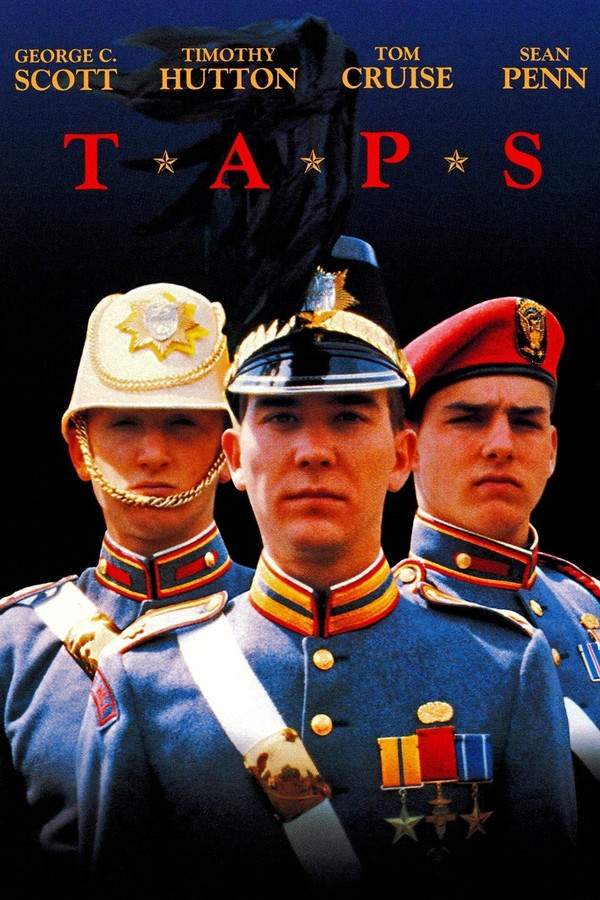
Taps (1981) movie poster

Plot Summary

Taps (1981) Plot Summary Explained

Release, runtime and language
1981 · 126 min · English
Loading streaming availability…
Directed by
Harold Becker
Starring
George C. Scott, Timothy Hutton

Facing the prospect of their prestigious military academy being torn down to make way for condominiums, a group of cadets takes matters into their own hands. Led by Cadet Major Brian Moreland, they seize control of the school, triggering a tense standoff with the Army. As the rebellion escalates, the students must grapple with the responsibilities of leadership and the difficult choices that come with fighting for what they believe in, ultimately questioning the true meaning of sacrifice.

On this page (6)
  1. 1 Where to watch
  2. 2 What happens: full plot
  3. 3 Plot questions answered
  4. 4 Movie threads
  5. 5 Movies like Taps
  6. 6 Every angle
Loading streaming availability…

Full plot summary · contains spoilers

What Happens in Taps: Full Plot Summary

The whole story of Taps (1981) explained, from the opening scene to the final frame: every key event, every twist and what it all adds up to. Read it as a quick recap before the sequel, to check a scene you missed, or to finally understand what really happened.

On the eve of the graduation parade at Bunker Hill military academy, Cadet Brian Moreland (Timothy Hutton) has a private meeting with the academy's commander, retired Brigadier General Harlan Bache (George C. Scott), who is an esteemed alumnus of the school. During this pivotal discussion, Bache promotes Moreland to Cadet Major, the highest rank achievable at the academy. However, the following day brings troubling news: General Bache, returning home with a weighed-down expression, reveals that the school's board of trustees has agreed to sell the academy to real estate developers. Although the school will remain open for an additional year to allow the Seniors to graduate, this decision instills a mix of hope and despair among the cadets who ponder the potential closure.

Glimmers of normalcy return with an evening dance following the commencement ceremony. Yet, outside the gates, local teenagers provoke a confrontation that spirals into a chaotic brawl. During this turmoil, General Bache intervenes but finds himself disarmed when one of the local boys seizes his service pistol. Tragically, in the ensuing struggle, the gun discharges, resulting in the death of another boy. Although the magazine was removed, a bullet lingered in the chamber, leading to Bache's arrest as he becomes the center of the incident. In custody, he suffers a heart attack, leaving him gravely ill in the hospital; the cadets are distraught as they listen for updates over the police band.

Meanwhile, Dean Ferris and other civilian officials explore the academy's armory, noting the extensive arsenal accumulated over Bache’s tenure. Moreland steps forward, inquiring about the training armaments for the upcoming summer session, only to learn that there will be no summer program and the academy is to be closed immediately, a decision that leaves him incensed. Determined not to give up, Moreland consults his senior officers, and together they resolve to seize control of the campus. When Ferris arrives with the Sheriff to clear out the armory, they are met by a contingent of armed cadets led by Major Moreland, who insist on negotiating with the board of trustees to preserve their beloved school. Overpowered, Ferris and the Sheriff are compelled to vacate the academy grounds as Moreland asserts military command.

In another scenario, a team of cadets dispatched to procure supplies faces trouble when their truck breaks down. As Cadet Captain Dwyer (played by Sean Penn) attempts repairs, local aggressors confront them. Tensions escalate when the impulsive Cadet Captain David Shawn (portrayed by Tom Cruise) reacts by firing his M16 into the air, scattering the locals. However, their foray back results in only half the provisions they originally sought.

The escalating situation draws police to the campus, and a delegation of parents, led by the fiercely military-minded Sergeant Moreland (played by Wayne Tippit), attempts to negotiate peace. In an act of defiance, Moreland rallies the cadets and offers them the chance to leave, but to his pride, they all choose to remain. The arrival of the National Guard intensifies the standoff, and Colonel Kerby (played by Ronny Cox) attempts negotiations but to no avail.

As tensions rise and further confrontations occur, it becomes clear that dissent among the cadets is growing. The following morning brings a disheartening report of fellow cadets abandoning the cause, with even Moreland's friend, Lieutenant Edward West (played by Evan Handler), leading the exit of a significant number of students. Tragedy strikes when the cadets are deprived of electricity and water, leading to a severe burn accident during a desperate attempt to restart a generator. The dire news of General Bache's passing sends shockwaves through the ranks, prompting a poignant military memorial service in his memory.

The following day's events spiral further out of control as military forces prepare to breach the campus. A young cadet panics and inadvertently discharges his weapon, leading to the death of yet another cadet. The inside conflict escalates when Shawn, in a fit of rage, shoots at the guards while Moreland struggles with the mounting pressure. As the authorities overpower the cadets, the session crescendos into chaos with combat resulting in multiple casualties.

In the aftermath of the siege, a montage of historical moments from the Academy’s past plays, serving as a haunting reminder of the pride and struggle inherent within its walls.

Last updated: October 27, 2024 at 18:11

Was this helpful?

Plot questions answered

Taps Plot Explained: Your Questions Answered

The questions people ask most about Taps (1981): what happens in the confusing scenes, why the characters do what they do, the twists, hidden details and what the ending means. Each answer contains spoilers.

Q1

Why does Cadet Major Moreland decide to take over Bunker Hill Academy?

Moreland decides to seize control of the academy after learning that the school will close immediately and the summer training program is canceled. As the highest-ranking cadet, he feels responsible for protecting the institution that has defined his life and that of his fellow cadets. He believes taking armed control will force the board of trustees to negotiate and potentially save the school.

Foreshadowing: Earlier, General Bache promotes Moreland to Cadet Major,赋予ing him both the authority and the sense of duty that drives his later decision to fight for the school.

  • bunker hill academy
  • cadet moreland
  • military academy closure
  • student rebellion
Q2

How does the accidental shooting happen outside the academy gates?

During a brawl between cadets and local teenagers, General Bache attempts to intervene but is disarmed by one of the local boys. In the ensuing struggle over the pistol, the gun discharges even though the magazine was removed, a bullet remained in the chamber. The shooting kills another local boy and leads to Bache's arrest.

Foreshadowing: The confrontation is sparked by local teenagers provoking the cadets after the graduation dance, creating the volatile situation that leads to the tragedy.

  • general bache
  • accidental shooting
  • gun discharge
  • arrest
Q3

What happens to General Bache after the shooting incident?

After being arrested for the accidental shooting, General Bache suffers a heart attack while in police custody. He is hospitalized and remains gravely ill. The cadets listen anxiously to police band updates about his condition. Later, he dies from his health crisis, sending shockwaves through the ranks and deepening the cadets' determination to continue their protest.

Foreshadowing: Bache returns home with a weighed-down expression after meeting with the board, hinting at the stress and burden he carries leading up to the incident.

  • general bache
  • heart attack
  • hospitalization
  • death
Q4

Why do some cadets, including Lieutenant West, decide to leave the rebellion?

As the standoff continues and conditions deteriorate, with loss of electricity, water, and no end in sight, several cadets lose faith in the cause. Lieutenant West, Moreland's friend, leads a significant number of students in abandoning the rebellion. The pressure of the escalating situation, fear of consequences, and the realization that the protest may be futile causes internal dissent to grow.

Foreshadowing: The parents' negotiation attempt marks the first major test of the cadets' resolve, with some beginning to question whether the fight is worth continuing.

  • lieutenant west
  • cadet dissent
  • desertion
  • internal conflict
Q5

What causes the standoff to escalate into violence?

The situation escalates when military forces prepare to breach the campus. A panicked young cadet accidentally discharges his weapon during the tension, killing another cadet. This triggers chaos, and Cadet Shawn reacts by shooting at the guards. The authorities then overwhelm the cadets, resulting in multiple casualties on both sides.

Foreshadowing: The escalating confrontations throughout the standoff, including the power and water cutoffs, steadily build toward the violent conclusion.

  • military breach
  • campus siege
  • casualties
  • violence escalation
Q6

How does the power outage lead to tragedy at the academy?

When authorities cut electricity and water to force the cadets out, the situation becomes desperate. During a dangerous attempt to restart a generator, a severe burn accident occurs, adding to the mounting casualties and hardships faced by the occupying cadets.

Foreshadowing: The cutting of utilities represents the escalating pressure tactics used by authorities to end the standoff.

  • power outage
  • generator accident
  • burns
  • hardship
Q7

What happens to Cadet Shawn during the final confrontation?

During the military breach of the academy, Cadet Captain David Shawn reacts violently to the escalating chaos. Overwhelmed by pressure and rage, he fires at the guards. The authorities respond with force, and the confrontation results in multiple casualties among the cadets.

Foreshadowing: Earlier, Shawn demonstrates impulsive behavior when he fires his M16 into the air during a confrontation with locals during the supply run, establishing his tendency toward reckless violence.

  • cadet shawn
  • tom cruise
  • shooting
  • final confrontation
  • casualties
Q8

Why does the military decide to breach the academy?

The military decides to breach the campus after all negotiation attempts fail. Despite Colonel Kerby's efforts to negotiate peace, the cadets remain resolute in their demand to save the school. With the situation dragging on and the death of General Bache occurring during the standoff, authorities determine that force is necessary to end the occupation.

Foreshadowing: The arrival of the National Guard and Colonel Kerby's failed negotiation attempts signal that the authorities are running out of patience with the cadets' refusal to surrender.

  • national guard
  • colonel kerby
  • military breach
  • negotiation failure
Q9

What is the significance of the academy's armory in the story?

The academy's armory contains an extensive arsenal accumulated over General Bache's tenure. When Dean Ferris and civilian officials inspect it, they realize the cadets have access to significant weapons. This discovery raises the stakes of the standoff and explains how the cadets are able to mount an armed occupation. Moreland's knowledge of the armory and his assertion of military command depend on this arsenal.

Foreshadowing: Dean Ferris's discovery of the armory foreshadows the armed confrontation to come, as the cadets use these weapons to take control of the campus.

  • armory
  • weapons
  • dean ferris
  • arsenal
  • military equipment
Q10

How does General Bache's death affect the cadets?

General Bache's death sends shockwaves through the ranks of the cadets. As the revered leader who promoted Moreland and devoted his life to the academy, his passing represents the loss of the institution's heart and soul. The cadets hold a poignant military memorial service in his memory, which intensifies their grief and their resolve to fight for what he built, though it also marks a turning point that accelerates the story toward its tragic conclusion.

Foreshadowing: The earlier scene where Bache returns home with a weighed-down expression after learning of the sale hints at the personal toll the school's closure is taking on him.

  • general bache
  • death
  • memorial service
  • grief
  • cadets
Q11

What happens to Moreland and the remaining cadets at the end?

The rebellion ultimately fails. As authorities breach the campus, the remaining cadets are overwhelmed by military force. The confrontation results in multiple casualties among the cadets. The film ends with a haunting montage of historical moments from the academy’s past, serving as a somber reminder of the pride and sacrifice associated with Bunker Hill, now shattered by the violent conclusion of the students' protest.

Foreshadowing: The gradual desertion of cadets and the deteriorating conditions foreshadow the ultimate failure of the rebellion.

  • moreland
  • final outcome
  • rebellion failure
  • casualties
  • montage

Movie threads

More Movies Like Taps, by Mood & Story

Curated lists built around what makes Taps tick: the same mood, the same kind of story or the same emotional payoff. Each list explains why these movies belong together.

Movies about tragic youth rebellion like Taps

Stories where passionate idealism collides with harsh reality, leading to devastating consequences. For viewers who appreciated the grim escalation of Taps, this section features films with similar stories of idealistic young characters whose passionate uprisings lead to heartbreaking conclusions. If you liked the exploration of sacrifice and the shattering of youthful ideals in Taps, you'll find these movies resonate with a similarly heavy emotional weight.

  • tragic
  • idealistic
  • desperate
  • somber
  • confrontational
  • grim
  • Tone: tense, tragic, somber
  • Pacing: steady, escalating
Why these movies?

The story pattern: These narratives typically follow a clear arc: a group of young, principled characters identify an injustice and mount a rebellion. Their initial fervor and camaraderie are slowly eroded by external pressure and internal conflict, culminating in a confrontation that exposes the futility of their fight and results in profound loss.

Why they belong together: Movies are grouped here based on their shared focus on the tragedy of youthful idealism. They blend a tense, confrontational tone with a steady, inevitable pacing towards a sad ending, creating a cohesive experience centered on the theme of lost innocence.

Tense siege and standoff thrillers similar to Taps

High-stakes narratives where characters are trapped in a confined space under immense pressure. If the gripping, contained tension of the armed standoff in Taps captivated you, this collection highlights films with a similar narrative structure. These movies often feature a group defending a stronghold, creating a claustrophobic, high-intensity experience with steady pacing and a consistently tense tone, much like Taps.

  • tense
  • claustrophobic
  • desperate
  • confrontational
  • high-stakes
  • psychological
  • Tone: tense, grim, desperate
  • Pacing: steady, methodical
Why these movies?

The story pattern: The core pattern involves a group fortifying a location against an external threat. The story unfolds in real-time or over a compressed period, methodically increasing tension as resources dwindle, alliances fracture, and the characters are forced to make increasingly desperate choices, often leading to a bleak resolution.

Why they belong together: These films are united by their primary narrative engine: the siege. They share a high-intensity, tense tone and a steady, methodical pacing that builds claustrophobic dread. The experience is defined by the psychological unraveling of characters under sustained pressure.

If you liked this

Movies Like Taps

Similar movies to Taps: the same genre, themes or kind of story. Each one comes with its own plot summary, timeline and ending explained.

Browse all movie summaries

Every angle

Taps (1981) Explained: Plot, Timeline & Characters

Everything about Taps in one place: what happens in the plot summary, the timeline in chronological order, the characters and meaning and a spoiler-free summary. What's After the Movie adds the cast, box office and post-credit scenes.

Coming soon on iOS and Android

The Plot Explained Movie Summary App

Plot summaries, endings explained and timelines on your phone. Catch up on any movie in minutes, save your favorites and never miss a twist again.

Be the first to know when we launch. Your email stays private, always.

Learn more about the app