Plot Explained Spoilers guaranteed!
Plot Explained

Browse by genre

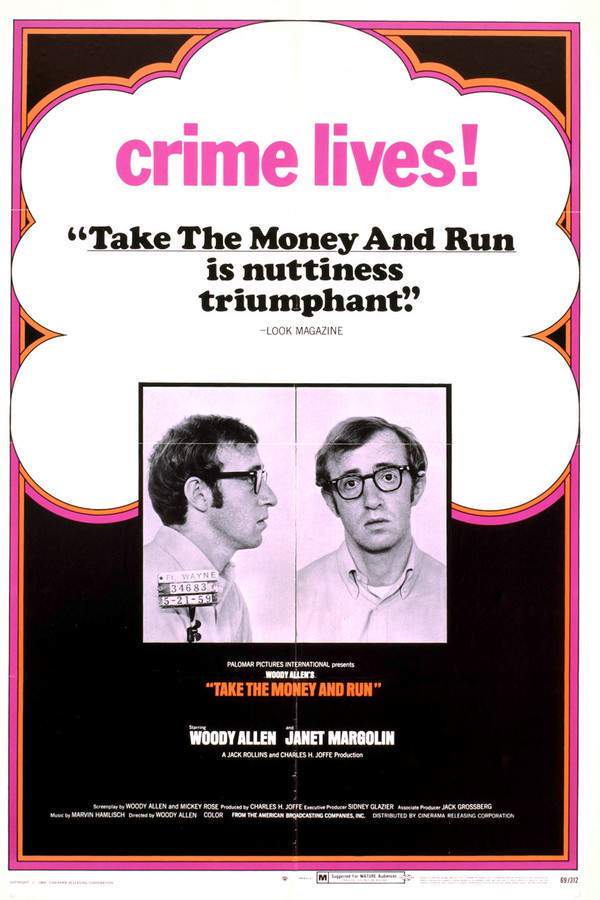
Take the Money and Run (1970) movie poster

Characters & Themes

Take the Money and Run (1970) Characters, Setting & Themes Explained

Release, runtime and language
1970 · 85 min · English
Starring
Lonny Chapman, Woody Allen, Howard Storm, Jacquelyn Hyde, James Anderson, Jan Merlin

This comedy follows Virgil Starkwell, a hopelessly inept bank robber portrayed by Woody Allen, as he attempts to become a notorious criminal. The film unfolds as a series of comical mishaps seen through the perspectives of those around him, including his patient wife, Louise. His misguided plans and awkward execution lead to increasingly absurd situations, making for a laugh-out-loud experience.

On this page (6)
  1. 1 Characters explained (2)
  2. 2 Where & when it takes place
  3. 3 Themes & meaning (2)
  4. 4 Character & meaning questions
  5. 5 Movie threads
  6. 6 Every angle

2 main characters · contains spoilers

Take the Money and Run Characters Explained: Who Is Who

The main characters of Take the Money and Run (1970), heroes and villains: what drives them, how they change over the course of the story and what each of them reveals about the film's bigger ideas.

  • Virgil Starkwell

    played by Lonny Chapman

    Virgil is a socially awkward and comically inept character who struggles with a life of crime. His unintentional blunders in various heists highlight his clumsiness and provide a humorous exploration of failure and ambition. Despite facing significant challenges, such as love, blackmail, and imprisonment, he maintains a relentless optimism that adds depth to his character.

    • 👨‍🎤 Criminal
    • 🤷‍♂️ Awkwardness
    • 💔 Love
  • Louise

    Louise serves as a foil to Virgil, representing the normalcy and affection he yearns for amidst his chaotic lifestyle. Her love for Virgil remains steadfast despite his antics, embodying patience and resilience. She is drawn into his world of escapades, illustrating the challenges faced by those who care for individuals entrenched in misfortune.

    • 💖 Love Interest
    • 🚺 Patience
    • 🎭 Supportive

Last updated: October 22, 2024 at 21:39

Was this helpful?

Setting

Where and When Does Take the Money and Run Take Place?

The setting of Take the Money and Run (1970): the year and time period, the places and locations, and how they shape the characters, the mood and the tension of the story.

Time period

The film's events unfold in a contemporary setting that reflects the social dynamics of the time, emphasizing Virgil's struggles with law and society. Its comedic take on crime and punishment critiques both law enforcement and societal expectations during an undefined modern era. The film embodies the trials of an individual navigating an often unforgiving world.

Location

Prison, City Park, Pet Shop

The movie takes place in various locations, including a city filled with mundane life events and a prison that serves as the backdrop for Virgil's misadventures. The park symbolizes a brief escape from his troubles, where he meets Louise, marking a pivotal turn in his narrative. The pet shop, although briefly involved, illustrates his humorous attempts at crime while highlighting the absurdity of his character.

  • 🏙️ Urban
  • 🏢 Prison
  • 🦍 Animals

Last updated: October 22, 2024 at 21:39

Was this helpful?

2 major themes

Take the Money and Run Meaning: Themes & Message Explained

What is Take the Money and Run (1970) really about? The emotional, social and philosophical themes the film keeps returning to, its symbolism and the message beneath the surface.

  • Absurdity

    The theme of absurdity permeates Virgil's journey, as his earnest yet misguided attempts at crime consistently lead to humorous failures. From botched heists to clumsy interactions with authority, his character exemplifies the ridiculousness of trying to fit into a world that continually outsmarts him. This encapsulates the comedic essence of the film, contrasting earnest ambition with comedic missteps.

  • Love and Relationships

    The film also navigates the theme of love, particularly through Virgil's relationship with Louise. His quick realization of love reflects a desire for connection that contrasts with his criminal antics. Virgil juggles his feelings for her alongside his chaotic life, which adds a layer of depth to his character—showing the struggle between personal desires and societal expectations.

Last updated: October 22, 2024 at 21:39

Was this helpful?

Character & theme questions

Take the Money and Run Characters & Meaning: Your Questions Answered

The questions people ask about Take the Money and Run (1970): who the characters really are, their relationships, what the symbols mean, where it takes place and what the movie is really about. Each answer contains spoilers.

Q1

Where is the movie set?

The film takes place across several key locations, including an urban city environment where most of Virgil's misadventures unfold, a prison that serves as a recurring backdrop for his failed criminal ventures, and a city park where he meets Louise, marking a pivotal emotional turn in his story.

  • setting
  • locations
  • prison
  • park
  • city
Q2

What time period does the film take place in?

The film is set in a contemporary, undefined modern era that reflects the social dynamics of its time, using a present-day backdrop to critique law enforcement and societal expectations.

  • time period
  • era
  • modern
  • contemporary setting
Q3

What does the theme of absurdity represent in the film?

The theme of absurdity permeates Virgil Starkwell's journey as his earnest yet misguided attempts at crime consistently lead to humorous failures. From botched heists to clumsy interactions with authority, his character exemplifies the ridiculousness of trying to fit into a world that continually outsmarts him.

  • absurdity
  • theme
  • comedy
  • humor
  • _failure
Q4

How is love portrayed in the movie?

Love is portrayed through Virgil's relationship with Louise, representing a desire for connection that contrasts sharply with his criminal antics. His quick realization of love shows his struggle between personal desires and societal expectations, adding depth to his otherwise bumbling character.

  • love
  • relationships
  • louise
  • romance
Q5

Who is Virgil Starkwell?

Virgil Starkwell is a socially awkward and comically inept bank robber portrayed by Woody Allen. Despite his relentless optimism and earnest ambition, his unintentional blunders in various heists highlight his clumsiness, making him a humorous exploration of failure and ambition in the criminal world.

  • virgil
  • protagonist
  • woody allen
  • character
Q6

Who is Louise and what is her role?

Louise serves as a foil to Virgil, representing the normalcy and affection he yearns for amidst his chaotic lifestyle. Her steadfast love for Virgil despite his antics embodies patience and resilience, illustrating the challenges faced by those who care for individuals entrenched in misfortune.

  • louise
  • character
  • love interest
  • supporting character
Q7

What narrative style does the film employ?

The film uses a mockumentary style, presenting Virgil's story through perspectives of those around him and incorporating fictionalized documentary footage. This playful parody of crime documentaries, combined with a rapid-fire series of vignettes, creates a whimsical tone that satirizes the crime genre.

  • mockumentary
  • narrative style
  • documentary
  • storytelling
Q8

What commentary does the film make about crime and society?

The film offers a comedic take on crime and punishment that critiques both law enforcement and societal expectations. Virgil's struggles with law and society embody the trials of an individual navigating an often unforgiving world, though the treatment remains light and humorous rather than cynical.

  • crime
  • society
  • critique
  • law enforcement
  • satire
Q9

What makes the film's tone whimsical?

The film's whimsical tone stems from its playful parody of crime documentaries and the absurd, cartoonish nature of Virgil's blunders. Despite topics like prison and crime, the presentation remains lighthearted, focusing on humor and satire rather than genuine threat or suspense.

  • tone
  • whimsical
  • humor
  • satire
  • comedy style
Q10

What kind of world does Virgil inhabit?

Virgil inhabits an urban world filled with mundane life events where his misguided plans unfold against the backdrop of everyday settings. This ordinary environment makes his absurd criminal attempts even more comedic, as he struggles to navigate a world that continually outsmarts him.

  • urban setting
  • world
  • environment
  • city life

Movie threads

More Movies Like Take the Money and Run, by Mood & Story

Curated lists built around what makes Take the Money and Run tick: the same mood, the same kind of story or the same emotional payoff. Each list explains why these movies belong together.

Movies with inept protagonists like Take the Money and Run

Stories where hopelessly clumsy characters fail upwards in hilarious fashion. If you liked the hilarious bumbling of Virgil Starkwell in 'Take the Money and Run', you'll enjoy these other movies featuring lovably inept antiheroes. These films find comedy in catastrophic failure, presenting stories of characters whose ambitions wildly outpace their abilities.

  • absurd
  • silly
  • quirky
  • lighthearted
  • playful
  • satirical
  • Tone: whimsical, lighthearted
  • Pacing: fast, episodic
Why these movies?

The story pattern: Stories in this thread typically follow a hapless protagonist with a goal, often involving crime or ambition, which they are spectacularly unqualified to achieve. The plot unfolds as a series of escalating comedic set pieces, each failure more ridiculous than the last, with little genuine consequence or danger.

Why they belong together: Movies are grouped here for their shared focus on character-based physical and situational comedy derived from incompetence. They maintain a light, playful tone where the protagonist's flaws are the primary source of entertainment, creating a consistent vibe of harmless chaos.
Mockumentary comedies similar to Take the Money and Run

Whimsical parodies that use a documentary style for rapid-fire jokes. Fans of the fake documentary style and satirical humor of 'Take the Money and Run' will find more to love here. These movies parody a genre or institution through a series of rapid-fire, humorous interviews and reenactments, creating a unique blend of structure and silliness.

  • satirical
  • quirky
  • meta
  • playful
  • witty
  • absurd
  • Tone: satirical, playful
  • Pacing: fast, vignette-based
Why these movies?

The story pattern: The narrative is driven by the mockumentary framing device, which allows for a non-linear, anecdotal structure. Characters directly address the camera, and the story is often pieced together through testimonials and comedic reenactments, prioritizing joke density over a tightly woven plot.

Why they belong together: These films are grouped by their shared formal approach—the mockumentary style—which directly influences their tone, humor, and pacing. The faux-serious presentation contrasts with the absurd content, creating a specific comedic rhythm that feels cohesive across titles.

Every angle

Take the Money and Run (1970) Explained: Plot, Timeline & Characters

Everything about Take the Money and Run in one place: what happens in the plot summary, the timeline in chronological order, the characters and meaning and a spoiler-free summary. What's After the Movie adds the cast, box office and post-credit scenes.

Coming soon on iOS and Android

The Plot Explained Movie Summary App

Plot summaries, endings explained and timelines on your phone. Catch up on any movie in minutes, save your favorites and never miss a twist again.

Be the first to know when we launch. Your email stays private, always.

Learn more about the app