Plot Explained Spoilers guaranteed!
Plot Explained

Browse by genre

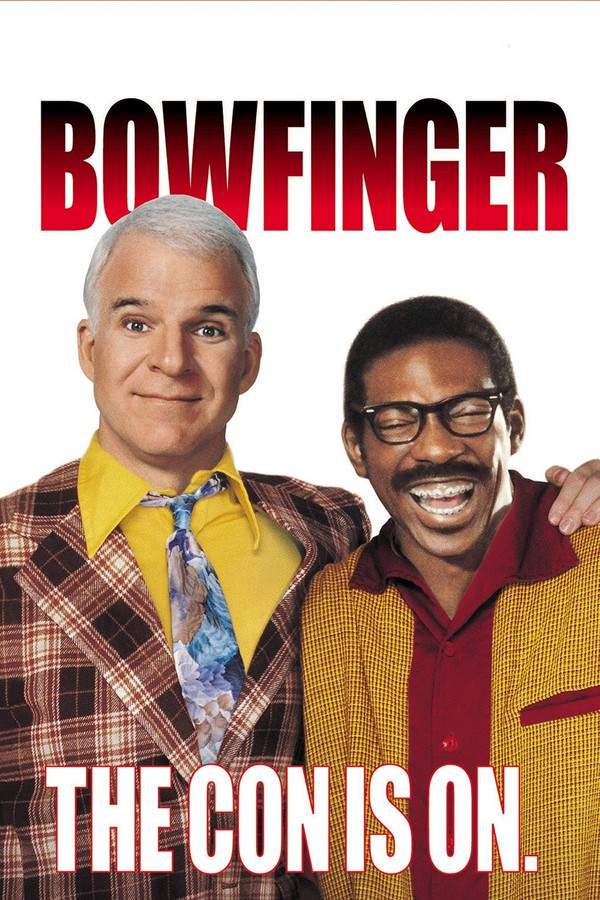
Bowfinger (1999) movie poster

Plot Summary

Bowfinger (1999) Plot Summary Explained

Release, runtime and language
1999 · 97 min · English
Loading streaming availability…
Directed by
Frank Oz
Starring
Eddie Murphy, Steve Martin
Budget
$55M

A struggling filmmaker, Bobby Bowfinger, devises a risky plan to secretly film Hollywood superstar Jeff Bridges without his knowledge. Gathering a quirky crew, Bowfinger intends to create a low-budget action film, believing this unauthorized production will finally launch his career. The scheme involves elaborate deceptions and hilarious mishaps as he tries to pull off the audacious project while dodging Bridges' protective entourage.

On this page (5)
  1. 1 Where to watch
  2. 2 What happens: full plot
  3. 3 Plot questions answered
  4. 4 Movie threads
  5. 5 Every angle
Loading streaming availability…

Full plot summary · contains spoilers

What Happens in Bowfinger: Full Plot Summary

The whole story of Bowfinger (1999) explained, from the opening scene to the final frame: every key event, every twist and what it all adds up to. Read it as a quick recap before the sequel, to check a scene you missed, or to finally understand what really happened.

Bobby Bowfinger, an ambitious B-movie producer, has been dreaming of directing a film since he was just ten years old. Now, with a meager $2,184 saved up for production, he is eager to turn his vision into reality. He has a script titled "Chubby Rain" written by an accountant named Afrim and a dedicated camera operator, Dave, who has the advantage of using studio equipment through his gig as a gofer. To complete his project, Bowfinger gathers a cast of eager actors and a crew composed of undocumented Mexican immigrants, all while desperate for a studio deal to distribute his cinematic masterpiece.

Bowfinger secures a commitment from high-ranking Universal Pictures executive Jerry Renfro, who agrees to distribute the film, provided that it includes the current action superstar, Kit Ramsey. However, Ramsey, known for his pompous, neurotic, and paranoid demeanor, initially refuses to participate. In a clever twist, Bowfinger devises a scheme to stealthily film Ramsey's scenes without his awareness. The actors are briefed to recite their lines in public, insisting that Ramsey is method acting and will not engage outside of their scenes, capturing his bewildered reactions with hidden cameras.

The operation appears to be effective, especially when Ramsey, who is entangled with a Scientology-like group named MindHead, begins to believe in the film's alien invasion theme. This delusion results in a remarkably authentic yet intense performance. Unfortunately, as the pressure mounts, Ramsey retreats to protect his frail mental state, causing production delays.

In a bid to keep the project alive, Bowfinger hires a lookalike named Jiff. Jiff, who is unsuspecting and cheerful, becomes an unwitting participant in the chaotic plan; Bowfinger even convinces him to dash across a busy freeway under the pretense that the vehicles are being piloted by "stunt drivers." During interactions with the rest of the cast, Jiff casually reveals that he is actually Kit's twin brother, providing crucial insight for Bowfinger to locate and ambush the elusive star to film the grand finale.

With only one pivotal scene left to shoot at the iconic Griffith Observatory, Bowfinger is particularly focused on Kit's climactic line, "Gotcha, suckas!" Wanting to keep the film's momentum, he instructs Daisy, the female lead, to help Kit navigate through the scene while feigning to offer strategies for dealing with "aliens." When filming begins, however, Kit falls into a panic, struggling to deliver the critical line. As tension mounts, Kit's MindHead mentor, Terry Stricter, steps in after uncovering that Kit's "aliens" might not be mere figments of his imagination, bringing production to a standstill.

In a twist of fate, Bowfinger's crew presents him with B-roll footage they captured off-set, showcasing a comical yet embarrassing moment where Kit, with a paper bag on his head, exposes himself to the Laker Girl Cheerleading Squad, an act previously discouraged by Stricter. Armed with this incriminating footage, Bowfinger blackmails Stricter and the higher-ups at MindHead, threatening to publish the scandal and destroy Ramsey's career, which would, in turn, jeopardize MindHead's financial stability given Ramsey’s status as a significant contributor. Faced with such leverage, Stricter concedes, allowing Bowfinger to complete the film with Kit's involvement.

Finally, the film reaches its premiere, leaving the cast and crew in awe of the finished product. In the aftermath of their success, Bowfinger receives an enticing offer to direct a martial arts film in Taiwan featuring Jiff. The film concludes with an exhilarating fight scene from the upcoming movie, Fake Purse Ninjas, showcasing the talents of all who contributed to the making of Chubby Rain.
Last updated: November 16, 2024 at 11:48

Was this helpful?

Plot questions answered

Bowfinger Plot Explained: Your Questions Answered

The questions people ask most about Bowfinger (1999): what happens in the confusing scenes, why the characters do what they do, the twists, hidden details and what the ending means. Each answer contains spoilers.

Q1

Why does Kit Ramsey believe in the alien invasion theme in Chubby Rain?

Kit Ramsey becomes convinced that the film's alien invasion premise is real because Bowfinger's crew deliberately feeds into his paranoia. They instruct actors to recite their lines in public and claim that Ramsey is method acting, refusing to engage with anyone outside of character. Ramsey, who is already neurotic and paranoid, begins to genuinely believe he is fighting aliens during filming, which results in an unexpectedly authentic and intense performance.

Foreshadowing: Ramsey's preexisting paranoia and his involvement with the cult-like MindHead organization make him susceptible to this delusion.

  • kit ramsey
  • alien invasion
  • delusion
  • mindhead
  • method acting
Q2

Who is Jiff and how is he related to Kit Ramsey?

Jiff is a cheerful, unsuspecting lookalike that Bowfinger hires when Kit Ramsey's mental state deteriorates and he can no longer complete filming. During interactions with the cast, Jiff casually reveals that he is actually Kit Ramsey's twin brother, which gives Bowfinger the crucial information needed to locate and confront Kit for the final scene at Griffith Observatory.

Foreshadowing: Bowfinger's decision to hire a lookalike foreshadows the discovery of their familial connection later in the film.

  • jiff
  • kit ramsey
  • twin brother
  • lookalike
Q3

How does Bowfinger film Kit Ramsey without his knowledge?

Bowfinger devises a scheme where actors recite their lines in public while pretending that Ramsey is method acting and refusing to engage with anyone outside of character. Hidden cameras capture Ramsey's confused reactions to situations staged by the crew. Actors interact with Ramsey in everyday settings like restaurants and streets, acting as if an alien invasion is happening, which makes Ramsey believe he is witnessing real extraterrestrial events.

Foreshadowing: The initial setup where Ramsey refuses to participate forces Bowfinger to resort to covert filming methods.

  • stealth filming
  • hidden cameras
  • kit ramsey
  • method acting
  • chubby rain
Q4

How does Bowfinger use the B-roll footage to blackmail MindHead?

Bowfinger's crew captures embarrassing B-roll footage of Kit Ramsey wearing a paper bag on his head and exposing himself to the Laker Girl Cheerleading Squad, an act that his MindHead mentor Terry Stricter had previously forbidden. Bowfinger uses this footage to blackmail Stricter and the MindHead organization, threatening to ruin Ramsey's career and thereby jeopardize MindHead's financial stability since Ramsey is a major contributor. This forces Stricter to allow Bowfinger to complete the film with Kit's involvement.

Foreshadowing: Stricter's earlier warning to Ramsey about the embarrassment that could result from his behavior sets up the stakes for this blackmail moment.

  • blackmail
  • b-roll footage
  • mindhead
  • terry stricter
  • laker girls
Q5

What happens during the final scene at Griffith Observatory?

At Griffith Observatory, Bowfinger needs Kit Ramsey to deliver the climactic line "Gotcha, suckas!" for the final scene. However, Ramsey panics and struggles to deliver the line due to his deteriorating mental state. His MindHead mentor Terry Stricter intervenes after realizing that Ramsey's "aliens" might not be imaginary, bringing production to a standstill until Bowfinger resolves the situation through blackmail.

Foreshadowing: The buildup to this scene emphasizes how critical this final line is to the entire film's success.

  • griffith observatory
  • final scene
  • gotcha suckas
  • kit ramsey production
Q6

What is MindHead and why is it important to the story?

MindHead is a Scientology-like organization that Kit Ramsey is heavily involved with, led by his mentor Terry Stricter. The organization matters because it influences Ramsey's mental state and decisions throughout the film. When Bowfinger discovers the embarrassing B-roll footage, he uses it to blackmail MindHead by threatening to expose the scandal and destroy Ramsey's career, which would also damage MindHead financially since Ramsey is their key contributor.

Foreshadowing: Ramsey's initial refusal to participate and his vulnerability to the alien delusion stem from his involvement with MindHead.

  • mindhead
  • terry stricter
  • scientology
  • kit ramsey cult
Q7

How does Bowfinger secure a distribution deal with Universal Pictures?

Bowfinger obtains a commitment from Universal Pictures executive Jerry Renfro to distribute the film, but with one condition: the movie must include the current action superstar Kit Ramsey to make it commercially viable. This requirement forces Bowfinger to devise his elaborate stealth filming scheme since Ramsey initially refuses to participate in the project.

Foreshadowing: The distribution requirement is what drives the entire plot of secretly filming Ramsey without his knowledge.

  • universal pictures
  • jerry renfro
  • distribution deal
  • kit ramsey
Q8

Why does Jiff run across the busy freeway?

Bowfinger tricks Jiff into dashing across a busy freeway by convincing him that the vehicles are being piloted by stunt drivers for the film. The cheerful and unsuspecting Jiff believes this explanation and performs the dangerous stunt without hesitation, demonstrating the lengths Bowfinger is willing to go to in order to make his movie appear more authentic.

Foreshadowing: This scene highlights Bowfinger's willingness to deceive people for his film, setting up the larger deceptions to come.

  • freeway dash
  • jiff
  • stunt
  • deception
Q9

Why does Kit Ramsey refuse to be in Bowfinger's film initially?

Kit Ramsey, known for his pompous, neurotic, and paranoid demeanor, initially refuses to participate in Bowfinger's low-budget film. His refusal is consistent with his character's personality, he views himself as too prestigious for such a project. This rejection forces Bowfinger to resort to secretly filming Ramsey without his knowledge, which becomes the central scheme of the movie.

Foreshadowing: Ramsey's refusal sets up the entire stealth filming operation and the complications that follow.

  • kit ramsey
  • refusal
  • action star
  • arrogance
Q10

Who wrote the script for Chubby Rain?

The script for "Chubby Rain" is written by an accountant named Afrim, which reflects Bowfinger's resourceful approach to assembling his film with minimal resources. Despite coming from an unconventional background, the script becomes the foundation for Bowfinger's ambitious (though legally questionable) production.

Foreshadowing: The unconventional authorship of the script sets the tone for the entire unorthodox production.

  • chubby rain
  • script
  • afrim
  • accountant
Q11

Why is Bowfinger so desperate to make a film?

Bobby Bowfinger has been dreaming of directing a film since he was ten years old. With only $2,184 saved up for production, he is determined to turn his lifelong vision into reality. This desperate ambition drives him to undertake the risky scheme of secretly filming a Hollywood superstar, demonstrating how far he is willing to go to achieve his dream despite the enormous obstacles and legal risks.

Foreshadowing: Bowfinger's childhood dream establishes his motivation for pursuing the increasingly complicated and potentially illegal production.

  • bobby bowfinger
  • ambition
  • dream
  • filmmaker
  • career

Movie threads

More Movies Like Bowfinger, by Mood & Story

Curated lists built around what makes Bowfinger tick: the same mood, the same kind of story or the same emotional payoff. Each list explains why these movies belong together.

Movies with clever schemers like Bowfinger

Unlikely heroes hatch elaborate, absurdly clever schemes against all odds. If you liked the cunning and chaotic energy of Bowfinger, you'll love these movies about underdogs pulling off audacious plans. Discover stories of quirky ambition and elaborate deceptions where the charm is in the clever execution and hilarious mishaps.

  • cunning
  • energetic
  • chaotic
  • optimistic
  • silly
  • lighthearted
  • Tone: whimsical, cunning
  • Pacing: fast, energetic
Why these movies?

The story pattern: The narrative follows a determined protagonist with a seemingly impossible goal, who relies on a clever, often morally flexible, scheme rather than conventional means. The plot unfolds through a series of escalating, absurd situations as the plan is put into action, testing the protagonist's ingenuity and luck.

Why they belong together: Movies in this thread share a focus on charismatic, cunning characters navigating chaotic situations they created. The tone is consistently whimsical and lighthearted, celebrating cleverness and resilience with fast pacing and a focus on humorous escalation rather than deep consequence.

Movies about chaotic creativity like Bowfinger

Stories of passion projects spiraling into hilarious, unpredictable madness. Fans of Bowfinger's depiction of low-budget filmmaking chaos will enjoy these movies. Find similar stories about passionate, dysfunctional creative teams, where the journey is filled with hilarious hurdles and the triumph of chaotic imagination over polished perfection.

  • quirky
  • energetic
  • optimistic
  • chaotic creativity
  • dysfunctional teams
  • lighthearted
  • Tone: lighthearted, quirky
  • Pacing: fast, unpredictable
Why these movies?

The story pattern: The story revolves around a passionate creative endeavor—like making a movie, putting on a play, or starting a band—that is plagued by a lack of resources, eccentric personalities, and unforeseen disasters. The narrative arc is less about the final product's quality and more about the hilarious, bond-forging chaos of the process.

Why they belong together: These films are united by their celebration of creative passion in the face of absurd obstacles. They share a lighthearted, optimistic tone where the chaos is the point, featuring fast-paced plots and a cast of quirky characters whose enthusiasm drives the story.

Every angle

Bowfinger (1999) Explained: Plot, Timeline & Characters

Everything about Bowfinger in one place: what happens in the plot summary, the timeline in chronological order, the characters and meaning and a spoiler-free summary. What's After the Movie adds the cast, box office and post-credit scenes.

Coming soon on iOS and Android

The Plot Explained Movie Summary App

Plot summaries, endings explained and timelines on your phone. Catch up on any movie in minutes, save your favorites and never miss a twist again.

Be the first to know when we launch. Your email stays private, always.

Learn more about the app