Plot Explained Spoilers guaranteed!
Plot Explained

Browse by genre

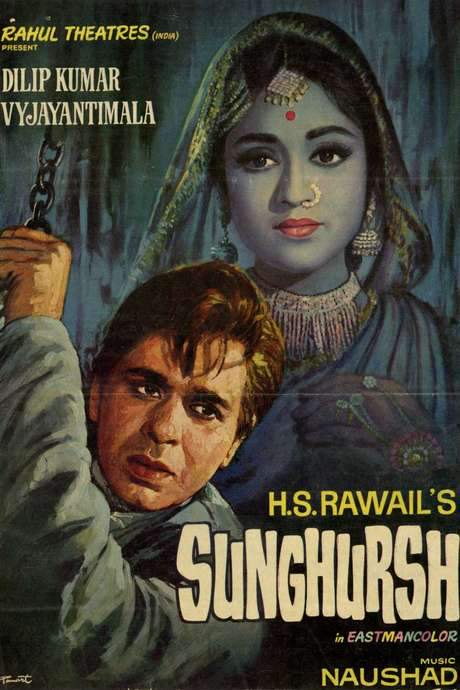
Sunghursh (1968) movie poster

Plot Summary

Sunghursh (1968) Plot Summary Explained

Release, runtime and language
1968 · 158 mins · Hindi
Loading streaming availability…
Directed by
Harnam Singh Rawail
Starring
Anju Mahendru, Sanjeev Kumar, Rammohan Sharma, Jagdish Raj, Dilip Kumar, Deven Verma

Bhavani Prasad, a vicious gangster who pretends to be a priest, seeks to perpetuate his criminal empire through his lineage. After his son Shankar rebels against the violent way of life, Bhavani murders him and attempts to frame his cousin Naubat Lal. When Naubat Lal reveals the truth, Bhavani eliminates him as well, intensifying the bitter family feud that now threatens his grandson Kundan’s future.

On this page (5)
  1. 1 Where to watch
  2. 2 What happens: full plot
  3. 3 Plot questions answered
  4. 4 Movie threads
  5. 5 Every angle
Loading streaming availability…

Full plot summary · contains spoilers

What Happens in Sunghursh: Full Plot Summary

The whole story of Sunghursh (1968) explained, from the opening scene to the final frame: every key event, every twist and what it all adds up to. Read it as a quick recap before the sequel, to check a scene you missed, or to finally understand what really happened.

Kashi, a city renowned for its spiritual significance, is the backdrop for the complex and intense story of Bhavani Prasad, a powerful Shakta priest who is deeply devoted to the black goddess Kali. However, beneath his devout exterior lies a dark secret. Bhavani Prasad, played by [Dilip Kumar], is also a thuggee—a murderous criminal who practices ritualistic killings of wealthy travelers staying at his pilgrim guesthouse. These victims are offered up as sacrifices to Kali in accordance with his twisted beliefs, creating a sinister aura around his religious devotion.

The story unfolds through the life of his son, Shankar. Shankar, portrayed by [Sanjeev Kumar], opposes his father’s ruthless methods and refuses to partake in the murderous rituals. His moral stance puts him at odds with Bhavani Prasad, leading him to decide to leave the village along with his wife and their three children: Kundan, Yashoda, and Gopal. Bhavani Prasad, determined to carry on his dark legacy, forcibly takes Kundan away from his family to follow in his footsteps. He forbids Kundan from seeing his mother and siblings, raising the young boy in a strict and oppressive environment.

Kundan, now being brought up by his grandfather Bhawani Prasad, harbors the hope of becoming the successor—serving as the head of a temple and the pilgrim guesthouse located on the banks of the Ganges river. Tensions escalate when a deep family secret is revealed: Bhavani Prasad had murdered his own son (Kundan's father), then falsely accused his enemy and nephew, Naubatlal, of the crime. Naubatlal, played by [D.K. Sapru], was previously attacked by Bhavani Prasad, who also had a history of killing Naubatlal’s father. When Naubatlal uncovers the truth, he becomes consumed with revenge, but Bhavani Prasad manages to kill him before he can act.

Naubatlal's family, devastated and seeking justice, migrates to Calcutta, where his two young sons—Dwarka and Ganeshi Prasad—grow into merchants. The brothers, played by [Sanjeev Kumar] and other supporting actors, learn about their father’s murder from their mother (Mumtaz Begum) and vow to avenge his death at any cost. Their mission sets the stage for a saga of revenge, betrayal, and familial conflict.

Meanwhile, Kundan, while serving in a temple in Banaras, refuses to partake in the violent rituals of his grandfather. As he develops a sense of morality and independence, he gets an invitation to his sister Yashoda’s wedding—a rare opportunity to reconnect with his family after many years in seclusion. During this visit, Kundan reunites with his mother and siblings. It is here that he meets Laila-E-Aasmaan, a courtesan from Calcutta who has come to Banaras after her madam’s death. Through her, Kundan rediscovers his childhood friend, Munni, and falls in love. However, his love story is complicated by his grandfather's machinations; Bhavani Prasad opposes their union, suspecting Laila’s motives.

The plot thickens as Kundan attempts to forge peace with Dwarka, seeking to end the cycle of violence that has haunted their family for generations. Unfortunately, Dwarka is not easily moved. In a confrontation that leads to tragedy, Dwarka attacks Kundan, only to be killed by him in self-defense. Driven by guilt over his grandfather’s sins and the bloodshed, Kundan adopts a new identity as Bajrangi—a symbol of his desire to break free from the cycle of violence.

Yet, as Kundan tries to find his own path, he uncovers that Ganeshi, played by another character, is secretly in love with Laila and desires to marry her as his second wife. The web of loyalties, revenge, love, and moral conflict continues to grow more tangled, amplifying the complex nature of this multi-layered tale.

Throughout the story, the film explores themes of religious fanaticism, family loyalty, moral integrity, and the struggle for redemption. Kundan’s journey from a innocent young boy caught in family feuds to a man seeking justice and peace forms the emotional core of this compelling narrative. The film masterfully weaves together elements of drama, tragedy, and spirituality, culminating in a powerful reflection on the consequences of blind faith and ruthless vengeance.
Last updated: August 19, 2025 at 05:13

Was this helpful?

Plot questions answered

Sunghursh Plot Explained: Your Questions Answered

The questions people ask most about Sunghursh (1968): what happens in the confusing scenes, why the characters do what they do, the twists, hidden details and what the ending means. Each answer contains spoilers.

Q1

Why does Bhavani Prasad kill his own son Shankar?

Bhavani Prasad kills his son Shankar because Shankar opposes his father's violent thuggee practices and refuses to participate in the ritualistic murders of wealthy travelers. Shankar decides to leave the village with his family to escape the dangerous environment, which threatens Bhavani's criminal empire and legacy. Determined to continue his dark tradition, Bhavani murders Shankar to eliminate this opposition and maintain control over his criminal operations.

Foreshadowing: Early in the film, Bhavani Prasad is shown as a devout Shakta priest who secretly practices thuggee, hinting at his willingness to commit violence in the name of his beliefs.

  • shankar murder
  • bhavani prasad
  • killing son
  • thuggee
Q2

Why does Bhavani Prasad frame Naubatlal for Shankar's murder?

After killing his son Shankar, Bhavani Prasad frames his enemy and nephew Naubatlal for the crime to eliminate a rival and protect his own reputation. Naubatlal had already been attacked by Bhavani before and had a history of conflict with him, including Bhavani having killed Naubatlal's father. Framing Naubatlal allows Bhavani to redirect revenge away from himself while removing an enemy.

Foreshadowing: The timeline shows Bhavani Prasad had a history of attacking Naubatlal and killing his father, establishing the animosity that makes framing him plausible.

  • naubatlal frame
  • false accusation
  • shankar death
  • blame
Q3

Why does Bhavani Prasad take Kundan away from his family?

Bhavani Prasad forcibly takes his grandson Kundan to raise him in his own image and make him the successor to his temple and pilgrim guesthouse. He wants to perpetuate his thuggee tradition through Kundan's lineage and ensure his criminal empire continues after him. Bhavani forbids Kundan from seeing his mother and siblings, isolating him to instill his twisted beliefs.

Foreshadowing: When Shankar decides to leave with his family, Bhavani's immediate response is to forcibly take Kundan, showing his determination to maintain his legacy.

  • kundan taken
  • grandfather
  • family separation
  • successor
Q4

Who is Laila-E-Aasmaan and how is she connected to Munni?

Laila-E-Aasmaan is a courtesan from Calcutta who is sent to seduce Kundan, but she is revealed to be his childhood friend Munni. After her madam's death, she came to Banaras and reconnects with Kundan during his visit for his sister Yashoda's wedding. Their reunion adds emotional complexity as Kundan falls in love with someone from his past.

Foreshadowing: Kundan meeting Laila at the temple during his family visit sets up the revelation of her true identity as Munni.

  • laila munni
  • courtesan
  • childhood friend
  • love interest
Q5

How does Dwarka die and why does Kundan kill him?

Dwarka, one of Naubatlal's sons who grew up in Calcutta seeking revenge, attacks Kundan during a confrontation aimed at undermining him. Kundan kills Dwarka in self-defense while trying to defend himself. This tragic event occurs because Dwarka is consumed by his vow to avenge his father's death and cannot be reasoned with, despite Kundan's attempts to forge peace.

Foreshadowing: Kundan's attempts to make peace with Dwarka are shown earlier, but Dwarka's thirst for revenge makes reconciliation impossible.

  • dwarka death
  • kundan kills
  • self defense
  • confrontation
Q6

Why does Kundan become Bajrangi after killing Dwarka?

After killing Dwarka in self-defense, Kundan is consumed by guilt over his grandfather's sins and the ongoing bloodshed in his family. He adopts the identity of Bajrangi as a symbol of his desire to break free from the cycle of violence that has plagued his family for generations. This new identity represents his quest for redemption and peace.

Foreshadowing: Kundan's rejection of his grandfather's violent thuggee practices throughout the story builds toward his desire to escape this legacy.

  • bajrangi identity
  • guilt
  • redemption
  • peace seeking
Q7

What is the origin of the family feud between Bhavani Prasad and Naubatlal's family?

The feud begins when Bhavani Prasad kills his own son Shankar and frames his enemy Naubatlal for the murder. Naubatlal had already been attacked by Bhavani, who had also killed Naubatlal's father. When Naubatlal discovers the truth, Bhavani kills him before he can take revenge. Naubatlal's family then migrates to Calcutta, where his sons Dwarka and Ganeshi Prasad vow to avenge their father's death, continuing the bitter cycle of vengeance.

Foreshadowing: The timeline establishes Bhavani's pattern of killing enemies and his nephew, creating the foundation for the multi-generational conflict.

  • family feud
  • naubatlal
  • revenge
  • bloodshed
Q8

Why does Ganeshi Prasad want to marry Laila?

Ganeshi Prasad, who grew up in Calcutta with his brother Dwarka seeking revenge, falls in love with Laila-E-Aasmaan and desires to marry her as his second wife. This creates a new layer of complication because Laila is already connected to Kundan, adding rivalry and conflict within the already tangled web of familial relationships and romantic entanglements.

Foreshadowing: The revelation of Ganeshi's love for Laila emerges after Kundan's attempts at peace, showing how personal desires further complicate the family conflict.

  • ganeshi prasad
  • laila marriage
  • second wife
  • love triangle
Q9

What are the thuggee rituals that Bhavani Prasad practices?

Bhavani Prasad practices thuggee, a ritualistic tradition of murdering wealthy travelers who stay at his pilgrim guesthouse on the banks of the Ganges. These victims are offered up as sacrifices to Kali, the black goddess he worships. This twisted interpretation of his Shakta religious beliefs combines devotion with criminal violence, allowing him to maintain both his religious authority and criminal empire.

Foreshadowing: The film establishes early on that Bhavani is a powerful Shakta priest whose religious devotion conceals his violent criminal activities.

  • thuggee rituals
  • kali worship
  • sacrifices
  • pilgrim guesthouse
Q10

How does Kundan try to end the family feud?

Kundan attempts to make peace with Dwarka, seeking to end the cycle of violence that has haunted his family for generations. However, Dwarka is consumed by revenge and cannot be reasoned with. The reconciliation fails, leading to the confrontation where Dwarka attacks Kundan and is killed in self-defense. Despite this failure, Kundan's desire for peace drives him to adopt the Bajrangi identity and serve Ganeshi.

Foreshadowing: Kundan's moral stance against his grandfather's violence and his rejection of thuggee practices show his innate desire for a different path.

  • peace attempt
  • reconciliation
  • dwarka
  • cycle of violence
Q11

Why does Kundan reject his grandfather's violent ways?

Kundan rejects his grandfather's violent thuggee practices because he develops a sense of morality and independence while serving in the temple at Banaras. Unlike his father Shankar who also opposed the violence, Kundan grows up within his grandfather's household but chooses a different spiritual path. His moral awakening leads him to refuse participating in the ritual killings, setting him on a collision course with Bhavani Prasad.

Foreshadowing: The timeline shows Kundan growing older and continuing to serve in the temple while rejecting the violent practices of his grandfather.

  • kundan morality
  • temple
  • spiritual path
  • rejection of violence

Movie threads

More Movies Like Sunghursh, by Mood & Story

Curated lists built around what makes Sunghursh tick: the same mood, the same kind of story or the same emotional payoff. Each list explains why these movies belong together.

Crime Dynasty Tragedies like Sunghursh

Epic stories of families trapped in a legacy of violence and betrayal. Movies like Sunghursh that delve into multi-generational crime families and the heavy moral conflicts they endure. If you were captivated by the saga of Bhavani Prasad's violent legacy and his grandson's struggle, you'll find similar epic stories of family, power, and inescapable fate in these films.

  • brooding
  • tragic
  • oppressive
  • intense
  • somber
  • melancholic
  • Tone: dark, tragic, grim
  • Pacing: steady, epic
Why these movies?

The story pattern: This thread follows narratives that span decades or generations, often beginning with the founding of a criminal empire and exploring its corrosive effects on the founder's descendants. The core conflict is typically internal—a battle for the soul of the next generation, pitting loyalty to the family against the desire for a moral life, frequently ending in tragedy.

Why they belong together: Movies are grouped here for their shared focus on the inescapable nature of a family's criminal legacy. They share a dark, oppressive tone, a steady, epic pacing that allows the tragedy to unfold, and a heavy emotional weight centered on betrayal and the high cost of breaking a violent cycle.

Bleak Moral Conflict Stories like Sunghursh

Stories where characters are crushed by the weight of their violent world. If you appreciated the heavy emotional weight and bleak moral landscape of Sunghursh, this collection features similar films. Explore stories centered on cyclical violence, difficult redemption, and bittersweet endings where characters seek to break free from a destructive path, often with tragic consequences.

  • grim
  • somber
  • intense
  • tragic
  • brooding
  • melancholic
  • Tone: dark, bittersweet, somber
  • Pacing: steady, tense
Why these movies?

The story pattern: The narrative pattern here is defined by a protagonist trapped in a system or tradition of violence. Their central arc is an attempt to break the cycle, which forces them into profound moral conflict, often leading to great personal loss. The ending provides a sense of resolution to the central conflict but is shadowed by tragedy, offering a somber form of catharsis.

Why they belong together: These films are united by their exploration of cyclical violence and the heavy toll it takes on the human spirit. They share a dark, brooding tone, a steady pacing that builds grim tension, and a consistent high intensity driven by the high stakes of the characters' moral struggles.

Every angle

Sunghursh (1968) Explained: Plot, Timeline & Characters

Everything about Sunghursh in one place: what happens in the plot summary, the timeline in chronological order, the characters and meaning and a spoiler-free summary. What's After the Movie adds the cast, box office and post-credit scenes.

Coming soon on iOS and Android

The Plot Explained Movie Summary App

Plot summaries, endings explained and timelines on your phone. Catch up on any movie in minutes, save your favorites and never miss a twist again.

Be the first to know when we launch. Your email stays private, always.

Learn more about the app