

Plot Explained Spoilers guaranteed!
Plot Explained

Browse by genre

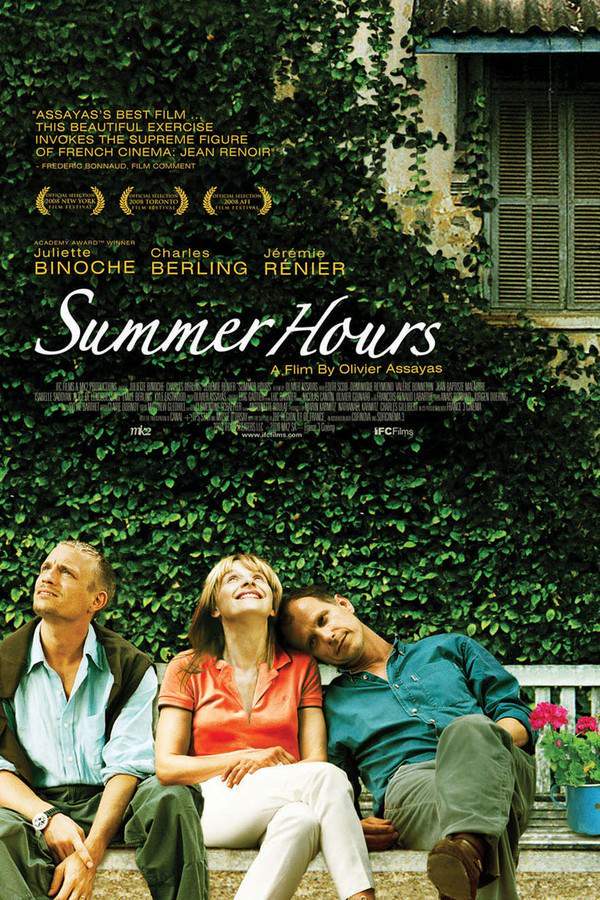
Summer Hours (2009) movie poster

Timeline

Summer Hours (2009) Timeline Explained – Every Event in Order

Release, runtime and language
2009 · 103 min · French
JustWatch #23,490 2
Directed by
Olivier Assayas

Following the death of their mother, three adult siblings find themselves returning to their family home and grappling with grief, shared history, and the complexities of their individual lives. Adrienne is a successful designer, Frederic is dedicated to his studies, and Jeremie pursues business opportunities. As they confront their mother's legacy and their own diverging paths, they must reconcile their differing perspectives and navigate the challenges of adulthood and loss.

On this page (7)
  1. 1 Where to watch
  2. 2 Events in order (11)
  3. 3 Timeline questions answered
  4. 4 Movie threads
  5. 5 Movies like Summer Hours
  6. 6 Categories
  7. 7 Every angle

Where to watch

Where to Watch Summer Hours (2009)

Where can you watch Summer Hours? Stream, rent or buy it in the US, including on Philo: current JustWatch availability with up-to-date prices.

Streaming availability powered by JustWatch

11 events in order · contains spoilers

Summer Hours Timeline: Events in Chronological Order

Every key event of Summer Hours (2009) in order, scene by scene, with when and where it takes place. Use it to untangle flashbacks, time jumps and parallel storylines, to refresh your memory before the sequel or to find the exact scene you are thinking of.

  1. Hélène's 75th Birthday Celebration

    On a warm summer day, Hélène Berthier celebrates her 75th birthday at her picturesque countryside home. Surrounded by her three children, partners, and grandchildren, the gathering reflects Hélène's hopes for a unified family legacy regarding her cherished home.

    Where
    Countryside Home
  2. Hélène's Passing

    Shortly after the celebration, tragedy strikes as Hélène unexpectedly passes away. Her death leaves her three heirs, Frédéric, Adrienne, and Jérémie, grappling with the loss and differing opinions about their family's future.

  3. Frédéric's Desire for Preservation

    Frédéric, the eldest sibling residing in Paris, wishes to preserve their mother's home as a gathering place for future family events. His desire is rooted in the memories and traditions that the house represents for their family.

    Where
    Paris
  4. Adrienne's and Jérémie's Contrasting Views

    Adrienne, who is in a relationship with an American in New York City, and Jérémie, settled in China, have differing wishes regarding the estate. They prefer to keep few sentimental items while seeking to cash in on the rest, highlighting the family divide.

    Where
    New York City and China
  5. Estate Without a Will

    Due to Hélène not leaving behind a will, the heirs face significant tax implications. This leads to complications in managing her estate and the family's intentions regarding their legacy and property.

  6. Lawyer's Proposal

    To alleviate the financial burdens of the estate, the family's lawyer suggests donating some artifacts to the State. This pragmatic advice opens discussions about preserving family heritage while managing the estate's value.

  7. Donation to Musée d'Orsay

    The prestigious Musée d'Orsay agrees to accept several valuable pieces from the family collection. This generous act not only helps with tax implications but also ensures that Hélène's uncle Paul Berthier's work is preserved in a respected institution.

    Where
    Musée d'Orsay
  8. Auctioning Remaining Possessions

    After the donation, the remaining possessions in the home are auctioned off. This process is bittersweet, marking the end of an era while providing some financial relief to the heirs.

  9. Selling the Family Home

    Following the auction, the cherished family home is put on the market. The decision to sell signifies a deep emotional transition for the heirs as they part with the place filled with memories of their mother.

  10. Sylvie's Final Party

    Frédéric's daughter, Sylvie, decides to host a final party in their now bustling family home. Inviting her school friends for one last joyous celebration, the gathering fills the house with laughter, echoing memories of happier times.

    Where
    Family Home
  11. Housekeeper's Tribute

    As the festivities draw to a close, the loyal housekeeper pays her respects to Hélène by placing fresh flowers on her grave. This poignant act symbolizes the enduring love and legacy that Hélène leaves behind.

    Where
    Graveyard

Last updated: November 15, 2024 at 18:37

Was this helpful?

Timeline questions answered

Summer Hours Timeline Explained: Your Questions Answered

When does it happen, and why in that order? The questions people ask about the chronology of Summer Hours (2009): time jumps, flashbacks, cause and effect between scenes and the correct order of events, each answered with spoilers.

Q1

Why do the three siblings have different opinions about the family home?

The three siblings disagree because they live very different lives. Frédéric lives in Paris and wants to preserve the house as a family gathering place, keeping memories alive. Adrienne lives in New York with her American partner, and Jérémie lives in China, both have settled abroad and prefer to liquidate the estate into cash rather than maintain a property they rarely visit.

Foreshadowing: The birthday celebration shows the family together but hints at their divergent lifestyles, setting up the conflict to come.

  • siblings
  • differing opinions
  • family home
  • inheritance
  • Frédéric
  • Adrienne
  • Jérémie
Q2

Why didn't Hélène leave a will?

The summary does not explicitly explain why Hélène did not leave a will. This omission creates significant complications for her children, as French inheritance law without a will leads to substantial tax burdens and forces the siblings to negotiate the estate's disposition collectively.

  • will
  • estate
  • tax implications
  • inheritance law
  • French law
Q3

What happened to the valuable artwork left by Paul Berthier?

The family's lawyer proposed donating some artifacts to the State to reduce tax burdens. The prestigious Musée d'Orsay accepted several valuable pieces from Paul Berthier's collection, preserving his work in a respected institution while helping the heirs manage the estate's financial obligations.

Foreshadowing: Hélène's preoccupation with her late uncle's treasures during the birthday celebration hints at their cultural significance.

  • Paul Berthier
  • artwork
  • Museum d'Orsay
  • donation
  • estate
  • art collection
Q4

Why do Adrienne and Jérémie want to sell the house?

Adrienne and Jérémie both live abroad, Adrienne in New York City with her American partner and Jérémie in China, so they have little practical need for a countryside home in France. They prefer to keep a few sentimental items and convert the rest into cash, which would provide them with financial benefits rather than an unused property.

  • Adrienne
  • Jérémie
  • sell house
  • abroad
  • financial benefit
Q5

Why does Frédéric want to keep the family home?

Frédéric, the eldest sibling living in Paris, wants to preserve the house as a cherished gathering space for future family events. For him, the home represents family memories and traditions that should be maintained for generations, making its preservation emotionally important beyond mere financial value.

Foreshadowing: During the birthday celebration, Hélène's hope for a harmonious agreement reflects Frédéric's desire to keep the family united through the house.

  • Frédéric
  • keep house
  • family memories
  • traditions
  • Paris
Q6

What was the purpose of the auction?

After donating valuable pieces to Musée d'Orsay, the remaining possessions from the home were auctioned off. This process marked the end of an era for the family, dispersing tangible memories while providing the heirs with some financial relief from the estate's tax obligations.

  • auction
  • possessions
  • estate
  • family treasures
  • dispersal
Q7

Why does Sylvie host a final party at the house?

Sylvie, Frédéric's daughter, decides to host one last party for her school friends before the new owners take possession. This gathering fills the house with laughter and light, echoing happier times and serving as a bittersweet farewell to the family home filled with memories of her grandmother Hélène.

Foreshadowing: The birthday celebration earlier in the film establishes the house as a place of family gatherings.

  • Sylvie
  • final party
  • farewell
  • memories
  • grandmother
Q8

What is the significance of the housekeeper placing flowers on Hélène's grave?

After the final party, the loyal housekeeper places fresh flowers on Hélène's grave as the festivities end. This poignant act symbolizes the enduring love and legacy that Hélène leaves behind, representing continuity of care and respect beyond the family's departure.

  • housekeeper
  • flowers
  • grave
  • tribute
  • legacy
  • love
Q9

How did the family handle the estate's tax burden?

Because Hélène left no will, the heirs faced substantial tax implications from the estate. Their lawyer suggested donating some valuable artifacts to the State, which the Musée d'Orsay accepted. This generous act alleviated the financial burden and allowed the remaining estate to be settled more easily.

  • tax
  • estate
  • donation
  • Museum d'Orsay
  • lawyer
  • financial burden
Q10

Why is the family home important to Hélène?

The countryside home represents Hélène's life and legacy, filled with memories of her family and her beloved uncle Paul Berthier's artistic heritage. She wishes for a harmonious agreement among her children regarding its future, hoping the family unity she cherished will continue through the property.

Foreshadowing: Hélène's preoccupation with the home and its treasures during her 75th birthday establishes its emotional significance.

  • family home
  • Hélène
  • memory
  • legacy
  • heritage
  • countryside

Movie threads

More Movies Like Summer Hours, by Mood & Story

Curated lists built around what makes Summer Hours tick: the same mood, the same kind of story or the same emotional payoff. Each list explains why these movies belong together.

Movies about inheritance and letting go like Summer Hours

Stories where adult children face the bittersweet task of parting with a family legacy. If you enjoyed the poignant journey in Summer Hours, this thread gathers similar quiet dramas about adult siblings grappling with their parents' legacy. These movies explore grief, memory, and the difficult decisions surrounding a childhood home or family heirlooms, offering a bittersweet and thoughtful viewing experience.

  • nostalgic
  • reflective
  • melancholic
  • bittersweet
  • quiet
  • contemplative
  • Tone: melancholic, bittersweet, reflective
  • Pacing: slow, contemplative
Why these movies?

The story pattern: The narrative typically centers on adult siblings reuniting after the death of a parent, forcing them to confront their shared past and individual futures. The central conflict involves deciding the fate of a cherished family home or collection of possessions, a process that reveals character dynamics and unresolved history.

Why they belong together: These films are grouped together for their shared focus on the specific life transition of managing an inheritance. They possess a melancholic, reflective tone, slow pacing that allows for contemplation, and a theme of navigating familial bonds and personal history through a lens of loss and acceptance.

Contemplative family dramas like Summer Hours

Gentle, slow-paced dramas that capture a family at a pivotal moment of change. For viewers who appreciated the gentle, observant style of Summer Hours, this list highlights similar character-driven stories about families in flux. These movies share a slow, deliberate pace, a melancholic or bittersweet tone, and a focus on the emotional undercurrents of family life during times of change.

  • contemplative
  • quiet
  • reflective
  • melancholic
  • bittersweet
  • nostalgic
  • Tone: melancholic, reflective, bittersweet
  • Pacing: slow, observational
Why these movies?

The story pattern: These stories unfold without high-stakes plot twists, instead focusing on the emotional reality of a family facing a change, such as a death, a reunion, or a move. The narrative is built through conversations, memories, and small gestures, emphasizing character depth over dramatic events.

Why they belong together: They are connected by a shared cinematic language: low intensity, slow pacing, and a straightforward yet profound exploration of family relationships. The experience is defined by a melancholic mood and a focus on the bittersweet nature of memory, time, and the evolution of family bonds.

If you liked this

Movies Like Summer Hours

Similar movies to Summer Hours: the same genre, themes or kind of story. Each one comes with its own plot summary, timeline and ending explained.

Browse all movie summaries

Categories

Movie Lists Featuring Summer Hours

Summer Hours appears in these hand-built movie categories. Each one groups movies by a specific mood, theme or story type, with their plot summaries and endings explained.

View all movie categories

Every angle

Summer Hours (2009) Explained: Plot, Timeline & Characters

Everything about Summer Hours in one place: what happens in the plot summary, the timeline in chronological order, the characters and meaning and a spoiler-free summary. What's After the Movie adds the cast, box office and post-credit scenes.

Coming soon on iOS and Android

The Plot Explained Movie Summary App

Plot summaries, endings explained and timelines on your phone. Catch up on any movie in minutes, save your favorites and never miss a twist again.

Be the first to know when we launch. Your email stays private, always.

Learn more about the app