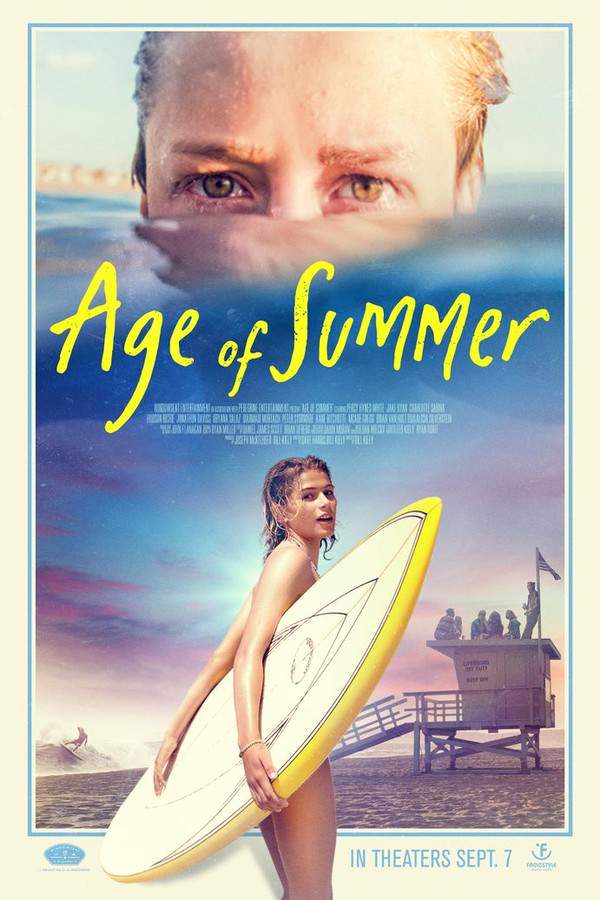
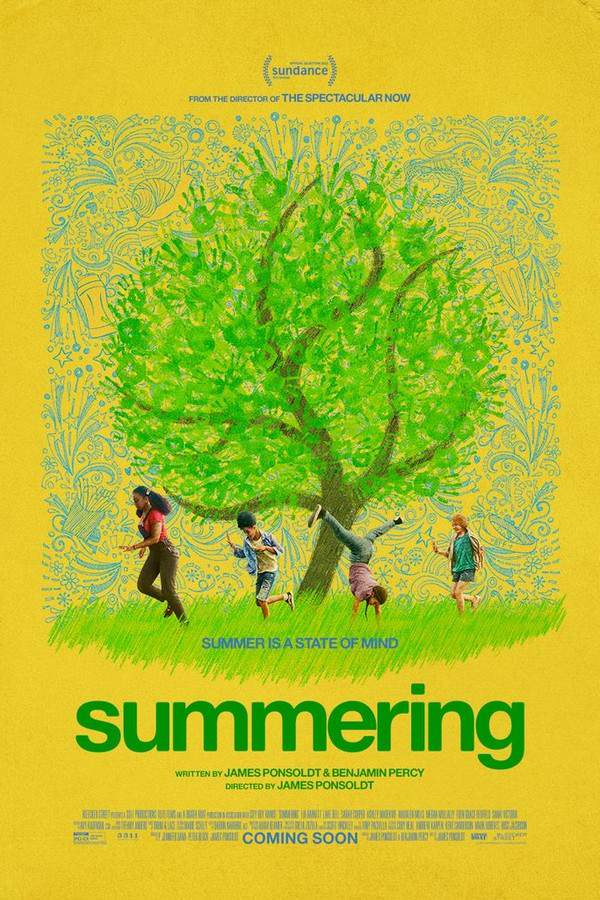
Set in the summer of 1982 on Long Island, the film unfolds in a working‑class beach town where bungalows, boardwalks, marinas, and a cadence of seasonal life shape the days. On its surface, it’s a sunlit portrait of a community between tides, but beneath the surface it’s really a quiet study of growth, choice, and the fragile edge between youth and adulthood. At the center is JJ Flynn Pico Alexander, a recent high school graduate who works at his father Jack Flynn’s (Edward Burns) bustling beach club. JJ feels the tug of restlessness beneath the club’s routines, a sense that the summer could be a turning point rather than just another season.
From the moment JJ crosses paths with Debbie Espinoza Lindsey Morgan, a sharp, confident worker at the club, the film drapes their tentative chemistry in a texture of possibility. Debbie embodies ambition and self‑possession, and her presence destabilizes JJ’s quiet certainty about what his life should look like. Their courtship unfolds through shifts at the club, echoes of beach parties, and late‑night conversations that drift between jokes and something more earnest. As their relationship deepens, JJ starts to imagine a life beyond the familiar rhythms of his town, but he also grapples with the weight of his father’s expectations and the practical pull of staying local. The tension isn’t in grand melodrama; it lives in small, intimate moments where a decision to lean into someone else might alter the path he’s meant to follow.
Meanwhile, Frankie [Anthony Ramos] returns to his hometown after time away and reconnects with Suzy Denner [Caitlin Stasey], his high‑school flame. Their reencounter isn’t just a nostalgic dusting‑off of old feelings; it’s a reckoning with who they’ve become and what they’ve left behind. Frankie realizes that his time away didn’t erase the longing for the life he once imagined with Suzy, and Suzy wonders whether they can recapture a version of themselves that still feels true. The two navigate a delicate dance of attraction, memory, and the reality of how much people change in the years apart, all while the town moves with the inexorable tempo of a season’s end.
Interwoven through the central arcs are smaller threads that color the mosaic of this coastal world. Terry [Amadeus Serafini], a cousin and aspiring musician‑storyteller who stays with the Flynn family, tries to coax Winky [Rita Volk], the teenage daughter of Claudia McKenna (Claudia is portrayed by Susan Misner in the cast), to believe in her own talent and future. Winky’s search for a path—whether it’s collaboration with Terry or a leap toward her own ambitions—gives the film a sense of mentorship mixed with flirtation and the raw honesty of youth discovering its potential. On the boardwalk and beyond, Mello [Jon Rudnitsky], a boisterous, good‑humored presence who is married to Lydia [Zoe Levin], provides a wide‑angle view of the town’s social life. He offers warmth, humor, and a narrated lens through which the audience understands how the community talks, teases, and teeters on the edge of adulthood together.
The film’s texture comes from its small rituals—the early‑morning bike rides, the crackle of fireworks on the beach, the feel of sand between toes, and the casual conversations that frequently carry more weight than they appear. The soundtrack, a careful weave of 1980s pop—Duran Duran, The Cure, The Go‑Go’s—threads through these scenes, underscoring a mood of nostalgia without tipping into kitsch. The balance—between lighthearted beach party energy and the deeper emotional weight of change—is what gives the movie its lingering resonance. The director leans into the sensory details—salt air, sun‑bleached boards, the hum of a town that seems suspended between seasons—and lets the characters’ inner lives unfold with quiet, earned honesty.
As summer stretches toward its end, JJ’s central question crystallizes into a choice: will he accept the life laid out for him by his father and the local world he’s grown up in, or will he risk stepping into a larger horizon that Debbie invites him to explore? The stakes aren’t defined by a single climactic confrontation but by the incremental, often uneasy shifts in how each character sees themselves and their future. Debbie’s aspirations pull JJ toward something bigger, while the familiarity of the club and town tugs him back toward home. Terry’s budding confidence, Winky’s search for direction, Suzy’s reaction to Frankie’s return, and Mello’s navigations of friendship, loyalty, and marriage all contribute to a chorus of voices that echo the broader truth: growing up is a mosaic of small steps, not a dramatic leap.
The later weeks of summer tighten the sense that something is ending even as something new is trying to begin. The parties grow smaller, the jobs wind down, and the tourists retreat, leaving the town to its off‑season punctuation. Suzy and Frankie face a quiet inflection—whether to reconcile more honestly or recognize that distance has altered what they once had. For JJ and Debbie, the question hovers: can what they’ve built endure beyond the warmth and light of summer, or will the practicalities of reality intrude? For Winky, Terry, and the other younger figures, the next steps loom large—pursuing music, continuing studies, or choosing to remain in a place that has shaped them. The film closes not with a neat resolution but with a softened sense of transition: goodbyes on the sand, tentative plans for what might come next, and the understanding that life does not pause at summer’s end.
In the end, the story honors both the laughter and the longing of youth. It presents a portrait of a town and a collection of lives that feels true to its time—a summer that might end, but at which point a future begins to whisper in the background. The emphasis stays on texture and feeling rather than on dramatic shocks, offering a patient, empathetic look at how people choose to grow up when the sea and the sun are urging them forward. The final image—people drifting apart and then stepping toward what lies ahead—leaves a wistful sense of what was and what could be, a reminder that the best summers are often the ones that point the way to tomorrow.