Plot Explained Spoilers guaranteed!
Plot Explained

Browse by genre

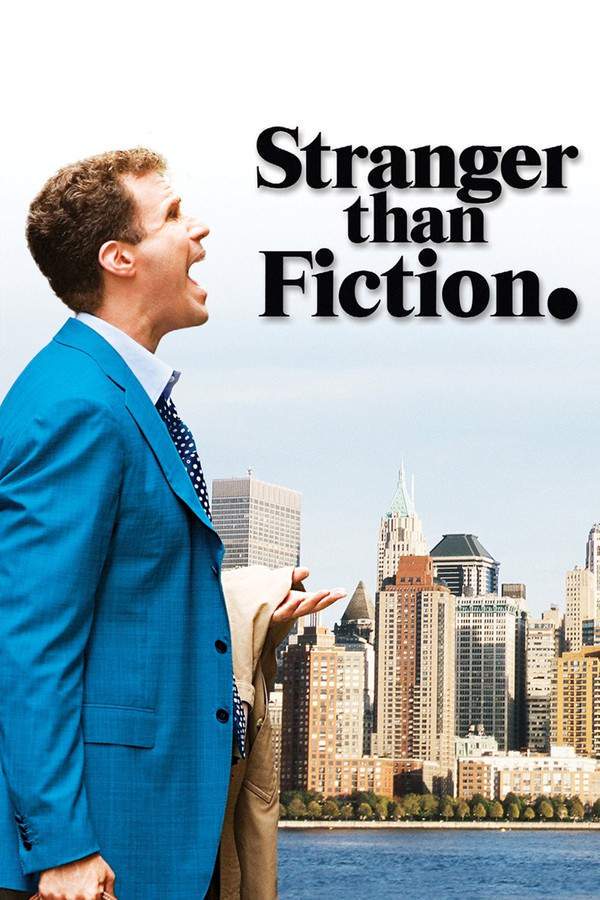
Stranger Than Fiction (2006) movie poster

Timeline

Stranger Than Fiction (2006) Timeline Explained – Every Event in Order

Release, runtime and language
2006 · 113 min · English
Loading streaming availability…
Directed by
Marc Forster
Starring
Will Ferrell
Budget
$30M

An IRS agent named Harold Crick finds his life inexplicably narrated by an unseen voice, predicting his every move and ultimately, his death. As he desperately seeks to understand and stop the narration, he discovers the identity of the author and the profound connection between his reality and the story being written about him. Harold must confront his mortality and find a way to reclaim his life before the narrative concludes.

On this page (7)
  1. 1 Where to watch
  2. 2 Events in order (15)
  3. 3 Timeline questions answered
  4. 4 Movie threads
  5. 5 Movies like Stranger Than Fiction
  6. 6 Categories
  7. 7 Every angle
Loading streaming availability…

15 events in order · contains spoilers

Stranger Than Fiction Timeline: Events in Chronological Order

Every key event of Stranger Than Fiction (2006) in order, scene by scene, with when and where it takes place. Use it to untangle flashbacks, time jumps and parallel storylines, to refresh your memory before the sequel or to find the exact scene you are thinking of.

  1. Harold's Routine

    Harold Crick, an IRS auditor, lives a meticulously structured life governed by his wristwatch. The steady ticking of time defines his existence, leading him to analyze every aspect with precision.

  2. The Audit Begins

    Harold is assigned to audit Ana Pascal, a charming yet tax-delinquent baker. As he works on her case, he unexpectedly finds himself drawn to her, creating an awkward sense of attraction amidst the formalities of his job.

  3. The Mysterious Voice

    On a seemingly normal day, Harold begins to hear a woman's voice narrating his life in an omniscient manner. This bizarre experience leaves him perplexed and questioning his reality as he attempts to comprehend the implications of this mysterious presence.

  4. A Stop Watch

    As Harold heads home, his wristwatch unexpectedly stops ticking. A passerby helps him reset it, and the narrator ominously hints that this small act will lead to Harold's imminent death, heightening his anxieties.

  5. Seeking Help

    Concerned about the narrator's ominous predictions, Harold decides to seek professional help. He visits a psychiatrist, who attributes the voice to schizophrenia, leading Harold to ponder the possibility of a real narrator involved in his life.

  6. Meeting Jules

    Harold consults literature professor Jules Hilbert, hoping to find answers to his situation. As they discuss Harold's mundane life, Jules recognizes the lack of drama, proposing an exploration of whether Harold's story is categorized as comedy or tragedy.

  7. A Day of Inaction

    Taking Jules' advice, Harold decides to experience a day of absolute inaction. Ironically, this leads to chaos when a crew mistakenly demolishes part of his apartment, prompting Jules to encourage him to embrace life and his fate more fully.

  8. Embracing Life

    With a newfound perspective, Harold takes a break from work and begins bonding with his co-worker, Dave. He also pursues his passion for playing guitar and deepens his relationship with Ana, experiencing joy in his life for the first time.

  9. Connection to Karen

    Harold realizes that the voice narrating his life belongs to the author, Karen Eiffel. This revelation comes during a visit to Jules, signaling a turning point where Harold contemplates his reality as part of a potentially comedic narrative.

  10. Karen's Struggle

    Meanwhile, Karen Eiffel grapples with writer's block as she attempts to construct Harold's tragic narrative. Her struggles worsen upon discovering Harold is a real person, intensifying her fear of the implications of his fate in her story.

  11. The Manuscript Revelation

    Karen confides in Harold that she has written an ending in which he dies, putting him in a state of distress. Despite the shock of this revelation, she prepares to finalize his tragic fate with a single keystroke, leaving Harold in turmoil.

  12. Choosing to Live

    As the day arrives for Harold to return to work, he faces the noise of the impending tragedy. However, in a moment of bravery and self-sacrifice, he leaps to save a child from being hit by a bus, ultimately altering the trajectory of his narrative.

  13. Harold's Resurgence

    Despite the tragic prediction, Harold miraculously survives due to the timing of his wristwatch obstructing a critical artery. He awakens in a hospital, reuniting with Ana, showcasing the fragility and unpredictability of life.

  14. Karen's Reassessment

    In the aftermath of Harold's survival, Jules reveals to Karen that the depth of the manuscript is diminished without Harold's act of sacrifice. This pivotal realization reframes their approach, imparting profound meaning to both Harold's character and the story.

  15. Redefining Fate

    Ultimately, Harold comes to terms with his fate and the beauty of life's fleeting moments. Embracing love and the unpredictability of storytelling, he reshapes not only his life but Karen's narrative as well.

Last updated: November 03, 2024 at 21:36

Was this helpful?

Timeline questions answered

Stranger Than Fiction Timeline Explained: Your Questions Answered

When does it happen, and why in that order? The questions people ask about the chronology of Stranger Than Fiction (2006): time jumps, flashbacks, cause and effect between scenes and the correct order of events, each answered with spoilers.

Q1

Why does Harold's watch save his life at the end?

The watch saves Harold because when he resets it using the time from a passerby earlier in the film, he inadvertently sets it ahead. This causes him to arrive at the bus stop early on the day of his predicted death. When he leaps in front of the bus to save the child, the impact shatters the watch, and its fragments obstruct a critical artery that would have caused fatal bleeding. The watch that was anthropomorphized throughout the film as narrating Harold's life becomes the literal salvation device.

Foreshadowing: The narrator explicitly states early on that setting the watch would result in Harold's death, but the irony is that the watch timing also enables his survival.

  • watch
  • death
  • bus
  • survival
  • artery
  • fragments
Q2

How does Harold change his own fate in the story?

Harold changes his fate by embracing life fully instead of living by his rigid routine. After consulting Jules, Harold takes a break from work, pursues a relationship with Ana, learns guitar, and bonds with his coworker Dave. Most importantly, when the predicted day arrives, he chooses to sacrifice himself to save a child rather than simply accepting his fate. This act of selflessness transforms his story from tragedy to something more meaningful, prompting Karen to rewrite the ending.

Foreshadowing: Jules tells Harold that the best approach is to 'embrace his fate and live fully until the end,' which Harold does by filling his life with meaning before the climax.

  • fate
  • change
  • sacrifice
  • child
  • bus
  • choice
Q3

What is the narrator's identity in the film?

The narrator is Karen Eiffel, a renowned author struggling with writer's block. She is writing a novel called "Death and Taxes" about Harold's life, and her narration controls his reality. Harold eventually connects the voice to her after recognizing literary patterns in her commentary.

Foreshadowing: Jules mentions that Harold's story has recognizable elements of literature, hinting that a real author is crafting his narrative.

  • narrator
  • karen eiffel
  • author
  • voice
  • death and taxes
Q4

Why does Karen Eiffel want Harold to die in her manuscript?

Karen believes Harold's death is essential to her story's impact. Throughout the film, she struggles with writer's block, unable to find a compelling ending. When she discovers Harold is real, she is terrified but still feels his death is necessary for literary merit, as her previous characters have all met tragic ends. Jules later tells her that Harold's sacrifice gives the manuscript its power, not his death itself.

Foreshadowing: Karen's assistant Penny pushes her to finish the book, noting that Karen's characters always die tragically.

  • karen eiffel
  • manuscript
  • death
  • writer
  • ending
  • tragedy
Q5

What does the ending of Stranger Than Fiction mean?

The ending means that Harold's willing sacrifice to save the child gives his life meaning beyond mere survival. While he physically survives, the watch (the narrative device that personified his rigid existence) is destroyed. Karen revises the story so Harold lives, but the thematic victory comes from Harold accepting mortality and choosing selflessness. The watch symbolically dies in his place, satisfying both the narrative's needs and the theme that embracing life's fragility gives it beauty.

Foreshadowing: Jules tells Harold that the beauty of a narrative comes from the certainty of its ending, and later tells Karen that the manuscript lacks potency without Harold's sacrifice.

  • ending
  • meaning
  • sacrifice
  • watch
  • survival
  • acceptance
Q6

Why does Harold's watch stop at the beginning of the film?

Harold's watch stopping is the inciting incident that triggers the narrator's ominous prediction. The watch stopping is presented as the moment that sets Harold's death in motion. A passerby helps him reset it using the correct time, but this act of resetting the watch is what leads to the chain of events where Harold arrives early to the bus stop and ultimately survives due to the watch's fragments.

Foreshadowing: The narrator states that this simple act will result in Harold's imminent death, making the watch's destruction at the end a deliberate narrative callback.

  • watch
  • stop
  • time
  • death
  • inciting incident
Q7

Why does Harold decide to save the child from the bus?

Harold decides to save the child because he has already accepted his fate and wants his death to mean something. After reading Karen's manuscript and finding it beautiful, he chooses to embrace his predicted death but transforms it into an act of heroism. Rather than simply waiting to die, he uses his foreknowledge to intervene and save another life, making his potential sacrifice purposeful.

Foreshadowing: Harold tells Ana that he has made peace with the manuscript's portrayal of him, indicating he is ready to face whatever comes next.

  • child
  • bus
  • sacrifice
  • heroism
  • acceptance
Q8

How does Harold figure out the narrator is Karen Eiffel?

Harold identifies Karen Eiffel by recognizing literary patterns in the narrator's commentary. After Jules explains the elements of comedic versus tragic narratives, Harold begins perceiving his own story differently. He realizes the narrator's sophisticated vocabulary and narrative structure match the style of the famous author Karen Eiffel, leading him to seek her out.

Foreshadowing: Jules discusses literary conventions with Harold, teaching him to recognize narrative patterns that eventually help him identify his author.

  • karin eiffel
  • identify
  • discover
  • literature
  • author
Q9

What happens between Jules and Karen after Harold survives?

After Harold survives, Jules confronts Karen about the weakness of her manuscript without Harold's sacrifice. He tells her that the depth of the story comes from Harold's willing act of selflessness, not from his death. This conversation prompts Karen to recognize that Harold's choice to sacrifice himself, regardless of the outcome, is what gives the narrative its power, leading her to revise the ending so he lives.

Foreshadowing: Jules previously tells Harold that the narrator has power over life and death, but also suggests that the character's choices define the story's meaning.

  • jules
  • karen
  • manuscript
  • revision
  • aftermath
Q10

Why does Ana initially reject Harold after he audits her?

Ana is angry with Harold because he audited her bakery while also developing romantic feelings for her. When she offers him cookies as a friendly gesture, he refuses them, fearing it could be seen as a bribe. This rejection hurts Ana, making her feel used and confused about his motives. Their relationship only progresses after Harold embraces life and pursues her authentically rather than formally.

Foreshadowing: The awkwardness of Harold's professional role versus his personal feelings creates tension throughout their early interactions.

  • ana
  • cookies
  • rejection
  • audit
  • relationship
  • bakery
Q11

What is the difference between comedy and tragedy in Harold's story?

Jules explains to Harold that stories are categorized as comedy or tragedy based on their ending. A comedy ends with the protagonist marrying or achieving social reinstatement, while a tragedy ends with the protagonist dying. Harold initially believes he is in a tragedy after Ana rejects him, but when he embraces life and takes control, he begins perceiving his narrative as a comedy.

Foreshadowing: Jules advises Harold to determine which genre his story belongs to, suggesting that understanding the narrative structure could help him change his outcome.

  • comedy
  • tragedy
  • genre
  • jules
  • ending
  • classification

Movie threads

More Movies Like Stranger Than Fiction, by Mood & Story

Curated lists built around what makes Stranger Than Fiction tick: the same mood, the same kind of story or the same emotional payoff. Each list explains why these movies belong together.

Metafictional Movies Like Stranger Than Fiction

Stories that break the fourth wall, placing characters in a battle against their author or fate. Explore movies like Stranger Than Fiction where characters confront their own fictional nature. If you enjoyed the blend of existential drama with a whimsical, self-aware plot, you'll find similar thought-provoking stories about authorship and free will in this collection.

  • metafictional
  • quirky
  • existential
  • thought-provoking
  • self-referential
  • philosophical
  • Tone: whimsical, contemplative
  • Pacing: steady, character-driven
Why these movies?

The story pattern: The narrative pattern involves a protagonist discovering they are a character in a book, film, or other narrative construct. This revelation kicks off a journey to understand the rules of their world, confront their creator, and fight for autonomy against a predetermined plot, often leading to a philosophical climax about the nature of existence.

Why they belong together: Movies in this thread are united by a shared metafictional premise that challenges the line between fiction and reality. They typically feature a whimsical or intellectual tone, a steady pacing that allows for contemplation, and a central conflict between fate and free will that resonates on a deeply human level.
Movies About Personal Transformation Like Stranger Than Fiction

Character-driven stories about ordinary people finding extraordinary meaning in their lives. Find movies similar to Stranger Than Fiction that follow a quirky, introspective journey of self-discovery. These character-driven dramas and comedies explore how ordinary people find new meaning and connection, often with a bittersweet but hopeful conclusion.

  • contemplative
  • introspective
  • hopeful
  • quirky
  • character-driven
  • bittersweet
  • Tone: bittersweet, hopeful
  • Pacing: steady, introspective
Why these movies?

The story pattern: The narrative follows a structured, perhaps socially isolated individual whose orderly existence is disrupted. This catalyst forces them to step outside their comfort zone, leading to new relationships and perspectives. The story unfolds at a steady pace, focusing on internal change rather than external action, culminating in a bittersweet but meaningful acceptance of a new self.

Why they belong together: These movies are grouped by their shared focus on a gentle, character-led arc of transformation. They balance dry humor with sincere emotion, feature a medium emotional weight, and prioritize the protagonist's internal journey over fast-paced plot, resulting in a contemplative and ultimately uplifting vibe.

If you liked this

Movies Like Stranger Than Fiction

Similar movies to Stranger Than Fiction: the same genre, themes or kind of story. Each one comes with its own plot summary, timeline and ending explained.

Browse all movie summaries

Categories

Movie Lists Featuring Stranger Than Fiction

Stranger Than Fiction appears in these hand-built movie categories. Each one groups movies by a specific mood, theme or story type, with their plot summaries and endings explained.

View all movie categories

Every angle

Stranger Than Fiction (2006) Explained: Plot, Timeline & Characters

Everything about Stranger Than Fiction in one place: what happens in the plot summary, the timeline in chronological order, the characters and meaning and a spoiler-free summary. What's After the Movie adds the cast, box office and post-credit scenes.

Coming soon on iOS and Android

The Plot Explained Movie Summary App

Plot summaries, endings explained and timelines on your phone. Catch up on any movie in minutes, save your favorites and never miss a twist again.

Be the first to know when we launch. Your email stays private, always.

Learn more about the app