Plot Explained Spoilers guaranteed!
Plot Explained

Browse by genre

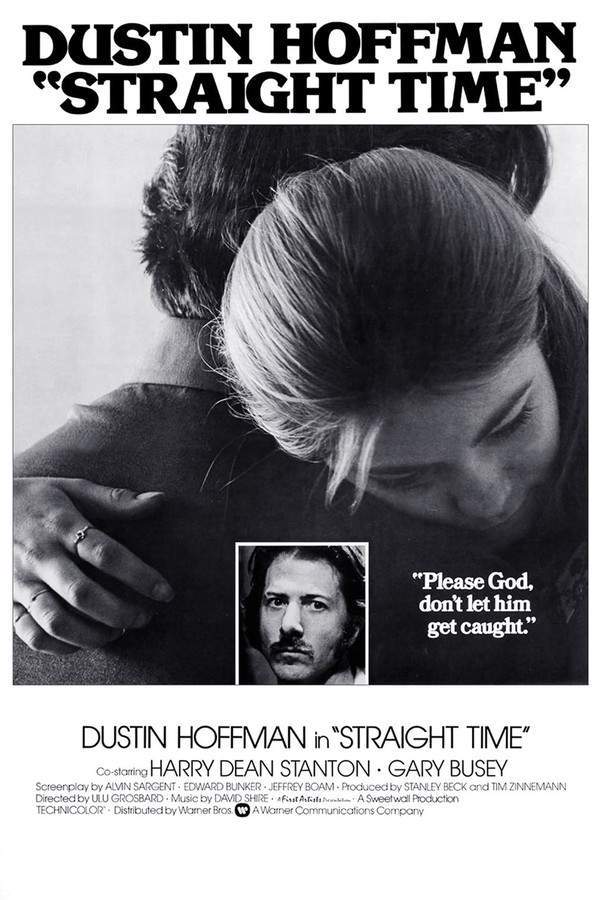
Straight Time (1978) movie poster

Timeline

Straight Time (1978) Timeline Explained – Every Event in Order

Release, runtime and language
1978 · 114 min · English
Loading streaming availability…
Directed by
Ulu Grosbard
Starring
Gary Busey, Dustin Hoffman, Kathy Bates, Harry Dean Stanton, Jake Busey, Sandy Baron

Upon his release from prison, Max Dembo attempts to start a new life, taking a simple job and enduring the frustrations of his parole officer. However, when falsely accused of a crime, his patience snaps. Driven by anger and injustice, he abandons his promise of reform and plunges into a desperate series of events, leading him down a dangerous path of crime and escalating chaos.

On this page (6)
  1. 1 Where to watch
  2. 2 Events in order (16)
  3. 3 Timeline questions answered
  4. 4 The book behind the movie
  5. 5 Movie threads
  6. 6 Every angle
Loading streaming availability…

16 events in order · contains spoilers

Straight Time Timeline: Events in Chronological Order

Every key event of Straight Time (1978) in order, scene by scene, with when and where it takes place. Use it to untangle flashbacks, time jumps and parallel storylines, to refresh your memory before the sequel or to find the exact scene you are thinking of.

  1. Max's Release from Prison

    After spending six years in prison, Max Dembo is released back into society. He faces the challenge of adjusting to life under the watchful eye of a strict parole officer, Earl Frank, who embodies the struggles of reentry into a judgmental world.

    Where
    Los Angeles
  2. Meeting Jenny Mercer

    While navigating the complexities of job hunting, Max meets Jenny Mercer, a lively secretary at an employment agency. Their instant chemistry leads to an invitation for dinner, sparking a flicker of hope in Max's otherwise bleak existence.

    Where
    Employment agency
  3. Earl's Visit

    Earl Frank surprises Max with a visit at his home, where he uncovers a disturbing clue linked to Max's past. The discovery of a book of matches tied to Max's friend Willy leads to Max's immediate arrest, unraveling his efforts to maintain a stable life.

    Where
    Max's home
  4. Imprisonment and Jenny's Support

    After being taken back to prison, Max finds solace in Jenny's unwavering support as she makes efforts to visit him and encourages him with hope. She leaves her contact information, trying to keep their connection alive amidst the turmoil.

    Where
    Prison
  5. Proving Sobriety

    Upon his release from prison, Max is subjected to a series of mandatory urine tests. Successfully passing these tests, he attempts to demonstrate his sobriety, but Earl's persistent control deepens Max's desire for rebellion.

    Where
    Los Angeles
  6. Confrontation with Earl

    In an explosive confrontation, Max stands up against Earl's domineering presence. After a heated argument, he handcuffs Earl to a fence, symbolizing his rejection of the societal constraints that impose on him.

    Where
    Roadside in Los Angeles
  7. Return to Crime

    Feeling the pull of his former life, Max decides to re-enter the world of crime. He executes a daring robbery at a Chinese grocery store, reuniting with old friends and reigniting his rebellious spirit.

    Where
    Los Angeles
  8. Bank Robbery Plan

    Max begins to plot more ambitious heists, including a poorly conceived bank robbery. His reckless nature starts to strain relationships, particularly with his accomplice Jerry Schue, highlighting the growing tension among the group.

    Where
    Los Angeles
  9. Jewelry Store Heist

    During a chaotic robbery at a Beverly Hills jewelry store, panic ensues when Willy, the assigned getaway driver, takes off, leaving Max and Jerry stranded. The situation escalates, showcasing Max's evolving recklessness and disregard for the consequences.

    Where
    Beverly Hills
  10. Jerry's Tragic Fate

    As they attempt to escape through nearby yards, tragedy strikes when Jerry is shot, marking a pivotal shift in Max's criminal saga. Faced with a bleak reality, Max resorts to violence, further deepening his descent into chaos.

    Where
    Los Angeles
  11. Max's Desperate Acts

    In an act of desperation during their escape, Max shoots a police officer while retaining their stolen items. His actions crystallize his transformation as he increasingly embraces his life of crime.

    Where
    Los Angeles
  12. Willy's Betrayal

    To settle an old score and in a chilling twist, Max eliminates Willy, showcasing the ruthless choices he's willing to make. This dark decision manifests the extreme lengths to which he will go as he chooses a life shrouded in crime.

    Where
    Los Angeles
  13. Journey with Jenny

    As Max and Jenny flee Los Angeles, their drive through Antelope Valley becomes a tense reflection of their situation. Listening to news reports of their crimes, Jenny breaks down, exposing the emotional toll of their reckless choices.

    Where
    Antelope Valley
  14. Final Decision

    Arriving at a lonely diner near Palmdale, Max grapples with his motivations and the urgent need to keep Jenny safe. In a heart-wrenching moment, he confesses his intent to turn himself in, signaling the painful end of their partnership.

    Where
    Palmdale
  15. Max's Departure

    In a poignant farewell, Max leaves Jenny behind, accepting the inevitability of his life choices. His final words, 'I wanna get caught,' echo as he drives into the darkness, leaving Jenny with the burden of their shattered dreams.

  16. Montage of Max's Journey

    The film closes with a powerful montage that captures Max's tumultuous teenage years. His prisoner number, A-20284, serves as a haunting reminder of his choices and the cyclical nature of his life, underscoring the inevitable consequences of his actions.

Last updated: November 22, 2024 at 14:16

Was this helpful?

Timeline questions answered

Straight Time Timeline Explained: Your Questions Answered

When does it happen, and why in that order? The questions people ask about the chronology of Straight Time (1978): time jumps, flashbacks, cause and effect between scenes and the correct order of events, each answered with spoilers.

Q1

Why was Max Dembo arrested the second time?

Max was rearrested when his parole officer Earl Frank discovered a matchbook from Willy Darin (a known heroin cook) at Max's home. Despite no actual evidence of drug activity by Max, Earl used this as justification to send him back to prison, stripping him of his job and home.

  • Earl Frank
  • matchbook
  • Willy Darin
  • rearrest
  • parole violation
Q2

Why does Max handcuff Earl to a fence?

After his second release, Max grows increasingly resentment toward Earl's constant surveillance and controlling behavior. During a heated confrontation, Max physically fights back and handcuffs Earl to a roadside fence, marking his definitive break from the parole system and any hope of living an upright life.

  • Earl Frank
  • confrontation
  • handcuffs
  • rebellion
  • parole officer
Q3

What causes Max to return to a life of crime?

Max's return to crime is triggered by his false rearrest and the constant harassment from Earl Frank. After being denied a chance at a normal life, Max decides to embrace his criminal instincts, telling his old cohorts that the system has already decided what he is, so he might as well live up to it.

  • return to crime
  • frustration
  • false accusation
  • rebellion
Q4

Why does Max kill Willy during the escape?

Max kills Willy because Willy abandoned him and Jerry during the Beverly Hills jewelry store robbery by panicking and driving off in the getaway car, leaving them stranded. Max settles this betrayal by eliminating Willy, an act that demonstrates how fully Max has embraced violence and criminality.

  • Willy Darin
  • killing
  • betrayal
  • jewelry store heist
  • getaway driver
Q5

Why does Max say he wants to get caught?

At the diner near Palmdale, Max tells Jenny he wants to get caught because he realizes his criminal lifestyle has made her a target and a liability. By turning himself in, Max believes he can protect her from the consequences of his actions while accepting accountability for his own choices.

  • get caught
  • surrender
  • Palmdale
  • Jenny
  • sacrifice
Q6

What happens to Jerry Schue during the jewelry store robbery?

During the chaotic escape from the Beverly Hills jewelry store, Jerry is shot and killed while trying to flee through neighboring yards. His death marks a pivotal turning point that deepens Max's descent into violence and desperation.

  • Jerry Schue
  • jewelry store
  • death
  • shooting
  • Beverly Hills
Q7

Why does Max leave Jenny at the diner?

Max leaves Jenny behind because he knows his criminal life has placed her in danger and that she cannot escape the consequences of being associated with him. By driving away alone, Max intends to turn himself in, believing this is the only way to give her a chance at a normal life.

  • Jenny Mercer
  • abandonment
  • Palmdale
  • diner
  • sacrifice
Q8

Why does Max shoot the police officer during the escape?

Max shoots a police officer during the chaotic escape from the Beverly Hills jewelry store heist when cornered while fleeing on foot. This desperate act allows him to break free and escape with the stolen goods, cementing his transformation into a violent criminal willing to kill to survive.

  • police officer
  • shooting
  • escape
  • Beverly Hills
  • violence
Q9

What is Max's first robbery after his confrontation with Earl?

After handcuffing Earl to the fence, Max immediately returns to crime by robbing a Chinese grocery store in Los Angeles. This marks his complete break from reform and the beginning of his escalating criminal spree with old accomplices.

  • Chinese grocery store
  • robbery
  • Los Angeles
  • crime return
Q10

Why is parole officer Earl Frank so hard on Max?

Earl Frank is known for his patronizing demeanor and treats Max with suspicion from the moment of his release. Despite Max's efforts to find employment and stay clean, Earl constantly monitors him and looks for reasons to violate his parole, ultimately using the matchbook incident to rearrest him without real evidence.

  • Earl Frank
  • parole officer
  • surveillance
  • harassment
  • patronizing
Q11

Why does Jenny continue supporting Max after his rearrest?

Jenny remains loyal to Max even after his false imprisonment because she is drawn to his magnetic charm and sees potential in him. She visits him in prison and leaves her phone number, trying to maintain hope that their connection can survive his legal troubles.

  • Jenny Mercer
  • prison visits
  • loyalty
  • support
  • phone number
Q12

Why does the jewelry store heist go wrong?

The Beverly Hills jewelry store robbery goes wrong because Willy, the designated getaway driver, panics when police arrive and abandons Max and Jerry by driving off. This forces Max and Jerry to flee on foot, leading to Jerry's death and Max's violent escalation.

  • Willy
  • jewelry store
  • Beverly Hills
  • panic
  • getaway driver
  • failed robbery
Q13

What does Max hope to achieve when he's released from prison?

When Max is first released, he genuinely attempts to go straight by job hunting and complying with his parole conditions. He hopes to build a new life and maintain a relationship with Jenny, but the system's constant harassment and false accusation ultimately destroy these aspirations.

  • reform
  • job hunting
  • parole
  • fresh start
  • straight life
Q14

Why does Max take Jenny with him after the jewelry store heist?

Max takes Jenny as a passenger as he flees Los Angeles because she is loyal to him and chooses to stay by his side despite knowing his criminal nature. However, their flight together becomes a traumatic experience for her as she listens to news reports of the crimes.

  • Jenny
  • fugitive
  • escape
  • Antelope Valley
  • crime spree
Q15

What is the significance of the ending montage?

The closing montage shows Max's turbulent teenage years and his repeated arrests, with his prisoner number A-20284 hauntingly displayed. This reinforces the film's theme of cyclical fate, Max was never able to escape the path the system seemingly destined him for, and his final surrender confirms this inevitability.

  • montage
  • ending
  • prisoner number A-20284
  • cyclical fate
  • arrested teen

Movie threads

More Movies Like Straight Time, by Mood & Story

Curated lists built around what makes Straight Time tick: the same mood, the same kind of story or the same emotional payoff. Each list explains why these movies belong together.

Ex-con crime spiral stories like Straight Time

Stories where a second chance is violently ripped away by a rigged system. This section features movies like Straight Time and other gritty dramas about recidivism. If you liked the story of Max Dembo's frustrating descent back into a life of crime, you'll find similar films here that explore themes of institutional failure, social alienation, and the struggle for redemption against impossible odds.

  • grim
  • frustrated
  • desperate
  • anxious
  • oppressive
  • fatalistic
  • Tone: bleak, cynical, desperate
  • Pacing: steady, deliberate
Why these movies?

The story pattern: These narratives typically follow a linear, straightforward path from a hopeful release to a crushing relapse. The protagonist's attempts at a normal life are systematically undermined, often by an oppressive authority figure or a single moment of injustice, triggering a chain reaction of escalating criminal acts that lead to a tragic endpoint.

Why they belong together: Movies in this thread are united by their bleak tone, heavy emotional weight, and focus on the psychological toll of being trapped in a cycle of crime. They share a high intensity driven by a sense of impending doom and a steady, character-driven pacing that makes the downfall feel both logical and heartbreakingly inevitable.

Bleak character studies of systemic failure like Straight Time

Intense portraits of individuals being crushed by the machinery of society. If you appreciated the grim, realistic portrayal of an individual against an uncaring system in Straight Time, this section is for you. Discover movies with a similar steady pacing and heavy emotional weight, where characters are methodically broken down by societal pressures, leading to a tense and ultimately hopeless atmosphere.

  • anxious
  • claustrophobic
  • grim
  • cynical
  • tense
  • psychological
  • Tone: bleak, tense, oppressive
  • Pacing: steady, methodical
Why these movies?

The story pattern: The narrative pattern is one of mounting pressure. A character, already vulnerable, is placed under the microscope of an institution (legal, bureaucratic, social) that proves to be inflexible and damaging. The story unfolds with a logical, almost procedural steadiness, focusing on the character's growing desperation and the systemic forces that seal their fate.

Why they belong together: These films are grouped by their shared bleak tone, high tension, and heavy emotional weight. They create a cohesive experience through a steady, deliberate pacing that makes the protagonist's trapped feeling palpable, and an intensity that comes from the relentless psychological pressure applied by an unforgiving world.

Every angle

Straight Time (1978) Explained: Plot, Timeline & Characters

Everything about Straight Time in one place: what happens in the plot summary, the timeline in chronological order, the characters and meaning and a spoiler-free summary. What's After the Movie adds the cast, box office and post-credit scenes.

Coming soon on iOS and Android

The Plot Explained Movie Summary App

Plot summaries, endings explained and timelines on your phone. Catch up on any movie in minutes, save your favorites and never miss a twist again.

Be the first to know when we launch. Your email stays private, always.

Learn more about the app