Plot Explained Spoilers guaranteed!
Plot Explained

Browse by genre

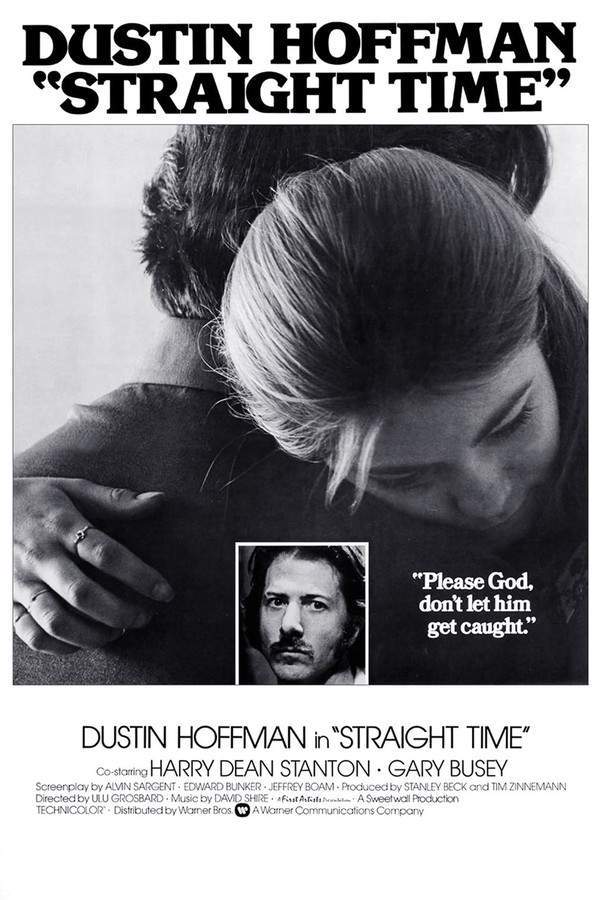
Straight Time (1978) movie poster

Characters & Themes

Straight Time (1978) Characters, Setting & Themes Explained

Release, runtime and language
1978 · 114 min · English
Loading streaming availability…
Directed by
Ulu Grosbard
Starring
Gary Busey, Dustin Hoffman, Kathy Bates, Harry Dean Stanton, Jake Busey, Sandy Baron

Upon his release from prison, Max Dembo attempts to start a new life, taking a simple job and enduring the frustrations of his parole officer. However, when falsely accused of a crime, his patience snaps. Driven by anger and injustice, he abandons his promise of reform and plunges into a desperate series of events, leading him down a dangerous path of crime and escalating chaos.

On this page (8)
  1. 1 Where to watch
  2. 2 Characters explained (4)
  3. 3 Where & when it takes place
  4. 4 Themes & meaning (3)
  5. 5 Character & meaning questions
  6. 6 The book behind the movie
  7. 7 Movie threads
  8. 8 Every angle
Loading streaming availability…

4 main characters · contains spoilers

Straight Time Characters Explained: Who Is Who

The main characters of Straight Time (1978), heroes and villains: what drives them, how they change over the course of the story and what each of them reveals about the film's bigger ideas.

  • Max Dembo

    Max is a complex character embodying the internal struggle between his desire for change and the pull of his criminal past. Charismatic yet conflicted, he navigates moments of vulnerability and aggression as he faces the consequences of his choices. This dichotomy depicts a man at war with himself, torn between love and a life bound by crime.

    • 👤 Protagonist
    • ⚡ Rebellious
  • Earl Frank

    Earl serves as the embodiment of authority and control in Max's life, his patronizing demeanor symbolizing the societal constraints placed upon individuals seeking redemption. His relentless scrutiny creates a tense dynamic with Max, fueling the latter's resentment and rebellion. Earl's character illustrates the challenges parole officers face when managing troubled individuals.

    • 👮 Authority
    • 📋 Officer
  • Jenny Mercer

    Jenny is a spirited and empathetic individual who represents a glimmer of hope in Max's tumultuous existence. Her unwavering support and deep connection with Max highlight the emotional stakes and the personal costs associated with a life of crime. However, her breaking point reflects the harsh realities faced by those who love individuals caught in destructive cycles.

    • ❤️ Love Interest
    • 🤝 Supportive
  • Jerry Schue

    Jerry is Max's accomplice whose discontent grows as Max's reckless behavior escalates. His character showcases the tensions that arise within criminal partnerships, particularly when personal safety is jeopardized. Jerry's plight underscores the chaotic fallout of decisions made in the heat of the moment.

    • 🔫 Accomplice
    • ⚠️ Tension

Last updated: October 22, 2024 at 22:18

Was this helpful?

Setting

Where and When Does Straight Time Take Place?

The setting of Straight Time (1978): the year and time period, the places and locations, and how they shape the characters, the mood and the tension of the story.

Time period

The movie takes place in a contemporary setting, reflecting a gritty landscape of crime and rehabilitation in the post-1970s America. It captures the struggles of reintegration into society for a released convict and the societal pressures that accompany it, making it relevant to various eras concerning issues of justice and personal choice.

Location

Los Angeles, Antelope Valley, Palmdale

Los Angeles serves as the backdrop for Max Dembo's turbulent life, known for its vibrant culture and the stark realities of crime. Antelope Valley is a vast area that represents both escape and the weight of decisions, while Palmdale, with its remote service station and diner, embodies a momentary pause in their chaotic journey. These locations highlight the dichotomy between urban life and the haunting isolation of choices made.

  • 🏙️ City
  • 🏞️ Valley
  • 🍽️ Diner

Last updated: October 22, 2024 at 22:18

Was this helpful?

3 major themes

Straight Time Meaning: Themes & Message Explained

What is Straight Time (1978) really about? The emotional, social and philosophical themes the film keeps returning to, its symbolism and the message beneath the surface.

  • Crime & Consequences

    The theme of crime and its repercussions is central to Max's journey, portraying his struggle between the desire for a fresh start and the allure of his past life. Each choice, from rebellion against his parole officer to the decision to commit robbery, reinforces the cycle of crime and reflects the harsh realities one faces in attempting to escape their history.

  • Love & Loss

    Max's relationship with Jenny underscores the complexities of love intertwined with a life of crime. Their bond is tested through hardship, and his decision to leave her behind not only signifies a loss of love but also the personal sacrifices made in pursuit of a darker path. This emotional turmoil serves to highlight the sometimes-inextricable link between love and self-destruction.

  • Freedom & Imprisonment

    Max's narrative illustrates the paradox of seeking freedom while feeling imprisoned by his circumstances. His repeated run-ins with the law and the system's attempt to control him conflict with his yearning for autonomy, ultimately provoking a violent rebellion. The struggle for both literal and metaphorical freedom is a poignant commentary on societal constraints.

Last updated: October 22, 2024 at 22:18

Was this helpful?

Character & theme questions

Straight Time Characters & Meaning: Your Questions Answered

The questions people ask about Straight Time (1978): who the characters really are, their relationships, what the symbols mean, where it takes place and what the movie is really about. Each answer contains spoilers.

Q1

Who is Max Dembo and what makes him a complex character?

Max Dembo is the protagonist of Straight Time, a man recently released from prison who struggles to rebuild his life. He is charismatic yet deeply conflicted, constantly battling between his genuine desire for change and the powerful pull of his criminal past. This internal duality, wanting to reform while being drawn back into crime, makes him a compelling study of a man at war with himself.

  • max dembo
  • protagonist
  • character analysis
  • conflicted criminal
Q2

What is Earl Frank's role in the story?

Earl Frank is Max's parole officer who serves as the primary authority figure in the film. His patronizing demeanor and relentless scrutiny of Max create intense tension, symbolizing the societal constraints placed on individuals seeking redemption. The adversarial dynamic between Earl and Max fuels much of Max's resentment and eventual rebellion against the system.

  • earl frank
  • parole officer
  • authority
  • supervision
Q3

Why is Jenny Mercer important to Max's story?

Jenny Mercer represents hope and genuine connection in Max's otherwise bleak existence. Their relationship shows how love can coexist with a life of crime, but also highlights the personal costs involved. Jenny's unwavering support provides Max with a chance at a normal life, making his eventual decision to abandon her and choose his criminal path all the more tragic and definitive.

  • jenny mercer
  • love interest
  • romance
  • hope
  • relationship
Q4

How does the setting shape the story?

The film uses Los Angeles as its primary backdrop, contrasting the city's vibrant culture with the stark realities of crime and rehabilitation. Key locations like Antelope Valley and Palmdale emphasize themes of isolation and the weight of decisions, while the remote service station and diner represent brief moments of pause in otherwise chaotic lives. The setting visually reinforces the dichotomy between urban life and the haunting isolation of Max's choices.

  • los angeles
  • antelope valley
  • palmdale
  • setting
  • location
Q5

What time period does the movie depict?

Straight Time is set in contemporary, post-1970s America, depicting the gritty realities of crime and rehabilitation during that era. The setting captures the struggles of reintegration into society for a released convict, making it relevant to broader discussions about justice, personal choice, and systemic challenges faced by ex-convicts.

  • 1970s
  • contemporary
  • time period
  • post-1970s america
Q6

What does the Crime & Consequences theme represent?

The Crime & Consequences theme is central to Max's journey, portraying his constant struggle between wanting a fresh start and being seduced by his criminal past. Every choice, from resisting his parole officer's demands to committing robbery, reinforces the inescapable cycle of crime. The film shows how breaking free from one's history is extraordinarily difficult, even when genuine change is desired.

  • crime
  • consequences
  • cycle of crime
  • rehabilitation
Q7

How does the film explore Freedom & Imprisonment?

The film illustrates the paradox of seeking freedom while feeling imprisoned by circumstances. Max's repeated encounters with the law and the system's attempt to control him conflict with his deep yearning for autonomy. This tension ultimately provokes his violent rebellion, making the struggle for both literal and metaphorical freedom a poignant commentary on societal constraints and personal confinement.

  • freedom
  • imprisonment
  • autonomy
  • rebellion
  • constraints
Q8

What does Love & Loss mean in the context of the film?

Love & Loss in Straight Time refers to Max's relationship with Jenny, which shows how love becomes intertwined with a life of crime. Their bond is tested through hardship, and Max's decision to leave her represents not just romantic loss but the personal sacrifices made when choosing a darker path. The theme highlights how love and self-destruction can be tragically connected.

  • love
  • loss
  • sacrifice
  • self-destruction
  • relationship
Q9

Who is Jerry Schue and what role does he play?

Jerry Schue is Max's criminal accomplice whose discontent grows as Max's behavior becomes increasingly reckless. He represents the tensions that arise within criminal partnerships when personal safety is threatened. Jerry's plight underscores the chaotic consequences of impulsive decision-making and serves as a counterpoint to Max's downward spiral.

  • jerry schue
  • accomplice
  • criminal partnership
  • tension
Q10

What is the overall tone and emotional arc of the movie?

The film maintains a consistently bleak tone throughout, depicting a protagonist who confronts a rigged system and descends into fatalistic despair. The narrative moves logically from one event to the next, building emotional intensity through constant pressure from the parole officer and escalating criminal actions. The emotional weight deals with institutional failure, lost chances, and self-destructive impulses, culminating in an unambiguously pessimistic ending.

  • bleak tone
  • emotional arc
  • fatalistic
  • tone
  • atmosphere
Q11

Does Max have any real chance at rehabilitation?

The film presents a grim view of rehabilitation, showing how systemic pressures, false accusations, and personal impulses work against Max's attempts at reform. Though he initially tries to go straight by taking a simple job, the movie suggests that the combination of institutional failure and his own internal conflicts makes genuine redemption nearly impossible within the story's world.

  • rehabilitation
  • reform
  • redemption
  • chances
  • system

Movie threads

More Movies Like Straight Time, by Mood & Story

Curated lists built around what makes Straight Time tick: the same mood, the same kind of story or the same emotional payoff. Each list explains why these movies belong together.

Ex-con crime spiral stories like Straight Time

Stories where a second chance is violently ripped away by a rigged system. This section features movies like Straight Time and other gritty dramas about recidivism. If you liked the story of Max Dembo's frustrating descent back into a life of crime, you'll find similar films here that explore themes of institutional failure, social alienation, and the struggle for redemption against impossible odds.

  • grim
  • frustrated
  • desperate
  • anxious
  • oppressive
  • fatalistic
  • Tone: bleak, cynical, desperate
  • Pacing: steady, deliberate
Why these movies?

The story pattern: These narratives typically follow a linear, straightforward path from a hopeful release to a crushing relapse. The protagonist's attempts at a normal life are systematically undermined, often by an oppressive authority figure or a single moment of injustice, triggering a chain reaction of escalating criminal acts that lead to a tragic endpoint.

Why they belong together: Movies in this thread are united by their bleak tone, heavy emotional weight, and focus on the psychological toll of being trapped in a cycle of crime. They share a high intensity driven by a sense of impending doom and a steady, character-driven pacing that makes the downfall feel both logical and heartbreakingly inevitable.

Bleak character studies of systemic failure like Straight Time

Intense portraits of individuals being crushed by the machinery of society. If you appreciated the grim, realistic portrayal of an individual against an uncaring system in Straight Time, this section is for you. Discover movies with a similar steady pacing and heavy emotional weight, where characters are methodically broken down by societal pressures, leading to a tense and ultimately hopeless atmosphere.

  • anxious
  • claustrophobic
  • grim
  • cynical
  • tense
  • psychological
  • Tone: bleak, tense, oppressive
  • Pacing: steady, methodical
Why these movies?

The story pattern: The narrative pattern is one of mounting pressure. A character, already vulnerable, is placed under the microscope of an institution (legal, bureaucratic, social) that proves to be inflexible and damaging. The story unfolds with a logical, almost procedural steadiness, focusing on the character's growing desperation and the systemic forces that seal their fate.

Why they belong together: These films are grouped by their shared bleak tone, high tension, and heavy emotional weight. They create a cohesive experience through a steady, deliberate pacing that makes the protagonist's trapped feeling palpable, and an intensity that comes from the relentless psychological pressure applied by an unforgiving world.

Every angle

Straight Time (1978) Explained: Plot, Timeline & Characters

Everything about Straight Time in one place: what happens in the plot summary, the timeline in chronological order, the characters and meaning and a spoiler-free summary. What's After the Movie adds the cast, box office and post-credit scenes.

Coming soon on iOS and Android

The Plot Explained Movie Summary App

Plot summaries, endings explained and timelines on your phone. Catch up on any movie in minutes, save your favorites and never miss a twist again.

Be the first to know when we launch. Your email stays private, always.

Learn more about the app