Plot Explained Spoilers guaranteed!
Plot Explained

Browse by genre

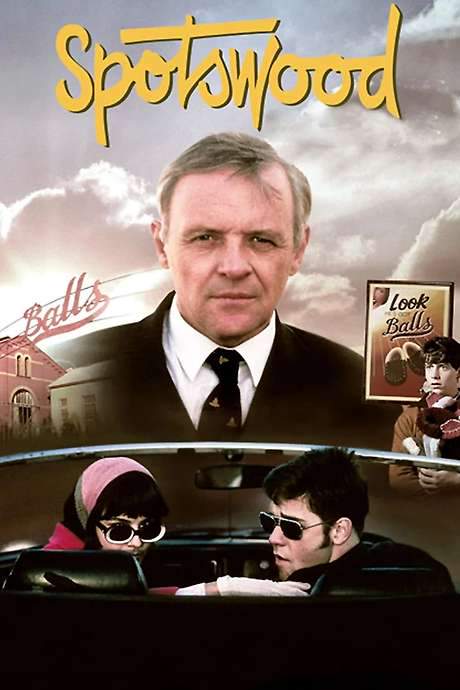
Spotswood (1991) movie poster

Timeline

Spotswood (1991) Timeline Explained – Every Event in Order

Release, runtime and language
1991 · 95 mins · English
Loading streaming availability…
Directed by
Mark Joffe
Starring
Anthony Hopkins, Russell Crowe, Ben Mendelsohn, Toni Collette, Dan Wyllie, Jillian Murray

Wallace, a sharp efficiency consultant overseeing the high‑profile layoffs of a large auto‑parts plant, is hired to assess a struggling moccasin workshop that feels stuck in another era. As he pushes for rapid modernization, he confronts the human cost of his own recommendations, forcing him to weigh loyalty, betrayal, desire, and the personal impact of change.

On this page (7)
  1. 1 Where to watch
  2. 2 Events in order (12)
  3. 3 Timeline questions answered
  4. 4 Movie threads
  5. 5 Movies like Spotswood
  6. 6 Categories
  7. 7 Every angle
Loading streaming availability…

12 events in order · contains spoilers

Spotswood Timeline: Events in Chronological Order

Every key event of Spotswood (1991) in order, scene by scene, with when and where it takes place. Use it to untangle flashbacks, time jumps and parallel storylines, to refresh your memory before the sequel or to find the exact scene you are thinking of.

  1. Wallace is hired by Durmack to assess redundancies

    Wallace is hired by the Durmack board to assess a planned large-scale workforce redundancy. He conducts analysis, interviews, and weighs the financials to determine the impact of layoffs. He concludes that major job cuts are necessary, setting a tense tone for the corporate purge.

    When
    early in the film
    Where
    Melbourne — Durmack boardroom
  2. Carey joins the Balls review

    Carey, a young Balls worker, is asked to assist Wallace with the workplace review. He is reluctant at first until he learns that Ball's daughter Cheryl is part of the review staff, which motivates him. The collaboration foreshadows the tensions between workers and management.

    When
    early in the review phase
    Where
    Balls factory office, Spotswood
  3. Wallace tours Balls factory, notes shabby conditions

    Wallace tours the Balls moccasin factory and sees shabby facilities, old machinery, and a workforce that appears driftless. He notes how these conditions reflect inefficiency and potential for improvement. This initial visit builds the case for his later recommendations.

    When
    early in the evaluation
    Where
    Balls factory, Spotswood
  4. Jerry leaks the Durmack report

    Wallace learns that a colleague, Jerry, has leaked the Durmack report to inflate layoff numbers and demoralize the union. The leak creates tension between management and the workers and colors Wallace's perspective. It becomes a catalyst for power struggles within the company.

    When
    during the review phase
    Where
    Durmack offices
  5. Kim Barry exposes falsified profits

    Kim Barry arrives at Wallace's home with the company records, revealing that profits have been non-existent for years and that assets have been sold to keep the business afloat. The revelation undermines trust and complicates the case for layoffs. Wallace confronts the reality of corporate deception.

    When
    night
    Where
    Wallace's home, Melbourne
  6. Wallace confronts the limits of productivity gains

    Wallace realises that productivity improvements and staff reductions won't save Balls. Despite this, he still recommends layoffs, which deepens his moral conflict. The moment marks a turning point as he begins to see the human cost of the decision.

    When
    after revelations about profits
    Where
    Durmack boardroom
  7. Vandalism and solidarity from workers

    Wallace's car is vandalised, but Balls workers come to his aid and begin including him in their off-hours activities. The act of solidarity shifts his perception of the workers from adversaries to potential allies. He starts to feel the human impact of the decision.

    When
    following the vandalism
    Where
    Melbourne street near the factory
  8. Ball announces redundancies

    Ball publicly announces the workforce redundancies, and Wallace watches with clear discomfort, realizing the human cost of his recommendation. The scene cements the conflict between managerial pragmatism and worker dignity. The atmosphere turns sour as the layoffs loom.

    When
    after Wallace's disillusionment
    Where
    Balls factory
  9. Union capitulates and management party

    The union at Durmack capitulates as management celebrates with a party. Wallace becomes increasingly disillusioned with the ruthlessness of the purge and the superficial corporate victories. The party-setting underscores the separation between decision-makers and workers.

    When
    after redundancies are announced
    Where
    Durmack offices / party
  10. A new perspective: diversification as a growth path

    Wallace begins to rethink Balls' competitive position, considering that a very large product range could convert inefficiencies into opportunities for growth. Rather than pure price competition, diversification could offer profits without wholesale layoffs. The idea marks a potential shift away from his earlier stance.

    When
    after revelations about profits
    Where
    Factory floor / surrounding offices
  11. Carey and Wendy rooftop moment

    Carey realises his feelings for Wendy and they climb onto the factory roof to hold hands. The moment adds a human and hopeful counterpoint to the industrial conflict. It hints at a personal future beyond the factory.

    When
    near the end
    Where
    Balls factory rooftop
  12. Final shot: West Gate Bridge ambiguity

    In the final shot, Carey and Wendy look out over the West Gate Bridge, whose opening in 1978 anchors a sense of time while deliberately leaving the film's setting ambiguous. The ending invites multiple interpretations about when the events occurred. The bridge serves as a thematic backdrop for the unresolved question of time and progress.

    When
    final scene (ambiguous; late 1970s)
    Where
    West Gate Bridge

Last updated: October 09, 2025 at 15:00

Was this helpful?

Timeline questions answered

Spotswood Timeline Explained: Your Questions Answered

When does it happen, and why in that order? The questions people ask about the chronology of Spotswood (1991): time jumps, flashbacks, cause and effect between scenes and the correct order of events, each answered with spoilers.

Q1

Why does Wallace recommend layoffs at Balls when he knows they won't save the company?

Wallace realizes that productivity improvements and staff cuts won't actually save Balls, yet he still recommends layoffs because it's his standard professional response to underperforming businesses. This moment marks the beginning of his moral conflict, he mechanically applies his usual formula without questioning its effectiveness or human cost. His recommendation exposes his detachment from the real impact of corporate efficiency decisions.

  • Wallace
  • layoffs
  • Balls
  • recommendation
  • productivity
Q2

What motivates Jerry to leak the Durmack report to the union?

Jerry leaks the Durmack report to inflate the number of layoffs as a strategic move to demoralize the union. By exaggerating the job cuts, he aims to strengthen management's negotiating position and weaken union resistance. His action reveals the political manipulation behind the layoffs and highlights the adversarial dynamic between workers and management.

  • Jerry
  • Durmack report
  • leak
  • union
  • layoffs
Q3

Why does Kim Barry bring the company financial records to Wallace's home?

Kim Barry arrives at Wallace's home with the financial records to expose that profits have been non-existent for years and that Mr. Ball has been selling off company assets to keep Balls afloat. Barry does this to undermine Wallace's review process and advance his own ambitions with the company, demonstrating his ruthless and calculating nature.

  • Kim Barry
  • financial records
  • profits
  • assets
  • company books
Q4

Why do Balls workers help Wallace after his car is vandalized?

After Wallace's car is vandalized, Balls workers come to his aid and begin including him in their off-hours activities. This act of solidarity shifts Wallace's perception of the workers from abstract statistics to real people with genuine humanity. It marks a turning point where he starts feeling the human cost of decisions he previously made detachedly.

  • Wallace car vandalism
  • Balls workers
  • solidarity
  • help
Q5

What does Wallace realize about Balls' competitive advantage?

Wallace realizes that Balls could thrive through product diversification rather than competing on price. The factory's large product range, which seems inefficient with old machinery and many skilled workers, actually becomes an advantage, customers can get specialized items nowhere else. This insight offers a path to profitability without wholesale layoffs.

  • Wallace
  • Balls
  • diversification
  • competitive advantage
  • product range
Q6

Why does the film end with the West Gate Bridge shot?

The final shot shows Carey and Wendy looking out over the West Gate Bridge, which opened in 1978. The bridge deliberately leaves the film's time setting ambiguous, the story could be happening in the late 1970s or the present day. This visual metaphor represents unresolved questions about progress, time, and whether industrial practices have truly changed.

  • West Gate Bridge
  • final shot
  • ending
  • time period
  • 1978
Q7

Why does Carey agree to help Wallace with the factory review?

Carey is initially reluctant to assist Wallace with the workplace review, but he changes his mind when he learns that Mr. Ball's daughter Cheryl is part of the review staff. His attraction to Cheryl motivates him to participate, despite his underlying reservations about being seen as a collaborator with management.

  • Carey
  • Cheryl
  • Wallace review
  • motivation
  • helper
Q8

What causes Wallace to change his perspective about the layoffs?

Wallace's perspective shifts through multiple moments: learning about the falsified profits, seeing workers help him after the vandalism, attending the Durmack celebration party where he witnesses the harsh reality of sackings, and realizing Balls could survive through diversification. These experiences gradually dismantle his detached corporate approach and make him confront the human cost of his recommendations.

  • Wallace
  • transformation
  • layoffs
  • perspective
  • change
Q9

Why does Mr. Ball continue operating Balls despite years of losses?

Mr. Ball keeps Balls running by selling off company assets to cover operational costs. When Wallace confronts him with this reality, Ball responds that it's "not just about dollars and cents, it's about dignity, treating people with respect." This reveals that Ball prioritizes his workers' livelihoods and community over pure profitability.

  • Mr. Ball
  • Balls
  • losses
  • assets
  • dignity
  • workers
Q10

What happens when Carey and Wendy climb onto the factory roof?

Near the film's end, Carey realizes his romantic feelings for his workmate Wendy. Together they climb onto the Balls factory roof and hold hands, looking out toward the West Gate Bridge. This intimate moment provides a hopeful counterpoint to the industrial conflict, suggesting personal futures beyond the factory's uncertain fate.

  • Carey
  • Wendy
  • roof
  • romance
  • factory
  • West Gate Bridge

Movie threads

More Movies Like Spotswood, by Mood & Story

Curated lists built around what makes Spotswood tick: the same mood, the same kind of story or the same emotional payoff. Each list explains why these movies belong together.

Heartfelt Workplace Dramedies like Spotswood

Stories where the soul of a workplace is more important than its bottom line. If you liked the warm, human-centric drama of Spotswood, explore more movies that find humor and heart in workplace dynamics. These films focus on community, moral dilemmas, and personal transformation within the unique culture of a specific job or factory.

  • heartfelt
  • satirical
  • warm
  • nostalgic
  • reflective
  • anxious
  • Tone: bittersweet, warm, reflective
  • Pacing: steady, character-driven
Why these movies?

The story pattern: The narrative often centers on an outsider or a force of change entering a well-established, often eccentric, workplace. Through their interactions, both the protagonist and the community are transformed, leading to a reevaluation of what truly gives work and life meaning.

Why they belong together: These films are grouped together for their shared focus on the delicate balance between efficiency and humanity, their bittersweet tone that mixes humor with serious themes, and their steady, character-driven pacing that allows relationships to develop authentically.
Bittersweet Transformation Stories like Spotswood

Character arcs where profound personal change comes with a cost. For fans of Spotswood's character-driven story, this list features movies about personal reevaluation and growth. These films explore characters who question their life's path, leading to bittersweet transformations that are realistically messy and emotionally resonant.

  • reflective
  • heartfelt
  • bittersweet
  • nostalgic
  • anxious
  • transformation
  • Tone: bittersweet, reflective, heartfelt
  • Pacing: steady, methodical
Why these movies?

The story pattern: A protagonist, usually competent but emotionally detached, is thrust into an environment that challenges their core values. Through a series of interactions and conflicts, they experience doubt and growth, culminating in a change that is impactful yet leaves some questions unanswered, reflecting the complexity of real life.

Why they belong together: This thread connects films through a specific character arc pattern: the meaningful but imperfect transformation. They share a medium intensity and complexity, a steady pacing that allows for reflection, and an ending feel that is more ambiguous than purely happy, focusing on the journey over a neat conclusion.

If you liked this

Movies Like Spotswood

Similar movies to Spotswood: the same genre, themes or kind of story. Each one comes with its own plot summary, timeline and ending explained.

Browse all movie summaries

Categories

Movie Lists Featuring Spotswood

Spotswood appears in these hand-built movie categories. Each one groups movies by a specific mood, theme or story type, with their plot summaries and endings explained.

View all movie categories

Every angle

Spotswood (1991) Explained: Plot, Timeline & Characters

Everything about Spotswood in one place: what happens in the plot summary, the timeline in chronological order, the characters and meaning and a spoiler-free summary. What's After the Movie adds the cast, box office and post-credit scenes.

Coming soon on iOS and Android

The Plot Explained Movie Summary App

Plot summaries, endings explained and timelines on your phone. Catch up on any movie in minutes, save your favorites and never miss a twist again.

Be the first to know when we launch. Your email stays private, always.

Learn more about the app