Plot Explained Spoilers guaranteed!
Plot Explained

Browse by genre

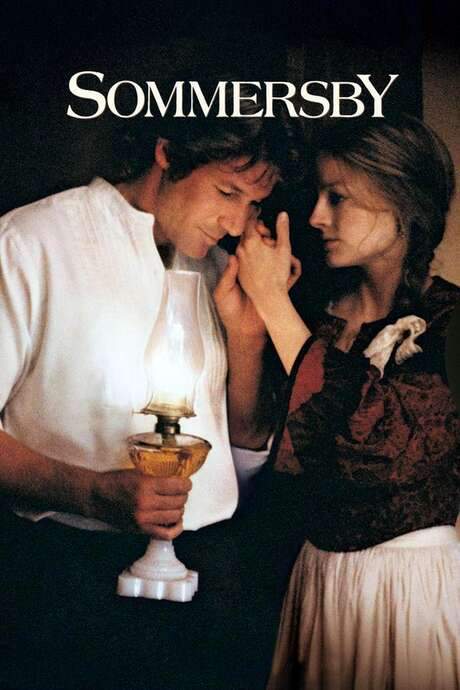
Sommersby (1993) movie poster

Timeline

Sommersby (1993) Timeline Explained – Every Event in Order

Release, runtime and language
1993 · 109 mins · English
Loading streaming availability…
Directed by
Jon Amiel
Starring
Jodie Foster, Richard Gere, Bill Pullman, Frankie Faison, R. Lee Ermey, James Earl Jones

Laurel Sommersby has been managing the farm alone since her husband Jack was reported killed in the Civil War. When a man claiming to be Jack returns, he is gentle, caring, and seems dramatically changed, prompting townsfolk to suspect he is an imposter. Torn between doubt and lingering affection, Laurel welcomes him into her home and slowly confronts whether he is truly the husband she once knew or a chance at a new love.

On this page (6)
  1. 1 Where to watch
  2. 2 Events in order (15)
  3. 3 Timeline questions answered
  4. 4 Movie threads
  5. 5 Movies like Sommersby
  6. 6 Every angle
Loading streaming availability…

15 events in order · contains spoilers

Sommersby Timeline: Events in Chronological Order

Every key event of Sommersby (1993) in order, scene by scene, with when and where it takes place. Use it to untangle flashbacks, time jumps and parallel storylines, to refresh your memory before the sequel or to find the exact scene you are thinking of.

  1. Jack Sommersby returns after years missing

    After six years presumed dead, Jack Sommersby returns to Vine Hill a changed man. He speaks with a softer tone and shows new warmth toward Laurel and their son, rebuilding a fragile sense of normalcy. The town is wary, but Laurel gradually allows herself to hope again.

    When
    Early Civil War era, soon after his return
    Where
    Vine Hill, Tennessee
  2. Laurel contemplates remarriage with Meacham

    Laurel has kept the farm afloat in Jack's absence and begins to entertain remarriage to Orin Meacham, who has helped with the chores and finances. The option offers practical security, yet carries a social risk in the eyes of the community. Her heart is torn between cautious trust and lingering love for Jack.

    When
    Soon after Jack's return
    Where
    Vine Hill, Tennessee
  3. Jack pitches a tobacco-based revival plan

    Jack pushes Burley tobacco as a cash crop to revive the town's economy. He organizes neighbors to pool resources, buy seed, share plots, and sell land at fair prices once the mortgage is cleared. He also opens a chance for freed slaves to own land they work, stirring tension among white citizens.

    When
    Shortly after his return
    Where
    Sommersby plantation and surrounding town
  4. Skepticism and clues of imposture arise

    Displaced from Laurel's life with him, Meacham grows suspicious that the returning Jack is an impostor. The town shoemaker notes a telltale inconsistency: his foot is two sizes smaller than the original Sommersby’s. Rumors and scrutiny begin to accumulate around the newcomer.

    When
    Days to weeks after his return
    Where
    Vine Hill, Tennessee
  5. Jack performs a cultivated persona, reading Iliad

    In the evenings, Jack reads from Homer’s Iliad to Laurel and others, a gesture that paints him as educated and principled. He claims the book was given to him by a fellow prisoner, a detail that deepens his mysterious backstory. The performance helps win trust but also blurs lines between truth and display.

    When
    Evenings after his return
    Where
    Sommersby home
  6. Laurel discovers she is pregnant

    Laurel and Jack's rekindled intimacy leads to her pregnancy, changing the family dynamic and heightening the town’s scrutiny. Laurel wrestles with whether the man she loves is truly the same person she believed him to be. The pregnancy anchors the couple’s fragile future amid rising tensions.

    When
    Months after his return
    Where
    Sommersby home, Vine Hill
  7. Knights threaten black landowners; barn attack thwarted

    The Knights of the White Camelia threaten to drive Black tenants off the land and intimidate the community. Meacham and others push back against racial oppression, while Jack refuses to exclude Black people from land ownership. The barn becomes a flashpoint as a fire-raising attempt is stopped before it robs them of their livelihood.

    When
    During the land reform period
    Where
    Sommersby property, Vine Hill
  8. Birth of daughter Rachel

    Laurel gives birth to a daughter named Rachel, a moment of joy tempered by the era’s turmoil. The family clings to hope as they face a hostile social climate. The baby’s presence strengthens Laurel’s resolve to stand by Jack, whatever his true identity might be.

    When
    Shortly after Laurel's pregnancy
    Where
    Sommersby plantation
  9. Rachel’s baptism and Jack’s arrest for murder

    Shortly after Rachel’s baptism, two U.S. Marshals arrest Jack on a murder charge with a death penalty on the table. Laurel’s hope clashes with fear as the legal process begins, and the community divides between loyalty and the danger of defending a presumed impostor. The stakes escalate quickly as the truth becomes a matter of life and death.

    When
    Immediately after baptism
    Where
    Plantation church / Vine Hill
  10. Trial begins and impostor strategy is formed

    Laurel and the defense weigh whether the man on trial is truly Jack Sommersby or an impostor. A plan develops to argue that the man is Horace Townsend rather than Sommersby, with Laurel playing a pivotal role in the strategy. Meacham’s leverage, tied to a broader scheme, adds a dangerous undercurrent to the courtroom drama.

    When
    Trial period
    Where
    Courtroom, Vine Hill
  11. Witnesses challenge identity; Laurel testifies

    Witnesses claim the man is Horace Townsend, an English teacher and con artist who deserted the Confederacy. Jack counters by accusing Meacham and others of manipulation to steal the new landholdings. Laurel testifies, admitting that her love for Jack shaped her perception, declaring that her feelings influenced her earlier judgments.

    When
    Trial day
    Where
    Courtroom
  12. Jack is convicted and faces death

    Judge Isaacs asks Jack to choose a path of trial identity, and Jack elects to be tried as John Sommersby. The jury convicts him of first-degree murder, and the death penalty looms over the impending execution. The verdict seals the tragedy at the heart of the story.

    When
    End of trial
    Where
    Courtroom / jail
  13. Jack’s backstory and the cellmate tale

    In prison, Jack recounts the truth of his identity to Laurel, describing how a lookalike cellmate created a bond that led to the eventual reveal. He recounts the chain of events that allowed an impostor to come to power. The tale reframes what Laurel believes about who he really is.

    When
    Before execution
    Where
    Prison
  14. Horace Townsend’s role and the impersonation twist

    The narrative reveals that Horace Townsend, a con artist, was the real instigator whose plan culminated in burying Jack and taking his identity. Townsend’s motive appears to be protecting the freed Black farmers and the land they own. The twist casts doubt on what the community has accepted as truth.

    When
    Prior to the main timeline
    Where
    Opening scene / backstory
  15. Execution day and closing scenes

    As Jack is led to the gallows, he asks Laurel to stand with him in solidarity. She moves to the front, and they share a final moment before the execution. In the final shots, Laurel walks to a grave, places flowers on John Robert Sommersby’s tomb, and the church steeple is shown under reconstruction, signaling fragile hope for the future.

    When
    Execution day / closing
    Where
    Village gallows; graveyard; church

Last updated: October 07, 2025 at 08:23

Was this helpful?

Timeline questions answered

Sommersby Timeline Explained: Your Questions Answered

When does it happen, and why in that order? The questions people ask about the chronology of Sommersby (1993): time jumps, flashbacks, cause and effect between scenes and the correct order of events, each answered with spoilers.

Q1

Why did Jack agree to sell land to freed Black farmers?

Jack's tobacco revival plan included selling land to freed Black farmers as a strategic move to rebuild the town's economy while also addressing historical injustice. He recognized that excluding Black people from land ownership would perpetuate the cycles of poverty and dependency that followed emancipation. This decision also served a political purpose, uniting poor white and Black farmers against the wealthy landowners who profited from the old system. However, this progressive stance made him a target for the Knights of the White Camelia, a white supremacist group that violently opposed Black land ownership.

  • land ownership
  • Black farmers
  • tobacco
  • Reconstruction
  • community
Q2

What was the foot size clue about?

The town shoemaker noticed that Jack's foot was two sizes smaller than the original Jack Sommersby's. This physical discrepancy became one of the key pieces of evidence suggesting the returning man was an impostor. While seemingly minor, this detail grounded the mystery in tangible, verifiable evidence that contrasted with the more subjective observations about his changed personality.

  • foot size
  • impostor
  • identity
  • shoemaker
  • evidence
Q3

What happened to the real Jack Sommersby?

The real Jack Sommersby was Horace Townsend's cellmate in prison during the Civil War. After they escaped together, Horace killed another man during a confrontation and died from his wound. Horace then buried the real Jack and assumed his identity, deciding to take on Jack's life. Rather than continuing his pattern of con artistry, Horace chose to use Jack's identity to make a genuine difference, reviving the town through tobacco and helping freed Black farmers gain land ownership.

  • Horace Townsend
  • real Jack
  • cellmate
  • identity
  • impostor
Q4

Why did Jack refuse to admit he was Horace Townsend?

Jack refused to admit he was Horace Townsend because doing so would have voided the land deals that allowed freed Black farmers to own their plots. If he revealed himself as an impostor, the courts would have invalidated all transactions made under Jack's name, stripping the Black farmers of their newly acquired land and returning it to the original creditors. Jack chose to die as Jack Sommersby rather than save himself by destroying the lives of the people he had helped.

  • admission
  • execution
  • land deals
  • Black farmers
  • sacrifice
Q5

What was Jack on trial for?

Jack was arrested and tried for first-degree murder, a crime carrying the death penalty. The exact details of the murder aren't fully explained in the summary, but the charge provided the legal mechanism for challenging his identity. The prosecution used the trial toarguethat he was Horace Townsend, a known con artist who had committed murder elsewhere before assuming Jack's identity.

  • murder
  • trial
  • death penalty
  • U.S. Marshals
  • conviction
Q6

Why did Jack read the Iliad to the family?

Jack read Homer's Iliad to Laurel and others during evening gatherings, presenting it as a book given to him by a fellow prisoner. This reading served multiple purposes, it painted him as educated and cultured, helping to establish his claim as the refined Jack Sommersby, and it strengthened his bond with Laurel by sharing meaningful literature with her. The book also symbolized themes of war, identity, and homecoming that paralleled his own story.

  • Iliad
  • Homer
  • reading
  • education
  • evenings
Q7

Who were the Knights of the White Camelia?

The Knights of the White Camelia were a white supremacist group in post-Civil War Tennessee who violently opposed Black land ownership and racial equality. They threatened Joseph, a Black freedman living on the Sommersby estate, and conducted night rides to intimidate Black farmers who had purchased land through Jack's program. Their threats escalated to arson attempts on the barn, reflecting the real historical violence faced by Black Americans during Reconstruction when they attempted to exercise newly won rights.

  • Knights of the White Camelia
  • intimidation
  • Reconstruction
  • racism
  • Black farmers
Q8

Why did Laurel testify against Jack at trial?

Laurel testified at Jack's trial in a complex move to save him. She revealed that her belief in his identity came from his kindness rather than objective proof, stating "because I never loved him the way I love you!" This confession was part of a strategy to argue he was Horace Townsend rather than Jack Sommersby, which would have carried a lesser punishment. However, Jack ultimately rejected this defense, insisting on being tried as John Sommersby.

  • Laurel
  • testimony
  • trial
  • love
  • strategy
Q9

What happened at Jack's execution?

Jack was convicted of first-degree murder and sentenced to death. At the gallows, he called out to Laurel, pleading he wasn't ready. Laurel pushed through the crowd to stand with him in his final moments. After the execution, she visited the grave of "John Robert Sommersby" and placed flowers there. The church steeple, which had been under construction as part of Jack's revival plan, was shown being rebuilt, symbolizing both the community's endurance and the fragile hope that Jack's sacrifices wouldn't be in vain.

  • execution
  • gallows
  • Laurel
  • grave
  • church steeple
Q10

How was Jack's tobacco plan supposed to work?

Jack proposed using Burley tobacco as a cash crop to revive the struggling local economy. He organized townspeople to pool resources to buy seed, offered share-cropping arrangements on his land, and promised fair terms for buying back plots once mortgages were cleared. The plan was ambitious, projecting enough profit to fund a new church and restore prosperity to a community trapped in debt and decay after the Civil War.

  • tobacco
  • Burley
  • economy
  • farm
  • revival
Q11

Why was Orin Meecham against Jack?

Orin Meecham, who had helped Laurel run the farm for six years and whom she had considered marrying, became one of Jack's chief accusers. His opposition stemmed partly from jealousy, Laurel had chosen the returned Jack over him, but also from genuine suspicion about his identity. Meecham leveraged the legal situation, demanding Laurel promise to marry him if Jack were imprisoned, adding a manipulative dimension to his accusations.

  • Orin Meecham
  • jealousy
  • accusation
  • marriage promise
Q12

Why did Laurel stand by Jack at the end?

Laurel chose to stand with Jack at the gallows because she had come to love him, whether he was the real Jack or Horace Townsend, regardless of his true identity. His kindness, his commitment to the community, and his sacrifice in refusing to save himself at the cost of the Black farmers' land had proven his character. Her final act of solidarity showed that for her, the man he had chosen to be mattered more than the man he originally was.

  • Laurel
  • love
  • stand
  • support
  • final moments

Movie threads

More Movies Like Sommersby, by Mood & Story

Curated lists built around what makes Sommersby tick: the same mood, the same kind of story or the same emotional payoff. Each list explains why these movies belong together.

Movies about post-war rebirth like Sommersby

Characters haunted by the past seek redemption and love in a rebuilding world. If you liked the historical setting and themes of redemption in Sommersby, explore these movies that also deal with characters rebuilding their lives and communities after a war. These stories blend drama, romance, and the heavy weight of the past.

  • melancholic
  • hopeful
  • grieving
  • historical
  • redemptive
  • solemn
  • Tone: bittersweet, melancholic, hopeful
  • Pacing: steady, character-driven
Why these movies?

The story pattern: These stories often begin with a world or a character shattered by war. The narrative follows the difficult process of rebuilding, both externally (a town, a farm) and internally (a psyche, a relationship). The central conflict arises from the tension between the trauma of the past and the desperate, often painful, pursuit of a better future.

Why they belong together: They are grouped by their shared setting of a post-conflict era and their exploration of themes like grief, redemption, and societal healing. The mood is typically melancholic yet hopeful, focusing on the slow, steady work of mending what was broken.

Identity mystery romance movies like Sommersby

A stranger appears, claiming to be a lost love, testing faith and igniting desire. Find more movies like Sommersby where the central plot revolves around a mysterious figure returning and claiming a loved one's identity. These suspenseful romance dramas explore doubt, memory, and the blurred lines between past love and new beginnings.

  • suspenseful
  • romantic
  • tense
  • melancholic
  • mysterious
  • doubtful
  • Tone: bittersweet, tense, romantic
  • Pacing: steady, suspenseful
Why these movies?

The story pattern: The narrative hinges on a single, consuming question of identity. A protagonist, often grieving, is confronted with someone who embodies their lost loved one but behaves differently. The plot unfolds as a slow unraveling of clues, building tension between the community's skepticism, the protagonist's longing, and the imposter's motives, leading to an emotional and morally complex climax.

Why they belong together: They share the core narrative device of an identity mystery that drives both the plot and the emotional arc of the romance. The experience is defined by a steady build of suspense, a bittersweet tone, and the emotional weight of choosing between truth and happiness.

If you liked this

Movies Like Sommersby

Similar movies to Sommersby: the same genre, themes or kind of story. Each one comes with its own plot summary, timeline and ending explained.

Browse all movie summaries

Every angle

Sommersby (1993) Explained: Plot, Timeline & Characters

Everything about Sommersby in one place: what happens in the plot summary, the timeline in chronological order, the characters and meaning and a spoiler-free summary. What's After the Movie adds the cast, box office and post-credit scenes.

Coming soon on iOS and Android

The Plot Explained Movie Summary App

Plot summaries, endings explained and timelines on your phone. Catch up on any movie in minutes, save your favorites and never miss a twist again.

Be the first to know when we launch. Your email stays private, always.

Learn more about the app