Year: 2002
Runtime: More mins
Language: Hindi
Director: Gurudev Bhalla
A miscreant who commits a misdemeanor is sentenced to do community service in an old-folks home.
Warning: spoilers below!
Haven’t seen Shararat yet? This summary contains major spoilers. Bookmark the page, watch the movie, and come back for the full breakdown. If you're ready, scroll on and relive the story!
Trace every key event in Shararat (2002) with our detailed, chronological timeline. Perfect for unpacking nonlinear stories, spotting hidden connections, and understanding how each scene builds toward the film’s climax. Whether you're revisiting or decoding for the first time, this timeline gives you the full picture.
Last updated: February 20, 2026 at 18:44
Find frequently asked questions about the Shararat (2002) timeline, including chronological order, nonlinear jumps, cause-and-effect links, and scene sequence clarifications. This timeline FAQ helps explain when key events happen, how moments connect, and why the story unfolds in that specific order.
Rahul was sentenced to community service at a senior citizens' home because the judge approved Neha Sengupta's innovative proposal. After his reckless traffic light manipulation caused multiple crashes, his usual method of buying his way out of trouble failed. Neha suggested this unusual punishment inspired by a Bill Clinton article, believing it would teach him responsibility by connecting him with ordinary people and real-world consequences, rather than simply locking him away.
The traffic light incident was different because it endangered many lives and created visible, undeniable chaos with multiple crashes. Unlike his previous mischief which could be quietly resolved through bribes, this offense was too public and too severe for his usual corruption to work. DCP Bhosle specifically noted that this time the offense was too serious to buy his way out.
Earlier timeline events show Rahul regularly escaped consequences through favors and bribes, establishing a pattern that finally broke down.
Neha Sengupta was the one who came up with the community service idea for Rahul's punishment. Inspired by a newspaper article about Bill Clinton, she suggested this unconventional approach as a way to reform Rahul by forcing him to interact with ordinary people and face real consequences. Her proposal caught the judge's attention because it offered an alternative to simple incarceration that might actually teach him responsibility.
Rahul was the pampered only son of wealthy industrialists, but his parents' business empire left them with little time for him. They provided material wealth but not emotional presence or guidance. This neglect, combined with endless free time and no adult supervision, drove Rahul to seek thrills and push boundaries as a way to fill the void and feel something.
Rahul's transformation happened gradually through his interactions with the elderly residents. Initially hostile and resistant, he slowly began to see value in their experiences and wisdom. Small acts of kindness and shared moments helped his arrogance soften, allowing him to develop empathy and take responsibility. The clash of generations eventually gave way to meaningful connections.
The elderly residents were wary and resistant to Rahul because he represented everything they were not, young, privileged, and accustomed to getting whatever he wanted. His ego and sense of entitlement clashed directly with their more grounded perspectives. The initial friction came from their blunt attitudes meeting his arrogance, creating immediate generational conflict.
The rural location was significant because it removed Rahul completely from his familiar environment of wealth, privilege, and distractions. The countryside setting forced him to adjust to a slower pace and unfamiliar routines, which contrasted sharply with his previous lifestyle. This physical distance from his normal life was essential to his reform process.
Rahul manipulated the traffic lights because he was desperately trying to catch a flight to America. In his rush, he turned all the lights green, creating a dangerous chain of crashes. This act showed his characteristic willingness to bend rules and take extreme risks to get what he wanted, regardless of the danger to others.
The film explores how privilege can shield people from real consequences until they cross a line that can't be ignored. Rahul's wealth and connections had protected him from responsibility for years, but the traffic light incident forced him to finally face accountability. The senior citizens' home became a place where his privilege was challenged by real-world consequences and genuine human interaction.
Yes, the film suggests Rahul moves from remorseless behavior to genuine connection and growth. Through his time with the elderly residents, he develops empathy and slowly changes his attitude. The hopeful tone of the story indicates real transformation rather than just superficial compliance, though the film maintains a gentle approach rather than depicting a dramatic conversion.
Discover curated groups of movies connected by mood, themes, and story style. Browse collections built around emotion, atmosphere, and narrative focus to easily find films that match what you feel like watching right now.
Character-driven stories about finding purpose through quiet, humbling connections.If you enjoyed the quiet transformation in Shararat, you'll appreciate these movies where privileged or lost characters find meaning through humbling service and connection. These films share a gentle pacing, low intensity, and a hopeful, reflective tone focused on personal growth.
The narrative follows a character, often starting from a place of immaturity or selfishness, who is placed into an unfamiliar and humbling environment. Through slow-building, gentle interactions with others, they gradually shed their old self, leading to genuine empathy and a positive personal change.
These movies are grouped together because they share a focus on low-key, character-led redemption. The tone is consistently hopeful, the pacing is slow to allow for reflection, and the emotional weight is light, creating a warm, uplifting viewing experience centered on human connection.
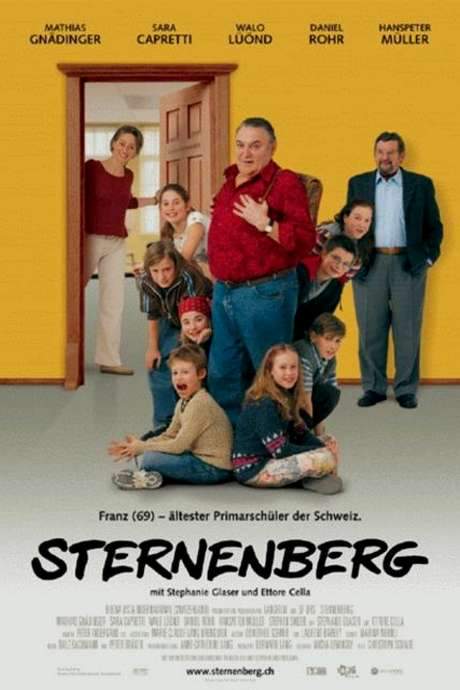
Stories where unlikely friendships bridge the gap between youth and old age.Like Shararat, these films explore the awkward yet heartwarming bonds that form between young adults and senior citizens. If you liked the generational clash and gentle humor, these movies offer similar stories of empathy and connection built across age gaps.
The plot revolves around a young protagonist forced into proximity with elderly characters, leading to initial cultural and personal clashes. As they spend time together, misunderstandings give way to mutual understanding, revealing shared stories and wisdom that facilitate growth for both the young and old characters.
These films are united by their central theme of bridging generational gaps. They share a gentle, observational tone, light emotional weight, and use awkward humor to explore themes of empathy, legacy, and the universal need for connection, regardless of age.
Don't stop at just watching - explore Shararat in full detail. From the complete plot summary and scene-by-scene timeline to character breakdowns, thematic analysis, and a deep dive into the ending - every page helps you truly understand what Shararat is all about. Plus, discover what's next after the movie.
Read a complete plot summary of Shararat, including all key story points, character arcs, and turning points. This in-depth recap is ideal for understanding the narrative structure or reviewing what happened in the movie.
Discover the characters, locations, and core themes that shape Shararat. Get insights into symbolic elements, setting significance, and deeper narrative meaning - ideal for thematic analysis and movie breakdowns.