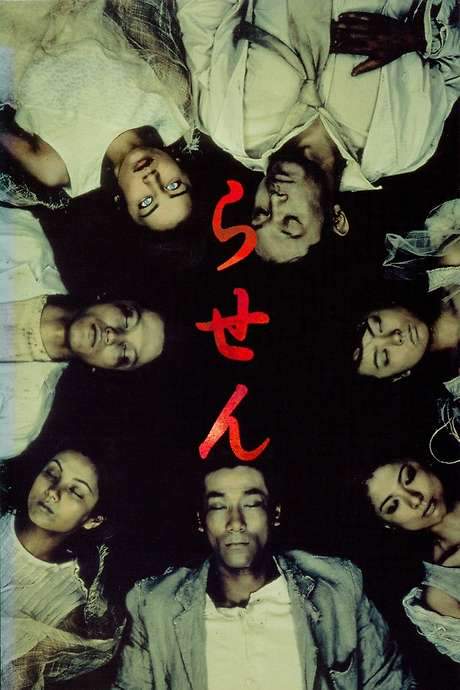
Three men pause in an art gallery to discuss a provocative performance piece, only to be interrupted by a sudden, brutal attack from a monstrous figure. The scene sets a tone of unease that threads throughout the film as reality and vision blur in a way that feels both ritualistic and personal.
Pun Siraphan Wattanajinda walks with a monk through a quiet forest, speaking softly about her worries for her son after a disturbing dream. The mood shifts as the camera lingers on the forest’s damp shadows, hinting at a past weight she carries and the possibility that the dream’s images are more than mere memory.
A young woman named Poon swims laps in a pool, only to be approached by a mysterious figure. After she showers, she sees more spectral figures, who turn out to be her friends and her boyfriend Nat James Mackie playing a prank. They coax her toward a night out at a club, pushing her to join them even though she’s hesitant. The tension between desire, fear, and suspicion begins to ripple through the group as night presses in.
After the club, Poon compels Nat to visit his mother, an act he resists but ultimately agrees to. Nat’s mother, Nittaya Penpak Sirikul, disapproves of Poon and urges Nat toward temple visits and a steadier path. The clash between tradition and longing threads deeper into their lives, revealing fragile loyalties and unspoken guilt.
At the first temple, Nat meets a novice monk who appears familiar, only to be revealed as Sujitto [Pradon Sirakovit], an old friend who joins Nat and Poon on their road trip. The trio’s journey evolves from a casual pilgrimage into a nightmarish odyssey as they move toward a succession of temples and confront increasingly disturbing visions.
Along the road to a fifth temple, their car’s windshield is smashed by three troublemakers on motorbikes. Nat chases them but they vanish, leaving a wake of tension and unspoken blame. They press on to a temple where a quiet argument erupts between Nat and Poon; later, a ghostly child watches from a balcony as a blackout rolls through the bar where the dispute intensified.
The morning after, a lingering unease follows. Poon vomits in the street at a cafe, and Nat worries about the possibility of pregnancy, though she avoids the question. They collect Sujitto to attend a funeral for a family, driving through the night with two monks in tow. Nat’s sense of danger intensifies when he seems to glimpse the boy who damaged the windshield, and the pursuit ends in a submerged moment inside an old fishery where the boy disappears beneath a swarm of eels.
Back at the temple funeral that night, Nat bleeds from the head, and the realization grows that the funeral is for the boy he chased. The trio continues onward, with Poon behind the wheel. A devastating accident follows: she hits a calf on the road, and the sight of the grieving mother on the roadside unsettles her deeply. The local helper’s cruel decision to slaughter the calf to “spare” suffering lingers in the mind, complicating Poon’s sense of karma and fate.
At the next temple, Poon seeks spiritual atonement for the calf’s death but is set upon by a deformed, child-sized demon who reveals disturbing images of a burns-scarred boy abused by his mother. The vision unsettles Poon, and a fierce confrontation with Nat ends with her slapping him, driving a wedge between them and leaving Sujitto behind.
Nat resolves to track down Poon and Sujitto as they push toward the final temples. Poon wanders again and is assaulted once more, this time revealing that she is reliving the abuse and death of the burned boy from her visions—and she begins to suspect that she is witnessing a past life. She confides in Nat about her pregnancy and a contemplated abortion, hinting that the trauma echoes a cycle she believes she carried into this life.
The final temple becomes a fulcrum of revelations. Nat and Poon arrive at the site of Poon’s vision, a place tied to a boy who killed his father and whose mother dragged him into the woods. Nat’s mother arrives and drops a bombshell: Nat has a twin, Sujitto, and she reveals that Nat is not her only son, a truth that unsettles everyone. Sujitto accepts that Karma cannot be escaped, while Poon realizes Sujitto is standing atop a well. The well collapses, and Sujitto falls, his face serene in a moment of perceived peace. The three allies—Nat, Poon, and Nat’s mother—leave the temple with a sense of uneasy closure, and Nat tenderly presents a long-held gift to his mother before the journey home resumes, leaving questions of fate and forgiveness lingering in the air.
This story unfolds as a measured, dreamlike traversal through fear, guilt, and the mysterious forces that bind past and present. The film maintains a calm, observational tone while gradually revealing a web of relationships, consequences, and hidden kinship that reframes each encounter as part of a larger karmic pattern. The tension between skepticism and belief, between personal longing and ancestral duty, is kept ambiguous and haunting, inviting viewers to reflect on how memory, guilt, and love shape the paths we choose and the fates we bear.