Plot Explained Spoilers guaranteed!
Plot Explained

Browse by genre

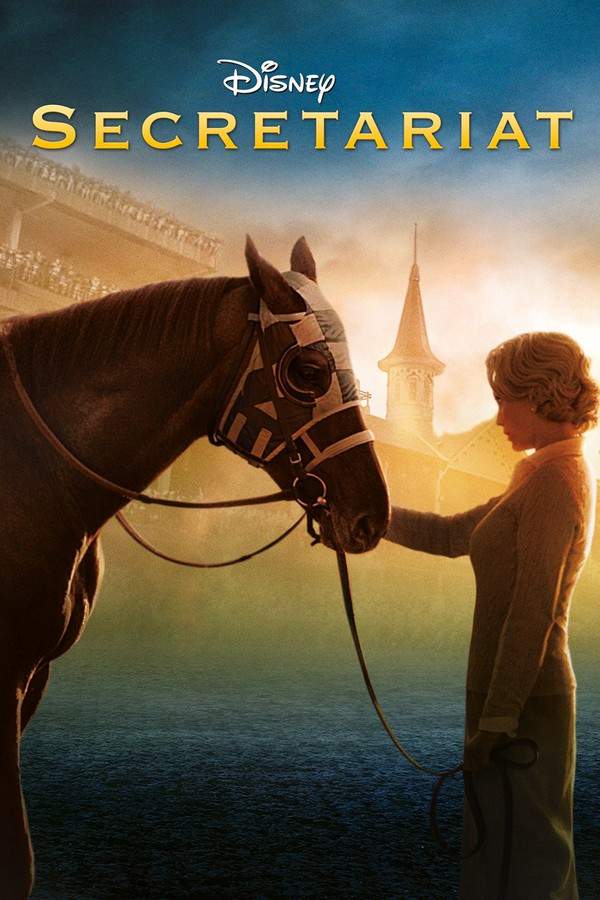
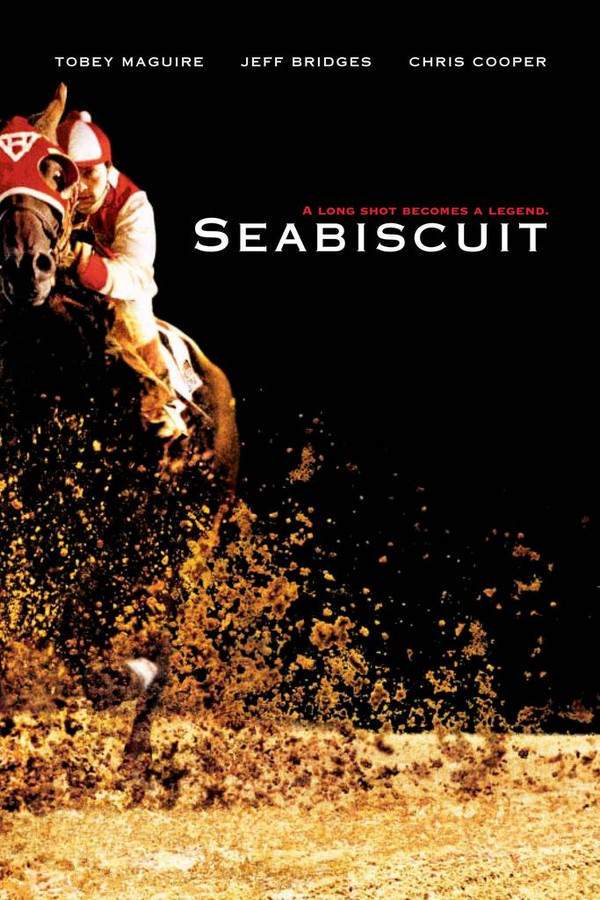
Seabiscuit (2003) movie poster

Plot Summary

Seabiscuit (2003) Plot Summary Explained

Release, runtime and language
2003 · 141 min · English
Directed by
Gary Ross
Starring
Jeff Bridges, Chris Cooper
Budget
$87M

During the Great Depression, a sorrowing businessman, a weary jockey, and a determined trainer join forces to restore a spirited racehorse named Seabiscuit. This unlikely team overcomes numerous challenges as they work together, transforming the underdog thoroughbred into a beacon of hope for a struggling nation. Their unconventional partnership brings triumph and heartbreak, captivating audiences and offering a much-needed escape from the hardships of the era.

On this page (6)
  1. 1 Where to watch
  2. 2 What happens: full plot
  3. 3 Plot questions answered
  4. 4 Movie threads
  5. 5 Movies like Seabiscuit
  6. 6 Every angle

Where to watch

Where to Watch Seabiscuit (2003)

Where can you watch Seabiscuit? Stream, rent or buy it in the US, including on Hoopla, Kanopy and Amazon Video: current JustWatch availability with up-to-date prices.

Streaming availability powered by JustWatch

Full plot summary · contains spoilers

What Happens in Seabiscuit: Full Plot Summary

The whole story of Seabiscuit (2003) explained, from the opening scene to the final frame: every key event, every twist and what it all adds up to. Read it as a quick recap before the sequel, to check a scene you missed, or to finally understand what really happened.

Three men—Red Pollard, Charles S. Howard, and Tom Smith—forge a special bond as they come together to become the jockey, owner, and trainer of the legendary racehorse Seabiscuit. Their journey is marked by struggles and adversity as they rise to fame and success alongside this remarkable horse.

In 1910, America was revolutionized by Henry Ford's introduction of the assembly line with the Model T Ford, producing a vehicle every 90 seconds. This transformation spurred a massive shift in manufacturing practices across various industries. However, the specter of the Great Depression loomed, devastating many, including Red, who hails from a once-wealthy family in Alberta, Canada. Following the stock market crash of 1929, which wiped out billions and led to widespread unemployment, Red's family is forced to abandon their lavish lifestyle. "You have a gift, don’t waste it," his father, Mr. Pollard, impressed upon him before leaving him with a horse trainer.

Red's journey to becoming a jockey is fraught with challenges; despite his passion for horses, his height is an obstacle in a sport that demands agility and ferocity. Earning a meager $10 a week, Red scrapes by, and his attempts to bolster his income through underground boxing leave him at risk, nearly losing his sight in one eye. His closest ally in the racing world is George Woolfe, the top jockey.

Meanwhile, Charles Howard, originally a handyman in a bicycle shop, dreams big. After a failed attempt at running his own repair business, he finds unexpected fortune in the burgeoning automobile industry, ultimately becoming one of the wealthiest car dealers in California. However, the death of his son in a tragic automobile accident plunges him into a deep despair, leading to his wife's departure. During a soul-searching trip to Mexico, he meets Marcela, who helps him rediscover joy through horse riding. Under her influence, he acquires a stable of horses, eventually crossing paths with the experienced and compassionate trainer, Tom Smith.

Smith, known for his ability to rehabilitate injured and troubled horses, convinces Howard to bring Seabiscuit into their fold. Once deemed "incorrigible" by his previous handlers, Seabiscuit is a horse in desperate need of understanding and care. Smith sees a spark of potential in Red, likening his fiery spirit to that of Seabiscuit, and offers him the chance to become the horse's jockey.

As Red and Seabiscuit begin to work together, they forge an unbreakable bond. Smith encourages Seabiscuit to embrace his competitive nature rather than succumbing to defeatism. Under the deft guidance of Smith and the supportive relationship they build, Seabiscuit learns to race again, capturing the spirit of the downtrodden who resonate with his story—their underdog.

With the promise of hope, Howard pushes for a race against the unimpressed New York tycoon, Samuel Riddle. Although Seabiscuit faces challenges on the racetrack, including a devastating loss due to Red's vision impairment, Howard remains steadfast in his belief in Red's potential. Seeking to galvanize public interest, Howard organizes a race that captivates the nation, with millions tuning in to witness Seabiscuit's grand showdown against War Admiral, the reigning champion.

The anticipation culminates in what is dubbed the "race of the century." As Seabiscuit triumphs, the victory symbolizes not just a win for the horse but hope for a nation battered by economic hardship. In a poignant moment, Pollard reflects that the true essence of Seabiscuit's story lies in the transformative healing journey they have all experienced together, each finding redemption in the other. Through grit, determination, and the unwavering spirit of connection, they become more than legends—they become a testament to resilience.

Last updated: November 08, 2024 at 01:05

Was this helpful?

Plot questions answered

Seabiscuit Plot Explained: Your Questions Answered

The questions people ask most about Seabiscuit (2003): what happens in the confusing scenes, why the characters do what they do, the twists, hidden details and what the ending means. Each answer contains spoilers.

Q1

Why did Red Pollard pursue horse racing despite being too tall for a jockey?

Red Pollard came from a wealthy family in Alberta, Canada that lost everything during the Great Depression. After his family abandoned their lavish lifestyle, his father left him with a horse trainer, telling him, "You have a gift, don't waste it." With few options and only $10 a week earnings, Red pursued his passion for horses despite his height being a significant obstacle in a sport that demands agility. His determination to succeed was further fueled by taking risks in underground boxing, which nearly cost him his sight in one eye.

Foreshadowing: The film establishes early on that Red's father saw his son's natural gift with horses, planting the seed for his eventual career.

  • red pollard
  • jockey
  • great depression
  • underground boxing
  • height limit
Q2

How did Charles Howard go from a bicycle shop handyman to a wealthy businessman?

Charles Howard started as a handyman in a bicycle shop but dreamed of running his own business. After a failed attempt at a repair business, he found unexpected fortune in the burgeoning automobile industry during the early 20th century. His success in selling cars made him one of the wealthiest car dealers in California, providing the financial means that would later allow him to pursue his passion for horse racing.

Foreshadowing: The film opens with Henry Ford's assembly line revolution in 1910, establishing the era's economic transformation that enabled Howard's rise.

  • charles howard
  • automobile industry
  • california
  • bicycle shop
  • wealth
Q3

Why was Seabiscuit labeled as an incorrigible horse before meeting Tom Smith?

Before coming under Tom Smith's care, Seabiscuit was considered "incorrigible" by his previous handlers, meaning he was unmanageable and refused to be trained or raced effectively. The horse had developed a defiant, uncooperative attitude that made him appear hopeless to those who only saw his behavioral problems rather than his potential.

Foreshadowing: Smith's reputation for rehabilitating injured and troubled horses establishes his unique ability to see beyond Seabiscuit's difficult exterior.

  • seabiscuit
  • tom smith
  • incorrigible
  • horse training
  • problem horse
Q4

How did Tom Smith transform Seabiscuit from an unmanageable horse to a champion?

Tom Smith, known for his ability to rehabilitate injured and troubled horses, recognized that Seabiscuit needed understanding rather than force. Rather than trying to break his spirit, Smith encouraged Seabiscuit to embrace his competitive nature instead of succumbing to defeatism. Through patience and by tapping into the horse's natural drive to compete, Smith helped Seabiscuit rediscover his racing instincts and transform him into a confident competitor.

Foreshadowing: Smith's philosophy of working with a horse's nature rather than against it is established when he first examines Seabiscuit.

  • tom smith
  • seabiscuit
  • horse training
  • rehabilitation
  • competitive nature
Q5

Why did Charles Howard want to race Seabiscuit against War Admiral?

After facing challenges and losses on the racetrack, including a devastating defeat, Howard sought to galvanize public interest and prove Seabiscuit's worth. He pushed for a match race against War Admiral, the reigning champion, as a way to create a spectacle that would captivate the nation. The race became a means to restore hope and generate public excitement during the Great Depression, with Howard believing his horse could compete with the best.

Foreshadowing: The film builds tension through Howard's earlier interactions with the unimpressed New York tycoon Samuel Riddle, setting up the eventual challenge.

  • war admiral
  • charles howard
  • match race
  • seabiscuit
  • 1938
Q6

What caused Red Pollard's vision problems during the race against War Admiral?

Red Pollard had been participating in underground boxing matches to supplement his meager $10 weekly earnings as a jockey. These brutal fights left him at risk of losing sight in one eye, and his impaired vision later contributed to a devastating loss in an important race. Despite this handicap, Howard maintained faith in Red's abilities and continued to believe in his potential.

Foreshadowing: The film shows Red's dangerous boxing career early on, establishing the physical toll it takes on him.

  • red pollard
  • vision impairment
  • underground boxing
  • eye injury
  • race loss
Q7

Why did Red Pollard and Seabiscuit develop such a close bond?

Tom Smith saw a parallel between Red Pollard and Seabiscuit, both possessed a fiery, determined spirit that others misunderstood. Smith recognized that Red's own struggles and determination mirrored Seabiscuit's nature, making them natural partners. As they trained together, they forged an unbreakable bond based on shared adversity and mutual determination to prove the doubters wrong.

Foreshadowing: Smith explicitly likens Red's spirit to Seabiscuit's when he offers Red the jockey position.

  • red pollard
  • seabiscuit
  • bond
  • jockey horse relationship
  • tom smith
Q8

How did the Great Depression impact Red Pollard's family?

Red Pollard came from a once-wealthy family in Alberta, Canada. Following the stock market crash of 1929, which wiped out billions and led to widespread unemployment, his family was forced to abandon their lavish lifestyle. This sudden fall from wealth drove Red to pursue horse racing as a means of survival and eventually led to his father's decision to leave him with a horse trainer.

Foreshadowing: The film opens with the 1929 stock market crash and its devastating economic consequences, establishing the era's hardships.

  • great depression
  • red pollard
  • alberta
  • stock market crash
  • family wealth loss
Q9

Why was Seabiscuit's race against War Admiral called the race of the century?

The match race between Seabiscuit and War Admiral in 1938 became known as "the race of the century" because it pitted the underdog champion Seabiscuit against the reigning Triple Crown winner War Admiral. The race captivated the nation, with millions tuning in to witness what was seen as a clash between an underestimated horse and the undisputed champion of American racing. The event represented far more than a sporting competition, it became a symbol of hope during the Great Depression.

Foreshadowing: The film's buildup to the race emphasizes the enormous public interest and the odds stacked against Seabiscuit.

  • war admiral
  • seabiscuit
  • race of the century
  • 1938
  • match race
Q10

How did Marcela influence Charles Howard's decision to pursue horse racing?

After losing his son in a tragic automobile accident and experiencing his wife's departure due to his deep depression, Charles Howard went on a soul-searching trip to Mexico. There he met Marcela, who helped him rediscover joy through horse riding. This transformative experience led him to acquire a stable of horses, ultimately setting the stage for his connection with Tom Smith and Seabiscuit.

Foreshadowing: Howard's depression and emptiness are established immediately after his son's death, making his Mexico journey a crucial turning point.

  • marcela
  • charles howard
  • mexico
  • horse riding
  • redemption
Q11

Why did Seabiscuit's victory represent hope for the nation?

Seabiscuit's triumph in the race of the century symbolized hope for a nation battered by the Great Depression because the horse's story mirrored the struggles of ordinary Americans. Like the horse, the characters had overcome personal tragedy, economic hardship, and doubt from others. Their victory represented the possibility of redemption and success against overwhelming odds, offering the public a much-needed source of inspiration and optimism during one of America's darkest economic periods.

Foreshadowing: Throughout the film, characters repeatedly note how Seabiscuit's underdog story resonates with ordinary people facing hardship.

  • seabiscuit
  • hope
  • great depression
  • national morale
  • underdog story
Q12

What transformed Seabiscuit into a champion racehorse?

The transformation of Seabiscuit into a champion was the result of three key factors: Tom Smith's patient training methods that harness而非抑制他的竞争本能,Red Pollard作为骑师与其建立的深厚纽带,以及Charles Howard的财务支持与信念。Smith帮助Seabiscuit找回竞速的本能,Red与其建立了不可分割的情感联系,而Howard则在逆境中始终相信他们的潜力。这些元素结合在一起,将一匹被认为"无法驯服"的马变成了全国冠军。

Foreshadowing: The film demonstrates how each character contributes uniquely to Seabiscuit's development throughout the training sequences.

  • seabiscuit
  • champion
  • tom smith
  • red pollard
  • transformation

Movie threads

More Movies Like Seabiscuit, by Mood & Story

Curated lists built around what makes Seabiscuit tick: the same mood, the same kind of story or the same emotional payoff. Each list explains why these movies belong together.

Inspirational Underdog Sports Dramas like Seabiscuit

Stories about unlikely teams overcoming odds to achieve greatness on the field. If you enjoyed the triumphant spirit of Seabiscuit, discover more movies about underdog teams defying the odds. These films share a steady, hopeful pace, medium emotional weight, and a focus on resilience, teamwork, and the joy of an earned, happy ending—perfect for fans of uplifting sports stories.

  • uplifting
  • inspiring
  • triumphant
  • determined
  • teamwork
  • resilient
  • Tone: hopeful, uplifting
  • Pacing: steady, building
Why these movies?

The story pattern: These narratives typically follow a linear path from hardship and dismissal to rigorous training and a climactic competition. Personal struggles serve as motivation, but the core journey is collective, building towards a definitive, uplifting victory that validates the characters' hard work and spirit.

Why they belong together: Movies are grouped here for their shared inspirational core. They blend the excitement of sport with profound human themes of redemption and hope, creating a specific, feel-good experience centered on triumph against adversity.

Hopeful Historical Recovery Stories like Seabiscuit

Character-driven stories of personal and collective healing against a difficult historical backdrop. Seabiscuit fans will appreciate these movies that weave personal redemption into a larger historical context. Explore stories set in tough eras where characters, burdened by past sorrows, find healing and hope through a shared mission, offering a blend of dramatic depth and uplifting resolution.

  • hopeful
  • resilient
  • nostalgic
  • dramatic
  • redemptive
  • historical
  • Tone: hopeful, dramatic
  • Pacing: steady, character-driven
Why these movies?

The story pattern: The stories often begin with individuals broken by their circumstances—economic hardship, war, or personal tragedy. A catalyst, often a project or a found family, gives them a new purpose. The plot follows their steady progress towards rebuilding their lives, using the historical struggle to mirror their internal journey toward hope.

Why they belong together: These films are grouped by their unique blend of a serious historical setting with a fundamentally hopeful character arc. They balance acknowledging past pain with a forward-moving, steady narrative that culminates in a sense of earned recovery and optimism.

If you liked this

Movies Like Seabiscuit

Similar movies to Seabiscuit: the same genre, themes or kind of story. Each one comes with its own plot summary, timeline and ending explained.

Browse all movie summaries

Every angle

Seabiscuit (2003) Explained: Plot, Timeline & Characters

Everything about Seabiscuit in one place: what happens in the plot summary, the timeline in chronological order, the characters and meaning and a spoiler-free summary. What's After the Movie adds the cast, box office and post-credit scenes.

Coming soon on iOS and Android

The Plot Explained Movie Summary App

Plot summaries, endings explained and timelines on your phone. Catch up on any movie in minutes, save your favorites and never miss a twist again.

Be the first to know when we launch. Your email stays private, always.

Learn more about the app