Plot Explained Spoilers guaranteed!
Plot Explained

Browse by genre

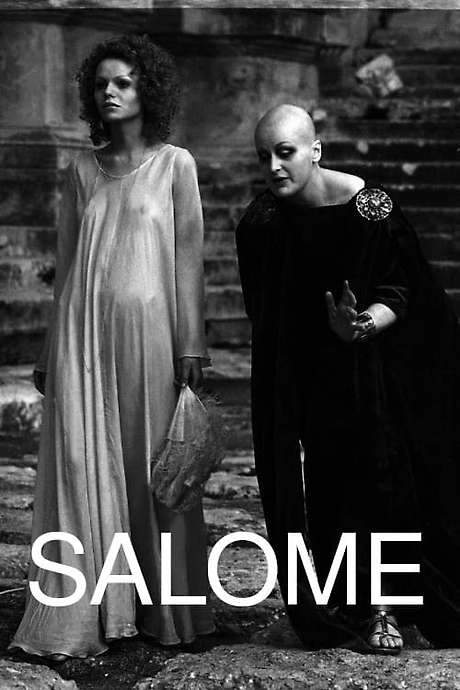
Salome (1953) movie poster

Timeline

Salome (1953) Timeline Explained – Every Event in Order

Release, runtime and language
1953 · 103 mins · English
Loading streaming availability…
Directed by
William Dieterle
Starring
Basil Sydney, Rita Hayworth, Cedric Hardwicke, Judith Anderson, Alan Badel, Charles Laughton

The film sweeps through the splendor and decadence of Tiberian Rome, where Galilean prophet John the Baptist denounces King Herod and Queen Herodias. Herodias plots John’s death, while Herod hesitates under an ominous prophecy. The long‑absent step‑daughter Salome returns, igniting Herod’s lust, which Herodias hopes to exploit. Meanwhile Salome and her lover Claudius edge toward the new faith, and her famed dance carries a startling, unforeseen price.

On this page (6)
  1. 1 Where to watch
  2. 2 Events in order (12)
  3. 3 Timeline questions answered
  4. 4 Movie threads
  5. 5 Movies like Salome
  6. 6 Every angle
Loading streaming availability…

12 events in order · contains spoilers

Salome Timeline: Events in Chronological Order

Every key event of Salome (1953) in order, scene by scene, with when and where it takes place. Use it to untangle flashbacks, time jumps and parallel storylines, to refresh your memory before the sequel or to find the exact scene you are thinking of.

  1. John the Baptist condemns Herod and Herodias

    John the Baptist publicly condemns Herod and Herodias for their adulterous marriage and tyrannical rule in Galilee. He labels Herodias an adulteress and declares that such sins invite divine judgment. A prophecy warns that a king who kills the Messiah will suffer an agonizing death, and Herod fears the consequences of acting against John.

    When
    During the rule of Tiberius Caesar
    Where
    Galilee
  2. Marcellus seeks Salome's hand

    Marcellus, Caesar's nephew, petitions his uncle to marry Salome, hoping for an alliance that would elevate his status. A message arrives forbidding him to wed a barbarian, signaling political and social boundaries. Salome is banished from Rome for seeking to rise above her station and will be escorted back to Galilee.

    When
    In Rome
    Where
    Rome
  3. Salome and Claudius on the voyage

    On the boat escorting Salome home, she begins to take charge, giving orders to others. Claudius, a Roman soldier assigned to Herod's palace, disobeys her and she slaps him; he retaliates by stealing a kiss, which shocks her. Their uneasy interaction foreshadows a shifting alliance.

    When
    During the voyage
    Where
    Aboard the boat returning Salome to Galilee
  4. Herodias plots while Herod's desire grows

    Back at the palace, Herodias becomes aware of Herod's growing lust for Salome, her daughter and niece. The queen begins to plot how to use this weakness to manipulate the king and preserve the throne for Salome. The tension between desire and power sets the stage for future conflicts.

    When
    Rising tensions
    Where
    Palace in Galilee
  5. Salome tests John at the Galilee marketplace

    Salome sneaks into the Galilee marketplace with servants to hear John the Baptist. John condemns Herodias as adulteress and denounces violence, and Salome repudiates him while inadvertently revealing her identity. John calms the crowd and urges restraint. Salome pleads with Herodias to flee Galilee, but her mother refuses to leave to preserve the throne.

    When
    During John's preaching
    Where
    Galilee marketplace
  6. Herod arrests John; Claudius pleads

    Shortly after, Herod decides to arrest John, ostensibly for treason but in reality to protect him from Herodias's plots. Claudius, now a Christian, hurries to Herod to plead for John's release but is unable to secure his freedom. He then travels to Jerusalem to attempt to save him.

    When
    After the marketplace events
    Where
    Galilee; Jerusalem
  7. Pilate refuses to release John

    Claudius meets Pontius Pilate in Jerusalem; Pilate refuses to release John because he preaches against Rome and is considered treasonous. Claudius tries to persuade Pilate to join him as a champion of John's new religion, but Pilate relieves him of his post and forbids him from returning to Galilee.

    When
    In Jerusalem
    Where
    Jerusalem
  8. Claudius seeks the miracle worker

    During their talk, Claudius learns of a miracle worker and decides to seek him. He then returns to the palace and meets Salome, beginning a new turn in their alliance.

    When
    After meeting Pilate
    Where
    Palace in Galilee
  9. Herodias pressures Salome toward a dangerous dance

    On Claudius's departure, Herodias manipulates Salome into believing that dancing for Herod is the only way to save her mother's life. Salome is torn by the prospect of surrendering her will and body to Herod, though she fears the consequences. Claudius urges her to leave Galilee, but the decision remains uncertain.

    When
    Before the dance
    Where
    Palace in Galilee
  10. Claudius reveals his faith and the Messiah

    In John's cell, Claudius reveals that he is a Christian and speaks of the miracle worker who John recognizes as the Messiah. The revelation deepens Salome's moral crisis and aligns her with the emerging Christian faith.

    When
    During Claudius's revelation
    Where
    John's cell, Galilee
  11. Salome dances; John is beheaded; Salome renounces Herodias

    Salome dances for Herod, shedding layers of clothing as the king beams with enthralled indulgence. John is beheaded before she finishes, fulfilling Herodias's deadly scheme. Horrified, Salome renounces Herodias and, like Claudius, embraces Christianity.

    When
    During the dance
    Where
    Palace in Galilee
  12. Sermon on the Mount

    After the beheading and the fall of Herodias's plans, Salome and Claudius listen to Christ delivering the Sermon on the Mount. The shared Christian faith marks a turning point for both of them and for their future.

    When
    After the beheading
    Where
    Galilee

Last updated: October 09, 2025 at 12:33

Was this helpful?

Timeline questions answered

Salome Timeline Explained: Your Questions Answered

When does it happen, and why in that order? The questions people ask about the chronology of Salome (1953): time jumps, flashbacks, cause and effect between scenes and the correct order of events, each answered with spoilers.

Q1

Why is Herod so afraid of the prophecy about killing the Messiah?

Herod fears the prophecy because his father died a agonizing death after ordering the killing of the land's firstborn. The prophecy states that if a king of Judea kills the Messiah, he will suffer the same fate. When John the Baptist arrives and begins his preaching, Herod mistakenly suspects John might be the Messiah, making him terrified of the consequences if he orders John's death.

  • herod
  • prophecy
  • john the baptist
  • messiah
  • fear of death
Q2

Why does Herodias want John the Baptist dead?

Herodias hates John because he publicly condemned her marriage to Herod, calling her an adulteress for marrying her former husband's brother. As queen, she views John's continued presence and teachings as a direct threat to her political power and legitimacy. She plots to have him executed to silence the only voice challenging her rule.

Foreshadowing: The prophecy about a king killing the Messiah was previously introduced, hinting at the consequences of actions against prophets.

  • herodias
  • john the baptist
  • adulteress
  • political threat
  • condemnation
Q3

Why does Herod arrest John instead of executing him immediately?

Herod orders John's arrest disguised as treason to protect him from Herodias's schemes. While Herod fears John might be the Messiah and is pressured by Herodias to execute him, the king chooses to imprison John rather than kill him, possibly to avoid triggering the prophecy or to keep his options open while satisfying his queen's demands temporarily.

  • herod
  • john arrest
  • protection
  • herodias阴谋
Q4

Why does Salome agree to dance for Herod despite despising the idea?

Salome agrees to dance because Herodias manipulates her, convincing her it is the only way to save her mother's life. Though Salome is horrified at the prospect of surrendering her will and body to Herod, she feels compelled to protect Herodias, even though Herodias is primarily interested in using Salome's dance as a political weapon against John.

  • salome dance
  • herod
  • herodias manipulation
  • coercion
Q5

Why is John the Baptist beheaded before Salome can make her request?

Herodias arranges for John to be executed before Salome finishes her dance and can request his release. Knowing Salome might ask for John's life, Herodias ensures the beheading occurs first, using the chaos of the celebration to accomplish her vengeful goal. Salome is left horrified as the head is presented to her.

  • john beheading
  • salome request
  • herodias scheming
  • timing
Q6

Why does Salome reject Herodias after witnessing the beheading?

Salome rejects Herodias because she is horrified by the execution of John, whom she tried to protect. The beheading represents the culmination of Herodias's manipulation and violence, using Salome's dance as a distraction while carrying out the murder. This tragedy opens Salome's eyes to her mother's true nature and triggers her spiritual transformation.

  • salome rejection
  • herodias
  • horror
  • spiritual transformation
Q7

How does Claudius convert to Christianity?

Claudius converts to Christianity after meeting Pontius Pilate in Jerusalem and learning about the miracle worker (who John identifies as the Messiah). His encounter with the new faith and his conversations with John in prison solidify his belief. This transformation happens gradually as he becomes exposed to the teachings and witnesses the events unfolding around John.

  • claudius
  • christianity
  • conversion
  • messiah
  • miracle worker
Q8

Why does Salome convert to Christianity at the end?

Salome converts to Christianity after witnessing John's martyrdom and rejecting Herodias's corruption. The tragedy of the beheading, combined with Claudius's earlier teachings about the miracle worker and the Messiah, leads her to embrace the new faith. Her conversion represents both her moral awakening and her rejection of her mother's manipulative world.

  • salome conversion
  • christianity
  • redemption
  • new faith
Q9

What makes Herod desire Salome so intensely?

Herod becomes intensely attracted to Salome after she returns from Rome. Having spent time in the imperial city and carrying herself with confidence and command, Salome represents something new and exciting in Herod's court. Herodias immediately recognizes this lust as a political opportunity to manipulate the king and advance her own schemes against John.

  • herod
  • salome desire
  • lust
  • manipulation
Q10

Why does Salome's identity get revealed in the marketplace?

Salome's identity is exposed when she rebukes John the Baptist for calling her mother an adulteress. Her public defense inadvertently reveals who she is to the crowd, placing her in danger of being stoned for her faith and her association with the queen. John calms the mob and saves her from violence.

  • salome identity
  • marketplace
  • john the baptist
  • exposed
Q11

Why does Pontius Pilate refuse to release John the Baptist?

Pilate refuses to release John because he views John's preaching against Roman rule as treason. Although Claudius pleads for John's freedom and tries to convince Pilate to join the new faith, Pilate sees John as a political threat who could incite rebellion. He dismisses Claudius and forbids him from returning to Galilee.

  • pilate
  • john release
  • treason
  • roman authority

Movie threads

More Movies Like Salome, by Mood & Story

Curated lists built around what makes Salome tick: the same mood, the same kind of story or the same emotional payoff. Each list explains why these movies belong together.

Opulent Period Dramas with Moral Decay like Salome

Stories where lavish settings mask moral decay and tragic political intrigue. If you enjoyed the lavish setting and dark intrigue of Salome, explore more movies like it. This section features epic period dramas where royal power, political manipulation, and fatal desires lead to tragic, bittersweet conclusions in worlds of stunning visual opulence.

  • opulent
  • dramatic
  • decadent
  • tragic
  • political
  • fateful
  • Tone: dark, dramatic, tragic
  • Pacing: steady, building tension
Why these movies?

The story pattern: These narratives often unfold in powerful, wealthy settings like courts or palaces, where characters are consumed by ambition, lust, or vengeance. The plot typically involves a web of political schemes and personal betrayals that escalate steadily, leading to a pivotal, tragic event that changes the course of lives, often with a bittersweet or bleak resolution.

Why they belong together: Movies in this thread share a high-intensity, dark tone and heavy emotional weight, driven by high-stakes power dynamics within an opulent world. They feature steady pacing that builds tension towards a consequential climax, focusing on themes of corruption, sacrifice, and the price of power.


Movies About Tragic Redemption Like Salome

Journeys where profound loss leads to a transformative spiritual or moral change. For viewers who appreciated the redemptive arc in Salome, this section highlights similar movies where a tragic sacrifice or profound loss leads to a character's spiritual or moral transformation. These films blend heavy drama with a ultimately hopeful, if bittersweet, conclusion.

  • redemptive
  • tragic
  • fateful
  • spiritual
  • bittersweet
  • transformative
  • Tone: dark, bittersweet, redemptive
  • Pacing: steady, character-driven
Why these movies?

The story pattern: The narrative pattern follows a central character, often initially distant from a higher purpose or moral code, who becomes entangled in a fateful conflict. A pivotal tragedy—often a sacrifice or martyrdom—serves as the catalyst, forcing a crisis of conscience that leads to a profound personal transformation and the embracing of a new faith or ethical path.

Why they belong together: These films are grouped by their shared emotional arc: a heavy, dark tone that pivots on a tragic event to arrive at a bittersweet, redemptive ending. They combine high emotional weight with steady pacing, focusing on the internal transformation of a character in response to external sacrifice.

If you liked this

Movies Like Salome

Similar movies to Salome: the same genre, themes or kind of story. Each one comes with its own plot summary, timeline and ending explained.

Browse all movie summaries

Every angle

Salome (1953) Explained: Plot, Timeline & Characters

Everything about Salome in one place: what happens in the plot summary, the timeline in chronological order, the characters and meaning and a spoiler-free summary. What's After the Movie adds the cast, box office and post-credit scenes.

Coming soon on iOS and Android

The Plot Explained Movie Summary App

Plot summaries, endings explained and timelines on your phone. Catch up on any movie in minutes, save your favorites and never miss a twist again.

Be the first to know when we launch. Your email stays private, always.

Learn more about the app